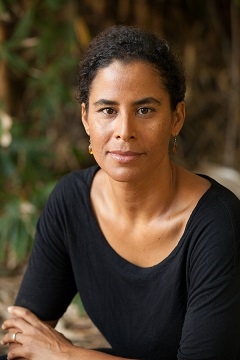
Kelly Lytle Hernández
· The Thomas E. Lifka Chair of History & African American StudiesUniversity of California, Los Angeles · African American Studies
Active 2002–2024
About
Kelly Lytle Hernández is the Thomas E. Lifka Chair of History & African American Studies at UCLA. Her work focuses on race, incarceration, migration, and border control in the United States, with particular attention to the history of Los Angeles and the U.S.-Mexico border. Hernández has authored significant publications including the book "Migra! A History of the U.S. Border Patrol," which explores the history and impact of border enforcement policies. Her research examines the politics of labor emigration, Mexican migration controls, and the racialization processes associated with border policing. Hernández has received numerous awards and honors for her scholarly contributions, including the Clements Prize for her book and recognition from the American Studies Association and the Berkshire Conference of Women Historians. She is actively involved in academic and public discussions on migration, race, and criminal justice, contributing to the understanding of these critical issues through her research and teaching.
Research topics
- Political Science
- Law
- Genealogy
- Demographic economics
- History
- Economics
- Geography
- Medicine
Selected publications
The Whites-Only Immigration Regime
Western Historical Quarterly · 2024
1st authorCorresponding- Political Science
- Demographic economics
- Political Science
Abstract After the U.S. Civil War, federal authorities began building the framework for our modern immigration regime. By the 1930s, they had adopted a variety of laws, rules, and tactics designed to target non-White immigrants for exclusion, punishment, and removal, imposing a Whites-only immigration regime in all but name. To date, federal authorities have revised but have yet to repeal this regime. This essay is a written version of the author’s 2024 Western History Association presidential address.
Amnesty or Abolition? Felons, Illegals, and the Case for a New Abolition Movement
2023-09-01 · 1 citations
book-chapter1st authorCorrespondingKelly Lytle Hernández explores the rise of the criminal justice and immigration control systems that frame the caste of outsiders. Reaching back to the forgotten origins of immigration control during the era of Black emancipation, this chapter highlights the deep and allied inequities rooted in the rise of immigration control and mass incarceration.
Labor Studies in Working-Class History of the Americas · 2023-09-01
article1st authorCorrespondingI want to begin by thanking Labor: Studies in Working-Class History for selecting Bad Mexicans: Race, Empire, and Rebellion in the Borderlands as its Big Book for 2022. It has been an honor to engage with the Labor and Working-Class History Association community and, especially, with Sonia Hernández, John Tutino, and Elliott Young, who so graciously accepted invitations to read and comment on the book. I will keep my reflections brief, as the readers have all made fair critiques of Bad Mexicans, including its strengths and weaknesses.Elliott Young and Sonia Hernández both comment on the book's embrace of a transnational approach to history. Young, who cofounded the Tepoztlán Institute for the Transnational History of the Americas, an institute I once attended back in 2008, writes that Bad Mexicans joins a forgotten but reemerging tradition of telling “stories that cross and spill over borders.” As he notes, the first page of Bad Mexicans jumps the border, launching a narrative “journey that weaves back and forth across the US-Mexico border to tell a story of a transnational anticapitalist movement at the birth of revolutionary Mexico.” Hernández, herself an intrepid chronicler of cross-border and revolutionary histories, writes that “magonismo, in many ways the perfect subject for a transnational study, lends itself to creating models of scholarship based on transnational, global efforts of solidarity.” Writing a borderlands history, one that sits comfortably at the intersection of nations and within an orbit of its own (“ni de aquí ni de allá,” as Hernández's grandmother might put it) was certainly one of my goals with this book. I am thrilled that these two distinguished historians of transnational history have identified the book's borderlands frame as well executed.Each reviewer notes that historians of the Mexican Revolution debate the “importance of the magonistas in the course of the [Mexican] revolution,” given that relatively few Mexicans, on either side of the border, actively supported the magonistas in their all-out “war on capital, authority, and the Church.” As John Tutino details, the magonista platform was too anticlerical and too liberal for mass support. Similarly, as Hernández observes, leading voices among the magonistas, namely Ricardo Flores Magón and Librado Rivera, “lost many allies who saw them as intransigent and stubborn.” In turn, the magonistas “never provoke[d] mass mobilizations, while thousands joined Villista risings just across the border and thousands more rose in Zapatista communities south of Mexico City.” Elliott Young makes the point with an important question—“Just who were these protagonists of the Mexican Revolution?”—and notes that Bad Mexicans does not address how the magonistas ideologically jived with the various factions that went on to fight in the revolution. These observations are correct. The magonistas did not lead the Mexican Revolution, the 1917 Mexican Constitution was not as radical as they demanded, and Ricardo Flores Magón died alone in a cell in Leavenworth Penitentiary. Plus, in the decades ahead, their memory as political agitators has warped and waned. Most recently, the Mexican government declared 2022 the year of Ricardo Flores Magón, making Young wonder whether “poor Ricardo,” an anarchist, is “throwing up a little” in his grave. And, as Sonia Hernández notes, despite their legacy as dissident writers, journalism remains a dangerous occupation in Mexico. In fact, 2022, the year of Ricardo Flores Magón, was the deadliest year on record for journalists in Mexico. All of this is true.1 The magonistas did not win—radicals almost never do—so some historians question their impact as historical agents.Still, I believe in the magonistas and the power of their story. For me, the knowledge that a small group of ordinary men and women in the borderlands, my homeland, challenged a tyrant and stirred a revolution that ousted him from power is enough. They did not go on to lead the revolution, but there is no doubt they helped kick-start it. Here it is important to note that many scholars who question the magonistas’ impact as historical actors tend to judge them by what came after their decline in 1911. But archives across the United States and Mexico clearly show that between 1901 and 1910, the magonistas’ most active years, the two governments scrambled to contain their rebellion. According to John Tutino, Bad Mexicans taps these archives to provide “an unprecedented portrayal of the Díaz regime's ability to engage in political espionage, on its own and in concert with US allies—matched by new detail on PLM radicals’ ability to share information and propaganda, news and plans, from hiding and in prison, across vast distances and against adamant adversaries.” I respectfully disagree. Ward Albro, W. Dirk Raat, John Womack, Juan Gomez Quiñones, and others have previously provided exhaustive analyses of the US and Mexican governments’ efforts to suppress the magonistas, especially after they arrived in the United States in 1904. We have all made clear that, between 1901 and 1910, the magonistas forced some of the most powerful men on earth to contend with their freedom dreams: power for the disenfranchised, land for the dispossessed, plenty for the impoverished, and autonomy for the subjugated. Striking terror in the hearts of powerful men, provoking the wrath of governments, and spreading ideas of freedom among the dispossessed are not the only ways to make history, but they certainly count for me. And, most important, as Sonia Hernández writes, “even if the PLM and magonismo declined, anarchist ideas [and their direct-action campaigns] remained relevant throughout the revolution and the postrevolutionary period, and their spirit is noticeable in today's struggles.” Their ideas and their lives continued not just to inspire but also to inform rebel movements, including the Chicana/o movement of the 1960s and ’70s, when Gomez Quiñones declared the magonistas to have been “major contributors as ideologues and organizers to the intellectual climate and political process of the Chicano community and México.”2 Indeed, he continues, the magonistas left the Chicana/o movement “a heritage of love, self-sacrifice, ideals, and organizational modes from which to draw critically.”3 Therefore, I agree with Elliott Young, who writes, “Telling and retelling this history, like tending a fire at night, as Lytle Hernández put it, helps to keep the embers warm, waiting for a rush of oxygen to ignite the flame again.”In writing Bad Mexicans, I joined the fire tenders of this rebel history, stoking it for the questions it can answer about the past and the lessons it can provide for the present. My goal was to bring the magonista story, and what it can teach us about the past and the present, to as many people as possible. So, in closing, I want to note something the reviewers did not directly address in their comments: storytelling. Only Hernández nods to the fact that Bad Mexicans is not crafted for the academic reader. She is correct. I wrote Bad Mexicans for a broad and diverse audience. I wanted not only people who had never heard of the magonistas but even those who knew very little about the Mexican American, Mexican, and borderlands past to pick up the book and learn about these pivotal areas of modern US history. I specifically wrote for Mexican American youth hungry to see themselves at the center of US history and for social justice advocates who, like the magonistas, dare to demand a new world. I wanted these rebel readers to feel their forebears turning the pages of history. And, to be true to the magonista spirit, the book needed to inform and inspire. To do this, I retooled as a writer, working closely with my editor to develop my storytelling skills, something we, as historians, are rarely trained to do. It was difficult but thrilling work, prioritizing the pace and arc of the story alongside the evidence and argument. Draft after draft, I grew as a writer. When Fidel Martínez, editor of the Latinx Files for the Los Angeles Times, reviewed Bad Mexicans, writing that the book has the “cadence of a corrido,” I couldn't help but think the book's cadence helped to deliver its content and spirit. As Martínez put it, Bad Mexicans “radicalized me[,] . . . fundamentally changed the way I see the world, the way I see myself in this country.”4
24. Amnesty or Abolition? Felons, Illegals, and the Case for a New Abolition Movement
2023-10-13
book-chapter1st authorCorrespondingDuke University Press eBooks · 2023
1st authorCorresponding- Political Science
- Political Science
- Law
Cornell University Press eBooks · 2023
- Medicine
The Price for Freedom: Bail in the City of L.A.
University of Washington Press eBooks · 2021-12-31
book-chapter1. Race as a Relational Theory: A Roundtable Discussion
2019-12-31 · 1 citations
book-chapterSenior author2019-12-31
book-chapterOpen access1st authorCorrespondingPacific Historical Review · 2019-01-01
article1st authorCorrespondingThis article is the guest editor’s introduction to a special issue of Pacific Historical Review titled “The Carceral West.” Whereas scholarship on the carceral state has traditionally focused on the U.S. South, the urban North, and post-war Los Angeles, scholars have more recently begun to focus on the long history of incarceration throughout the U.S. West. The West provides a rich environment for examining the carceral state, especially as it relates to race and immigration. Additional articles in this special issue include Elliott Young on immigrant incarceration at McNeil Federal Penitentiary between 1880 and 1930, Benjamin Madley interpreting the Spanish Mission system as a carceral regime, and Mary Mendoza examining the U.S.-Mexico border fence as a carceral environment that locks undocumented immigrants both in and out.
Frequent coauthors
- 36 shared
Niels Frenzen
Louisiana State University
- 36 shared
Emily Gil- Bert
Louisiana State University
- 36 shared
Emily Billo
Florida State University
- 36 shared
David Ley
University of British Columbia
- 36 shared
Craig Gilmore
New York University Press
- 36 shared
Marga- Ret Walton-Roberts
Louisiana State University
- 36 shared
Amy Gottlieb
Boston University
- 36 shared
Perla Guerrero
Micron (United States)
Education
- 2001
Ph.D., American Studies
University of California, Los Angeles
- 1997
M.A., American Studies
University of California, Los Angeles
- 1994
B.A., American Studies
University of California, Los Angeles
Awards & honors
- 2010 Clements Prize for Migra! A History of the U.S. Border…
- Honorable Mention, 2011 Lora Romero First Book Prize, Americ…
- Honorable Mention, 2011 John Hope Franklin Book Prize, Ameri…
- Finalist, 2011 First Book Prize from the Berkshire Conferenc…
- 2007 Oscar O. Winther Award for the best article to appear i…
- Resume-aware match score
- Save to shortlist
- AI-drafted outreach
See your match with Kelly Lytle Hernández
PhdFit ranks faculty by your research interests, methods, and publications — grounded in their actual work, not templates.
- Free to start
- No credit card
- 30-second signup