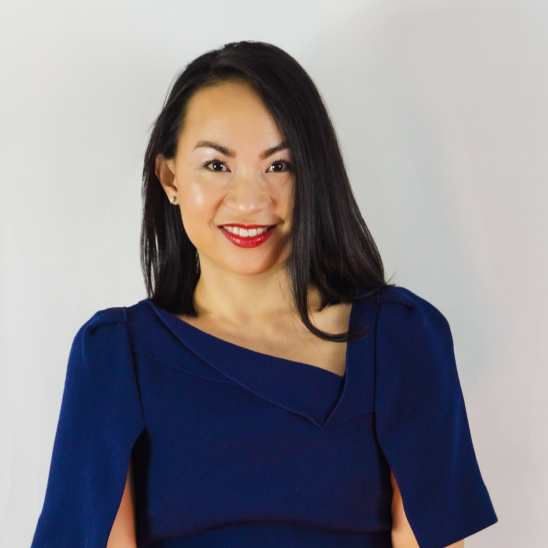
Kimberly Kay Hoang
· ProfessorVerifiedUniversity of Chicago · Sociology
Active 2010–2026
About
Professor Kimberly Kay Hoang is a Professor of Sociology and the College at the University of Chicago. Her research examines deal making in frontier and emerging economies. She is the author of two books: 'Spiderweb Capitalism: How Global Elites Exploit Frontier Markets,' which provides a behind-the-scenes look at how offshore shell corporations are used to conceal wealth and facilitate illicit financial activities, and 'Dealing in Desire: Asian Ascendancy, Western Decline, and the Hidden Currencies of Global Sex Work,' which explores the construction of masculinities, financial deal-making, and transnational political-economic identities through ethnography in Vietnam's informal economy. Her work has received numerous awards, including five distinguished book awards for 'Spiderweb Capitalism' and seven for 'Dealing in Desire.' She was also honored with the 2020 Lewis A Coser Award from the American Sociological Association Section on Sociological Theory for her theoretical contributions. Her research interests include economic sociology, law, global sociology, gender, qualitative research methods, and theory. Her publications have been recognized with over 26 prizes, and her articles have appeared in prominent journals such as the American Sociological Review, Social Problems, and Gender & Society.
Research topics
- Sociology
- Political Science
- Law
- Social Science
- Philosophy
- Market economy
- Finance
- Business
- Epistemology
- Economics
Selected publications
The Architecture of Global Capital: Elites, States, and the New Geography of Wealth
Annual Review of Sociology · 2026-04-15
article1st authorCorrespondingThis article reviews the sociological and interdisciplinary literature on the global architecture of elite wealth, emphasizing structural transformations in the global political economy following the 2008 financial crisis. First, we review the literature on wealth stratification and its limits for studying the current structure of elite wealth. Second, we highlight the dimensions central to this new landscape and examine the reorganization of global production and capital flows, including the outsourcing of manufacturing and the rise of new economic centers in East and Southeast Asia, which challenge nation-bounded analyses of wealth. Third, we show how both democratic and authoritarian states strategically partner with private capital, blurring political distinctions and enabling elite consolidation. Fourth, we trace the expansion of offshore finance that fosters the rise of a transnational elite supported by professional intermediaries. We conclude by calling for new theoretical and methodological tools to study elite power, hidden capital flows, and their implications for inequality and governance.
Administrative Science Quarterly · 2025-03-16
article1st authorCorrespondingDecoding the patterns of spiderweb capitalism
Open Access Government · 2024-04-09
articleOpen access1st authorCorrespondingDecoding the patterns of spiderweb capitalism Dr Kimberly Kay Hoang, the Director of Global Studies at the University of Chicago’s Department of Sociology, reflects on ‘spiderweb capitalism’ and her efforts to unravel opaque financial networks worldwide. I am a sociologist interested in deal-making in emerging and frontier markets. I use ethnographic and interview methods to examine highly risky, corrupt markets with no clear rule of law. Introducing the concept of ‘spiderweb capitalism,’ I build on the work of network scholars by exploring the substantive material that flows between two nodes in a network and by uncovering how totally disparate networks are connected. This is especially important in new frontiers where relationships with state officials are crucial to getting insider access to the most lucrative deals and securing profitable exit opportunities.
<i>Changing Women in a Changing Society</i> at 50: A Symposium
American Journal of Sociology · 2023-11-01 · 2 citations
articleSenior authorSpiderweb Capitalism: The Secret Financial Webs Built by the Ultra-Wealthy
2023-01-01
articleOpen access1st authorCorrespondingThe anonymous leak of the Panama Papers in 2016 revealed how the exceptionally wealthy (such as politicians, celebrities and business leaders) hide their money and exploit secretive offshore tax regimes. Dr Kimberly Kay Hoang is a Professor of Sociology at the University of Chicago, and after six years of research, hundreds of interviews and travelling 350,000 miles, she published Spiderweb Capitalism: How Global Elites Exploit Frontier Markets. She uncovered the mechanisms behind the movement of money into and out of Southeast Asia, and how that money travels all over the world.
Who Gets to Be a Theorist? The Oppression of Marginal Theories
2023-01-01
articleOpen access1st authorCorrespondingWho gets to be a theorist? What kinds of theoretical work get marginalised in academic research? And how does this oppression play out in the peer-review process? Dr Kimberly Kay Hoang is a Professor of Sociology at the University of Chicago. She has explored how difficult it is to get your sociology research published if you are not using research deemed to be legitimate by reviewers. She brings awareness to these issues and argues for change amongst scholars so that new forms of knowledge are not missed, especially regarding feminist, minority and racial theories.
Theorizing from the Margins: A Tribute to Lewis and Rose Laub Coser
Sociological Theory · 2022 · 13 citations
1st authorCorresponding- Sociology
- Sociology
- Social Science
This article is an adaptation of the sixteenth Lewis A. Coser lecture, given virtually in 2021 for the American Sociological Association Meetings. In this article, I pay tribute to Lewis and Rose Laub Coser by engaging with their past work, which inspired a theoretical provocation about what it means to theorize from the margins. I specifically address the questions of who gets to be a theorist and what kinds of theoretical work get marginalized. I outline the process of epistemic oppression involved in trying to publish marginal ideas in mainstream journals. I argue that the relationship between mainstream sociology and what I refer to as “marginal” requires a relational perspective that (1) situates both marginalized scholars and their scholarship in the broader discipline of sociology and (2) examines the epistemic oppression of their theories regardless of their sometimes-powerful institutional positioning in highly ranked departments or as leaders within various professional associations.
2022-07-21 · 4 citations
book1st authorCorrespondingAbstract This chapter examines the concept of “spiderweb capitalism,” a framework that illustrates how global elites exploit offshore financial structures and frontier markets. Drawing from extensive fieldwork and ethnographic data, it reveals how ultra-high-net-worth individuals (UHNWIs) collaborate with a network of financial professionals—including lawyers, accountants, and fixers—to construct complex, opaque webs of financial transactions. These webs facilitate tax avoidance, corruption, and the legal obfuscation of assets across multiple sovereignties. Focusing on emerging markets like Vietnam and Myanmar, the chapter argues that playing in the gray—manipulating the space between legality and illegality—is central to global capital flows. It challenges methodological nationalist approaches by emphasizing the interdependence of global and local actors in maintaining these financial networks. Ultimately, it underscores the systemic inequalities perpetuated by this form of capitalism and its implications for global governance and economic justice.
In Search of the Next El Dorado
2022-08-24
book-chapter1st authorCorresponding2022-10-11
book-chapter1st authorCorresponding
Frequent coauthors
- 49 shared
Benita Roth
University of Virginia
- 49 shared
Neda Maghbouleh
University of British Columbia
- 49 shared
Scott Schieman
University of Wisconsin–Madison
- 49 shared
Cynthia J. Cranford
University of Toronto
- 49 shared
Seoyoung Park
University of Illinois Urbana-Champaign
- 49 shared
Jenni- Fer Carlson
University of Illinois Urbana-Champaign
- 49 shared
Ching Lee
University of Illinois Urbana-Champaign
- 49 shared
Kelly Hannah‐Moffat
Education
- 2011
PhD, Sociology
University of California Berkeley
Awards & honors
- 2020 Lewis A Coser Award from the American Sociological Asso…
- Resume-aware match score
- Save to shortlist
- AI-drafted outreach
See your match with Kimberly Kay Hoang
PhdFit ranks faculty by your research interests, methods, and publications — grounded in their actual work, not templates.
- Free to start
- No credit card
- 30-second signup