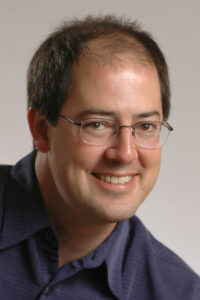
Kristofer Pister
· Professor of Electrical Engineering & Computer Science Co-Director, BSAC and Swarm LabVerifiedUniversity of California, Berkeley · Aerospace program
Active 1955–2025
About
Kristofer Pister is a Professor of Electrical Engineering & Computer Science at UC Berkeley. He received a B.A. in Applied Physics from UC San Diego in 1986, and both an M.S. and Ph.D. in EECS from UC Berkeley in 1989 and 1992, respectively. Prior to joining the faculty of EECS at UC Berkeley in 1996, he taught in the Electrical Engineering Department at UCLA. Professor Pister is known for developing Smart Dust, a project aimed at creating a complete sensing and communication platform within a cubic millimeter, which includes power supply, analog and digital electronics. This innovation has earned him the second annual Alexander Schwarzkopf Prize for Technological Innovation in 2006 from the I/UCRC Association, for successfully commercializing Smart Dust. His research interests include micro robotics, synthetic insects, and smart dust, with applications spanning from instrumented hospital rooms to atmospheric monitoring and virtual environments. He is also a co-Director of the Berkeley Sensor and Actuator Center (BSAC) and the Ubiquitous Swarm Lab, focusing on micro/nano electro-mechanical systems, control, robotics, and integrated circuits.
Research topics
- Computer Science
- Electrical engineering
- Engineering
- Physics
- Embedded system
- Materials science
- Computer hardware
- Electronic engineering
- Telecommunications
- Nanotechnology
- Computer network
- Optoelectronics
Selected publications
ODHD: on-Demand Helper Data Generation for Reliable NVM-Free Key Derivation from SRAM PUF
2025-10-22
articleSenior authorPhysically Unclonable Functions (PUFs) extract secure keys from inherent hardware variations, without storing them in non-volatile memory (NVM). SRAM PUFs leverage existing memory, but suffer from reliability issues due to noise. Current methods address this using complex error correction with NVM-stored helper data or by pre-selecting stable cells through repeated measurements. Avoiding NVM reduces leakage risks and manufacturing costs, benefiting low-end devices without NVM. This paper presents a novel self-contained approach for stabilizing SRAM PUFs without NVM-stored helper data, using a simple decoder and few SRAM measurements.
2025-06-29
articleSenior authorThis work presents a novel, ultra-thin, multipurpose micro-electromechanical system (MEMS) sensor platform that integrates on-chip power, control, actuation, and sensing. Two silicon-on-insulator (SOI) wafers undergo thermocompression bonding (TCB) and substrate release to form an 80 μm thick device with no substrate consisting of two silicon device layers. MEMS devices on both the upper and lower SOI layers provide sensing and actuation for the platform, and solar cells formed with in-situ doping harvest power for the sensor platform. Optionally, integrated circuits can be attached to the platform through TCB to provide analog, digital, and other RF functionality. In this work, we describe the platform's fabrication process and characterize the performance of solar cells and SOI MEMS devices, such as mechanical joints and electrostatic motors. We then present an example of a fully integrated sensor system using the proposed platform.
Taping Out Three Class Chips Per Semester in Intel 16 Technology
2025-08-24 · 2 citations
articleTwo-Electrode Screen-Printed pH Sensors for Monitoring Soil and Other Growing Media
IEEE Sensors Journal · 2025-04-10 · 3 citations
articleMulti-objective mission planning for solar sails and swarm networks
Computer Methods in Applied Mechanics and Engineering · 2025-07-24
articleOpen access2025-03-21
articleOpen accessSenior authorThis paper presents a low-level control strategy for femto-scale solar sail spacecraft to achieve Earth escape trajectories. The BLISS spacecraft employs MEMS inchworm motors to manipulate carbon fiber tethers that connect the sail to the spacecraft main body. Adjustments in tether length control the distance between the sail and main body and dictate the spacecraft's pitch and yaw. The study explored variations by parametric search in initial radial position, angular orientation, and lightness number to understand their effects on mission success. Additionally, we examined energy efficiency, power distribution, and pointing accuracy, which showed that the system provides sufficient control authority for successful missions. This approach allowed for Earth escape trajectory simulations with control over maximum cone angles to ensure stability and maintain control authority. A PD controller is used to generate control signals. Results indicate that the selected sail model with a ~10 g spacecraft, 1 m<sup>2</sup> solar sail, σβ = 10 g/m<sup>2</sup>, and β = 0.16 can reach interplanetary space, designated as the Hill Radius for Earth, in approximately 125 days from GEO.
Angle of Arrival Localization for Single-Chip Micro Mote
HAL (Le Centre pour la Communication Scientifique Directe) · 2025-09-22
articleOpen accessInternational audience
Two-Stage Threshold-based Majority Voting Scheme (TS-TMVS) for Robust SRAM PUFs
HAL (Le Centre pour la Communication Scientifique Directe) · 2025-09-22
articleOpen accessSenior authorInternational audience
Wireless EEG System for Concurrent TMS-EEG-fMRI
Proceedings on CD-ROM - International Society for Magnetic Resonance in Medicine. Scientific Meeting and Exhibition/Proceedings of the International Society for Magnetic Resonance in Medicine, Scientific Meeting and Exhibition · 2025-09-16
articleSenior authorMotivation: We present a novel approach to challenges posed by concurrent TMS-EEG-fMRI systems, using a wireless EEG system based on the Single Chip Micro Mote (SCμM). Goal(s): This approach could enable safer, more effective multimodal brain imaging and stimulation studies by eliminating long wires and large loop areas in the MRI environment. Approach: We demonstrate a prototype using SCμM-3C with Texas Instruments ADS1299 on an MRI-safe PCB. Results: Our results show stable operation and communication from within the bore with minimal disruption from structural and functional MRI sequences. Ongoing work aims to miniaturize the system by integrating a custom EEG front-end onto SCμM. Impact: This wireless EEG system aims to advance multimodal neuroimaging by enabling concurrent TMS-EEG-fMRI studies with reduced interference and improved safety. The system may improve the many relevant diagnostic and therapeutic applications in neuroscience. The presented prototype is made open-source.
TMVS: Threshold-Based Majority Voting Scheme for Robust SRAM PUFs
2024-06-26 · 1 citations
articleOpen accessSenior authorSRAM Physically Unclonable Functions (PUFs) derive secret keys from start-up values for inherent security benefits but suffer from reliability issues due to bit flipping. We introduce the Threshold-based Majority Voting Scheme (TMVS), a lightweight method that eliminates noise and mitigates bias in SRAM PUFs while retaining the simplicity of majority voting decoders used by repetition codes, without the significant entropy loss that repetition codes incur under biased responses. TMVS runs entirely in software, requires no cell-level bit-error rate qualification or SRAM redesign, and avoids the complex decoders of heavy error correcting codes. We derive closed-form expressions for decoding-error probability and expected memory, validate them on experimental data, and present a security analysis that provides exact formulas for min-entropy and secrecy leakage due to helper data and bias, identifying conditions under which TMVS achieves zero secrecy leakage. On a large public dataset, TMVS shows near-zero cross-chip secrecy leakage and preserves average conditional min-entropy above 1 bit despite biased, spatially correlated SRAM statistics. Compared with prior work, TMVS offers the smallest decoding complexity at the cost of a larger PUF size. In a representative configuration, TMVS generates a 128-bit key with failure probability 9.15 · 10<sup xmlns:mml="http://www.w3.org/1998/Math/MathML" xmlns:xlink="http://www.w3.org/1999/xlink">−6</sup> and zero secrecy leakage at a bit-flip probability of 10%, requiring only ∼ 248k clock cycles on a 32-bit ARM Cortex-M0. These results show that TMVS is practical and implementation-friendly for resource-constrained, low-power devices.
Frequent coauthors
- 101 shared
Deborah Estrin
Cornell University
- 100 shared
Viktor K. Prasanna
- 100 shared
Habib M. Ammari
Texas A&M University – Kingsville
- 100 shared
Sajal K. Das
- 100 shared
Phil Gibbons
University of California, Berkeley
- 100 shared
Sotiris Nikoletseas
- 100 shared
Christos H. Papadimitriou
Columbia University
- 100 shared
Josep Dı́az
Education
- 1986
B.A.
UC San Diego
- 1989
M.S., EECS
UC Berkeley
- 1992
Ph.D., EECS
UC Berkeley
Awards & honors
- Alexander Schwarzkopf Prize (2006)
- Alfred F. Sperry Founder Award (2009)
- Electrical Engineering Award for Outstanding Teaching (2018)
- Outstanding Advising Administrator, Director, Manager, Facul…
- NSF Faculty Early Career Development Award (CAREER) (1996)
- Resume-aware match score
- Save to shortlist
- AI-drafted outreach
See your match with Kristofer Pister
PhdFit ranks faculty by your research interests, methods, and publications — grounded in their actual work, not templates.
- Free to start
- No credit card
- 30-second signup