Resume-aware faculty matching

Find professors who actually fit you

Upload your resume. Four AI agents analyze your background, rank the faculty who fit, inspect their recent research, and help you draft outreach — grounded in their actual work, not templates.

Free to startNo credit cardCancel anytime
Top matches Balanced preset
Dr. Sarah Chen
Stanford · Interpretability · NLP
91
Dr. Marcus Holloway
MIT · Robotics · RL
84
Dr. Aisha Okonkwo
CMU · Fairness · HCI
82
Nova · Professor Researcher · re-ranking top 20…
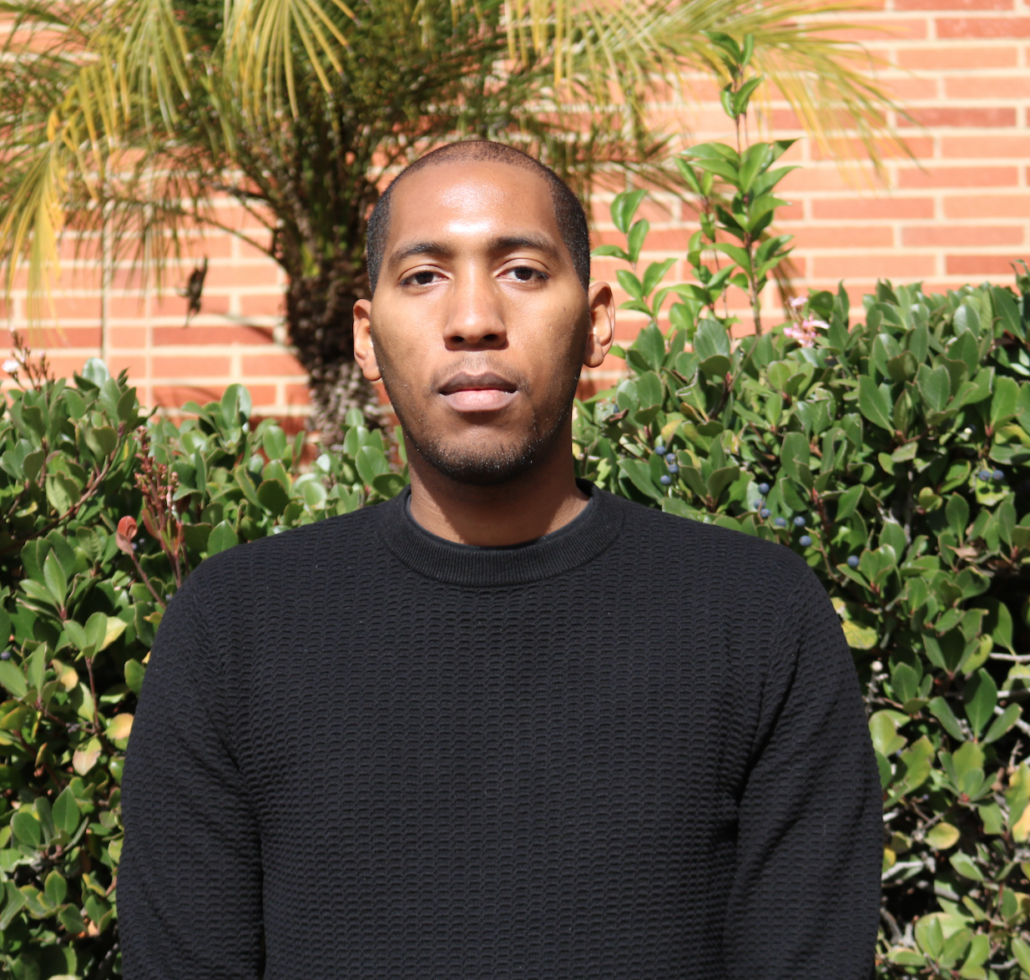
Kyle T. Mays

Kyle T. Mays

· Professor of African American Studies, American Indian Studies, & History and Assoc. Vice Provost of Inclusive Excellence

University of California, Los Angeles · African American Studies

Active 2010–2025

h-index6
Citations144
Papers4522 last 5y
Funding
See your match with Kyle T. Mays — sign in to PhdFit.Sign in

About

Kyle T. Mays is a professor associated with the UCLA Department of African American Studies. His research interests encompass Black Studies, the Black Experience in Professional Sports, Black Feminist Thought, Black Politics, Queer Theory, Pop Culture Studies, the Afterlives of Slavery, Black Joy, and Mutual Aid. His work explores various facets of Black culture, history, and social dynamics, contributing to a deeper understanding of these interconnected areas within the field of African American Studies.

Research topics

  • Political Science
  • Sociology
  • Ecology
  • Gender studies
  • Law
  • Archaeology
  • Geography
  • Epistemology
  • Environmental ethics
  • History
  • Anthropology

Selected publications

  • Dispossession and Its Aftermath

    2025-07-04

    book-chapterOpen access1st authorCorresponding

    To imagine a future for Black and Indigenous solidarity, one must consider the past, present, and future of this relationship, and envision the “sites of Black and Indigenous fugitivity.” This chapter explores how kinship serves as an example of Afro-Indigenous possibility. The move to dismantle Black and Indigenous dispossession requires an understanding of how racial capitalism and settler colonialism have constructed Black and Indigenous people’s experiences as inherently different, thus limiting the imaginary possibilities of their co-revolutionary freedom. Beginning with Indigenous activism in Detroit, Michigan, in the 1970s and 1980s, this chapter explores how Esther Shawboose Mays constructed ideas of belonging and kinship for urban Indigenous youth in a rapidly changing, predominantly African American city. The chapter concludes by exploring how kinship can be used as a speculative tool to visualize a future in the aftermath of settler colonialism and white supremacy.

  • Afro-Indigenous Social Science Methods: Applying an Anticolonial Approach in Detroit, Michigan, as a Case Study

    2025-01-01

    book1st authorCorresponding
  • :<i>Race, Removal, and the Right to Remain: Migration and the Making of the United States</i>

    The Journal of African American History · 2024-03-01

    article1st authorCorresponding
  • Rethinking the “Classic” Red Power Movement

    2024-04-29

    book-chapterSenior author
  • Red Power Timeline

    2024-04-29

    book-chapterSenior author
  • Rethinking the Red Power Movement

    2024-04-29 · 3 citations

    bookSenior author

    Rethinking the Red Power Movement examines Red Power ideology with a focus on its many forms of solidarity with African Americans, the role of gender in shaping the movement, its international expansion, and its current meaning in contemporary activism. The Red Power Movement is often considered the apex of Indigenous activism in the twentieth century. While diverse, the movement is typically told through four actions. Beginning with the occupation of Alcatraz in 1969, followed by the Trail of Broken Treaties in 1972, Wounded Knee in 1973, then culminating with the Longest Walk in 1978, there is a clear jumpstart, middle, and end to the Red Power Movement. Through a chronological approach, this study makes the case that Red Power never died—and neither did Indigenous activism. Instead, it shows how Indigenous peoples found many ways to push forward Indigenous sovereignty and continue to call on the United States to value Indigenous possibilities for justice, freedom, and power. This book is useful for students and scholars interested in twentieth century America, social movements, and the history of Indigenous activism.

  • Introduction

    2024-04-29

    book-chapterSenior author
  • Rethinking the Contexts of Red Power

    2024-04-29

    book-chapterSenior author
  • The Third Wave of Red Power

    2024-04-29

    book-chapterSenior author
  • Conclusion

    2024-04-29

    book-chapterSenior author

Frequent coauthors

Education

  • Ph.D., African American Studies

    University of California, Los Angeles

    2015
  • M.A., African American Studies

    University of California, Los Angeles

    2011
  • B.A., African American Studies

    University of California, Los Angeles

    2009

Awards & honors

  • Finalist, "Best First Book Prize" for the Native American an…
  • Resume-aware match score
  • Save to shortlist
  • AI-drafted outreach

See your match with Kyle T. Mays

PhdFit ranks faculty by your research interests, methods, and publications — grounded in their actual work, not templates.

  • Free to start
  • No credit card
  • 30-second signup