Resume-aware faculty matching

Find professors who actually fit you

Upload your resume. Four AI agents analyze your background, rank the faculty who fit, inspect their recent research, and help you draft outreach — grounded in their actual work, not templates.

Free to startNo credit cardCancel anytime
Top matches Balanced preset
Dr. Sarah Chen
Stanford · Interpretability · NLP
91
Dr. Marcus Holloway
MIT · Robotics · RL
84
Dr. Aisha Okonkwo
CMU · Fairness · HCI
82
Nova · Professor Researcher · re-ranking top 20…
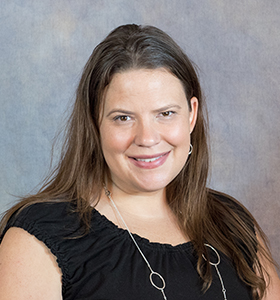
Laura Reynolds

Laura Reynolds

Verified

University of Florida · Soil and Water Sciences

Active 2007–2026

h-index14
Citations1.1k
Papers7757 last 5y
Funding
See your match with Laura Reynolds — sign in to PhdFit.Sign in

About

Laura Reynolds is an Associate Professor in the Department of Soil, Water, and Ecosystem Sciences at the University of Florida, within the Institute of Food and Agricultural Sciences. Her research integrates approaches from population and community ecology, biogeochemistry, and plant physiology to better understand how environmental and individual variability influence the functions and stability of nearshore marine ecosystems. She focuses on issues related to water quality, watershed management, and ecosystem and community ecology, with an emphasis on finding effective solutions to environmental problems impacting Florida. Reynolds is committed to not only documenting and understanding environmental issues but also collaborating on developing practical solutions. Her work includes studying habitat-forming marine plants, seagrass restoration, and the biogeochemistry of sediments influenced by lucinid bivalves. She has contributed to understanding how genetic diversity enhances restoration success and ecosystem services, and her research often emphasizes the importance of ecosystem stability and resilience in coastal environments.

Research topics

  • Agronomy
  • Biology
  • Ecology

Selected publications

  • Incorporating hydrogen in stable isotope analyses improves the ability to track decomposition in marine macrophytes

    Hydrobiologia · 2026-04-06

    articleSenior author
  • Effects of Seagrass-Mediated Soundscape Conservation on Fish Communities, Behaviors, and Communication Spaces

    2026-01-01

    book-chapterOpen access

    Biogenic habitats are hypothesized to attenuate anthropogenic sounds—termed habitat-mediated soundscape conservation—with the potential to mitigate sound pollution impacts. This hypothesis was tested in seagrass meadows near Dangriga, Belize. Recreational boat sounds were reduced more at sites with denser habitats, with the site with the least attached habitat (i.e., seagrasses and attached macroalgae) having nearly 4 dB re 1 μPa less transmission loss compared to the site with the most habitat. Attached habitat consequently led to marginally more favorable conditions in terms of communication space, of particular importance as recreational boat sounds reduced the estimated communication space of representative seagrass-inhabiting taxa by ~75% or more. However, the effects of anthropogenic sounds on fish occurrence and behaviors were less evident. Attached habitat and other environmental factors had minimal influence on fish total abundance, family richness, biting behaviors, and movement during exposure to anthropogenic sounds, with only weak evidence of increased escape behaviors at sites with reduced occurrence, density, height, and diversity of attached habitat. Overall, this work shows that the effects of seagrass-mediated soundscape conservation on fish communities may not be as easily discernable as expected.

  • Habitat-mediated noise pollution reduction in seagrass meadows

    Marine Pollution Bulletin · 2025-10-08 · 1 citations

    articleOpen access

    Despite widespread effects of anthropogenic noise on marine organisms, it is still unclear how the propagation of noise is influenced by habitat degradation. Here, we used field experiments to evaluate habitat-mediated reduction of noise pollution. We conducted habitat characterizations, faunal surveys, and transmission loss measurements at sites in subtropical and tropical seagrass ecosystems, across a range of habitat conditions. We found that recreational boat noise was reduced more at sites with denser habitats. For example, in Belize, a site with almost total coverage of seagrasses and attached macroalgae attenuated noise ~4 dB re 1 μPa more (reducing acoustic energy by ~37 %) over 5 m compared to a site with little habitat structure. Other factors that influenced transmission loss included water depth, dissolved oxygen, and temperature. Neither habitat density, nor any of the other environmental variables that affected transmission loss, influenced the abundance, richness, and composition of seagrass-associated faunal communities. The rich faunal communities found in sparser habitats could thus be disproportionately affected by the increased noise pollution exposure. Our work provides empirical evidence that seagrass habitats play a role in attenuating noise pollution, leading to greater protection for faunal communities and the seagrasses themselves. These findings strengthen our understanding of coastal soundscape-habitat interactions and demonstrate that the ability of seagrasses to dampen noise is a valuable ecosystem function that has so far largely been undervalued. A conceptual visualization of the hypothesized mitigation effects of habitat structure on noise pollution in seagrass ecosystems. • We measured transmission loss in subtropical and tropical seagrass ecosystems. • Denser seagrass habitats dampened boat noise more than sparser habitats. • Other environmental factors, like water depth, also influenced transmission loss. • Habitat-mediated attenuation can help protect faunal communities.

  • ¿Qué son los manglares urbanos?

    EDIS · 2025-11-14

    articleOpen access

    En Florida, el 80 % de los residentes viven entre 10 millas de la costa. Como resultado, los hábitats costales, como los manglares, han sido significativamente alterados por las actividades humanas. Los manglares urbanos son manglares ubicados en ciudades y zonas residenciales. Por lo tanto, los manglares urbanos pueden ser altamente impactados por la actividad humana, pero a la misma vez siguen proporcionando importantes servicios ecsistémicos, ó beneficios para la sociedad. De hecho, por su ubicación, mas personas pueden benificarse de estos manglares urbanos que de los manglares prístinos, que a menudo se encuentren en áreas protegidas. El siguiente documento describe el papel de los mangles en areas urbanos. Este documento está dirigido a los residentes costales, los gestores de recursos costeros, y los planificadores urbanos que quieren aprender sobre los manglares y su importanica en las ciudades.

  • Tropicalization Interacts with Other Human Stressors to Mediate the Diets of Expanding and Resident Herbivores

    Estuaries and Coasts · 2025-05-21 · 2 citations

    articleSenior author
  • What is blue carbon?

    EDIS · 2025-03-03 · 1 citations

    articleOpen accessSenior author

    Vegetated coastal ecosystems, including mangroves, salt marshes, and seagrasses, store large amounts of carbon in plant biomass and underlying sediments, known as blue carbon. There is increasing interest among policymakers and natural resource managers in quantifying and monetizing the carbon stored in blue carbon ecosystems. However, carbon cycling in the marine and coastal environment is complex. This complexity and the logistical issues in accurately measuring blue carbon limit our ability to manage and restore blue carbon ecosystems as nature-based tools for climate change mitigation. This publication provides a general introduction to the processes that affect net carbon storage in blue carbon habitats and addresses implications for natural resource managers interested in quantifying net carbon storage.

  • Sediment stability is optimized by manipulating planting design during coastal marsh establishment

    Scientific Reports · 2025-06-05 · 4 citations

    articleOpen access

    Seaside communities increasingly harness the shoreline protection functions of coastal ecosystems by constructing nature-based infrastructure. Practitioners often install vegetation into these "living shorelines" because coastal plants have traits that limit erosion by attenuating waves and increasing soil shear strength. However, failure is common during plant establishment, highlighting a need for planting designs that enhance short-term sediment stability. Here we combined hydrodynamic modelling with mesocosm experiments to assess planting approaches for the marsh grass Spartina alterniflora. The model compared random and regular planting arrangements containing plant clumps of different sizes and densities. The experiments evaluated the influence of plant collection source, arrangement, and sediment environment on plant traits. Model results showed random arrangements outperform regular arrangements, reducing areas of high-velocity flow. Large-diameter, high-stem-density Spartina clumps attenuated flow better than small-diameter clumps, even when site-wide vegetation coverage was identical. Experiments revealed multiple factors that influence the diameter and density of clumps, including plant source, sediment organic matter, and plant spatial arrangement. Some plant sources had larger diameters and more biomass than others, yet relative performance of sources varied with time and environment; thus, planting multiple sources would increase the likelihood that high-performers are included in variable and often-unexamined planting sites. Furthermore, a clumped planting arrangement was most effective for generating large, dense clumps that facilitate sediment stability.

  • Temperature Drives Seagrass Recovery Across the Western North Atlantic

    Global Change Biology · 2025-04-01 · 2 citations

    articleOpen access

    Climate-driven shifts in herbivores, temperature, and nutrient runoff threaten coastal ecosystem resilience. However, ecological resilience, particularly for foundation species, remains poorly understood due to the scarcity of field experiments conducted across appropriate spatial and temporal scales that investigate multiple stressors. This study evaluates the resilience of a widespread tropical marine plant (turtlegrass) to disturbances across its geographic range and examines how environmental gradients in (a)biotic factors influence recovery. We assessed turtlegrass resilience by following recovery rates for a year after a simulated pulse disturbance (complete above- and belowground biomass removal). Contrary to studies in temperate areas, higher temperature generally enhanced seagrass recovery. While nutrients had minimal individual effects, they reduced aboveground recovery when combined with high levels of herbivore grazing (meso and megaherbivore). Belowground recovery was also affected by combined high levels of nutrients and grazing (megaherbivores only). Light availability had minimal effects. Our results suggest that the resilience of some tropical species, particularly in cooler subtropical waters, may initially benefit from warming. However, continuing shifts in nutrient supply and changes in grazing pressure may ultimately serve to compromise seagrass recovery.

  • Seagrass Species Identity Drives Leaf Litter Decomposition Across a Naturally Occurring Phosphorus Gradient

    Estuaries and Coasts · 2025-06-12 · 1 citations

    articleOpen accessSenior author

    Abstract Decomposition is one of several controls on carbon storage in seagrass meadows, but the relative importance of environmental conditions and seagrass species identity in driving decomposition is unclear. We first investigated direct environmental effects on decomposition by measuring percent mass lost of standardized litter, green and rooibos (red) tea, incubated in meadows spanning a naturally occurring phosphorus gradient for up to 2 years; we then investigated indirect effects by measuring percent mass lost of seagrass leaf litter sourced from these meadows and incubated in a single location for up to 2 months. We tested the effect of species identity on decomposition by incubating litter from two seagrass species, the larger-bodied Thalassia testudinum and the smaller-bodied Halodule wrightii . We found evidence for both direct and indirect environmental effects on decomposition: the green tea decay rate was lowest at the phosphorus-limited site (0.011 d −1 ), and T. testudinum litter decay rate was lowest for leaves collected from the phosphorus-limited site (0.017 d −1 ). Species identity had a stronger effect on leaf litter decomposition, where mean leaf litter decay rates were consistently greater for T. testudinum ( k = 0.022 ± 0.002 SE) compared to H. wrightii ( k = 0.010 ± 0.001 SE). This finding was unexpected because T. testudinum meadows are typically associated with higher sediment carbon stocks than meadows dominated by other species and suggests that T. testudinum may promote carbon storage by producing above- and belowground litter in quantities that accrue as sediment carbon despite fast initial leaf litter decay rates, or through other mechanisms, such as particle trapping by the seagrass canopy.

  • Steps to Connecting Floridians to Living Shorelines

    EDIS · 2025-12-22

    articleOpen access

    The goal of this publication is to provide a roadmap of UF/IFAS and internet-accessible resources to living shorelines that will help coastal property owners or natural resource practitioners focused on coastal management. This information applies to the implementation of living shorelines on both private and managed lands. Across Florida, living shorelines are becoming a frequently used management tool for shoreline protection. Coastal armoring, in the form of seawalls, bulkheads, and concrete riprap, create an unnatural barrier to natural processes and can exacerbate sediment loss. As an alternative, living shorelines are shoreline stabilization methods that use planted vegetation and/or oyster reefs, sometimes in combination with other structures, to protect coastal properties. To most effectively plan a living shoreline, knowing when and where to start can be difficult. This publication maps out the broad steps for developing a living shoreline from start to finish.

Frequent coauthors

Labs

  • Coastal Ecology LaboratoryPI

Education

  • PhD, Department of Environmental Sciences

    University of Virginia

    2012
  • Resume-aware match score
  • Save to shortlist
  • AI-drafted outreach

See your match with Laura Reynolds

PhdFit ranks faculty by your research interests, methods, and publications — grounded in their actual work, not templates.

  • Free to start
  • No credit card
  • 30-second signup