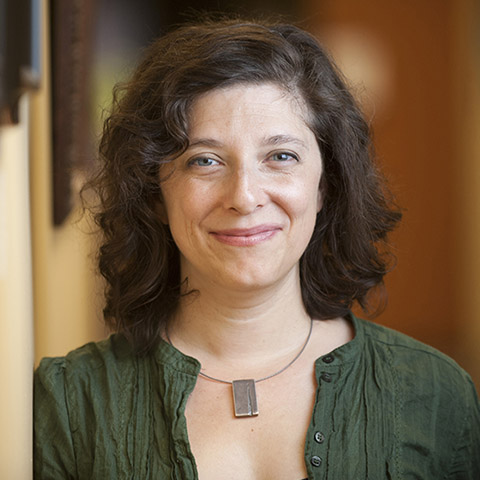
Lauren Martin
· Affiliate FacultyVerifiedUniversity of Minnesota · Doctor of Philosophy (PhD) in Public Affairs
Active 1984–2025
About
Lauren Martin, PhD, is an associate professor in the School of Nursing at the University of Minnesota. She has a background in anthropology and collaborates with partners on action research concerning transactional sex, trafficking, and community well-being. Lauren emphasizes putting her scholarship into action through policy, prevention, and program development, with her research rooted in strengths, meaning-making, and experience. She has nearly 10 years of experience as the director of research at the University of Minnesota’s Urban Research and Outreach-Engagement Center (UROC). In 2016, she received the University of Minnesota's President’s Engaged Scholar award. Her personal research mission is to co-create empirical knowledge aimed at fostering effective social change for justice, equity, and wellness for all.
Research topics
- Computer Science
- Political Science
- Artificial Intelligence
- Sociology
- Engineering
- Engineering ethics
- Social psychology
- Public relations
- Economics
- Mathematics
- Psychology
- Knowledge management
- Operations research
- Mathematical economics
- Mathematical optimization
Selected publications
Regular and Young Investigator Award Abstracts · 2025-11-01
articleOpen accessFigure 2 Uniform Manifold Approximation and Projection (UMAP) of the phenotypic distribution of tumor-reactive T cells.Tumorreactive TCRs expressed genes associated with T cell activation and exhaustion, including the previously characterized tumor-reactive T cell signature markers CXCL13 and ENTPD1
Cancer Immunology Research · 2025-02-23
articleAbstract The success of T cell therapies in solid tumors is limited by the immunosuppressive tumor microenvironment (TME). The secretion of metabolites in the TME directs the immune landscape, acting as signaling molecules regulating immune responses and reducing the efficacy of cell therapies. Succinate, a mitochondrial metabolite, accumulates in the solid tumor and is secreted into the interstitial space of the TME. Mutations in the succinate processing gene, succinate dehydrogenase (Sdh), occur in a range of solid tumors, leading to further accumulation and secretion. Studies revealed that tumor-derived succinate promotes suppressive macrophages via activation of the membrane-bound succinate receptor (SUCNR1). Regulatory T cell (Tregs) are a central immunosuppressive component of the TME, and high Treg numbers are associated with reduced anti-tumor responses, reduced efficacy of TCR therapies and poor clinical outcomes. Therefore, there is an imminent clinical need to develop synergistic therapies that specifically target Tregs in the TME to successfully overcome the barriers of infiltration and function of antigen-specific T cells. We hypothesized that succinate drives immunosuppression in the solid tumor by promoting Treg proliferation and function, leading to reduced anti-tumor responses to antigen-specific T cells. Consistent with this hypothesis, we identified that the SUCNR1 is more highly expressed on Tregs than CD4+ non Tregs and CD8+ T cells, and SUCNR1 is increased on tumor-infiltrating (TI) Tregs in human melanoma tumors. Using the NSG mouse model we screened a range of solid tumors and revealed that high succinate tumors have high TI-Tregs, and the Sdh-deficient tumors selectively enhance Treg expansion. Moreover, SUCNR1+ TI-Tregs have enhanced Granzyme B, a marker of suppression, and GITR, a marker of proliferation. In vitro studies identify the succinate-SUCNR1 axis mediates expansion of Tregs and an enhanced immunosuppressive profile with increased levels of IL-10, IL-35 and TGFb, an effect dampened by blocking the SUCNR1 using a small molecule antagonist. We propose the activation of the SUCNR1 to be a mechanism Tregs use to adapt and proliferate in the TME, demonstrating the clinical relevance of metabolites in anti-tumor immunity and T cell function. Targeting Tregs in the TME is an attractive therapeutic strategy and regulating the prolfieration and function of Tregs has the potential to increase the efficacy of effector T cells, thus improving anti-tumor responses by removing a critical suppressive barrier. Taken together, these findings identify a previously unknown molecular regulator of Tregs, providing a novel therapeutic target for enhancing therapies in solid tumors and laying a framework for innovative translational therapeutic development. Citation Format: Sinéad Kinsella, Erin Kirsche, Ian Thompson-Hernandez, Menna Hailemariam, Lauren E Martin, Yuta Asano, Colton W Smith, Kayla Hopwo, Francesco Mazziotta, Aude G Chapuis. Elevated tumor secreted metabolites direct immunosuppression by promoting Treg proliferation in the solid tumor [abstract]. In: Proceedings of the AACR IO Conference: Discovery and Innovation in Cancer Immunology: Revolutionizing Treatment through Immunotherapy; 2025 Feb 23-26; Los Angeles, CA. Philadelphia (PA): AACR; Cancer Immunol Res 2025;13(2 Suppl):Abstract nr B060.
Caring for People Who Have Experienced Human Trafficking Requires Connection
Journal of Forensic Nursing · 2025-07-01
article1st authorCorrespondingJournal of College Science Teaching · 2025-09-17
articleRealistic Computational Modeling of Human Trafficking Requires Lived Experience Experts
Journal of Human Trafficking · 2025-09-29
articleJournal of Human Trafficking · 2025-08-07 · 1 citations
articleResearch Square · 2025-04-21
preprintOpen accessSchool Nurse Perspectives on Interventions Supporting Youth at Risk for or Experiencing Sex Trading
Journal of Forensic Nursing · 2025-04-29
articleSenior authorBACKGROUND: School nurses work in interprofessional teams to identify and care for youth involved in commercial sex trading. However, the school nurse role in the care of these youth is not well documented despite evidence suggesting youth who trade sex are attending U.S. public schools. STUDY AIM: To describe licensed school nurses' (LSNs) perspectives on interventions implemented to support youth who trade sex in Minnesota. METHODS: Twenty-one LSNs participated in an online focus group discussing their role in the support of youth who trade sex. Thematic analysis was used to identify and synthesize details about the interventions described. RESULTS: Four themes were identified: independent nursing interventions, collaborative interventions, barriers to intervention , and suggested support for improved intervention . CONCLUSIONS AND IMPLICATIONS: School nurses rely on developing positive relationships with students, school staff, and community partners to intervene with youth who trade sex. Such relationships can facilitate identification of sexually exploited youth and may promote trauma-informed care when youth seek care from forensic nurses. Collaboration between forensic and school nurses is a promising yet underutilized school-based intervention for youth who trade sex.
Help-Seeking Among Children Impacted by Commercial Sexual Exploitation: A Scoping Review
Trauma Violence & Abuse · 2024-05-28 · 7 citations
reviewThis scoping review aims to summarize current research on help-seeking behaviors and patterns among children who have experienced commercial sexual exploitation of children (CSEC) victimization and/or are at high risk of exploitation. Because the literature on help-seeking specific to CSEC victimization is limited, the current review was expanded to summarize findings from help-seeking research for children who have experienced harms that often co-occur with CSEC, such as maltreatment and homelessness. The authors searched three large article databases (PsycInfo, Ovid MEDLINE, and Web of Science) for articles that were (a) empirical; (b) measured or used the term "help-seeking" in their framing and/or results; (c) included children between the ages of 12 and 18; (d) primarily focused on children from the United States; (e) published in English. Ultimately, 22 articles met all inclusion criteria and were included in the final review. Results suggest that cisgender white females are the most likely to seek help, followed by sexual and gender minority children. Cisgender male children were the least likely to engage in help-seeking behaviors. Universally, children were more likely to engage in informal help-seeking rather than formal help-seeking, with younger children being more likely to reach out to parents and older children more likely to reach out to friends. Importantly, ethnically diverse children were under-represented, leading to limited information about how and why these children seek help. Implications for help-seeking by children impacted by commercial sexual exploitation are discussed, providing guidance for programming and research related to CSEC prevention.
Journal of Transcultural Nursing · 2024-09-09 · 3 citations
articleINTRODUCTION: Gender-based violence (GBV) poses a significant threat to women with refugee status. METHODOLOGY: Following our analysis based on a previously published scoping review, we introduce a conceptual framework based on postcolonial feminist theory to inform research, policy, and practice that addresses the unique risk factors faced by Somali women with refugee status experiencing GBV and encountering barriers to care. RESULT: The framework synthesizes existing literature, incorporates findings from previous work with Somali women, and emphasizes the importance of understanding structural and sociocultural factors influencing help-seeking. DISCUSSION: By developing women-centered interventions, health care and social service institutions can play a pivotal role in addressing GBV for Somali women with refugee status.
Recent grants
EAGER: ISN: Modeling Operations of Human Trafficking Networks for Effective Interdiction
NSF · $329k · 2018–2020
Frequent coauthors
- 7 shared
Thomas C. Sharkey
Clemson University
- 7 shared
Francesco Mazziotta
Johns Hopkins Medicine
- 6 shared
Emily Singerhouse
University of Minnesota
- 6 shared
Kayse Lee Maass
Northeastern University
- 5 shared
Mary O. Hearst
University of Minnesota
- 5 shared
Tzu-Hao Tang
Fred Hutch Cancer Center
- 5 shared
Sinéad Kinsella
Fred Hutch Cancer Center
- 5 shared
Kelle Barrick
RTI International
Education
PhD, Anthropology
New School for Social Research
Awards & honors
- University of Minnesota's President’s Engaged Scholar award…
- Humphrey School of Public Affairs Hubert H. Humphrey Public…
- Resume-aware match score
- Save to shortlist
- AI-drafted outreach
See your match with Lauren Martin
PhdFit ranks faculty by your research interests, methods, and publications — grounded in their actual work, not templates.
- Free to start
- No credit card
- 30-second signup