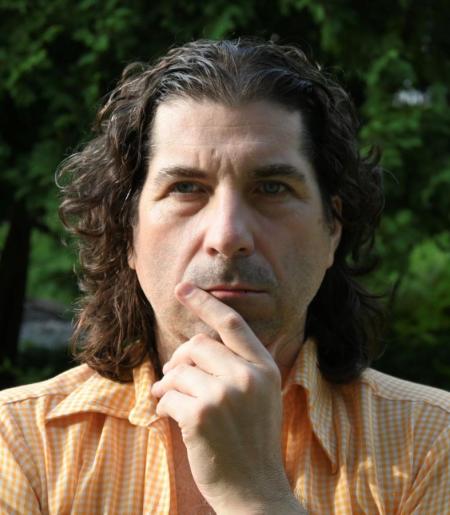
Laurent Dubreuil
· Distinguished Professor of Arts and Sciences Professor of French, Francophone & Comparative LiteratureCornell University · Comparative Literature
Active 1999–2025
About
Laurent Dubreuil is a Distinguished Professor of Arts and Sciences and a Professor of French, Francophone & Comparative Literature at Cornell University. His academic background includes Agrégation in French & Comparative Literature from the École normale supérieure in Paris, a Doctorate in French, Francophone & Comparative Literature from the University of Bordeaux, and a Doctorate in Philosophy & Women Studies from the University of Paris. Dubreuil's scholarly work explores the boundaries of thought, language, and artistic creation, with particular attention to the powers and nature of the extraordinary and of artistic expression. He has authored approximately fifteen scholarly books and five literary volumes, engaging with topics such as haunting, friendship, colonialism, literariness, disciplinarity, cognition, language, animals, politics, poetics, modernity, artificial intelligence, minds, and plants. His research primarily employs a comparative and theoretical approach, working across historical, cultural, and linguistic boundaries, and often involving experiments or experiences with non-human agents like great apes and computers. At Cornell, Dubreuil serves as Director of Graduate Studies in the Department of Romance Studies, is involved in the Department of Comparative Literature and the Cognitive Science Program, and is the founding Director of the Humanities Lab. He also holds the position of IWLC Senior International Chair of Transcultural Theory at Tsinghua University in Beijing and has held visiting appointments across Africa, Europe, Asia, and North America. His work extends into public humanities, contributing articles and op-eds to outlets such as Les cahiers du cinema, Harper's Magazine, Le Monde, and The Wall Street Journal. Dubreuil's upcoming publications include a book on Humanities in the era of AI, a volume on transcultural comparisons in Chinese, and a reflection on race and politics co-authored with Norman Ajari. He leads several research projects under the Humanities Lab, including studies on human and AI poetry, the semantics of indigeneity in French, and the relationship between language and painting in bonobos. His research focus encompasses literary theory and philosophy, poetics, epistemology, politics, metaphysics, and the artistic experience, with a linguistic emphasis on French, ancient Greek, Latin, German, English, Italian, and additional interests in Haitian Creole, Chinese, and Spanish. Dubreuil's work also involves visual arts, cinema, and interdisciplinary approaches bridging sciences and humanities.
Research topics
- Computer Science
- Artificial Intelligence
- Art
- Philosophy
- Literature
- Art history
Selected publications
Au-delà du principe d’identité
HAL (Le Centre pour la Communication Scientifique Directe) · 2025-12-11
otherOpen access1st authorCorrespondingConférence
2025-01-01
articleOpen accessJacob A. Matthews, Laurent Dubreuil, Imane Terhmina, Yunci Sun, Matthew Wilkens, Marten Van Schijndel. Proceedings of the 2025 Conference of the Nations of the Americas Chapter of the Association for Computational Linguistics: Human Language Technologies (Volume 1: Long Papers). 2025.
Beyond Social Injunctions and Computerized Communication
Romanic Review · 2023-12-01
article1st authorCorrespondingResearch Article| December 01 2023 Beyond Social Injunctions and Computerized Communication Laurent Dubreuil Laurent Dubreuil Cornell University Search for other works by this author on: This Site Google Romanic Review (2023) 114 (3): 517–523. https://doi.org/10.1215/00358118-10807002 Views Icon Views Article contents Figures & tables Video Audio Supplementary Data Peer Review Share Icon Share Facebook Twitter LinkedIn Email Tools Icon Tools Permissions Cite Icon Cite Search Site Citation Laurent Dubreuil; Beyond Social Injunctions and Computerized Communication. Romanic Review 1 December 2023; 114 (3): 517–523. doi: https://doi.org/10.1215/00358118-10807002 Download citation file: Zotero Reference Manager EasyBib Bookends Mendeley Papers EndNote RefWorks BibTex toolbar search Search Dropdown Menu toolbar search search input Search input auto suggest filter your search Books & JournalsAll JournalsRomanic Review Search Advanced Search epistemology, artificial intelligence, comparison, determinism Copyright © 2023 by the Trustees of Columbia University in the City of New York2023 You do not currently have access to this content.
Images >> Jean-Xavier Renaud
diacritics · 2022
1st authorCorresponding- Computer Science
- Art
- Artificial Intelligence
Abstract: Renaud, the illuminator. Renaud, the chronicler. “JXR” is not exactly recording facts and documents, although he often paints on the basis of “found images,” taking digital photos he collects from websites as a basis for his own work. He is not an archivist either, although he uses collage and routinely incorporates pictures or logotypes into his digital drawings. The chronicling work remains. In Renaud’s oeuvre, the times are being shown in all their glorious stupidity. An optimist nevertheless, the artist exhibits through the grotesque dehiscence of the ordinary the raw nature of survival. By his alliance of artistic métier and critical force, of iconoclastic crudeness and reflection on society, of laughter and precision, Renaud’s art is undoubtedly related to that of Honoré Daumier, George Grosz, or Philip Guston. JXR has in common with all three painters that he excels at displaying the ridicule of adventitious grandeur and the vulgarity of the norm.
Hermann eBooks · 2022-12-28
book-chapter1st authorCorrespondingNineteenth-century French studies · 2022-03-01
article1st authorCorrespondingWith a focus on a “French” corpus ranging from the 1850s to the 1900s, this essay explores different literary theorizations of race through poetry. From Vigny to Lautréamont and Vivien, the ancient syntagm “race of the poets” is often revived to build the mythology of what Verlaine would call the poète maudit. There, such a poetic “race” may remain structurally unrelated to the contemporary conceptualization developed by Gobineau for instance (or, conversely, by Firmin), even with Baudelaire, whose work is otherwise linked to the colonial experience. While the existence of a link between the assertion of racial belonging and poetic production cannot be determined a priori, it sometimes leads to intricate, multifold, and meta-literary statements about ethnicity, nationhood, and creation. Besides Rimbaud’s “Mauvais sang,” we describe such reflexive constructs in Verhaeren’s work and in the volumes published by the Haitian writer Paul Lochard, whose poetry is interpreted anew. (In French)
Les mots anglais : « le » care
Humanisme · 2021-01-30
article1st authorCorrespondingPolitique identitaire : regards croisés U.S.A. / France
Humanisme · 2021-08-30
article1st authorCorrespondingCités · 2020-05-25
article1st authorCorrespondingFordham University Press eBooks · 2020-06-22
book1st authorCorresponding
Frequent coauthors
- 58 shared
Cory Browning
DePaul University
- 57 shared
Leonard Lawlor
Pennsylvania State University
- 57 shared
Arne De Boever
- 57 shared
Rosi Braidotti
University of Wollongong
- 57 shared
Paul Patton
- 57 shared
Christoph Menke
Carl Zeiss (Germany)
- 57 shared
Kelly Oliver
- 57 shared
Antonio Negri
- Resume-aware match score
- Save to shortlist
- AI-drafted outreach
See your match with Laurent Dubreuil
PhdFit ranks faculty by your research interests, methods, and publications — grounded in their actual work, not templates.
- Free to start
- No credit card
- 30-second signup