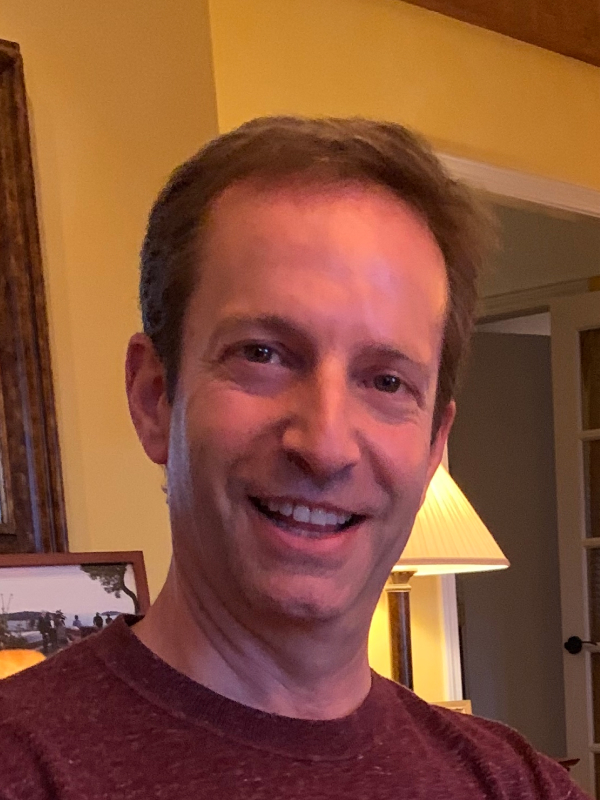
Lawrence D. Frank
· Professor, Urban Studies and PlanningVerifiedUniversity of California, San Diego · Urban Studies and Planning
Active 1949–2026
About
Lawrence D. Frank specializes in the interaction between land use, travel behavior, air quality, and health; and in the energy use and climate change impacts of urban form policies. He is recognized as a 'walkability pioneer' and was among the first in the early 1990s to quantify and publish on the connections between the built environment, active transportation, and health. He coined the term 'walkability,' and his work has contributed to the development of WalkScore. His research has been cited over 59,000 times according to Google Scholar. Dr. Frank is the top-cited scholar in transport policy and holds the second-highest H-Index among urban planning faculty globally. Since 2014, he has been ranked by Clarivate as being in the top 1% of highly cited researchers in the social sciences. He has published over 200 peer-reviewed articles and co-authored works such as 'Heath and Community Design' and 'Urban Sprawl and Public Health,' mapping out the emerging field at the nexus of built and natural environments and health. Dr. Frank has led over $20 million in primary research and regularly consults with government agencies, NGOs, and decision makers to support their ability to predict the impacts of land use and transportation policies on travel, greenhouse gases, chronic disease, and the economy.
Research topics
- Medicine
- Computer Science
- Environmental health
- Engineering
- Transport engineering
- Gerontology
- Physical medicine and rehabilitation
- Virology
- Biology
- Business
- Civil engineering
- Physical therapy
- Psychology
- Ecology
- Cartography
- Internal medicine
- Geography
- Demography
Selected publications
Occupation type, home and work environments, and physical activity and sedentary behaviour
Journal of Transport & Health · 2026-01-28 · 1 citations
articleSenior authorCities · 2025-05-03 · 2 citations
articleOpen accessEvaluating the performance of spatial indicators of destination accessibility for physical activity research: a comparative international analysis
Cities · 2025-09-08 · 1 citations
articleOpen accessSenior authorEnvironmental Research · 2025-10-09
articleSocial Science & Medicine · 2025-04-03 · 2 citations
articleOpen accessSenior authorBACKGROUND: Marginalized populations in the U.S. often live in dense urban areas, which could promote active travel and health. However, while compactness can support walkability, it can also create exposure to pollution, noise, injury risk, and urban heat islands. These exposures may be higher for marginalized groups, creating systematic "walkability-related" risks. OBJECTIVES: We evaluated relationships between walkability, health-related environmental exposures, and social vulnerability, asking: (1) How are sociodemographic groups sorted across space with respect to walkability? (2) Do the environmental health correlates of walkability vary by social vulnerability? METHODS: , pedestrian fatalities, noise, and tree coverage. We used multilevel mixed-effects regressions to predict (1) walkability as a function of vulnerability and (2) each environmental exposure as a function of the cross-tabulation between walkability and vulnerability. RESULTS: and noise levels and lower tree coverage. These differences were even more pronounced among block groups with low walkability, suggesting pervasive inequities. DISCUSSION: While marginalized groups often live in more walkable places, the "high" walkability to which they are exposed carries greater environmental risks than for privileged populations. Our findings illustrate the importance of mitigating environmental burdens that could dampen the health benefits of walkability in marginalized communities.
American Journal of Preventive Medicine · 2025-12-15
articleOpen access1st authorCorrespondingREPRINT OF: Obesity Relationships with Community Design, Physical Activity, and Time Spent in Cars
American Journal of Preventive Medicine · 2025-11-13
articleOpen access1st authorCorrespondingFindings · 2024-12-30 · 1 citations
articleOpen accessDespite the growing number of older adult drivers, knowledge on factors influencing their driving safety from device-collected behavior data in naturalistic driving environment is limited. This study utilizes GPS tracked driving data of 1,200 older adults in the US to examine the link between home neighborhood environment, driving exposure, and driving safety behaviors. Structural equation model results show that urban older adults exhibited more frequent events of very high-speed driving (>80 mile/h, 130 km/h), rapid decelerations, and higher right-to-left turn ratios than their suburban and rural counterparts. This is partially explained by differences in driving exposure (i.e., more trips on high-speed roads, during nighttime, and shorter distances). Notably, living in neighborhoods with higher auto-oriented road densities and more nighttime destinations contribute substantially to unsafe driving behaviors.
Crime-related perceptions and walking for recreation inside and outside one's home neighborhood
Health & Place · 2024-07-31 · 8 citations
articleOpen access2024-01-09
book-chapterSenior authorThe built environments in which individuals live, work, and spend their time, are hypothesized to influence rates of obesity, and overall health, through two main interconnected pathways: individual behaviors and environmental exposures. This chapter explores the role of the behaviors (physical activity, diet, and social interaction) and the exposures (air pollution, noise, greenspaces, heat, and crime and safety). This chapter also summarizes the current understanding of the relationship between these built environment features, such as neighborhood walkability, transportation networks, and park access, and rates of obesity in the population. To date much of this work has examined aggregate neighborhood-level exposures; however, additional methods are currently being applied to measure and quantify individual interaction and exposure to built environment features more accurately.
Frequent coauthors
- 279 shared
James F. Sallis
- 242 shared
Brian E. Saelens
Seattle Children's Hospital
- 165 shared
Terry L. Conway
University of California, San Diego
- 143 shared
Kelli L. Cain
Human Longevity (United States)
- 104 shared
Karen Glanz
University of Pennsylvania
- 81 shared
Jacqueline Kerr
- 66 shared
Sherry Ryan
San Diego State University
- 57 shared
Abby C. King
Stanford University
Labs
- Resume-aware match score
- Save to shortlist
- AI-drafted outreach
See your match with Lawrence D. Frank
PhdFit ranks faculty by your research interests, methods, and publications — grounded in their actual work, not templates.
- Free to start
- No credit card
- 30-second signup