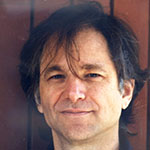
Leonard M Adleman · University of Southern California · PhdFit
Resume-aware faculty matching
Find professors who actually fit you
Upload your resume. PhdFit's six research agents compare your background with faculty profiles, recent publications, lab focus, and outreach opportunities, then rank professors with evidence you can review.
Resume-aware matchingEvidence from recent researchOutreach drafts included
Advisor Match Brief Resume uploaded
Resume signals5 found
NLPHCIFairnessGraph MLPyTorch
Six-agent analysisRunning
Axel · Candidate AnalystResume parsed
Nova · Professor ResearcherRecent papers
Echo · Match ExplainerEvidence linked
Atlas · Strategy AdvisorFit ranked
Lyra · Outreach WriterDraft queued
Juno · Meeting Prep CompilerNext step ready
SC
Dr. Sarah Chen
Stanford · NLP & interpretability
91
fit
Fairness + NLP projects overlap with her recent work.
Strong methods fit: model evaluation and interpretability.
Clear outreach angle for current trustworthy AI research.
Outreach angle
Ask how her lab is extending interpretability methods into fairness audits for real-world AI systems.
Leonard M Adleman
· Henry Salvatori Chair in Computer Science and Distinguished Professor of Computer Science
University of Southern California · Thomas Lord Department of Computer Science
Professor Leonard M Adleman holds the Henry Salvatori Chair in Computer Science and is a Distinguished Professor of Computer Science at the University of Southern California. He is also a Professor of Molecular Biology by courtesy. His research areas encompass a broad range of topics including algorithms, computational complexity, computer viruses, cryptography, DNA computing, immunology, molecular biology, number theory, quantum computing, and evolution. His work integrates principles from computer science and molecular biology, contributing to advancements in cryptography and DNA computing. As a prominent figure in his field, Professor Adleman has made significant contributions to the understanding of computational processes and their biological counterparts, bridging the gap between theoretical computer science and molecular biology.
Living things, computers, societies, and even books are part of a grand evolutionary struggle to survive. That struggle shapes nature, nations, religions, art, science, and you. What you think, feel, and do is determined by it. Darwinian evolution does not apply solely to the genes that are stored in DNA. Using the insights of Alan Turing and Richard Dawkins, we will see that it also applies to the memes we store in our brains and the information we store in our computers. The next time you run for president, fight a war, or just deal with the ordinary problems humans are heir to, perhaps this book will be of use. If you want to understand why and when you will die, or if you want to achieve greatness this book may help. If you are concerned about where the computer revolution is headed, this book may provide some answers.
In the years since Alan Turing, and following his lead, computer scientists advanced their understanding of computational phenomena by developing a very specialized, original and penetrating way of rigorous thinking. Now it turns out that this "algorithmic" way of thinking can be applied productively to the study of important phenomena outside computation proper (examples: the cell, the brain, the market, the universe, indeed mathematical truth itself). This development is an exquisite unintended consequence of the fact that there is latent computation underlying each of these phenomena, or the ways in which science studies them.
SIAM Journal on Computing · 2009-01-01 · 27 citations
article1st authorCorresponding
Self-assembly, the process by which objects autonomously come together to form complex structures, is omnipresent in the physical world. Recent experiments in self-assembly demonstrate its potential for the parallel creation of a large number of nanostructures, including possibly computers. A systematic study of self-assembly as a mathematical process has been initiated by L. Adleman and E. Winfree. The individual components are modeled as square tiles on the infinite two-dimensional plane. Each side of a tile is covered by a specific “glue, ” and two adjacent tiles will stick iff they have matching glues on their abutting edges. Tiles that stick to each other may form various two-dimensional “structures ” such as squares and rectangles, or may cover the entire plane. In this paper we focus on a special type of structure, called a ribbon: a non-self-crossing rectilinear sequence of tiles on the plane, in which successive tiles are adjacent along an edge and abutting edges of consecutive tiles have matching glues. We prove that it is undecidable whether an arbitrary finite set of tiles with glues (infinite supply of each tile type available) can be used to assemble an infinite ribbon. While the problem can be proved undecidable using existing techniques if the ribbon is required to start with a given “seed ” tile, our result settles the “unseeded ” case, an open problem formerly known as the “unlimited infinite snake problem.” The proof is based on a construction,
Journal of the American Chemical Society · 2005-11-24 · 96 citations
articleSenior author
We designed a molecular complex, the double-double crossover, consisting of four DNA double helices connected by six reciprocal exchanges. Atomic force micrographs suggest that double-double crossover complexes self-assemble into high-density, doubly connected, two-dimensional, planar structures. Such structures may be suitable as substrates for the deposition of nanomaterials in the creation of high-density electrical and quantum devices. We speculate about a modified double-double crossover complex that might self-assemble into high-density, doubly connected, three-dimensional structures.
Journal of the American Chemical Society · 2004-10-08 · 125 citations
articleSenior author
We have designed and constructed DNA complexes in the form of triangles. We have created hexagonal planar tilings from these triangles via self-assembly. Unlike previously reported structures self-assembled from DNA, our structures appear to involve bending of double helices. Bending helices may be a useful design option in the creation of self-assembled DNA structures. It has been suggested that DNA self-assembly may lead to novel materials and efficient computational devices.