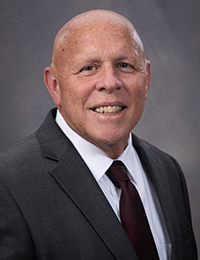
LeRoy A. Marklund
· Assistant Dean for Undergraduate Nursing Education - McAllen, Clinical Associate ProfessorVerifiedTexas A&M University · Nursing
Active 2002–2022
About
LeRoy A. Marklund is associated with the Texas A&M Health Center of Excellence in Forensic Nursing, which is part of the Texas A&M College of Nursing. The center is dedicated to serving vulnerable populations by translating evidence-based research into practice, supporting sexual assault nurse examiners, and increasing access to trauma-informed care for victims and perpetrators of violence. The center was formally approved in 2019 and is the first state- and federally funded center of its kind in Texas, focusing on advancing forensic nursing education, outreach, and research. The center's mission is to improve health outcomes for those affected by violence and disaster through interdisciplinary, trauma-informed strategies, research, academic programs, continuing education, and outreach. Its goals include educating nurses to provide high-quality care, collaborating with stakeholders for holistic responses to violence, advancing forensic nursing knowledge through research and innovation, and developing nurse leaders with graduate education. The center also collaborates on the Texas Evidence Collection Protocol, a standardized guide for healthcare professionals across Texas, emphasizing its role in forensic nursing practice and education.
Research topics
- Political Science
- Business
- Medical emergency
- Nursing
- Medicine
- Family medicine
- Virology
Selected publications
Educational communications and technology: issues and innovations · 2022-01-01 · 1 citations
book-chapterOpen accessAbstract Interprofessional education is required by all athletic training, medical, pharmacy, nursing, and public health students at Texas A&M University. One such opportunity for collaborative training has been Disaster Day, the nation’s largest student-led interprofessional emergency response simulation. This annual training of 500–800 students takes place on a single day, in two 4-h sessions, at a designated site on campus. Due to COVID-19, the simulation could not be offered in-person in 2020, so the organizers looked for alternative solutions. We opted to use digital games, which have been proposed and used for formal and informal education for several years. While there have been games specifically developed for interprofessional training, none of those games were readily available for use by other institutions, nor is their focus on disaster response. In this chapter, we provide a detailed analysis of how an interdisciplinary team of health professions educators and game designers met interprofessional learning requirements while maintaining student engagement. Lessons from an abbreviated schedule and limited budget will be discussed. The approach incorporated different technologies and tools that are readily available. We will discuss pitfalls, assumptions, and full implementation of our approach. This will allow others to replicate our method and create similar highly engaging learning experiences for remote and online learning.
Journal for Nurses in Professional Development · 2021 · 1 citations
1st authorCorresponding- Political Science
- Medical emergency
- Nursing
Registered nurses (RNs) are national assets who provide quality patient care, especially during the corona virus disease 2019 pandemic. Currently, healthcare organizations are overwhelmed with ill patients who require RNs with specialty experiences. Curtailment and cancellation by healthcare organizations of civilian and military transition-to-practice programs for newly licensed RNs are at risk. If this phenomenon continues, current and future nursing shortages will prevail.
Prehospital and Disaster Medicine · 2010-10-01 · 18 citations
review1st authorCorrespondingCollaboration is used by the US National Security Council as a means to integrate inter-federal government agencies during planning and execution of common goals towards unified, national security. The concept of collaboration has benefits in the healthcare system by building trust, sharing resources, and reducing costs. The current terrorist threats have made collaborative medical training between military and civilian agencies crucial. This review summarizes the long and rich history of collaboration between civilians and the military in various countries and provides support for the continuation and improvement of collaborative efforts. Through collaboration, advances in the treatment of injuries have been realized, deaths have been reduced, and significant strides in the betterment of the Emergency Medical System have been achieved. This review promotes collaborative medical training between military and civilian medical professionals and provides recommendations for the future based on medical collaboration.
Biosecurity and Bioterrorism Biodefense Strategy Practice and Science · 2006-12-01 · 101 citations
articleIn spite of great advances in medicine, serious communicable diseases are a significant threat. Hospitals must be prepared to deal with patients who are infected with pathogens introduced by a bioterrorist act (e.g., smallpox), by a global emerging infectious disease (e.g., avian influenza, viral hemorrhagic fevers), or by a laboratory accident. One approach to hazardous infectious diseases in the hospital setting is a biocontainment patient care unit (BPCU). This article represents the consensus recommendations from a conference of civilian and military professionals involved in the various aspects of BPCUs. The role of these units in overall U.S. preparedness efforts is discussed. Technical issues, including medical care issues (e.g., diagnostic services, unit access); infection control issues (e.g., disinfection, personal protective equipment); facility design, structure, and construction features; and psychosocial and ethical issues, are summarized and addressed in detail in an appendix. The consensus recommendations are presented to standardize the planning, design, construction, and operation of BPCUs as one element of the U.S. preparedness effort.
Patient care in a biological safety level-4 (BSL-4) environment
Critical Care Nursing Clinics of North America · 2003-06-01 · 11 citations
review1st authorCorrespondingTransporting patients with lethal contagious infections
International Journal of Trauma Nursing · 2002-04-01 · 6 citations
article1st authorCorresponding
Frequent coauthors
- 6 shared
Susanna G. Von Essen
University of Nebraska Medical Center
- 6 shared
Andrew J. Streifel
University of Minnesota
- 4 shared
Kermit Huebner
Wright State University
- 4 shared
Gary A. Roselle
Veterans Health Administration
- 4 shared
Theodore J. Cieslak
University of Nebraska Medical Center
- 3 shared
Angela Mulcahy
United States Army
- 3 shared
Manuel Santiago
- 3 shared
Jana L. Nohrenberg
United States Army
Education
- 2015
DNP, Nusing
The University of Alabama at Birmingham
- Resume-aware match score
- Save to shortlist
- AI-drafted outreach
See your match with LeRoy A. Marklund
PhdFit ranks faculty by your research interests, methods, and publications — grounded in their actual work, not templates.
- Free to start
- No credit card
- 30-second signup