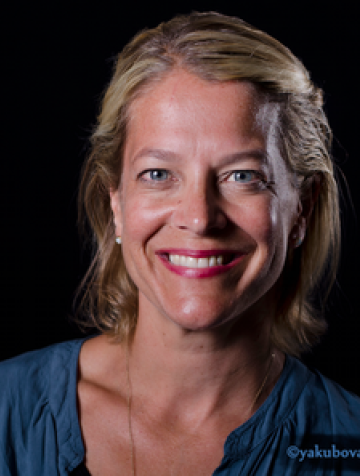
Liliane Weissberg
· Professor of German and Comparative LiteratureUniversity of Pennsylvania · Germanics
Active 1957–2026
About
Liliane Weissberg is the Christopher H. Browne Distinguished Professor in Arts and Sciences and a Professor of German and Comparative Literature at the University of Pennsylvania. Her academic interests focus on late eighteenth-century to early twentieth-century German literature and philosophy, with a particular emphasis on German-Jewish Studies. Her work explores themes related to the German Enlightenment, European and American Romanticism, German realism, and visual studies. Weissberg has contributed significantly to the field through her research, publications, and curatorial projects, including work with museums and exhibition catalogues. She has held visiting professorships at universities in the United States, Germany, Austria, and Switzerland, and has held endowed chairs such as the Ernst Cassirer Professor in Philosophy at the University of Hamburg, the Kurt Brühl Professor in Jewish Studies at the University of Graz, and the Franz Rosenzweig Professor at the University of Kassel. Weissberg has received numerous awards, including fellowships from the ACLS, Fulbright, Guggenheim, and the German Alexander von Humboldt Prize, among others. She holds an honorary degree from the University of Graz. Her publications include critical editions, books on cultural memory, psychoanalysis, Jewish history, and literature, as well as essays on figures such as Hannah Arendt, Walter Benjamin, and Rahel Varnhagen. Weissberg's curatorial work includes exhibitions at the Jewish Museum in Frankfurt and the German Historical Museum Berlin, where she curated and edited accompanying catalogues. Her courses cover topics from Vienna to psychoanalytic theory and political philosophy, reflecting her broad interdisciplinary research interests.
Research topics
- Philosophy
- Computer Science
- Humanities
- World Wide Web
- Psychology
- Art
- Psychoanalysis
Selected publications
Zwischen Wien und Rom: Emanuel Löwy, Sigmund Freud und die Rolle der Erinnerung
V&R unipress eBooks · 2026-03-05
book-chapter1st authorCorrespondingArbitrium · 2026-04-01
article1st authorCorrespondingArticle Georg Wiesing-Brandes, Walter Benjamin. Das Pariser Adressbuch. Eine Biographie des Exils im Spiegel. Nimbus, Wädenswil 2025. 800 S., € 48,–. was published on April 1, 2026 in the journal Arbitrium (volume 44, issue 1).
Arbitrium · 2025-04-01
article1st authorCorrespondingArticle Ernst Osterkamp, Der Dichter und der Risches. Leben und Werk des Michael Beer (1800–1833). Wallstein, Göttingen 2024. 254 S., € 24,‒. was published on April 1, 2025 in the journal Arbitrium (volume 43, issue 1).
Leopold Zunz, Alexander von Humboldt, and the Names of the Jews
Zeitschrift für Religions- und Geistesgeschichte · 2024-03-27
article1st authorCorrespondingZwischen Wien und Rom: Emanuel Löwy, Sigmund Freud und die Rolle der Erinnerung
V&R unipress eBooks · 2024-02-08
book-chapter1st authorCorrespondingReliquie unter Milchglas. Hans Sahl umschreibt das Hungern in der Emigration
Zeitschrift für Ideengeschichte · 2024-01-01
article1st authorCorresponding«Der Krieg hat auf den verschiedensten Gebieten ‹Experimente› angestellt», schreibt Leo Spitzer in der Einleitung zu seiner 1920 erschienenen Studie Die Umschreibungen des Begriffes «Hunger» im Italienischen. Der österreichische Romanist, der während des Ersten Weltkrieges zum Kriegsdienst bei der habsburgischen Zensurbehörde einberufen wurde, verbrachte seine Zeit dort mit der Lektüre von Postkarten italienischer Kriegsgefangener, die er nicht nur in seiner offiziellen Rolle als Zensor las, sondern als Linguist auch analysieren wollte. Hunger war in dieser Zeit nicht einfach ein Beiprodukt des Krieges, sondern wurde auch taktisch als Kriegswaffe eingesetzt; ein Vorgehen, das bis heute trotz internationaler Sanktionen gängige Praxis ist.
transcript Verlag eBooks · 2023-09-26
book-chapter1st authorCorrespondingLettre · 2023-09-01
book-chapter1st authorCorresponding2022-07-04
book-chapterOpen access1st authorCorrespondingIn the course of the French Revolution, French Jews wereemancipated in 1791.M anyB erlin Jews watched these events carefully, and some traveled to Paris to experience the new freedom first hand. The Berlin Jewish philosopher Lazarus Bendavid did not travel to Paris that year,however,but to Vienna,where he would live until 1797.I tw as there that he began to lecture and publish his commentaries on Kant'sphilosophy, become ar egular of the aristocratic salons, and write popular fiction. Paradoxicallyp erhaps,B endavid experiencedh is greatest professional success and social recognitioni nV ienna, and the present essayd iscusses his life and philosophical and literaryp roduction there during these years.
2022-09-21
bookVon der Antike bis in die Gegenwart prägen Männer das Bild von Politik und öffentlichem Raum. Doch ebenso lange gibt es auch "Frauen, die sich einmischen", die aus den ihnen zugewiesenen Rollen fallen, die Gesellschaft gestalten und das oft genug im Widerstand gegen den jeweiligen Mainstream tun. Die in diesem Band versammelten Beiträge spannen einen weiten Bogen vom biblischen Israel bis ins Europa des 21. Jahrhunderts. Der Schwerpunkt liegt auf bibelwissenschaftlichen Untersuchungen, die deutlich machen, wie sehr die Erzählungen von starken Frauengestalten geprägt sind. Die Blicke in die Rezeptionsgeschichte zeigen aber auch, dass biblische Figuren immer wieder Frauen ermutigt haben, ihren Weg zu gehen.
Frequent coauthors
- 64 shared
Laurence A. Rickels
- 64 shared
Adrian Daub
Stanford University
- 64 shared
Avital Ronell
New York University
- 64 shared
Tabitha Freeman
University of Tennessee at Knoxville
- 64 shared
Andrew Parker
- 64 shared
Richard H. Armstrong
University of Houston
- 64 shared
Jama Adams
Rutgers, The State University of New Jersey
- 64 shared
Harold P. Blum
Awards & honors
- German Alexander von Humboldt Prize for her life's work
- American ACLS Fellowship
- Fulbright Fellowship
- Guggenheim Fellowship
- Berlin Prize, American Academy in Berlin
- Resume-aware match score
- Save to shortlist
- AI-drafted outreach
See your match with Liliane Weissberg
PhdFit ranks faculty by your research interests, methods, and publications — grounded in their actual work, not templates.
- Free to start
- No credit card
- 30-second signup