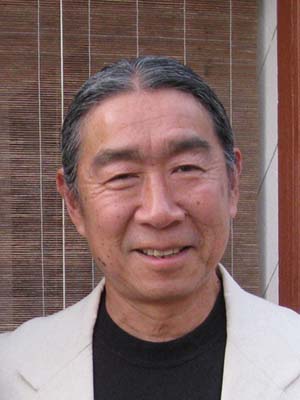
Lin Chao
· ProfessorVerifiedUniversity of California, San Diego · Ecology, Behavior & Evolution
Active 1977–2025
About
Lin Chao received his Ph.D. from the University of Massachusetts, Amherst, and was an NIH postdoctoral fellow at Princeton University. He joined UC San Diego in 1999 and served as the Chair of the Section of Ecology, Behavior and Evolution from 2004 to 2008. His research combines computer modeling and laboratory experimentation to study ecological and evolutionary processes, with a focus on microbial systems such as bacteria and viruses. His work addresses topics including host-parasite coexistence, the evolution of sex, mutation rates, transposable elements, group and individual adaptations, game theory strategies, and models of adaptive evolution. Currently, his research concentrates on the evolution of microbial aging or senescence, exploring how genetic and phenotypic damage affect fitness and how damage is transmitted across generations. His theoretical models and experimental approaches investigate damage distribution during cell division, asymmetry in bacterial division, and mechanisms of damage disposal. His contributions include advancing understanding of bacterial aging, damage partitioning, and the evolution of aging, with numerous publications elucidating these processes.
Research topics
- Genetics
- Biology
- Computer Science
- Mathematics
- Evolutionary biology
- Computational biology
- Demography
- Combinatorics
Selected publications
Marine ornithology · 2025-04-01
articleOpen access1st authorCorrespondingOn Genovesa Island (00.3°N, 089.9°W) in the Galápagos Islands, Ecuador, Great Frigatebirds Fregata minor kleptoparasitize (i.e., steal food from) Red-footed Boobies Sula sula. In five of eight cases that I observed, the frigatebirds harassed the boobies until the latter regurgitated their forage, which the frigatebirds consumed. In three cases, the booby responded with a honk-like call and the frigatebirds stopped harassing. I propose that the honk is an “honest signal” by a booby having little food to divulge. Boobies loaded with forage do not honk because the call could trigger regurgitation. Thus, frigatebirds harass with escalation only non-honking boobies. The interaction is important in what appears to be a food-limited booby population.
Marine ornithology · 2025-04-01
articleOpen access1st authorCorrespondingOn Genovesa Island (00.3°N, 089.9°W) in the Galápagos Islands, Ecuador, Great Frigatebirds Fregata minor kleptoparasitize (i.e., steal food from) Red-footed Boobies Sula sula. In five of eight cases that I observed, the frigatebirds harassed the boobies until the latter regurgitated their forage, which the frigatebirds consumed. In three cases, the booby responded with a honk-like call and the frigatebirds stopped harassing. I propose that the honk is an “honest signal” by a booby having little food to divulge. Boobies loaded with forage do not honk because the call could trigger regurgitation. Thus, frigatebirds harass with escalation only non-honking boobies. The interaction is important in what appears to be a food-limited booby population.
A link between aging and persistence
Antimicrobial Agents and Chemotherapy · 2025-02-21 · 2 citations
articleOpen accessSenior authorDespite the various strategies that microorganisms have evolved to resist antibiotics, survival to drug treatments can be driven by subpopulations of susceptible bacteria in a transient state of dormancy. This phenotype, known as bacterial persistence, arises due to a natural and ubiquitous heterogeneity of growth states in bacterial populations. Nonetheless, the unifying mechanism of persistence remains unknown, with several pathways being able to trigger the phenotype. Here, we show that asymmetric damage partitioning, a form of cellular aging, produces the underlying phenotypic heterogeneity upon which persistence is triggered. Using single-cell microscopy and microfluidic devices, we demonstrate that deterministic asymmetry in exponential phase populations leads to a state of growth stability, which prevents the spontaneous formation of persisters. However, as populations approach stationary phase, aging bacteria-those inheriting more damage upon division-exhibit a sharper growth rate decline, increased probability of growth arrest, and higher persistence rates. These results indicate that persistence triggers are biased by bacterial asymmetry, thus acting upon the deterministic heterogeneity produced by cellular aging. This work suggests unifying mechanisms for persistence and offers new perspectives on the treatment of recalcitrant infections.
eLife · 2024-11-20 · 4 citations
articleOpen access1st authorCorrespondingLineages of rod-shaped bacteria such as Escherichia coli exhibit a temporal decline in elongation rate in a manner comparable to cellular or biological aging. The effect results from the production of asymmetrical daughters, one with a lower elongation rate, by the division of a mother cell. The slower daughter compared to the faster daughter, denoted respectively as the old and new daughters, has more aggregates of damaged proteins and fewer expressed gene products. We have examined further the degree of asymmetry by measuring the density of ribosomes between old and new daughters and between their poles. We found that ribosomes were denser in the new daughter and also in the new pole of the daughters. These ribosome patterns match the ones we previously found for expressed gene products. This outcome suggests that the asymmetry is not likely to result from properties unique to the gene expressed in our previous study, but rather from a more fundamental upstream process affecting the distribution of ribosomal abundance. Because damage aggregates and ribosomes are both more abundant at the poles of E. coli cells, we suggest that competition for space between the two could explain the reduced ribosomal density in old daughters. Using published values for aggregate sizes and the relationship between ribosomal number and elongation rates, we show that the aggregate volumes could in principle displace quantitatively the amount of ribosomes needed to reduce the elongation rate of the old daughters.
Microbiology · 2024-07-24 · 1 citations
reviewOpen accessSenior authorGraphical abstract Phage ϕ6 is a model for segmented RNA viruses, and for testing evolutionary biology. (a) Phage ϕ6 attaches to type-IV pili of susceptible host bacteria and selects for phage-resistance via altered/deleted pili, causing a ‘trade-off’ that should reduce pathogenicity (leaf adherence and plant invasion) of Pseudomonad bacteria in the wild. (b) Muller’s ratchet predicts that asexual populations of small size should accrue harmful mutations that reduce mean fitness over time, depicted as rightward shift in a hypothetical histogram (blue bars) of individuals harbouring greater average genetic load. Whereas ϕ6 studies showed segment reassortment (viral sex) can create hybrids with fewer mutations (horizontal red bars on RNA segments) than those carried by co-infecting ‘parent’ viruses, causing leftward shift of histogram, and reduced average genetic load over time. (c) Wild-type phage (black) is advantaged in particle production, relative to a cheater phage (red). But frequent co-infection can favour selection for cheater variants of ϕ6 that outcompete the wild-type; overall productivity decreases but cheaters are over-represented among the viral progeny compared to their production when infecting cells alone. This result is consistent with the Prisoner’s Dilemma outcome in evolutionary game theory, which shows a cheating strategy (red line depicting cheater fitness) can invade a population at any initial starting frequency (exceeding horizontal black line for wild-type fitness defined as 1.0) despite causing mean fitness to decline through time (red arrow pointing down and to the right as cheaters approach fixation when frequency equals 1.0).
2024-11-20
peer-reviewOpen access1st authorCorrespondingeLife · 2024-08-28
preprintOpen access1st authorCorrespondingAbstract Lineages of rod-shaped bacteria such as Escherichia coli exhibit a temporal decline in elongation rate in a manner comparable to cellular or biological aging. The effect results from the production of asymmetrical daughters, one with a lower elongation rate, by the division of a mother cell. The slower daughter compared to the faster daughter, denoted respectively as the old and new daughters, has more aggregates of damaged proteins and fewer expressed gene products. We have examined further the degree of asymmetry by measuring the density of ribosomes between old and new daughters and between their poles. We found that ribosomes were denser in the new daughter and also in the new pole of the daughters. These ribosome patterns match the ones we previously found for expressed gene products. This outcome suggests that the asymmetry is not likely to result from properties unique to the gene expressed in our previous study, but rather from a more fundamental upstream process affecting distribution of ribosomal abundance. Because damage aggregates and ribosomes are both more abundant at the poles of E. coli cells, we suggest that competition for space between the two could explain the reduced ribosomal density in old daughters. Using published values for aggregate sizes and the relationship between ribosomal number and elongation rates, we show that the aggregate volumes could in principle displace quantitatively the amount of ribosomes needed to reduce the elongation rate of the old daughters.
A LINK BETWEEN AGING AND PERSISTENCE
bioRxiv (Cold Spring Harbor Laboratory) · 2024-08-26
preprintOpen accessSenior authorABSRACT Despite the various strategies that microorganisms have evolved to resist antibiotic treatments, most chronic infections are caused by subpopulations of susceptible bacteria in a transient state of dormancy. This phenotype, known as bacterial persistence, arises due to a natural and ubiquitous heterogeneity of growth states in bacterial populations. Nonetheless, the unifying mechanism of persistence remains unknown, with several pathways being able to trigger the phenotype. Here, we show that asymmetric damage partitioning, a form of cellular aging, produces the underlying phenotypic heterogeneity upon which persistence is triggered. Using single-cell microscopy and microfluidic devices, we demonstrate that deterministic asymmetry in exponential phase populations leads to a state of growth stability, which prevents the spontaneous formation of persisters. However, as populations approach stationary phase, aging bacteria — those inheriting more damage upon division — exhibit a sharper growth rate decline, increased probability of growth arrest, and higher persistence rates. These results indicate that persistence triggers are biased by bacterial asymmetry, thus acting upon the deterministic heterogeneity produced by cellular aging. This work suggests unifying mechanisms for persistence and offers new perspectives on the treatment of recalcitrant infections. IMPORTANCE Whenever bacterial cultures are treated with antibiotics, a fraction of the population survives despite exhibiting no active resistance mechanisms. These “persisters” are cells in a state of slow growth or dormancy, already present in the population prior to antibiotic exposure. Although various stressors or mutations increase persistence rates, a unifying persistence mechanism has not been established. Here, we show that cellular aging can represent such a mechanism. Bacteria age through the inheritance of intracellular damage, which occurs even in unstressed populations. As populations approach stationary phase, aging Escherichia coli have a steeper decline in elongation rates and earlier division arrest compared to younger cells. Upon antibiotic treatment, aging bacteria have higher persistence rates. These results show that stationary phase, a well-established persistence trigger, operates on the phenotypic heterogeneity produced by cellular aging. Because aging is a deterministic and ubiquitous process, it could represent a fundamental mechanism for the formation of persisters.
2024-08-28
peer-reviewOpen access1st authorCorrespondingLineages of rod-shaped bacteria such as Escherichia coli exhibit a temporal decline in elongation rate in a manner comparable to cellular or biological aging. The effect results from the production of asymmetrical daughters, one with a lower elongation rate, by the division of a mother cell. The slower daughter compared to the faster daughter, denoted respectively as the old and new daughters, has more aggregates of damaged proteins and fewer expressed gene products. We have examined further the degree of asymmetry by measuring the density of ribosomes between old and new daughters and between their poles. We found that ribosomes were denser in the new daughter and also in the new pole of the daughters. These ribosome patterns match the ones we previously found for expressed gene products. This outcome suggests that the asymmetry is not likely to result from properties unique to the gene expressed in our previous study, but rather from a more fundamental upstream process affecting distribution of ribosomal abundance. Because damage aggregates and ribosomes are both more abundant at the poles of E. coli cells, we suggest that competition for space between the two could explain the reduced ribosomal density in old daughters. Using published values for aggregate sizes and the relationship between ribosomal number and elongation rates, we show that the aggregate volumes could in principle displace quantitatively the amount of ribosomes needed to reduce the elongation rate of the old daughters.Bacteria exhibit a growth decline in a manner comparable to cellular or biological aging. When a mother bacterium reproduces by binary fission it allocates more damage to one of the two daughters. The extra damage correlates with a slower growth. Thus, a lineage of daughters successively acquiring more damage over generations ages, sometimes even to death under stressful conditions. Aging lineages also have lower levels of expressed gene products. Here we show that the aging process also correlates with lower cellular levels of ribosomes. The identification of a ribosomal effect shows that the aging process is acting at a much more fundamental upstream level. While decreased gene products could have resulted from local regulation of specific genes, a lower ribosomal density affects the entirety of cellular metabolism. Understanding bacterial aging is important because biological aging may have originated in single-celled organisms such as E. coli.
Annals of Oncology · 2024-09-01
article1st authorCorresponding
Recent grants
NIH · $833k · 2004
NIH · $281k · 1993
NIH · $62k · 1986
The unicellular origin of biological senescence: Its evolution and population dynamics
NSF · $558k · 2014–2019
Frequent coauthors
- 26 shared
Camilla U. Rang
University of California, San Diego
- 19 shared
Paul E. Turner
Yale University
- 14 shared
Audrey Menegaz Proenca
Freie Universität Berlin
- 14 shared
Santiago F. Elena
Institute for Integrative Systems Biology
- 11 shared
Chao Shi
University of California, San Diego
- 11 shared
Olivier Tenaillon
Université Paris Cité
- 11 shared
Daniel Weinreich
University of Maryland, Baltimore
- 11 shared
Olin Silander
Massey University
Labs
Chao LabPI
Not provided
Awards & honors
- 2014 UCSD Chancellor's Associates Award for Excellence in un…
- Resume-aware match score
- Save to shortlist
- AI-drafted outreach
See your match with Lin Chao
PhdFit ranks faculty by your research interests, methods, and publications — grounded in their actual work, not templates.
- Free to start
- No credit card
- 30-second signup