Resume-aware faculty matching

Find professors who actually fit you

Upload your resume. Four AI agents analyze your background, rank the faculty who fit, inspect their recent research, and help you draft outreach — grounded in their actual work, not templates.

Free to startNo credit cardCancel anytime
Top matches Balanced preset
Dr. Sarah Chen
Stanford · Interpretability · NLP
91
Dr. Marcus Holloway
MIT · Robotics · RL
84
Dr. Aisha Okonkwo
CMU · Fairness · HCI
82
Nova · Professor Researcher · re-ranking top 20…
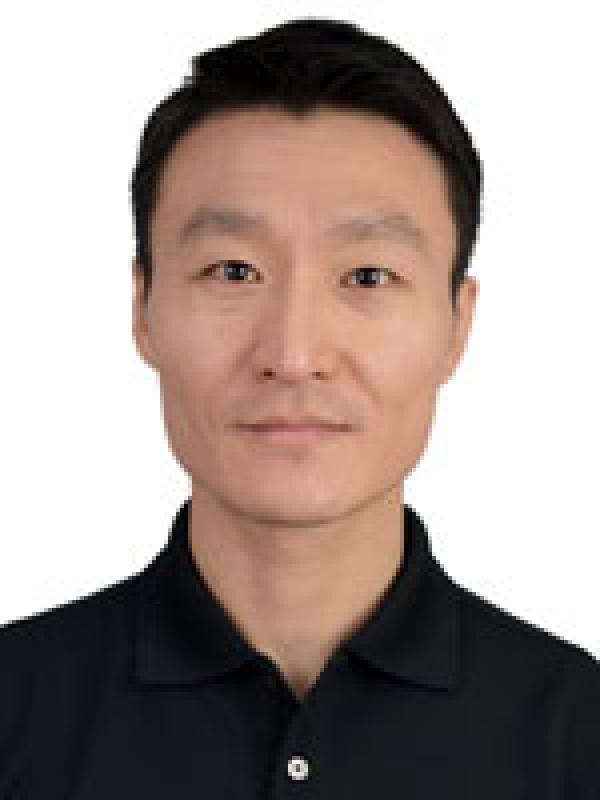
Lin Ding

Lin Ding

Verified

Ohio State University · Physics

Active 2002–2026

h-index23
Citations2.1k
Papers12741 last 5y
Funding$943k
See your match with Lin Ding — sign in to PhdFit.Sign in

About

Lin Ding is a professor in science education in the Department of Teaching and Learning at The Ohio State University. He has extensive experience in discipline-based physics education research, including students' conceptual learning, problem solving, and scientific reasoning, as well as curriculum development and assessment design. Prior to joining the faculty, Ding was a research associate and lecturer in Ohio State's Department of Physics. His areas of expertise include technology education, STEM science, and STEM education.

Research topics

  • Mathematics education
  • Computer science
  • Psychology
  • Pedagogy
  • Artificial intelligence

Selected publications

  • Research on robotic arm control based on improved reward function and experience replay strategy in DDPG

    2026-02-12

    article

    Deep reinforcement learning has demonstrated great potential in continuous control tasks such as robotic arm manipulation. However, the traditional Deep Deterministic Policy Gradient (DDPG) algorithm suffers from low sample efficiency and sparse rewards during training, leading to slow convergence and unstable control performance. This paper proposes an improved DDPG algorithm to enhance the training efficiency and success rate of robotic arm end-effector positioning tasks. The improvements focus on two aspects: first, a composite reward function is designed by integrating single-step distance penalties, sparse success rewards, and directional guidance rewards to provide richer and more effective learning signals. Second, an improved experience replay sampling strategy is proposed, which introduces a two-level experience buffer and prioritizes samples with high reward values to improve network training efficiency. Experimental results on a two-dimensional robotic arm simulation platform show that, compared with the original DDPG algorithm, the proposed method achieves significant improvements in average reward and task success rate, while requiring fewer steps to complete tasks, thereby verifying the effectiveness of the proposed improvements.

  • Timing of India-Asia diachronous collision: A view from the westernmost Indian margin, Pakistan

    Tectonophysics · 2026-01-03

    article
  • AI-Driven Pedagogical Empowerment in International Education: Transforming Teaching Practices for College Faculty Through Faculty-Centered Innovation

    IAFOR Journal of Education · 2025-12-16

    articleOpen access1st authorCorresponding

    The study examines the contribution of artificial intelligence (AI) to the strengthening of faculty potential in global higher education, with focus on pedagogical autonomy, cultural sensitivity and the sense of inclusivity in the respective institutions. A sequential mixed-methods design was used to collect data that was based on the survey of 150 faculty members across Asia, Europe, and North America combined with region-specific focus groups. With the help of UTAUT and Pedagogical Content Knowledge (PCK) frameworks, the study reveals the Institutional Trust and Training and Support Needs as important outlooks of AI adoption and pedagogical empowerment, whereas traditional determinants of adoption, such as Performance Expectancy and Effort Expectancy became irrelevant unless aligned to specific cultural and institutional contexts. Faculty consider hybrid AI-human models of instruction, cultural responsiveness-based training, and collaborative decision-making. This study differs with those that concentrate on student-oriented AI-related applications in that faculty is positioned as pedagogic constructors. The developed findings will guide universities to adopt AI by implementing faculty-oriented, culturally responsive measures, which will support equitable, ethical, and sustainable innovations in international classrooms.

  • Epistemic framing analysis of secondary students during instruction on quantum physics

    Physical Review Physics Education Research · 2025-03-07 · 6 citations

    articleOpen accessSenior author

    [This paper is part of the Focused Collection in Investigating and Improving Quantum Education Research.] Conceptual approaches to contemporary physics topics pose many learning challenges. One factor influencing knowledge integration is a student’s epistemic framing. Epistemic frames provide a context within which a particular situation is perceived, interpreted, and judged. The objective of this study is to explore secondary students’ framings during a conceptual-based introductory instructional unit on quantum physics. Student warrants are thematically analyzed using an inductive approach to identify epistemic framing clusters. The characteristics of each framing cluster are identified, and each framing is analyzed based on its sensemaking utility within the observed instructional unit. Data collection includes classroom video and audio recordings as well as pre- and postunit interviews with a student focus group (<a:math xmlns:a="http://www.w3.org/1998/Math/MathML" display="inline"><a:mrow><a:mi>n</a:mi><a:mo>=</a:mo><a:mn>6</a:mn></a:mrow></a:math>). Three framing clusters emerged from the data: (i) call on authority, (ii) experiential, and (iii) evidence-based sensemaking. Each framing is observed to assist in the student sensemaking process, however, the evidence-based sensemaking framing proved most effective during the knowledge integration of the abstract concepts associated with quantum physics.

  • DALNet: A Denoising Diffusion Probabilistic Model for High-Fidelity Day-Ahead Load Forecasting

    ArXiv.org · 2025-03-09

    preprintOpen accessSenior author

    Accurate probabilistic load forecasting is crucial for maintaining the safety and stability of power systems. However, the mainstream approach, multi-step prediction, is hindered by cumulative errors and forecasting lags, which limits its effectiveness in probabilistic day-ahead load forecasting (PDALF). To overcome these challenges, we introduce DALNet, a novel denoising diffusion model designed to generate load curves rather than relying on direct prediction. By shifting the focus to curve generation, DALNet captures the complex distribution of actual load time-series data under specific conditions with greater fidelity. To further enhance DALNet, we propose the temporal multi-scale attention block (TMSAB), a mechanism designed to integrate both positional and temporal information for improved forecasting precision. Furthermore, we utilize kernel density estimation (KDE) to reconstruct the distribution of generated load curves and employ Kullback-Leibler (KL) divergence to compare them with the actual data distribution. Experimental results demonstrate that DALNet excels in load forecasting accuracy and offers a novel perspective for other predictive tasks within power systems.

  • Teachers’ Willingness to Teach: An Empirical Study of Graduating Normal Students: Taking School A as an Example

    Journal of higher education teaching. · 2025-02-01

    articleOpen access1st authorCorresponding

    Teachers are the backbone of education, and the willingness of normal students to enter the teaching profession is crucial for building a robust teaching faculty and enhancing education quality. This study examines the perspectives of normal students teachers, focusing on the 2024 graduates of School A, and investigates the core issue of “teachers’ willingness to teach.” Utilizing questionnaire design and field investigations, this research explores the factors influencing normal students teachers’ willingness to join the teaching profession. Through comprehensive data analysis and logical examination, the study reveals that normal students teachers’ willingness to teach is shaped by a combination of multiple factors and uncovers the interactive relationships among these factors. Based on the findings, this paper proposes targeted strategic suggestions to enhance normal students teachers’ willingness to teach, aiming to effectively boost their teaching aspirations. This study provides solid data support and a theoretical basis for the reform of teacher education, promoting the sustained development of the education sector.

  • Toward a Concept Inventory for Energy Band Theory: Insights from Textbooks and Graduate Exam Syllabi

    2025-10-28

    articleOpen accessSenior author

    Energy band theory is a central topic in upper-division solid state physics and plays a foundational role in semiconductors and material science research.However, no validated concept inventory is currently available to measure students' conceptual understandings of this topic.As an initial step toward assessment development, this study reports a content analysis of four widely used textbooks-two in English and two in Chinese-aimed at identifying core concepts in energy band theory across different sources.Results revealed five key concept categories, common across all texts, including foundational approximations, Bloch's theorem, the nearly free electron model, the tight-binding model, and symmetry operators.We validated these concept categories by comparing them against graduate entrance exam syllabi from three major Chinese universities.The convergence between textbook content and national curricular expectations supports these five concept categories as the focus for assessment.This work lays the foundation for future development of a research-based concept inventory, capable of supporting instruction and learning in upper-level solid state physics.

  • Assessment of a medical physics educational program for science teachers

    Journal of Applied Clinical Medical Physics · 2025-04-03

    articleOpen accessSenior author

    INTRODUCTION: Medical physics is a fulfilling profession where physics is applied to advance human health. However, many are uninformed of the role of physicists in medicine, and students are unaware of this career pathway. This study presents a pilot 1-year program for science teachers to learn about physics in medicine and share with students and teachers. METHODS: A cohort of middle school and high school science teachers were selected to learn about physics in medicine, develop lesson plans for their students, participate in a Physics in Medicine field trip hosted at a cancer hospital, and concluded with a professional development day for other regional science teachers. Surveys were conducted throughout the program to assess attitudes toward teaching medical physics, content knowledge of medical physics, collaboration, and demographic information from participants. RESULTS: The program was implemented over the course of a year which included 5 school districts, 10 science teachers, and hundreds of students. After participating in the program, teacher scores on surveys regarding attitudes toward teaching medical physics and content knowledge significantly increased for the cohort. Strong collaboration between teaching pairs was maintained throughout the program based on survey responses. Teachers participating in the 1-day professional development program also benefited from the program based on survey responses regarding attitudes toward medical physics and interest in learning more about medical physics. DISCUSSION: This pilot study demonstrated the feasibility and effectiveness of an educational model for teachers' understanding and connecting medical physics with students in their schools. The program was well received by teachers and students, and this manuscript provides guidelines for effective replication of the curriculum at other institutions.

  • Physical interpretation of the Rasch model: analogy to Fermi–Dirac distribution

    European Journal of Physics · 2025-08-28

    articleOpen accessSenior author

    Abstract We propose a novel interdisciplinary analogy between the Rasch model in educational measurement and the Fermi–Dirac distribution in statistical physics. Both models share the same mathematical form, with the logistic function determining the probability of student correct responses in the Rasch model and the occupation probability of fermions in the Fermi–Dirac distribution. This analogy not only can deepen our understanding of the Rasch model but also serve as a pedagogical tool for enhancing student comprehension of the Fermi–Dirac distribution, addressing common misconceptions and fostering interest in educational research methodologies.

  • Unsupervised part extraction of substation equipment based on joint multilevel voxels’ features of point clouds

    2025-01-03

    article

    Aiming at the segmentation and extraction of the main part of substation equipment, we use Fast Point Feature Histograms (FPFH) and Locally Convex Connected Patches (LCCP) to obtain voxels’ integrated geometric features, then aggregate these features and their K nearest neighbors’ on voxels to build multi-level voxels’ features by bottom-up hierarchy, and achieve pre-segmentation of shapes with the flow-constrained super-voxel clustering algorithm; After the pre-segmentation, we conduct shape analysis to extract semantically meaningful instances of equipment components, achieving part-level point cloud data instance extraction of artificial equipment geometric features. Without training data or manual annotations, the work presented is simple and easy to implement. It can merge patches across surface-singularities. It needs a few parameters, can achieve automatic 3D instance extraction from point clouds for different scenes with the same or similar parameters.

Recent grants

Frequent coauthors

Education

  • Ph.D., Department of Physics

    North Carolina State University

  • Resume-aware match score
  • Save to shortlist
  • AI-drafted outreach

See your match with Lin Ding

PhdFit ranks faculty by your research interests, methods, and publications — grounded in their actual work, not templates.

  • Free to start
  • No credit card
  • 30-second signup