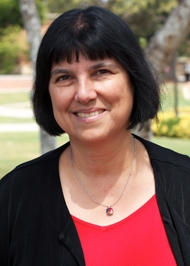
Linda Garro
University of California, Los Angeles · Anatomy and Cell Biology
Active 1978–2020
About
Linda Garro is a Professor in the UCLA Department of Anthropology, with research interests centered on health care decision making, health and illness in everyday life contexts, cultural models, narrative and illness, and remembering. She has contributed extensively to the fields of psychocultural and medical anthropology, exploring how cultural knowledge influences health behaviors and illness experiences. Her scholarly work includes editing the volume 'Narrative and the Cultural Construction of Illness and Healing' and authoring numerous articles and book chapters that examine cultural explanations of illness, decision-making processes in treatment choices, and the social and cognitive processes involved in health and illness narratives. Garro's research emphasizes understanding health and illness through ethnographic and narrative approaches, highlighting the importance of cultural context in shaping health-related experiences and decisions. She holds a Ph.D. in Psychology from Duke University and a Ph.D. in Social Sciences from the University of California Irvine. Her contributions have been recognized with awards such as the Distinguished Teaching Award at UCLA and the Stirling Award for Contributions to Psychological Anthropology from the Society for Psychological Anthropology. Her work continues to influence the understanding of health, illness, and decision-making within diverse cultural settings.
Research topics
- Sociology
- Psychology
- Quantum mechanics
- Physics
- Psychotherapist
- Social psychology
- Pedagogy
Selected publications
4. By the Will of Others or by One’s Own Action?
Stanford University Press eBooks · 2020
1st authorCorresponding- Psychology
- Physics
- Quantum mechanics
Transcultural Psychiatry · 2020 · 18 citations
- Sociology
- Psychology
- Social psychology
Models of cultural competence highlight the importance of the sociocultural world that is inhabited by patients, and the question of how best to integrate sociocultural factors into clinical assessment and intervention. However, one significant limitation of such approaches is that they leave unclear what type of in-session therapist behaviors actually reflect cultural competence. We draw on the Shifting Cultural Lenses model to operationalize culturally competent in-session behaviors. We argue that a key component of cultural competence is the collaborative relationship between therapists and patients, in which therapists shift between their own cultural lenses and those of their clients, as they co-construct shared narratives together. Accordingly, we propose that culturally competent therapist behaviors include accessing the client's views, explicitly presenting their own views as mental health care professionals, and working towards a shared understanding. We further specify the latter set of behaviors as including the practitioner's integration of the patient's view, their encouragement of the patient to consider their professional view, and the negotiation of a shared view. We developed a coding system to identify these therapist behaviors and examined the reliability of raters across 11 couple and 4 individual therapy sessions. We assessed whether the behavioral codes varied in expected ways over the first 3 sessions of 2 therapists' couple therapy as well. Operationalizing the behavioral indicators of the Shifting Cultural Lenses model opens the door to the integration of both process- and content-oriented approaches to cultural competence.
2019-12-31
book-chapter1st authorCorrespondingHispanic Journal of Behavioral Sciences · 2019-06-19 · 2 citations
articleThe current study developed a mixed-methods coding scheme to explore the degree of correspondence between Latino patients’ and their psychotherapists’ descriptions of the presenting problems. We interviewed 34 patients and clinicians (17 dyads) following an initial therapy session. Using a theoretical thematic approach, we generated a list of problem areas reported in participants’ descriptions. Independent coders reliably rated the presence and salience of these problems using a quantitative index. We then statistically estimated the fit between corresponding narratives. We found poor congruence across dyads’ descriptions of all problem areas, with two exceptions. We also noted patterns of incongruences, primarily characterized by therapists providing explanations that went beyond what their patients said. This study provides an innovative objective approach to estimate the nuanced degrees of concordance within dyads’ narratives. Our findings provide initial evidence of poor match between views held by Latino patients and their clinicians.
Culture: The missing link in health research
Social Science & Medicine · 2016-07-19 · 232 citations
articlePsycEXTRA Dataset · 2013-01-01
datasetChapter 10. Explanations of diabetes: Anishinaabeg and Dakota deliberate upon a new illness
2012-03-24 · 2 citations
book-chapter1st authorCorresponding2011-04-01
other1st authorCorrespondingThis chapter contains sections titled: Responding to Trouble: Personal Experience and Cultural Resources Knowing as Framework for Action: Recognizing Trouble as Illness Foreshadowed Possibilities and Everyday Actions Effort after Narrative? Narrative Thinking and Care for the Future Decision Models and Deciding on a Course of Action in Times of Illness Concluding Remarks References
Ethos · 2011-08-19 · 9 citations
article1st authorCorrespondingAbstract Drawing on a study of dual‐earner, middle‐class families in Los Angeles, in this article I explore what it means to enact health as part of everyday life for a family of Mexican descent and how enacting health relates to parental talk about health. Based on a conjoint analysis of video recordings and parental interviews, I maintain that a recurring interactional dynamic toward maintaining an emotional atmosphere of individual contentment and harmonious relationships is central to how the family enacts health. Inspired by Bateson's discussion of ethos as part of his efforts to study the “feel” of culture, the analytic framework of enacting ethos is proposed as a way to approach the “feel” of everyday life—an interactive view of emotional atmosphere in situated contexts. For this family, studying health as ensconced in family life reveals the centrality of a socially embedded and relational view of health as “family well‐being” that coexists, at times ambivalently, with health construed as an individual level concern. Examples from the video recordings illustrate some of the varied ways that the approach adopted allows for a more nuanced understanding of the microcultural realm of family life.
By the Will of Others or By One's Own Action?
Stanford University Press eBooks · 2010-02-10 · 10 citations
book-chapter1st authorCorrespondingAbstract This chapter contains a brief review of some relevant literature by American scholars that mostly reference to American cultural settings. This literature ranges from viewing will as universal psychological phenomena and others discuss some features of willing that can be found within a certain sociocultural milieu. This chapter also reveals the variable and dynamic nature of assessments and attributions of volitional states in connection to events within the social world.
Frequent coauthors
- 16 shared
Cheryl Mattingly
Aarhus University
- 3 shared
Alex Kopelowicz
University of California, Los Angeles
- 3 shared
Steven R. López
Northeastern University
- 2 shared
Byron J. Good
Harvard Global Health Institute
- 2 shared
Arthur J. Rubel
- 2 shared
Sylvanna M. Vargas
University of Southern California
- 2 shared
Karen A. Stephenson
Anderson University - South Carolina
- 1 shared
Sandra Baringer
Awards & honors
- Distinguished Teaching Award, with a citation for Distinctio…
- Stirling Award for Contributions to Psychological Anthropolo…
- National Health Research Scholar, National Health Research a…
- Resume-aware match score
- Save to shortlist
- AI-drafted outreach
See your match with Linda Garro
PhdFit ranks faculty by your research interests, methods, and publications — grounded in their actual work, not templates.
- Free to start
- No credit card
- 30-second signup