Resume-aware faculty matching

Find professors who actually fit you

Upload your resume. Four AI agents analyze your background, rank the faculty who fit, inspect their recent research, and help you draft outreach — grounded in their actual work, not templates.

Free to startNo credit cardCancel anytime
Top matches Balanced preset
Dr. Sarah Chen
Stanford · Interpretability · NLP
91
Dr. Marcus Holloway
MIT · Robotics · RL
84
Dr. Aisha Okonkwo
CMU · Fairness · HCI
82
Nova · Professor Researcher · re-ranking top 20…
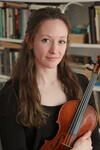
Lindsay Wright

Lindsay Wright

· Assistant ProfessorVerified

Yale University · Department of Music

Active 1976–2026

h-index31
Citations4.4k
Papers16593 last 5y
Funding
See your match with Lindsay Wright — sign in to PhdFit.Sign in

About

Lindsay Wright is a music historian and ethnographer specializing in the interconnection of musical performance, pedagogical practices, and racialized systems of privilege in the United States. Her research spans topics from the nineteenth and twentieth centuries, including figures such as Thomas “Blind Tom” Wiggins, televised talent shows, and contemporary violin pedagogies. Her work explores how beliefs about innate musicality and the American Dream are reflected and constructed through the talent show format, from nineteenth-century amateur nights to modern social media competitions. Wright’s research centers on processes of musical becoming, addressing inequities in musical practice and perception. She holds a PhD from the University of Chicago, a MEd in Multicultural Education from Eastern University, and a BA in African American studies and music from Wesleyan University. Her ongoing book project, Talent Show: Musicality, Meritocracy, and the Aesthetics of Exclusion, examines how talent shows serve as a stage for the negotiation of meritocracy and musical talent. Her previous dissertation, awarded the National Academy of Education and Spencer Foundation’s dissertation fellowship, argued that 'musical talent' is heterogeneous, contingent, and politicized. In 2021-2022, she was an American Council of Learned Societies fellow working on The Suzuki Industrial Complex: Race, Class, and Talent in American Classical Music, which investigates how the Suzuki Method promotes meritocratic ideals while challenging the concept of innate talent. Wright’s broader research interests include American musics of the 19th and 20th centuries, musical talent and giftedness, African American history, dis/ability studies, childhood studies, music and media, and the Suzuki method of music education. She has previously taught at the University of Chicago as a Postdoctoral Fellow in the Humanities and has experience as a public school teacher, youth orchestra conductor, and violin instructor since 2010. Her work promotes collaboration between musicology and education, and she actively contributes to the American Musicological Society’s Education Committee.

Research topics

  • Computer Science
  • Artificial Intelligence
  • Optics
  • Physics
  • Computer Security
  • Machine Learning
  • Mathematics
  • Telecommunications
  • Optoelectronics
  • Engineering
  • Classical mechanics
  • Acoustics
  • Electronic engineering
  • Quantum mechanics
  • Statistical physics
  • Materials science
  • Mathematical analysis

Selected publications

  • Quantum computational sensing using quantum signal processing, quantum neural networks, and Hamiltonian engineering

    npj Quantum Information · 2026-05-14

    articleOpen access

    Abstract Combining quantum sensing with quantum computing can lead to quantum computational sensing (QCS) protocols that are able to more efficiently extract task-specific information from physical signals than is possible otherwise. In this paper, we present, in theory and numerical simulations, the application of two quantum algorithms—quantum signal processing and quantum neural networks—to various binary and multiclass machine-learning classification tasks in sensing. Here, sensing operations are interleaved with computing operations, giving rise to nonlinear functions of the sensed signals. Our approach to optimizing QCS protocols takes into account quantum sampling noise and allows us to engineer protocols that can yield accurate results with as few as just a single measurement shot. In all cases, we have been able to show a regime of operation where a quantum computational sensor can achieve higher accuracy than a conventional quantum sensor for a given budget of sensing time, with a simulated accuracy advantage of >20 percentage points for some tasks. We also present protocols for performing nonlinear tasks using Hamiltonian-engineered bosonic systems and quantum signal processing with hybrid qubit-bosonic systems, and empirically show an advantage when the received signal has a limited mean photon number.

  • Data repository of the paper "Quantum computational displacement sensing"

    Zenodo (CERN European Organization for Nuclear Research) · 2026-04-11

    articleOpen access

    This data repository contains the information necessary to reproduce the main results of the paper “Quantum computational displacement sensing”. The repository contains both the data required to generate the figures of the main manuscript and the supplemental material, as well as source code for running the experiments and simulations presented in the paper. There are two main folders: code_simulation (which consists of the training code and the baseline simulations) and code_experiment (which covers the experimental code). The corresponding requirements for running them are in the zipped folder. The data folder contains all simulation and experimental raw and processed data generated. The figures folder contains all the plots presented in the manuscript.

  • Ultra-low-light computer vision using trained photon correlations

    Zenodo (CERN European Organization for Nuclear Research) · 2026-04-13

    datasetOpen access

    This data repository contains the information necessary to reproduce the main results of the paper “Ultra-low-light computer vision using trained photon correlations”.This repository contains the data and the code for generating the figures in the manuscript "Ultra-low-light computer vision using trained photon correlations", including figures in the main text and in supplementary materials. The repository also contains the code for controling the experiment setup and running the experiments conducted in the paper: Folder 'DATA_Figure2' contains the raw camera data of different SPDC illumination patters generated with different pump spectra and the correspoding images of the pump spectra taken on a Bassler camera. It also contains a notebook describing how to fit for the phasematching function, a notebook that predicts different SPDC illumination patterns from the pump spectrum, and an example data collection notebook. Data_Collection.ipynb - example data collection notebook Fitting_parameters_for_phase_matching_function.ipynb - notebook used to fit the phasematching function parameters SPDC_dataset.npz - a dataset constructed from different SPDC illumination patterns to be used in Fitting_parameters_for_phase_matching_function.ipynb Experiment_digital_twin_predictions_Fancy.ipynb - example notebook to generate SPDC illumination patterns from pump angular spectra Folder 'MPEG7_DATA_UNTRAINED_ILLUMINATION_Figure3/Experimental_DATA' contains the raw camera data of the MPEG7 objects under untrained SPDC (correlated) and coherent (uncorrelated) illumination patterns, the dataset made from these raw images, the estimated illumination photon-flux lists, and the accuracies from a trained set Transformer. Illumination_list_computing_example_SPDC.ipynb - Example notebook to extract illumination power levels Dataset_Untrained_Coherent_Illumination_MPEG7.zip - Untrained coherent (uncorrelated) illumination dataset file Dataset_Untrained_Illumination_MPEG7.zip - Untrained SPDC (correlated) illumination dataset file Untrained_illumination_SPDC_vs_Coherent_mpeg7_Set_Transformer_accuracies.npz - file containing accuracies for the untrained illumination points Folder 'MPEG7_DATA_UNTRAINED_ILLUMINATION_Figure3' contains example scripts for data collection and set Transformer training. postprocess_Set_Transformer_training.py - script for training the set Transformer utils.py - helper functions for postprocess_Set_Transformer_training.py Data_Collection_example_SPDC_untrained_illumination.ipynb - example notebook for data collection Folder 'E2E_EXPERIMENTAL_TRAINING_EXAMPLE_Figure3' contains an example script for running end-to-end optimization on the experimental setup. Experimental CAT E2E Training.ipynb - example notebook to run the end-to-end optimization protocol on the experimental setup Folder 'E2E_EXPERIMENTAL_TRAINING_EXAMPLE_Figure3/Accuracies_on_MPEG7' contain the illumination pattern details and the accuracies for the 3 different power levels of trained SPDC illumination show in main text Figure 3 test_errs_Pow2.npz - File containing the accuracies for trained correlated illumination test_errs_Pow3.npz - File containing the accuracies for trained correlated illumination test_errs_Pow4.npz - File containing the accuracies for trained correlated illumination Folder 'PLOTTING_CODE_Figure3' contains an example script to plot the experimental accuracies Plotting_MPEG7_results_Zenodo.ipynb - example code used to generated Figure 3 plots Folder 'E2E_TRAINING_Figure4' contains all the simualtion scripts, the datasets, and EMCCD noise distribution used to generate the results in Figure 4. It also contains 4 example notebooks on how to train the illumination for each illumination case considered. E2E_Training_arbitrary_SPDC_Example.ipynb - Example notebook to train the engineered phase matched SPDC source on the cell organelle task E2E_Training_baseline_Example.ipynb - Example notebook to train the conventional computer vision approach on the cell organelle task E2E_Training_Coherent_Example.ipynb - Example notebook to train the coherent (uncorrelated) source on the cell organelle task E2E_Training_simulation_of_experiment_SPDC_Example.ipynb - Example notebook to train the digital model of our SPDC source on the cell organelle task modules_original.py - helper function py file utils_training.py - helper function py file data - folder containing the cell organelle dataset and the noise distribution derived from the EMCCD camera train_e2e_coherent_cells.py - script used to generated the uncorrelated illumination data in Figure 4 train_e2e_spdc_cells.py - script used to generate the correlated illumination data in Figure 4 All files need to be unzipped and all paths to data files and folders in the scripts/notebooks will need to be checked before any code is run. All code was written in Python 3.XX. Python environment requirements: _libgcc_mutex 0.1 _openmp_mutex 4.5 antlr-python-runtime 4.9.2 appdirs 1.4.4 asttokens 2.2.1 attrs 23.2.0 autograd 1.7.0 autoray 0.6.12 backcall 0.2.0 blas 1.0 bokeh 2.4.3 bottleneck 1.3.5 brotli 1.1.0 brotli-bin 1.1.0 brotli-python 1.0.9 ca-certificates 2025.8.3 catalogue 2.0.7 certifi 2023.5.7 cffi 1.15.1 charset-normalizer 2.0.4 click 8.1.3 cloudpickle 2.2.1 cmake 3.26.3 cmasher 1.6.3 colorama 0.4.6 colorspacious 1.1.2 comm 0.1.3 confection 0.0.4 contourpy 1.0.5 cryptography 41.0.3 cycler 0.12.1 cymem 2.0.6 cython-blis 0.7.10 cytoolz 0.12.0 dask 2023.5.0 dask-core 2023.4.1 dbus 1.13.18 debugpy 1.6.7 distributed 2023.4.1 e13tools 0.9.6 executing 1.2.0 expat 2.5.0 filelock 3.12.0 fire 0.5.0 freetype 2.12.1 fsspec 2023.5.0 giflib 5.2.1 glib 2.69.1 gst-plugins-base 1.14.1 gstreamer 1.14.1 heapdict 1.0.1 icu 58.2 idna 3.4 importlib-metadata 6.6.0 importlib_resources 6.1.1 intel-openmp 2023.1.0 ipykernel 6.23.1 ipython 8.12.2 jedi 0.18.2 jinja2 3.1.2 joblib 1.4.2 jpeg 9e jsonschema 4.17.3 jupyter-client 8.2.0 jupyter-core 5.3.0 jupyter_core 5.8.1 kaleido-core 0.2.1 keyutils 1.6.1 kiwisolver 1.4.5 krb5 1.20.1 langcodes 3.3.0 lark-parser 0.12.0 lcms2 2.12 ld_impl_linux-64 2.38 lerc 3.0 libbrotlicommon 1.1.0 libbrotlidec 1.1.0 libbrotlienc 1.1.0 libclang 10.0.1 libdeflate 1.17 libedit 3.1.20191231 libevent 2.1.12 libexpat 2.5.0 libffi 3.4.4 libgcc-ng 13.2.0 libgfortran-ng 11.2.0 libgfortran5 11.2.0 libllvm10 10.0.1 libllvm14 14.0.6 libpng 1.6.39 libpq 12.15 libstdcxx-ng 13.2.0 libtiff 4.5.1 libwebp 1.3.2 libwebp-base 1.3.2 libxcb 1.16 libxkbcommon 1.0.1 libxml2 2.9.14 lit 16.0.5 llvm-openmp 14.0.6 llvmlite 0.40.0 locket 1.0.0 lz4-c 1.9.4 markupsafe 2.1.2 mathjax 2.7.7 matplotlib 3.7.2 matplotlib-base 3.7.2 matplotlib-inline 0.1.6 mk

  • Ultra-low-light computer vision using trained photon correlations

    Zenodo (CERN European Organization for Nuclear Research) · 2026-04-13

    datasetOpen access

    This data repository contains the information necessary to reproduce the main results of the paper “Ultra-low-light computer vision using trained photon correlations”.This repository contains the data and the code for generating the figures in the manuscript "Ultra-low-light computer vision using trained photon correlations", including figures in the main text and in supplementary materials. The repository also contains the code for controling the experiment setup and running the experiments conducted in the paper: Folder 'DATA_Figure2' contains the raw camera data of different SPDC illumination patters generated with different pump spectra and the correspoding images of the pump spectra taken on a Bassler camera. It also contains a notebook describing how to fit for the phasematching function, a notebook that predicts different SPDC illumination patterns from the pump spectrum, and an example data collection notebook. Data_Collection.ipynb - example data collection notebook Fitting_parameters_for_phase_matching_function.ipynb - notebook used to fit the phasematching function parameters SPDC_dataset.npz - a dataset constructed from different SPDC illumination patterns to be used in Fitting_parameters_for_phase_matching_function.ipynb Experiment_digital_twin_predictions_Fancy.ipynb - example notebook to generate SPDC illumination patterns from pump angular spectra Folder 'MPEG7_DATA_UNTRAINED_ILLUMINATION_Figure3/Experimental_DATA' contains the raw camera data of the MPEG7 objects under untrained SPDC (correlated) and coherent (uncorrelated) illumination patterns, the dataset made from these raw images, the estimated illumination photon-flux lists, and the accuracies from a trained set Transformer. Illumination_list_computing_example_SPDC.ipynb - Example notebook to extract illumination power levels Dataset_Untrained_Coherent_Illumination_MPEG7.zip - Untrained coherent (uncorrelated) illumination dataset file Dataset_Untrained_Illumination_MPEG7.zip - Untrained SPDC (correlated) illumination dataset file Untrained_illumination_SPDC_vs_Coherent_mpeg7_Set_Transformer_accuracies.npz - file containing accuracies for the untrained illumination points Folder 'MPEG7_DATA_UNTRAINED_ILLUMINATION_Figure3' contains example scripts for data collection and set Transformer training. postprocess_Set_Transformer_training.py - script for training the set Transformer utils.py - helper functions for postprocess_Set_Transformer_training.py Data_Collection_example_SPDC_untrained_illumination.ipynb - example notebook for data collection Folder 'E2E_EXPERIMENTAL_TRAINING_EXAMPLE_Figure3' contains an example script for running end-to-end optimization on the experimental setup. Experimental CAT E2E Training.ipynb - example notebook to run the end-to-end optimization protocol on the experimental setup Folder 'E2E_EXPERIMENTAL_TRAINING_EXAMPLE_Figure3/Accuracies_on_MPEG7' contain the illumination pattern details and the accuracies for the 3 different power levels of trained SPDC illumination show in main text Figure 3 test_errs_Pow2.npz - File containing the accuracies for trained correlated illumination test_errs_Pow3.npz - File containing the accuracies for trained correlated illumination test_errs_Pow4.npz - File containing the accuracies for trained correlated illumination Folder 'PLOTTING_CODE_Figure3' contains an example script to plot the experimental accuracies Plotting_MPEG7_results_Zenodo.ipynb - example code used to generated Figure 3 plots Folder 'E2E_TRAINING_Figure4' contains all the simualtion scripts, the datasets, and EMCCD noise distribution used to generate the results in Figure 4. It also contains 4 example notebooks on how to train the illumination for each illumination case considered. E2E_Training_arbitrary_SPDC_Example.ipynb - Example notebook to train the engineered phase matched SPDC source on the cell organelle task E2E_Training_baseline_Example.ipynb - Example notebook to train the conventional computer vision approach on the cell organelle task E2E_Training_Coherent_Example.ipynb - Example notebook to train the coherent (uncorrelated) source on the cell organelle task E2E_Training_simulation_of_experiment_SPDC_Example.ipynb - Example notebook to train the digital model of our SPDC source on the cell organelle task modules_original.py - helper function py file utils_training.py - helper function py file data - folder containing the cell organelle dataset and the noise distribution derived from the EMCCD camera train_e2e_coherent_cells.py - script used to generated the uncorrelated illumination data in Figure 4 train_e2e_spdc_cells.py - script used to generate the correlated illumination data in Figure 4 All files need to be unzipped and all paths to data files and folders in the scripts/notebooks will need to be checked before any code is run. All code was written in Python 3.XX. Python environment requirements: _libgcc_mutex 0.1 _openmp_mutex 4.5 antlr-python-runtime 4.9.2 appdirs 1.4.4 asttokens 2.2.1 attrs 23.2.0 autograd 1.7.0 autoray 0.6.12 backcall 0.2.0 blas 1.0 bokeh 2.4.3 bottleneck 1.3.5 brotli 1.1.0 brotli-bin 1.1.0 brotli-python 1.0.9 ca-certificates 2025.8.3 catalogue 2.0.7 certifi 2023.5.7 cffi 1.15.1 charset-normalizer 2.0.4 click 8.1.3 cloudpickle 2.2.1 cmake 3.26.3 cmasher 1.6.3 colorama 0.4.6 colorspacious 1.1.2 comm 0.1.3 confection 0.0.4 contourpy 1.0.5 cryptography 41.0.3 cycler 0.12.1 cymem 2.0.6 cython-blis 0.7.10 cytoolz 0.12.0 dask 2023.5.0 dask-core 2023.4.1 dbus 1.13.18 debugpy 1.6.7 distributed 2023.4.1 e13tools 0.9.6 executing 1.2.0 expat 2.5.0 filelock 3.12.0 fire 0.5.0 freetype 2.12.1 fsspec 2023.5.0 giflib 5.2.1 glib 2.69.1 gst-plugins-base 1.14.1 gstreamer 1.14.1 heapdict 1.0.1 icu 58.2 idna 3.4 importlib-metadata 6.6.0 importlib_resources 6.1.1 intel-openmp 2023.1.0 ipykernel 6.23.1 ipython 8.12.2 jedi 0.18.2 jinja2 3.1.2 joblib 1.4.2 jpeg 9e jsonschema 4.17.3 jupyter-client 8.2.0 jupyter-core 5.3.0 jupyter_core 5.8.1 kaleido-core 0.2.1 keyutils 1.6.1 kiwisolver 1.4.5 krb5 1.20.1 langcodes 3.3.0 lark-parser 0.12.0 lcms2 2.12 ld_impl_linux-64 2.38 lerc 3.0 libbrotlicommon 1.1.0 libbrotlidec 1.1.0 libbrotlienc 1.1.0 libclang 10.0.1 libdeflate 1.17 libedit 3.1.20191231 libevent 2.1.12 libexpat 2.5.0 libffi 3.4.4 libgcc-ng 13.2.0 libgfortran-ng 11.2.0 libgfortran5 11.2.0 libllvm10 10.0.1 libllvm14 14.0.6 libpng 1.6.39 libpq 12.15 libstdcxx-ng 13.2.0 libtiff 4.5.1 libwebp 1.3.2 libwebp-base 1.3.2 libxcb 1.16 libxkbcommon 1.0.1 libxml2 2.9.14 lit 16.0.5 llvm-openmp 14.0.6 llvmlite 0.40.0 locket 1.0.0 lz4-c 1.9.4 markupsafe 2.1.2 mathjax 2.7.7 matplotlib 3.7.2 matplotlib-base 3.7.2 matplotlib-inline 0.1.6 mk

  • Large-scale quantum reservoir computing using a Gaussian Boson Sampler

    npj Quantum Information · 2026-05-06

    articleOpen access

    Abstract A Gaussian boson sampler (GBS) is a special-purpose quantum computer that can be practically realized at a large scale in optics. Here we report on experiments in which we used a frequency-multiplexed GBS with > 400 modes as a quantum reservoir. We evaluated the accuracy of our GBS-based reservoir computer on a variety of benchmark tasks. We found that when the system was given access to the correlations between measured modes of the GBS, the achieved accuracies were the same or higher than when it was only given access to the mean photon number in each mode—and in several cases the advantage in accuracy from using the correlations was greater than 20 percentage points. This provides experimental evidence in support of theoretical predictions that access to correlations enhances the power of quantum reservoir computers. We also tested our reservoir computer when operating the reservoir with various sources of classical rather than quantum light and found that using squeezed light consistently resulted in the highest accuracies. Our work experimentally establishes that a GBS can be an effective quantum reservoir and provides a practical platform for experimentally exploring the role of quantumness and correlations in quantum machine learning at very large system sizes.

  • Data repository of the paper "Quantum computational displacement sensing"

    Zenodo (CERN European Organization for Nuclear Research) · 2026-04-11

    articleOpen access

    This data repository contains the information necessary to reproduce the main results of the paper “Quantum computational displacement sensing”. The repository contains both the data required to generate the figures of the main manuscript and the supplemental material, as well as source code for running the experiments and simulations presented in the paper. There are two main folders: code_simulation (which consists of the training code and the baseline simulations) and code_experiment (which covers the experimental code). The corresponding requirements for running them are in the zipped folder. The data folder contains all simulation and experimental raw and processed data generated. The figures folder contains all the plots presented in the manuscript.

  • High-dimensional spatial control in photonic devices for multimode propagation and nonlinear optics

    2025-09-17

    article
  • Programmable on-chip nonlinear photonics

    Nature · 2025-10-08 · 13 citations

    articleOpen access

    Abstract Nonlinear optics 1 plays a central role in many photonic technologies, both classical 2–5 and quantum 6–8 . However, the function of a nonlinear-optical device is typically determined during design and fixed during fabrication 9 , restricting the use of nonlinear optics to scenarios in which this inflexibility is tolerable. Here we present a photonic device with highly programmable nonlinear functionality: an optical slab waveguide with an arbitrarily reconfigurable two-dimensional distribution of χ (2) nonlinearity. The nonlinearity is realized using electric-field-induced χ (2) (refs. 10–16 ), and the programmability is engineered by massively parallel control of the electric-field distribution within the device using a photoconductive layer and optical programming with a spatial light pattern. To showcase the versatility of our device, we demonstrate spectral, spatial and spatio-spectral engineering of second-harmonic generation by tailoring arbitrary quasi-phase-matching grating structures 1 in two dimensions. The programmability of the device makes it possible to perform inverse design of grating structures in situ, as well as real-time feedback to compensate for fluctuations in operating and environmental conditions. Our work shows that we can break from the conventional one-device–one-function paradigm, potentially expanding the applications of nonlinear optics to situations in which fast device reconfigurability is desirable—such as in programmable optical quantum gates and quantum light sources 7,17–19 , all-optical signal processing 20 , optical computation 21 and adaptive structured light for sensing 22–24 .

  • Quantum-limited stochastic optical neural networks operating at a few quanta per activation

    Nature Communications · 2025-01-03 · 18 citations

    articleOpen access

    Energy efficiency in computation is ultimately limited by noise, with quantum limits setting the fundamental noise floor. Analog physical neural networks hold promise for improved energy efficiency compared to digital electronic neural networks. However, they are typically operated in a relatively high-power regime so that the signal-to-noise ratio (SNR) is large (>10), and the noise can be treated as a perturbation. We study optical neural networks where all layers except the last are operated in the limit that each neuron can be activated by just a single photon, and as a result the noise on neuron activations is no longer merely perturbative. We show that by using a physics-based probabilistic model of the neuron activations in training, it is possible to perform accurate machine-learning inference in spite of the extremely high shot noise (SNR ~ 1). We experimentally demonstrated MNIST handwritten-digit classification with a test accuracy of 98% using an optical neural network with a hidden layer operating in the single-photon regime; the optical energy used to perform the classification corresponds to just 0.038 photons per multiply-accumulate (MAC) operation. Our physics-aware stochastic training approach might also prove useful with non-optical ultra-low-power hardware.

  • Structured Light at the Extreme: Harnessing Spatiotemporal Control for High-Field Laser-Matter Interactions

    ArXiv.org · 2025-12-04 · 2 citations

    preprintOpen access

    This review charts the emerging paradigm of intelligent structured light for high-field laser-matter interactions, where the precise spatiotemporal and vectorial control of light is a critical degree of freedom. We outline a transformative framework built upon three synergistic pillars. First, we survey the advanced electromagnetic toolkit, moving beyond conventional spatial light modulators to include robust static optics and the promising frontier of plasma light modulators. Second, we detail the optimization engine for this high-dimensional design space, focusing on physics-informed digital twins and AI-driven inverse design to automate the discovery of optimal light structures. Finally, we explore the groundbreaking applications enabled by this integrated approach, including programmable electron beams, orbital-angular-momentum-carrying γ-rays, compact THz accelerators, and robust communications. The path forward necessitates overcoming grand challenges in material science, real-time adaptive control at MHz rates, and the extension of these principles to the quantum realm. This review serves as a call to action for a coordinated, interdisciplinary effort to command, rather than merely observe, light-matter interactions at the extreme.

Frequent coauthors

Awards & honors

  • Beekman Cannon Friends Prize
  • Selden Memorial Award
  • Sharp Prize
  • Sudler Arts Prize
  • R.J.R. Cohen Fellowship
  • Resume-aware match score
  • Save to shortlist
  • AI-drafted outreach

See your match with Lindsay Wright

PhdFit ranks faculty by your research interests, methods, and publications — grounded in their actual work, not templates.

  • Free to start
  • No credit card
  • 30-second signup