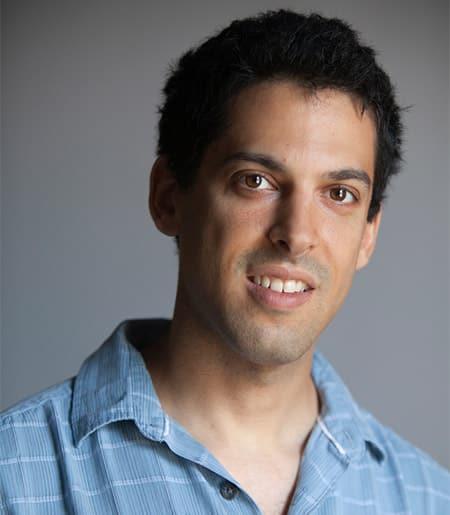
Lionel Levine
· ProfessorVerifiedCornell University · Mathematics
Active 1949–2024
About
Lionel Levine is a Professor in the Department of Mathematics at Cornell University. He earned his Ph.D. from the University of California at Berkeley in 2007. His academic interests include applied mathematics, combinatorics, discrete geometry, probability, and statistics. Levine's research focuses on understanding how and why large-scale forms and complex patterns emerge from simple local rules. He analyzes mathematical models that isolate specific features of pattern formation, aiming to capture aspects of scaling from local to global phenomena while maintaining mathematical tractability for proof development. His recent work involves the study of abelian networks, a generalization of the Bak-Tang-Wiesenfeld abelian sandpile model. Levine has contributed to the understanding of formation of large-scale random structures, sandpiles on square lattices, and the Apollonian structure of integer superharmonic matrices. His research explores the emergence of complex patterns through models that balance simplicity and the ability to prove theorems, advancing the mathematical understanding of pattern formation and criticality in complex systems.
Research topics
- Sociology
- Mathematics
- Physics
- Pure mathematics
- Mathematical analysis
- Statistics
- Combinatorics
- Statistical physics
Selected publications
Do language models plan ahead for future tokens?
arXiv (Cornell University) · 2024-04-01 · 1 citations
preprintOpen accessSenior authorDo transformers "think ahead" during inference at a given position? It is known transformers prepare information in the hidden states of the forward pass at time step $t$ that is then used in future forward passes $t+τ$. We posit two explanations for this phenomenon: pre-caching, in which off-diagonal gradient terms present during training result in the model computing features at $t$ irrelevant to the present inference task but useful for the future, and breadcrumbs, in which features most relevant to time step $t$ are already the same as those that would most benefit inference at time $t+τ$. We test these hypotheses by training language models without propagating gradients to past timesteps, a scheme we formalize as myopic training. In a constructed synthetic data setting, we find clear evidence for pre-caching. In the autoregressive language modeling setting, our experiments are more suggestive of the breadcrumbs hypothesis, though pre-caching increases with model scale.
Universality conjectures for activated random walk
Probability Surveys · 2024-01-01 · 5 citations
articleOpen access1st authorCorrespondingActivated Random Walk is a particle system displaying Self-Organized Criticality, in that the dynamics spontaneously drive the system to a critical state. How universal is this critical state? We state many interlocking conjectures aimed at different aspects of this question: scaling limits, microscopic limits, temporal and spatial mixing, incompressibility, and hyperuniformity.
FrontierMath: A Benchmark for Evaluating Advanced Mathematical Reasoning in AI
arXiv (Cornell University) · 2024-11-07 · 8 citations
preprintOpen accessWe introduce FrontierMath, a benchmark of hundreds of original, exceptionally challenging mathematics problems crafted and vetted by expert mathematicians. The questions cover most major branches of modern mathematics -- from computationally intensive problems in number theory and real analysis to abstract questions in algebraic geometry and category theory. Solving a typical problem requires multiple hours of effort from a researcher in the relevant branch of mathematics, and for the upper end questions, multiple days. FrontierMath uses new, unpublished problems and automated verification to reliably evaluate models while minimizing risk of data contamination. Current state-of-the-art AI models solve under 2% of problems, revealing a vast gap between AI capabilities and the prowess of the mathematical community. As AI systems advance toward expert-level mathematical abilities, FrontierMath offers a rigorous testbed that quantifies their progress.
Drug and Alcohol Dependence · 2024-07-01
articleHow to quantify the coherence of a set of beliefs
arXiv (Cornell University) · 2024-12-03
preprintOpen accessSenior authorGiven conflicting probability estimates for a set of events, how can we quantify how much they conflict? How can we find a single probability distribution that best encapsulates the given estimates? One approach is to minimize a loss function such as binary KL-divergence that quantifies the dissimilarity between the given estimates and the candidate probability distribution. Given a set of events, we characterize the facets of the polytope of coherent probability estimates about those events. We explore two applications of these ideas: eliciting the beliefs of large language models, and merging expert forecasts into a single coherent forecast.
Exact sampling and fast mixing of activated random walk
Electronic Journal of Probability · 2024-01-01
articleOpen access1st authorCorrespondingActivated Random Walk (ARW) is an interacting particle system on the d-dimensional lattice Zd. On a finite subset V⊂Zd it defines a Markov chain on {0,1}V. We prove that when V is a Euclidean ball intersected with Zd, the mixing time of the ARW Markov chain is at most 1+o(1) times the volume of the ball. The proof uses an exact sampling algorithm for the stationary distribution, a coupling with internal DLA, and an upper bound on the time when internal DLA fills the entire ball. We conjecture cutoff at time ζ times the volume of the ball, where ζ<1 is the limiting density of the stationary state.
Locally Markov walks on finite graphs
arXiv (Cornell University) · 2024-12-18
preprintOpen accessLocally Markov walks are natural generalizations of classical Markov chains, where instead of a particle moving independently of the past, it decides where to move next depending on the last action performed at the current location. We introduce the concept of locally Markov walks and we describe their stationary distribution and recurrent states, and we prove several properties such as irreducibility and ergodicity. For a particular locally Markov walk - the uniform unicycle walk on the complete graph - we investigate the mixing time and we prove that it exhibits cutoff.
The devil's staircase for chip‐firing on random graphs and on graphons
Random Structures and Algorithms · 2024-08-09
articleOpen accessAbstract We study the behavior of the activity of the parallel chip‐firing upon increasing the number of chips on an Erdős–Rényi random graph. We show that in various situations the resulting activity diagrams converge to a devil's staircase as we increase the number of vertices. Such a phenomenon was proved in an earlier paper by Levine for complete graphs, by relating the activity to the rotation number of a cycle map. Our method in this article is to generalize the parallel chip‐firing to graphons. Then we show that the earlier results on complete graphs generalize to constant graphons. Moreover, we prove a continuity result for the activity on graphons. These statements enable us to prove results on the activity of the parallel chip‐firing on large random graphs. We also address several problems concerning chip‐firing on graphons, and pose open problems. In particular, we show that the activity of a chip configuration on a graphon does not necessarily exist, but it does exist for every chip configuration on a large class of graphons.
2023-07-01 · 2 citations
articleRecent advances in remote health monitoring systems have significantly benefited patients and played a crucial role in improving their quality of life. However, while physiological health-focused solutions have demonstrated increasing success and maturity, mental health-focused applications have seen comparatively limited success in spite of the fact that stress and anxiety disorders are among the most common issues people deal with in their daily lives. In the hopes of furthering progress in this domain through the development of a more robust analytic framework for the measurement of indicators of mental health, we propose a multi-modal semi-supervised framework for tracking physiological precursors of the stress response. Our methodology enables utilizing multi-modal data of differing domains and resolutions from wearable devices and leveraging them to map short-term episodes to semantically efficient embeddings for a given task. Additionally, we leverage an inter-modality contrastive objective, with the advantages of rendering our framework both modular and scalable. The focus on optimizing both local and global aspects of our embeddings via a hierarchical structure renders transferring knowledge and compatibility with other devices easier to achieve. In our pipeline, a task-specific pooling based on an attention mechanism, which estimates the contribution of each modality on an instance level, computes the final embeddings for observations. This additionally provides a thorough diagnostic insight into the data characteristics and highlights the importance of signals in the broader view of predicting episodes annotated per mental health status. We perform training experiments using a corpus of real-world data on perceived stress, and our results demonstrate the efficacy of the proposed approach in performance improvements.
Universality Conjectures for Activated Random Walk
arXiv (Cornell University) · 2023-06-02
preprintOpen access1st authorCorrespondingActivated Random Walk is a particle system displaying Self-Organized Criticality, in that the dynamics spontaneously drive the system to a critical state. How universal is this critical state? We state many interlocking conjectures aimed at different aspects of this question: scaling limits, microscopic limits, temporal and spatial mixing, incompressibility, and hyperuniformity.
Recent grants
Algebra, dynamics and computation in abelian networks
NSF · $140k · 2011–2012
Algebra, dynamics and computation in abelian networks
NSF · $134k · 2012–2014
PostDoctoral Research Fellowship
NSF · $108k · 2008–2012
CAREER: Halting Problems In Statistical Mechanics
NSF · $500k · 2015–2020
Frequent coauthors
- 25 shared
Yuval Peres
Beijing Institute of Mathematical Sciences and Applications
- 19 shared
Shirshendu Ganguly
University of California, Berkeley
- 18 shared
Christopher Hoffman
- 18 shared
Elisabetta Candellero
Roma Tre University
- 11 shared
Scott Sheffield⋆
Massachusetts Institute of Technology
- 10 shared
David Jerison
Massachusetts Institute of Technology
- 9 shared
Benjamin Bond
- 7 shared
John Pike
Bridgewater State University
- Resume-aware match score
- Save to shortlist
- AI-drafted outreach
See your match with Lionel Levine
PhdFit ranks faculty by your research interests, methods, and publications — grounded in their actual work, not templates.
- Free to start
- No credit card
- 30-second signup