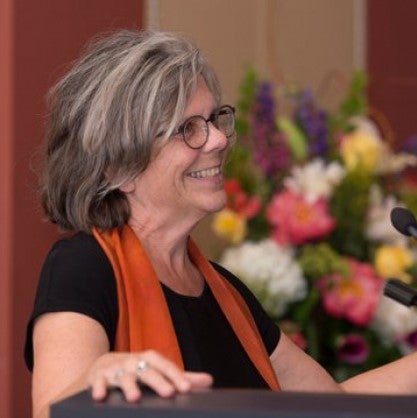
Lisa Balabanlilar
· Joseph and Joanna Nazro Mullen Professor in the Humanities Chair, Department of Transnational Asian Studies Director, Chao Center for Asian StudiesRice University · Transnational Asian Studies
Active 2007–2022
About
Lisa Balabanlilar is the Joseph and Joanna Nazro Mullen Professor in the Humanities, Chair of the Department of Transnational Asian Studies, and Director of the Chao Center for Asian Studies at Rice University. She received her PhD from The Ohio State University in 2007. Her research focuses on the Timurid-Mughal Empire of Central and South Asia, with broader interests encompassing Islamic South and Central Asia, comparative imperial court culture, movement and procession, memory and identity, and early modern Islamic Empires including the Ottoman, Mughal, and Safavid empires. Dr. Balabanlilar has authored significant works such as a biography of Mughal Emperor Jahangir titled 'The Emperor Jahangir: Power and Kingship in Mughal India' (2020), and her first book 'Imperial Identity in the Mughal Empire: Memory and Dynastic Politics in Early Modern South and Central Asia' (2012) explores the Central Asian legacy of the Mughal dynasty. Her current project is a comparative global study of imperial pleasure gardens called 'The King’s Garden.' She teaches courses on South Asian history, imperial pleasure gardens, Chingis Khan and the Mongol Empire, comparative early modern Islamic empires, and research seminars on topics like the Mughal Empire and world travel. Recognized for her teaching excellence, she has received multiple awards including the Brown Award for Superior Teaching and the Phi Beta Kappa Sophie Meyer Farb Prize for Teaching Excellence.
Research topics
- Political Science
- Ancient history
- History
- Law
- Sociology
- Gender studies
- Art
- Political economy
Selected publications
Women, the Imperial Household, and the State
Oxford University Press eBooks · 2022
1st authorCorresponding- Political Science
- Sociology
- Political Science
Abstract Building on recent scholarship, this chapter will re-examine the role of women in the imperial household, and the extent of their role in supporting and consolidating the power of the Mughal Emperors. Where an earlier scholarship had seen Mughal imperial marriages as consolidating political alliances and the women involved in such marriages as merely pawns being exchanged, this chapter will rethink how authority, influence, and patronage were structured within the harem and beyond it, as women interacted with and participated in the apparatus of state. As committed partners in the imperial project, Mughal women manifested their powers broadly: as political advisers and diplomats, sponsors of court ritual, in trade and mercantile power, through their pious patronage, and production of the arts in the service of the state. Mughal women remained tightly bound to dynastic politics and survival, not only as passive spectators or victims, nor only as wives and mothers, but as participants in the fraught and dangerous world of empire building.
2022-01-01
other1st authorCorrespondingIntroduction The Humayunnama, Book of Humayun, is a memoir written in the sixteenth century by Gulbadan Begam (1523–1603). Her father Zahir al-Din Muhammad Babur (d. 1530), was an independent Timurid prince descended from the Central Asian empire builders Chingis Khan and Timur. His successful conqu
The Emperor Jahangir: Power and Kingship in Mughal India
2020 · 4 citations
1st authorCorresponding- Political Science
- Ancient history
- Political Science
2020 · 4 citations
1st authorCorresponding- Ancient history
- Art
- History
Jahangir was the fourth of the ‘Great Six’ Mughal Emperors. The son of Akbar the Great, who extended the Mughal Empire across the Indian Subcontinent, and the father of Shah Jahan, builder of the Taj Mahal, Jahangir’s important role in building a Mughal cultural identity has been neglected. Jahangir was a great lover of art, and Mughal painting reached new heights under his patronage. He was also a patron of the sciences, and the world’s first seamless celestial globe was created under his reign. Seeking to uncover the man behind the figurehead, and taking an in-depth new look at Jahangir’s personal memoirs, the Jahangirnama, The Emperor Jahangir reveals in detail Jahangir’s battles with alcoholism and opium addiction, his struggles for power, his defence of kingship and courtly manners and his dealings with the rebellion led by his first son, Khusraw, whose uprising he crushed in 1605. This is one of the golden ages of the early modern world, and this book sheds new light on a remarkable historical figure.
The Mythical Ancestry of the Mughal Dynasty
Cursor mundi · 2018-01-01
book-chapter1st authorCorrespondingImperial Identity in the Mughal Empire
Zenodo (CERN European Organization for Nuclear Research) · 2012-04-03 · 1 citations
bookOpen access1st authorCorrespondingLisa Balabanlilar, <em>Imperial Identity in the Mughal Empire: Memory and Dynastic Politics in Early Modern South and Central Asia</em> (London: I. B. Tauris, 2012). Mogul Empire -- History.<br> India -- Mogul Empire.<br> History
Imperial Identity in the Mughal Empire
I.B.Tauris eBooks · 2012-01-01 · 58 citations
book1st authorCorrespondingHaving monopolized Central Asian politics and culture for over a century, the Timurid ruling elite was forced from its ancestral homeland in Transoxiana at the turn of the sixteenth century by an invading Uzbek tribal confederation. The Timurids travelled south: establishing themselves as the new rulers of a region roughly comprising modern Afghanistan, Pakistan and northern India, and founding what would become the Mughal Empire (1526-1857). The last survivors of the House of Timur, the Mughals drew invaluable political capital from their lineage, which was recognized for its charismatic genealogy and court culture - the features of which are examined here. By identifying Mughal loyalty to Turco-Mongol institutions and traditions, Lisa Balabanlilar here positions the Mughal dynasty at the centre of the early modern Islamic world as the direct successors of a powerful political and religious tradition.
The Begims of the Mystic Feast: Turco-Mongol Tradition in the Mughal Harem
The Journal of Asian Studies · 2010-02-01 · 14 citations
article1st authorCorrespondingThe founders of India's Mughal Empire were the last surviving remnants of the Timurid-Mongol ruling elite, descendants of Timur and Chingis Khan, for whom the traditions and institutions of Central Asia were universally recognized and potent symbols of cultural prowess and legitimacy. These ideas and understandings were not abandoned in the dynasty's displacement and reestablishment in India. Among them remained a distinctly Timurid understanding of the rights and roles of elite women—not only with regard to their artistic production or patronage but also, in marked contrast to their contemporaries the Ottomans and Safavids, the power offered to young, even childless, royal women and their active participation in dynastic survival and political success. In generations of Mughal rule on the Subcontinent, the comfortable cultural accommodation of independent elite women was a vital component of the Timurid cultural and social legacy, inherited and carefully maintained at the royal courts of India.
The Emperor Jahangir and the Pursuit of Pleasure
Journal of the Royal Asiatic Society of Great Britain & Ireland · 2009-03-11 · 8 citations
article1st authorCorrespondingThe Mughal emperors of India were remarkably mobile kings, inspiring modern historians to describe their imperial court culture as ‘peripatetic’. While the Mughals were not immune to the impulse to construct massive urban architect, no Mughal city, no matter how splendid, innovative, accessible or enlightened, remained the imperial centre for long. Through generations of Mughal rule in India, the political relevance of Mughal imperial cities continued to be very limited; it was physical mobility which remained at the centre of Mughal imperial court life and, for much of the Mughal period, the imperial court was encapsulated in the physical presence of the king.
Lords of the Auspicious Conjunction: Turco-Mongol Imperial Identity on the Subcontinent
Journal of world history · 2007-03-01 · 97 citations
articleOpen access1st authorCorrespondingRe-evaluating the scholarly and intellectual isolation with which India's Mughal empire has been treated, this study identifies the Mughals as direct descendants of Chinggis Khan and Tamerlane (Timur). It also explores the systematic manipulation of their Central Asian legacy through which the Mughals defined and defended their imperial identity and political viability on the South Asian subcontinent. In identifying and examining Mughal loyalty to Turco-Mongol institutions and traditions, the study positions the Mughal dynasty in the center of the early modern Islamic world as the direct successor of a powerful political and religious tradition.
Awards & honors
- 2018 Winner of the Brown Award for Superior Teaching
- 2016 Winner of the Brown Award for Teaching Excellence
- 2014 Winner of the Brown Award for Superior Teaching
- 2010 Winner of Phi Beta Kappa Sophie Meyer Farb Prize for Te…
- Resume-aware match score
- Save to shortlist
- AI-drafted outreach
See your match with Lisa Balabanlilar
PhdFit ranks faculty by your research interests, methods, and publications — grounded in their actual work, not templates.
- Free to start
- No credit card
- 30-second signup