Resume-aware faculty matching

Find professors who actually fit you

Upload your resume. Four AI agents analyze your background, rank the faculty who fit, inspect their recent research, and help you draft outreach — grounded in their actual work, not templates.

Free to startNo credit cardCancel anytime
Top matches Balanced preset
Dr. Sarah Chen
Stanford · Interpretability · NLP
91
Dr. Marcus Holloway
MIT · Robotics · RL
84
Dr. Aisha Okonkwo
CMU · Fairness · HCI
82
Nova · Professor Researcher · re-ranking top 20…
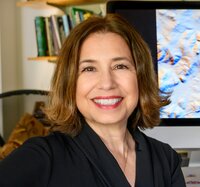
Lisa J Lucero

Lisa J Lucero

· ProfessorVerified

University of Illinois Urbana-Champaign · Anthropology

Active 1992–2024

h-index22
Citations1.8k
Papers10114 last 5y
Funding$119k
See your match with Lisa J Lucero — sign in to PhdFit.Sign in

About

Lisa J. Lucero is a professor in the Department of Anthropology at the University of Illinois. Her research interests include the Classic Maya, ritual, political power, climate change, and sustainability. She holds a Ph.D. from UCLA, earned in 1994, and has received recognition such as being an AAAS Fellow and serving as President of the Archaeology Division of the American Anthropological Association from 2017 to 2019. Lucero is also affiliated with multiple campus programs, including Medieval Studies, Latin American and Caribbean Studies, Global Studies, and the Institute for Sustainability, Energy, and Environment. Her scholarly work focuses on understanding ancient Maya societies, water management, and environmental sustainability, contributing to the fields of archaeology and anthropology through her research, publications, and academic leadership.

Research topics

  • Sociology
  • Archaeology
  • Computer Security
  • Geography
  • Computer Science
  • Political Science
  • Biology
  • Law
  • Environmental engineering
  • History
  • Environmental resource management
  • Architectural engineering
  • Visual arts
  • Epistemology
  • Ecology
  • Environmental science
  • Engineering
  • Art
  • Aesthetics
  • Environmental planning
  • Environmental ethics

Selected publications

  • The Maya

    2024-12-19

    book-chapter1st authorCorresponding

    Abstract This chapter introduces Maya history and details the Maya people’s resilience. The First Americans arrived 20,000 years ago during the last ice age and came face to face with megafauna (giant sloths, mammoths) and relied on hunting and gathering until the introduction of maize and other domesticated crops. The Maya and their ancestors were part of an interwoven history with other Mesoamerican peoples. Farming communities (c. 2000 bce) led to landscape transformation, growing population, and eventually, the emergence of hundreds of cities and kings. Rural farmers relied on urban reservoirs during seasonal drought. When several prolonged droughts struck beginning c. 800 ce, reservoir levels plummeted, crops failed, and famine ensued. Subjects blamed their kings and deserted them and the cities by 900 ce. Farmers adapted and moved on. This story continued until the early 1500s when the Spanish invaded and forced religious conversion and brought with them violence and epidemic diseases.

  • Animate Landscapes and Indigenous Ontologies in North America and Mesoamerica

    University Press of Florida eBooks · 2024-12-03

    book-chapterSenior author

    This chapter provides a synthetic discussion of the contributions in the first half of this volume, which present a range of Indigenous ontological perspectives from North America and Mesoamerica. Each contributor relies heavily on Indigenous philosophy, language, writing, and ethnography to inform their archaeological interpretations. Although Indigenous perspectives vary across the regions of North and Central America, one generally shared aspect is an understanding that the lifeworld is animate and regenerative. Each chapter describes various inhabitants (human or otherwise) who are considered persons in this animate world, namely because they contribute to the mutual care and growth of others. Other shared themes that are discussed here include the personified features of the animate landscape, the sacred-secular divide in relational societies, and the potential for other-than-human kinship. The contributions in this volume highlight the value of Indigenous knowledge systems not just as archaeological evidence, but as a body of theory. These chapters emphasize what the Anishinaabe refer to as a “braided” approach, showing how both Western and Indigenous “science” can offer complementary ways of knowing and provide a fuller understanding of the world while mutually strengthening one another.

  • Animate Landscapes and Indigenous Ontologies in North America and Mesoamerica

    University Press of Florida eBooks · 2024-11-09

    book-chapterSenior author
  • Maya Wisdom and the Survival of Our Planet

    2024-12-19 · 1 citations

    book1st authorCorresponding

    Abstract Maya Wisdom and the Survival of Our Planet presents the Maya way of seeing and interacting with the world, which embodies lessons and provides solutions to ensure a sustainable future of Earth. This book is based on over three decades of working with Maya associates in Belize, Central America, to study the ancestral Maya as an archaeologist, and it approaches the future through the lens of the Maya nonanthropocentric inclusive worldview. Ancestral Maya people worked with, not against, nature. Nor did they privilege humans at the expense of nonhumans. Their engagement with the tropical environment was expressed in a landscape of green cities, farmsteads, gardens, fields, forests, and sacred places. The Maya built green cities that drew people in through royal reservoirs, a system that lasted over 1,000 years in the southern lowlands (c. 300 bce to 900 ce). After taking the reader on a journey through Maya history, their tropical world, and how they lived in it and engaged with nonhumans through ceremonies, the book concludes with concrete solutions that bridge the past and present for the future. Conditions are not going to change, but people can. Maya resilience is a testament for how to move forward, and this book provides a roadmap of how to do so.

  • The Maya Inclusive Worldview

    2024-12-19

    book-chapter1st authorCorresponding

    Abstract This chapter introduces the Maya nonanthropocentric inclusive worldview where everything is animated and connected. The Maya work with nature, not against it, because they are part of the tropical world where things, humans, animals, land, water, and other entities coexist on the same plane and each plays a role in world maintenance. There are no Cartesian dichotomies—no sacred/secular, natural/supernatural, or animated/inanimate. Their cyclical view of life focuses on renewal via ceremonies and collaboration in the home, forests, and Underworld portals (caves and water bodies), which often were places of pilgrimage where they engaged with ancestors, gods, and fellow entities. Ancestors, gods, and forest spirits ensure that people follow the right path. Infractions can result in death or worse—including being killed as a witch and left in portals where their souls would never be reborn.

  • The Survival of Our Planet

    2024-12-19

    book-chapter1st authorCorresponding

    Abstract This chapter presents concrete solutions crucial for the survival of Earth based on Maya wisdom, and not just for the tropics, but globally. Action and change start in the home and continue in communities, cities, governments, and transnational corporations. Solutions include adopting more diverse practices and an inclusive worldview, appreciating Indigenous knowledge, and considering nonhumans in future strategies. It is also important to devise green technologies that don’t rely on finite resources (e.g., lithium) and that serve multiple purposes. Green cities, urban-rural networks, and using organic waste to fertilize fields and gardens are also vital. People need what the Earth provides, but the Earth does not need people. Thus, it is essential to take care of fellow entities and not deplete them or cause their extinction, and to collaborate more sustainably and properly with forests, water, land, soils, and air to ensure the survival of our planet.

  • House and Cosmos

    2024-12-19

    book-chapter1st authorCorresponding

    Abstract When Maya first moved into an area, they and their descendants invested in place materially and spiritually via their homes to emphasize their connection to the land, nonhuman entities, and the cosmos, as highlighted in this chapter. This relationship was sustained via renewal ceremonies, as illustrated at the small Maya city of Saturday Creek, Belize (c. 600 bce to 1500s ce). The house is part of the landscape, enmeshed with other entities through continuous transformation and renewal, essential since family is the unit of action and the home is the building block of society. Commoner and royal families recorded their history through burials and ritual deposits. The family home connects the three realms: the space underneath the roof is the Upperworld, the walls are the mountains, the floor is the Earth’s surface, and under the floors is the Underworld.

  • Ancient Maya reservoirs, constructed wetlands, and future water needs

    Proceedings of the National Academy of Sciences · 2023 · 12 citations

    1st authorCorresponding
    • Environmental science
    • Ecology
    • Geography

    The Classic Maya (c. 250 to 900 CE) in the tropical southern lowlands of Central America dealt with water scarcity during annual dry seasons and periods of climate instability via sophisticated urban reservoir systems they relied on for over a thousand years. Surface water is limited because typically rain percolates through the karstic terrain. I posit that Maya reservoirs functioned as do constructed wetlands (CWs) at present. Still-water systems like CWs and Maya reservoirs can become stagnant and nonpotable due to the build-up of nutrients that promote algal growth. Stagnant waters also serve as breeding grounds for mosquitoes that spread endemic diseases. CWs keep water clean via certain aquatic plants since all plants uptake nutrients (e.g., nitrogen, phosphorus) and decomposing plant matter supports microbial biofilms that break down nutrients. CWs also support diverse zooplankton that prey on pathogens and bacteria that assist to denitrify water. CWs do not require the use of chemicals or fossil fuels and after the initial labor-intensive output become self-cleaning and self-sufficient with some maintenance. I posit that the Maya used a diverse array of aquatic plants and other biota to keep water clean in the same manner as do CWs, which I demonstrate using evidence from excavations and settlement maps, sediment cores and current wetlands, and the iconographic and hieroglyphic records. The next step is to combine what we know about ancient Maya reservoirs in conjunction with what is currently known about CWs to better address future water needs.

  • DENUDED LANDSCAPES AND EXPOSED NEIGHBORHOODS: RESULTS OF THE 2022 VALLEY OF PEACE ARCHAEOLOGY PROJECT

    2023-01-01 · 1 citations

    article1st authorCorresponding

    Much of the Valley of Peace Archaeology (VOPA) project area, encompassing the center of Yalbac to the south, the pilgrimage destination of Cara Blanca to the north (owned by The Belize Maya Forest Trust as of late 2020) and rural areas in between that were home to farmsteads and elite residences, has recently been deforested for agricultural purposes exposing hundreds of mounds. Here we present the results of the 2022 VOPA salvage archaeology operations (excavations of 14 rural residences) in an area between Yalbac and Cara Blanca that yielded information on ancestral neighborhoods. One of the major benefits of this project is our contribution to recording ancestral Maya culture heritage one neighborhood at a time, which not only preserves their history, but also reveals lessons from the past. Even when Maya population peaked c. 600-800 CE in the Late Classic period, the Maya endured because of their diverse and sustainable practices.

  • IF THE PAST TEACHES, WHAT DOES THE FUTURE LEARN? Ancient Urban Regions and the Durable Future

    2022 · 11 citations

    • Sociology
    • Computer Science
    • Political Science

    How can we transform urban environments to encourage durability and mediate the social price of myriad risks and vulnerability?Our work here is to build a bridge from archaeology to mainstream architectural and design theory. The study of places, landscapes, and regions links the two fields. Architecture can be shaped and enhanced by the long-term cultural and geographic perspective afforded by archaeology; architecture can offer archaeology a ride into the future. We hope that our efforts are novel enough to be inspiring and connected enough to allow existing concepts to be furthered. The bridge unites three domains: material, social, and aesthetic. We look to the past to find material technologies—new engineering and conceptual solutions to an array of problems—and the past obliges with many examples. However, these technologies in their material aspects are only part of the story. The archaeologist sees them as playing a role in a system. This system, while mechanically functional, is also profoundly social: it includes administrative structures, but also innumerable other kinds of relationships—kin groups, neighborhoods, genders—that mirror the embedded relations between humans and nature. As in architecture, systems include semantics and aesthetics: not only are these forms pleasing to the eye, but they also tell stories of history and place and give identity and meaning to the lives in which they are enmeshed. This multi-functionality and multi-vocality are inherent in past systems.

Recent grants

Frequent coauthors

  • Jean Larmon

    University of Illinois Urbana-Champaign

    6 shared
  • Vernon L. Scarborough

    University of Cincinnati

    6 shared
  • Andrew Kinkella

    Moorpark College

    5 shared
  • Scott L. Fedick

    University of California, Riverside

    3 shared
  • Anabel Ford

    3 shared
  • Susan D. Gillespie

    University of Florida

    3 shared
  • Nicholas P. Dunning

    University of Cincinnati

    3 shared
  • Jerry D. Moore

    California State University, Dominguez Hills

    3 shared

Education

  • PhD, Archaeology

    University of California Los Angeles

    1994

Awards & honors

  • AAAS Fellow
  • President, Archaeology Division, American Anthropological As…
  • Resume-aware match score
  • Save to shortlist
  • AI-drafted outreach

See your match with Lisa J Lucero

PhdFit ranks faculty by your research interests, methods, and publications — grounded in their actual work, not templates.

  • Free to start
  • No credit card
  • 30-second signup