Resume-aware faculty matching

Find professors who actually fit you

Upload your resume. Four AI agents analyze your background, rank the faculty who fit, inspect their recent research, and help you draft outreach — grounded in their actual work, not templates.

Free to startNo credit cardCancel anytime
Top matches Balanced preset
Dr. Sarah Chen
Stanford · Interpretability · NLP
91
Dr. Marcus Holloway
MIT · Robotics · RL
84
Dr. Aisha Okonkwo
CMU · Fairness · HCI
82
Nova · Professor Researcher · re-ranking top 20…
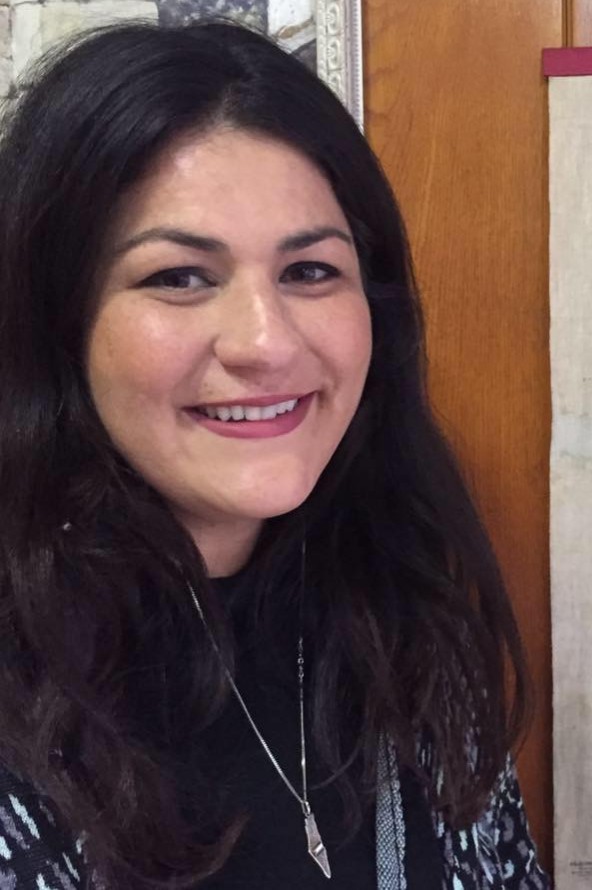
Loubna Qutami

Loubna Qutami

· Assistant Professor

University of California, Los Angeles · Asian American Studies

Active 2013–2025

h-index3
Citations40
Papers158 last 5y
Funding
See your match with Loubna Qutami — sign in to PhdFit.Sign in

About

Loubna Qutami is an Assistant Professor in the Department of Asian American Studies at the University of California, Los Angeles. She is a former President’s Postdoctoral Fellow from the Department of Ethnic Studies at the University of California, Berkeley (2018-2020) and received her PhD from the Department of Ethnic Studies at the University of California, Riverside (2018). Qutami’s research examines transnational Palestinian youth movements after the 1993 Oslo Accords through the 2011 Arab Uprisings. Her work is based on scholar-activist ethnographic research methods. Her broader scholarly interests include Palestine, critical refugee studies, the racialization of Arab/Muslim communities in the U.S., settler-colonialism, youth movements, transnationalism, and indigenous and Third World Feminisms.

Research topics

  • Political Science
  • Sociology
  • Law
  • Political economy
  • Geography
  • Criminology
  • Gender studies
  • Demography

Selected publications

  • On Zionist Logic and Structure

    Critical Ethnic Studies · 2025-11-06

    articleSenior author
  • Theory and Practice: Palestinian Youth Engagement in Frameworks of Struggle

    Graduate Institute Publications eBooks · 2025-01-01

    book-chapterOpen access1st authorCorresponding

    The Palestinian struggle has historically been defined and articulated through frameworks of anti-colonialism and national liberation. Since the 1993 Oslo Accords, however, new frameworks have gained popularity especially within solidarity scholarship and activism in North America: settler-colonialism, refugeehood, apartheid, and racial oppression. This essay engages a theorization of these frameworks from the vantage point of Palestinian youth organizers and thinkers in North America who are merging theory and practice to create a guiding praxis for liberation organizing. Utilizing scholar-activist ethnographic methods as members of the Palestinian Youth Movement (PYM), the authors argue that no one framework alone can define the historical and transnational threads of the Palestinian struggle but that each does have generative functions for Palestinian national liberation movement building and joint-struggle praxis with other communities.

  • Thinking Palestine, Decolonization and Abolition in Ethnic Studies

    State Crime Journal · 2024-02-16 · 4 citations

    articleOpen access1st authorCorresponding

    What does it mean to produce and engage in liberatory scholarship and teaching pedagogy on Palestine, given the extant forms of policing, surveillance and censorship that continue to target scholars of Palestine within the US academy? Why do these forms of repression appear even within a field of study—ethnic studies—that grew from emancipatory radical student movements seeking to dismantle (settler) colonial and white-supremacist hegemony in scholarship and teaching pedagogy? And how might we, as scholars engaged in the radical work and theory of abolition and decolonization, protect the field of ethnic studies from a mutilation of the pedagogical structure that such repression seeks to accomplish? To be clear about these terms, by abolition, I mean the insurgent praxis of Black rebellion that sought to abolish not only the system of but the foundational logics of racial-chattel-slavery. This insurgent praxis was not only sustained but renewed following the passage of the 13th amendment which abolished slavery except for as a punishment for crime. Since then, abolition continues to forcefully recreate itself as an ethos, school of thought, praxis, and movement, that redefines Blackness, and Black being against white-supremacist state violence codified in multiple liberal and neoliberal reconfigurations. In the contemporary moment abolitionist praxis seeks a dismantlement of the prison-industrial-complex and carceral logic that animates racist-state violence: policing, extrajudicial killing, racial surveillance and captivity of Black bodies (Browne 2015). But abolition also allows for and invites rebellion among all those whose lives are threatened by the white-being character of the state and its carceral logic and structure as well. This carceral logic extends to structures of regulated exclusion, taking form for example in the erection of carceral borders and border regimes to keep refugees and migrants out or contained, and the counter-insurgent war against knowledge curators, artists, and activists that question the fundamental coloniality and whiteness of the US state. I recognize true decolonization as that which has always been an abolitionist worldview and practice as well. Decolonization seeks not only to undue structures and ideologies of coloniality but to foreground Indigenous ways of being, knowing, and understanding in its place. When I refer to decolonization however, I am not referring only to an epistemic, psychological, or discursive project—I quite literally believe in the rematriation of stolen Indigenous lands to its stewards. By speaking and practising decolonization within, to, and against the academy and university, I am concerned with how our work within this space enables this rematriation. Within this framework, I offer this review of Sherene Razack’s Nothing Has to Make Sense (2022), Saree Makdisi’s Tolerance is a Wasteland (2022) and Lara Sheehi and Stephen Sheehi’s Psychoanalysis Under Occupation (2022) to explore partial causality for the institutionalized repression and absence of Palestinian studies within the field of ethnic studies as an institutional project. I propose that these three texts, when read in conversation with one another and alongside the rich tradition of decolonial and abolitionist thought and practice, offer important insights relevant to protecting the radical potential of the ethnic studies project from Zionist liberal co-optation.

  • A Feminist Practice of Bearing Witness to Genocide

    Feminist Studies · 2023-01-01 · 2 citations

    article1st authorCorresponding
  • A Feminist Practice of Bearing Witness to Genocide

    Feminist Studies · 2023-01-01 · 2 citations

    article1st authorCorresponding

    A Feminist Practice of Bearing Witness to Genocide Loubna Qutami (bio) what does it mean to bear witness to the staggering loss of life and unimaginable carnage unfolding in the besieged Gaza Strip? And how might the act of bearing witness lend itself to a practice of transnational feminist solidarity? Since October 7th, the Israeli state has waged a genocidal war on Palestinian life in the besieged Gaza Strip—proudly boasting that within the first six days alone, it had dropped 6000 bombs on Gaza.1 As of November 24, over 40,000 tons of explosives2 had rained from the skies onto Gaza—surpassing in force, damage, and lasting impacts to the strength of two nuclear bombs.3 The Euro-Med Human Rights Monitor reports that 20,031 Palestinians have been martyred—at least 18,460 of whom are civilians, including 4,112 women and 8,176 children.4 More children were killed in Gaza within the first three weeks of bombardment than in all other armed conflicts combined since 2019.5 The highest age group of those killed have been five-year-olds. Thousands more—unaccounted for in these numbers—are expected to have already perished due to widespread starvation and dehydration or remain entombed under the rubble of destroyed buildings unaccounted for in the final death tally. [End Page 531] Herein lies the painful reckoning: that the death toll in the Gaza Strip surpasses the number of the approximate 15,000 Palestinians killed during the Nakba campaign of 1947–1949. The 1.7 million people who have been displaced in this genocide surpasses the 750,000 Palestinians forcibly expelled during the 1948 Nakba, when Zionists vehemently worked to usurp and clear the land to establish the basis of its settler-colonial enterprise.6 Even if the bombing stops today, the catastrophic environmental and health ramifications of this war on Gaza will still yield hundreds of thousands of premature Palestinian deaths and a structure of harm that will live on for generations. Like the 1948 Nakba, this genocide holds the power to shift the course of history. Bearing witness to it gives us the power to determine how it is remembered. To bear witness to genocide is to record what is rendered unspeakable. The Israeli imposed telecommunications and media blackouts in the Gaza Strip have been matched by a relentless propaganda campaign promoted by Western journalists, governments, and our very own educational institutions that have worked vehemently to erase the truth and obscure the relations of colonial domination between the Israeli state and its Palestinian subjects. So that in the end, in the act of witnessing the bodies of Palestinians explode to pieces, or the images of fetuses and babies pulled from under the rubble, or of the wounded forced to flee south in the thousands, or hundreds of thousands of buildings destroyed, or in knowing that over fifty entire families have been completely wiped from the Gaza Civil registry, we are asked to grieve, and mourn, and remember the perpetrators: our colonizers. A feminist practice of bearing witness means understanding that violence and power work as deeply on the mind and soul as they do on the body and land. And to shield the mind and soul—to protect it from this violence—requires a militant and tenacious dedication to affirming truth. Bearing witness means we open our eyes despite the pain it causes. It is to see and hear those whose lives and homes are on the line, and to refuse to allow all those who mutilate the truth to bludgeon us into silence, intimidate us into complicity, beat the humanity out of us, or to normalize the notion that Palestinian life is disposable or justified. [End Page 532] To bear witness is to speak truth to power and to hold onto truth—defiantly—just as Palestinians are holding their ground in the Gaza Strip as the earth vanishes beneath them. History suggests that this is the difference between bearing witness to a genocide and cannibalizing its victims. A feminist practice of bearing witness means we defiantly record, remember, survive, and resist. [End Page 533] Loubna Qutami loubna qutami is an assistant professor in the Department...

  • The Graveyard of Revolutions

    Critical Ethnic Studies · 2023-06-29

    article1st authorCorresponding
  • Why Feminism? Why Now? Reflections on the “Palestine Is a Feminist Issue” Pledge

    2021-05-03

    report1st authorCorresponding

    Loubna Qutami asks what it means to think about Palestinian liberation as a feminist issue?

  • Transnational Histories of Palestinian Youth Organizing in the United States

    Journal of Palestine Studies · 2021-04-02 · 5 citations

    article1st authorCorresponding

    This article explores the transnational histories that have conditioned Palestinian youth organizing in the United States from the 1950s to the present day. It examines the organizational vehicles of earlier generations of activists such as the Organization of Arab Students (OAS) and the General Union of Palestinian Students (GUPS) to trace the formation of the U.S. chapter of the transnational Palestinian Youth Movement (PYM). It argues that in the Oslo and post-Oslo eras, which severed the Palestinian diaspora from the national body politic and the rich Palestinian organizational histories of the pre-1993 period, the lessons of their forerunners are instructive for PYM’s new generation of organizers. The article posits that transnational connections have profound implications for localized U.S. political organizing and that contemporary Palestinian youth organizing is part of a historical continuum. Drawing on oral history and scholar-­activist ethnographic methods, the article situates contemporary youth organizing in its transnational and historical contexts.

  • “The Camp Is My Nationality”

    Critical Ethnic Studies · 2021 · 17 citations

    1st authorCorresponding
    • Political Science
    • Political Science
    • Law
  • Alterity Across Generations 

    Revue des mondes musulmans et de la Méditerranée · 2020-01-01 · 3 citations

    articleOpen accessSenior author

    Les accords d’Oslo de 1993 marquent le passage d’un projet de libération anticolonial à un projet néolibéral de construction de l’État porté par l’establishment politique palestinien. Un passage non dénué de paradoxe puisque la génération « post-Oslo » qui aurait dû se réjouir des bienfaits de l’État doit porter le fardeau d’une colonisation néolibérale complexe de la terre et d’une oppression du peuple, sans jamais bénéficier des soi-disant droits à la citoyenneté et à la souveraineté. Au lieu de quoi les formes systémiques d’oppression se sont accrues tandis que la jeunesse assume le choc d’une nation palestinienne affaiblie, fragmentée tant bien géographiquement qu’idéologiquement. Cet article décrit la complexité des conditions coloniales palestiniennes après Oslo du point de vue de jeunes organisateurs transnationaux. Il relate les fondements, le développement et les défis du Mouvement de la jeunesse palestinienne (MJP) entre 2006 et 2015. Les auteurs proposent une analyse comparative du processus de développement du MJP juxtaposée aux expériences des mouvements de jeunes et d’étudiants palestiniens des années 1950 et 1960 de façon à comprendre comment et pourquoi ces jeunes en arrivent à s’ancrer dans une altérité politique essentielle aux processus révolutionnaires des peuples occupés et dépossédés.

Frequent coauthors

  • Mjriam Abu Samra

    University of Jordan

    2 shared
  • Omar Zahzah

    San Francisco State University

    1 shared
  • Nadine Naber

    1 shared
  • Ibrahim Fraihat

    1 shared
  • Sherene Seikaly

    1 shared
  • Resume-aware match score
  • Save to shortlist
  • AI-drafted outreach

See your match with Loubna Qutami

PhdFit ranks faculty by your research interests, methods, and publications — grounded in their actual work, not templates.

  • Free to start
  • No credit card
  • 30-second signup