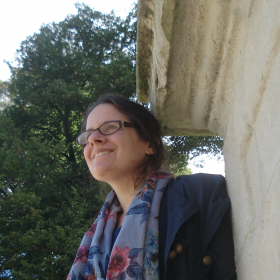
Lydia Spielberg
· Assistant Professor of ClassicsUniversity of California, Los Angeles · Classics
Active 2015–2025
About
Lydia Spielberg joined the Department of Classics at UCLA in 2018 after completing a post-doctoral position at Radboud University. She holds a PhD in Classics from the University of Pennsylvania and a BA in Classics and Music from Bard College. Her research primarily focuses on Roman historiography and the presentation of social and political agency by historians, especially in contexts of political turmoil or repression. She is interested in how ancient authors use literature to 'do things,' particularly within the Roman empire, and her dissertation, which is being revised into a book, explores claims of authenticity and authority in Roman historiography, including issues of quotation, transcription, and the social functions of intertextuality such as commonplaces, topoi, memes, and political clichés.
Research topics
- Linguistics
- Computer Science
- Art
- Philosophy
- History
- Literature
- Law
- Theology
- Psychology
- Classics
Selected publications
‘Distinctions between words’ (Differentiae uerborum)
Liverpool University Press eBooks · 2025-06-03
book-chapter1st authorCorresponding‘On Cicero’s Republic’ (Περὶ τῆς Κικέρωνος πολιτείας)
Liverpool University Press eBooks · 2025-06-03
book-chapter1st authorCorresponding‘On the Roman year’ (De anno Romano)
Liverpool University Press eBooks · 2025-06-03
book-chapter1st authorCorresponding2025-06-05
book-chapter1st authorCorrespondingAbstract In Histories 2, Tacitus narrates the war between Otho and Vitellius and the organization of the Flavian bid for imperial power. This chapter explores these three themes—information and the spaces of empire, individual agency, and historical memory—with particular attention to scenes of deliberation and hesitation by those caught between major events and places. When characters try to decide on the best course of action, they entertain multiple possible futures and their consequences. Such “sideshadowing” of possible alternative histories complicates both the predestination implied by fortuna and fate and the reader’s knowledge of what in fact came to pass.
‘On critical signs used in books’ (Περὶ τῶν ἐν τοῖς βιβλίοις σημείων)
Liverpool University Press eBooks · 2025-06-03
book-chapter1st authorCorresponding‘On Roman games’ (Ludicra historia)
Liverpool University Press eBooks · 2025-06-03
book-chapter1st authorCorresponding‘On Rome and its customs’ (De Roma et institutis moribusque Romanis)
Liverpool University Press eBooks · 2025-06-03
book-chapter1st authorCorresponding‘On the organisation of state offices’ (De institutione officiorum)
Liverpool University Press eBooks · 2025-06-03
book-chapter1st authorCorresponding‘Various topics’ (De rebus uariis)
Liverpool University Press eBooks · 2025-06-03
book-chapter1st authorCorrespondingCh. 4. Caesar’s Talkative Centurions: Anecdotal Speech, Soldierly Fides, and Contemporary History
2023 · 1 citations
1st authorCorresponding- Linguistics
- History
- Psychology
Caesar purports to quote brief utterances by his centurions at dramatic moments in the commentarii, who provide testimony ‘from the ranks’. These speakers demonstrate Caesar’s bond with his men and offer readers in Rome interpretations of contested events that might be indecorous for Caesar to make in his own voice, but which have persuasive power from notionally independent and unrhetorical soldiers. For non-contemporary readers these specifics were inapposite or irrelevant, however, and later writers such as Appian and Plutarch give Caesarian centurions only stock declarations of loyalty. Published in Andrew G. Scott,, ed., Studies in Contemporary Historiography (HISTOS Supplement 15), p. 65-106.
- Resume-aware match score
- Save to shortlist
- AI-drafted outreach
See your match with Lydia Spielberg
PhdFit ranks faculty by your research interests, methods, and publications — grounded in their actual work, not templates.
- Free to start
- No credit card
- 30-second signup