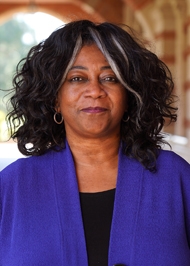
M Kamari Clarke
· AdjunctVerifiedUniversity of California, Los Angeles · Anatomy and Cell Biology
Active 1995–2026
About
Kamari Maxine Clarke is an Adjunct Professor at UCLA and a Distinguished Professor at the University of Toronto. She has conducted research for more than twenty years on issues related to legal institutions, human rights, international law, religious nationalism, and the politics of race and globalization. Her work explores theoretical questions concerning culture and power, and details the relationship between new social formations and contemporary problems. One of her key academic contributions is ethnographically demonstrating how legal and religious knowledge regimes produce practices that travel globally. In addition to her scholarly work, Professor Clarke has served as a technical advisor to the African Union legal counsel and has produced policy reports to assist the AU in navigating international law and United Nations challenges. She has published nine books, including 'Affective Justice: The International Criminal Court and the Pan-Africanist Pushback' (2019), 'Fictions of Justice' (2010), and 'Mapping Yorùbá Networks' (2004). Her research interests encompass culture and power, legal anthropology, affect theory, transnationalism, globalization and diaspora theory, social and cultural theory, the anthropology of Africa, race and globalization, social movements, international law, religious nationalism, expertise, and geospatial technologies. Her regional focus includes Nigeria-West Africa, the USA, and international institutions such as the International Criminal Courts and Tribunals in The Hague, the African Union in Addis Ababa, and the African Court of Justice and Peoples' Rights.
Research topics
- Sociology
- Anthropology
- Computer Science
- Political Science
- Criminology
- Philosophy
- Law
- Psychology
- Social psychology
- Library science
- History
- Theology
- Epistemology
Selected publications
2026-03-30
article1st authorCorrespondingMore evidence doesn’t mean more justice: The limits of visual technologies in human rights cases
2026-03-30
article1st authorCorresponding“A Dead Child Is Better than a Missing One”
Cambridge University Press eBooks · 2025-09-09
book-chapterOpen access1st authorCorrespondingTransitional Justice, Legal Non-Performatives, and the Sentiments of <i>Moving on</i>
Cambridge University Press eBooks · 2025-11-27
book-chapter1st authorCorrespondingTransitional Justice in African Contexts through the Institutionalization of Emotional Affects
Oxford University Press eBooks · 2024-02-22
book-chapter1st authorCorrespondingAbstract This chapter explores transitional justice in African contexts through the institutionalization of emotional affects. Over time, the development of the rule of law has led to an increased demand for global justice involving the expansion of judicial institutions. The term transitional justice correlates to a constellation of legalistic modalities ranging from criminal trials to amnesties. The chapter elaborates on the key concepts concerning the African Transitional Justice framework, which focuses on African governance concerned over injustice and inequality in the global order and the use of Pan-Africanist emotional affects. It considers how consistent patterns of controversy and conflict within justice narratives forced the re-examination of the making of international justice frameworks.
The Journal of Men s Studies · 2024-04-24 · 6 citations
articleSenior authorOf the violent crimes, sexual assault remains the least likely to be reported to law enforcement across various countries, particularly for male victims. Addressing this gap in the literature, this study uses National Crime Victimization Survey data from 1992 to 2020 to examine the relationship between victim, offender, and situational characteristics to the reporting of rape for male victims by both male and female offenders. Of the 330 male victims, only one in six (16%) reported it to law enforcement. In the multivariate model, men were less likely to report the incident when the offender was a woman or a juvenile, the victim was college educated and lived in a rural area, and when the incident was a completed rape and occurred at night-time. Older victims are more likely to report, and when a weapon is used or there are injuries. Implications for efforts to increase reporting among victims of male sexual violence are discussed.
2023-03-30
book-chapter1st authorCorrespondingThis article explores the emergence of various international justice narratives that operate as legal nonperformatives, making the law and law making seem liberatory. It shows that the ratification of a treaty may not qualify as a form of state expression or a speech act advocating human rights. Instead, it can be interpreted through semiotics as sending a signal about a stance. By examining this proleptic space, we can begin to make sense of what we cannot yet see, and perhaps begin to forecast whether the core tenets of international human rights will soon be reinvented or merely perpetuated.
Rendering the absent visible: victimhood and the irreconcilability of violence
Journal of the Royal Anthropological Institute · 2022 · 4 citations
1st authorCorresponding- Political Science
- Sociology
- Criminology
Abstract Contemporary justice‐making processes often focus on reconciliation or legal retribution, but not on the complexity of victimhood beyond individual subjectivity or refusals of state propositions for social repair. In Colombia, where drug cartels and state‐sponsored violence had terrorized the population for over fifty years, it was not forgiveness and acceptance that punctuated the turn of the twenty‐first century, but the refusal to reconcile with the state's duplicity regarding the disappearance and death of thousands. This essay illustrates how irreconciliation as an affective sentiment is taking shape in Colombia through forms of reattribution that take the form of victim visibilizations . In analysing the strategic use of victim visibilizations as a refusal of state accountability , their expansion of the notion of victimhood, and their politics of irreconciliation, I show how even with the state's remorse‐driven discourses, the public's understanding that political, judicial, and social accountability was not possible and pushed them to chart new strategies for disclosure and healing.
Deconstructing the Complexities of Violence
Cambridge University Press eBooks · 2022-09-01 · 2 citations
book-chapterSenior authorAkenroye and Clarke discuss the difficulties of fitting the moral ambiguities of violent conflict into the neat victim/perpetrator binaries of international criminal law. At center stage in this chapter is a discussion of the trial of Dominic Ongwen in the International Criminal Court in The Hague. The trial centered on the culpability of a man whose horrific acts of violence in the Ugandan civil war of the early 2000s led the ICC to issue 70 counts of war crimes and crimes against humanity against him. The ambiguities of the case and the reference point of the trial's arguments center on Ongwen's recruitment as a child soldier under the notorious Lord's Resistance Army headman, Joseph Kony. At what point does a child's transition into adulthood change the conditions of their responsibility for crime? At what point is a child soldier expected to repudiate his or her superiors and escape the scene of atrocity? And if repudiation and escape are called for in this and other cases of this kind, how might this example extend to other forms of aberrant socialization, the "brainwashing," for example, that can lead an entire nation to accept and act on ideas of the inhumanity and need to eliminate a national minority?
Journal of Human Rights · 2022-03-15 · 2 citations
article1st authorCorrespondingThis article explores the emergence of various international justice narratives that operate as legal nonperformatives, making the law and law making seem liberatory. It shows that the ratification of a treaty may not qualify as a form of state expression or a speech act advocating human rights. Instead, it can be interpreted through semiotics as sending a signal about a stance. By examining this proleptic space, we can begin to make sense of what we cannot yet see, and perhaps begin to forecast whether the core tenets of international human rights will soon be reinvented or merely perpetuated.
Recent grants
The International Criminal Court and the Pursuit of Justice
NSF · $226k · 2013–2015
Frequent coauthors
- 4 shared
Abel S. Knottnerus
- 4 shared
Philip D. McCormack
United States Department of Justice
- 3 shared
Charles Chernor Jalloh
- 3 shared
Mark Goodale
University of Lausanne
- 3 shared
Sara Kendall
University of Kent
- 3 shared
Vincent O. Nmehielle
African Development Bank Group
- 2 shared
Peter Geschiere
- 2 shared
Eefje de Volder
Impact
Awards & honors
- SSHRC Insight Impact Award
- Resume-aware match score
- Save to shortlist
- AI-drafted outreach
See your match with M Kamari Clarke
PhdFit ranks faculty by your research interests, methods, and publications — grounded in their actual work, not templates.
- Free to start
- No credit card
- 30-second signup