Resume-aware faculty matching

Find professors who actually fit you

Upload your resume. Four AI agents analyze your background, rank the faculty who fit, inspect their recent research, and help you draft outreach — grounded in their actual work, not templates.

Free to startNo credit cardCancel anytime
Top matches Balanced preset
Dr. Sarah Chen
Stanford · Interpretability · NLP
91
Dr. Marcus Holloway
MIT · Robotics · RL
84
Dr. Aisha Okonkwo
CMU · Fairness · HCI
82
Nova · Professor Researcher · re-ranking top 20…
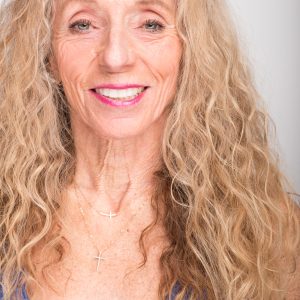
Margo Apostolos

Margo Apostolos

· Professor Conditioning, Dance Science, Dance As An Art Form, Health and Fitness Through Dance

University of Southern California · Dance

Active 2008–2024

h-index1
Citations26
Papers32 last 5y
Funding
See your match with Margo Apostolos — sign in to PhdFit.Sign in

About

Margo K. Apostolos, currently President of USC's Academic Senate, is a Professor at USC Kaufman and the co-director and co-founder of the Cedars-Sinai/USC Glorya Kaufman Dance Medicine Center. She earned her PhD from Stanford University, her MA in Dance at Northwestern University, and a BS from Southern Illinois University. She has served as a Visiting Professor in the Department of Psychology at Princeton University and has taught at Stanford University, Cal Poly-SLO, and Southern Illinois University. Dr. Apostolos’ research includes work for NASA at the Jet Propulsion Laboratory/Cal Tech as a research scientist in the area of space telerobotics. She is the recipient of the NASA/ASEE Faculty Fellowship. Her work has led to numerous articles on her pioneering research in robot choreography, the development of dance medicine, and dance for sports. Her notable research in 'Dance for Sports' has included presentations to the International Olympic Committee at the Sydney, Athens Olympic Games and at Cambridge University prior to the London Olympic Games. She has trained numerous professional and Olympic athletes, transferring dance skills from the studio to the field. Dr. Apostolos is the author of two books: 'Dance For Sports: A Practical Guide' (Oxford University Press, 2019) and 'Dance As A Catalyst: An Interdisciplinary Journey' (Kendall-Hunt Publishers, 2023). At USC School of Dramatic Arts, she developed the Dance Minor program, directed semester dance concerts, and coordinated the Open Gate Dance Program.

Research topics

  • Developmental psychology
  • Psychology
  • Art
  • Visual arts
  • Physical therapy
  • Medicine
  • Aesthetics

Selected publications

  • 523 EP036 – From Plato to Paris 2024: dance as training for sport

    E-Posters · 2024

    1st authorCorresponding
    • Psychology
    • Aesthetics
    • Visual arts

    <h3></h3> The link between dance and sport traces back to the works of Plato in Ancient Greece. The ancient athlete/warriors included dance and music in their physical training. Plato’s notion of the rhythm and harmony of an individual relates to rhythm and harmony in society. The Olympic Games unite the world every four years and perhaps it is the rhythm and harmony of the individual extended into society at the games. Dance provides the athlete with a non competitive form of physical training for athletes of all sports with a focus on fundamental movements, kinesthetic awareness, and rhythmic awareness. In the dance studio, athletes enjoy a space that is not sport specific but rather a place neutral for all athletes. The athlete focused on their own intrinsic rhythm in response with the accompaniment of extrinsic rhythms of music. Additional aspects of propprioception to include balance, coordination, agility, timing and flexibility. This dance training is both physical and mental and offers an alternative for cross training both during the sport season and off season. In addition to the aspect of sport similarity found in the fundamental movements of bending, stretching, and twisting, the dance teacher works with each athlete to find transferable aspects from the dance training to the specific sport. Dance, as a tool for injury prevention, keeps the athlete in training without over training. Dance is a way for the athlete to identify their own rhythms and develop individual harmony. Thus, carrying on the true Olympic mission. A lecture and video tapes of the individual exercise shared in a typical dance class for athletes of all sports.

  • Dance Biomechanics: A Tool for Controlling Health, Fitness, and Training

    Journal of Dance Medicine & Science · 2008-09-01 · 27 citations

    articleOpen accessSenior author

    The need for superior performance in dance has impelled teachers and choreographers to use increasingly effective and sophisticated methods of preparation. To that end, such modalities ofbiomechanics as advanced motion-capture, muscle-function and muscle-strength techniques are being used to provide useful information about which of the dancers' needs require special attention. This often involves improving aspects of dance technique, which, in turn, may help dancers to prevent disabling injuries, the most frequent cause of notoriously short dance careers. Biomechanics may also help dancers to assess fitness levels, to control overtraining or "burnout," and assist them and their teachers in the effective scheduling of practice and exercise sessions.

Frequent coauthors

  • Yiannis Koutedakis

    University of Wolverhampton

    1 shared
  • Emmanuel O. Owolabi

    1 shared

Awards & honors

  • NASA/ASEE Faculty Fellowship
  • Resume-aware match score
  • Save to shortlist
  • AI-drafted outreach

See your match with Margo Apostolos

PhdFit ranks faculty by your research interests, methods, and publications — grounded in their actual work, not templates.

  • Free to start
  • No credit card
  • 30-second signup