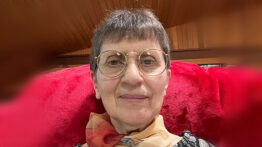
Maria Comninou
· Maria Comninou Collegiate Professor of Mechanical EngineeringUniversity of Michigan · Mechanical Engineering
Active 1972–2020
About
Maria Comninou is a Professor Emerita in the Department of Mechanical Engineering at the University of Michigan. Her academic background includes a Diploma in Civil Engineering from the National Technical University of Athens obtained in 1970, a Ph.D. from Northwestern University in 1973, and a J.D. from the University of Michigan in 1997. Her research interests encompass elasticity, elastodynamics, fracture mechanics, dislocations, and fatigue. She has made significant contributions to the theoretical and applied mechanics fields, focusing on the behavior of materials and structural integrity under various conditions. Her extensive experience and scholarly work have established her as a distinguished figure in her area of expertise.
Research topics
- Psychoanalysis
- Psychology
Selected publications
5 Speech, Pornography, and Hunting
Duke University Press eBooks · 2020
1st authorCorresponding- Psychology
- Psychoanalysis
The Penny-Shaped Interface Crack With Heat Flow
2009-01-01 · 4 citations
article1st authorCorrespondingThe penny-shaped crack with heat flux is investigated for the case in which the heat flux is into the material with the lower distortivity. A harmonic potential function representation is used to reduce the problem to a boundary value problem which is solved by an integral equation method. If a sufficiently high tensile traction is applied, a solution is obtained involving a central circle of separation and surrounding annuli of and perfect thermal contact. For lower tractions, or higher heat fluxes, the crack closes completely and a closed-form solution is obtained in which the division of the crack face into and perfect regions is unaffected by further changes in heat flux or traction. Multiple solutions are obtained in an intermediate range. Introductions In a previous paper [1], a solution was given for the thermal stress field due to the obstruction of a uniform heat flux by a penny-shaped crack at the interface between two dissimilar half spaces. The half spaces were simultaneously subjected to tractions tending to open the crack. The treatment was restricted to the case where the heat flows into the material of higher distortivity, for which an annular region is developed at the crack tip surrounding a circular region of separation. The extent of the region depends on the relative magnitude of mechanical and thermal effects and the behavior is qualitatively affected by the sign of the product 07 where j3 is a Dundurs constant and 7 is a constant describing the mismatch of distortivities. In this paper, we will consider the same system for the opposite direction of heat flow. The difficulties that arise when heat flows across a unilateral interface into the material of lower distortivity have been extensively discussed in previous publications [2-5]. Briefly, under certain conditions, all steady-state solutions with the conventional boundary conditions violate the unilateral inequalities (contact tractions nontensile and no interpenetration). The difficulty can be avoided by making the physically more realistic assumption of a pressure or gap-dependent interface thermal resistance and a limiting case of this is the state of imperfect thermal contact defined in [4]. The boundary conditions involving have been used to sovle a number of
Speech, Pornography, and Hunting
1995-11-14
book-chapter1st authorCorrespondingSpeech, Pornography, and Hunting
1995-01-01 · 5 citations
book-chapter1st authorCorrespondingBetween the Species An Online Journal for the Study of Philosophy and Animals · 1992-10-01
articleOpen access1st authorCorrespondingA mild winter was followed by an unseasonable cold spell, and spring was late in coming in this northern part of the midwest.Underneath a layer of mushy clay the ground was still frozen hard.Seeing it like this, it was difficult to imagine that any life could eventually spring out of it.It was already April when crocuses started to come up reticently, only to be cropped back to the ground by rabbits having their early breakfast.Herds ofdeer, sometimes as many as seventeen, could be seen among the tall, still naked, oak trees, searching for the first new leaves.They refrained from eating the daffodils, but showed a hearty partiality for the bright red tulips.Effortlessly, they leaped over the fence, designed to keep our dogs in, and grazed a few yards from the house, right in front of the bay windows.Our smallest and noisiest dog gave the alann with a deep growl, and a Pandemonium of barking, howling and crying followed from window to window to door.The days lengthened and brightened, and our walks in the woods were transformed with the fragrance of new vegetation and the sights of tiny, pink and white, nameless wild flowers, almost as plentiful as the blades of grass.Occasionally a flash of white would mark the trajectory ofa cottontail fleeing dogs and humans alike.The exuberance of new life and beauty was somewhat tempered by the appearance of a myriad of sticky white tents, occupying the branching points of the wild cherry trees.Tiny caterpillars, growing a little every day, could be seen wiggling under the thick, semitransparent substance of the tent.This year, for humane and ecological reasons, I had persuaded my husband not to spray them.In the beginning, he was glad to be rid of a time-consuming and unpleasant job.However, as the caterpillars grew and started eating every single wild-cherry leaf, leaving behind a trail of their sticky shrouds, he started having second thoughts."They are killing the trees," he said."In my book cherry trees are higher up the ladder than tent caterpillars."Interminable arguments would follow, in which each side tried to weigh the effects of poisoning the environment or killing with ecological but equally inhumane means versus doing nothing.In the end my husband admitted that these trees would die anyway under the shadow of the oaks, and that his real reasons were purely aesthetic.The caterpillars were now fully grown and were clinging in grape-like fashion one on top of the other in a writhing, black mass.Although each one had a dark green hue and a delicate, hairy body, the overall effect was somewhat gross.There were so many, you could hear the continuous hum made by the sound of their droppings falling on last year's oak leaves.
Journal of Elasticity · 1992-07-01 · 5 citations
articleOpen accessSenior authorOrigin of Hysteresis Observed During Fatigue of Ceramic‐Matrix Composites
Journal of the American Ceramic Society · 1990-07-01 · 104 citations
articleOpen accessSenior authorPossible mechanisms for the hysteresis in stress‐strain response observed during fatigue of fiber‐reinforced ceramics are examined analytically. In the model developed, the microstructure of a unidirectional composite is divided into adjacent cells, each containing a single fiber. The compliance of each cell is modeled by a series of springs, with frictional sliding of fibers represented by sliding blocks. Fatigue damage is modeled by allowing fibers to debond and fracture on a random cycle‐by‐cycle basis. The magnitude of the interfacial shear between the fibers and matrix is shown to play a significant role in determining the extent of hysteresis observed during fatigue loading of unidirectional composites. Practical considerations, such as the influence of fiber volume fraction on macroscopic fatigue behavior, are also discussed.
An overview of interface cracks
Engineering Fracture Mechanics · 1990-01-01 · 139 citations
articleOpen access1st authorCorrespondingThe equivalent elastic compliances of an elastic solid with interface cracks
International Journal of Mechanical Sciences · 1990-01-01 · 1 citations
articleOpen accessSenior authorBetween the Species An Online Journal for the Study of Philosophy and Animals · 1989-07-01
articleOpen access1st authorCorrespondingThe OriJPnal
Frequent coauthors
- 48 shared
J. Dundurs
Northwestern University
- 17 shared
J. R. Barber
University of Michigan–Ann Arbor
- 7 shared
David Schmueser
Clemson University
- 4 shared
J. D. Achenbach
- 3 shared
Xiaoping Lu
Henan Polytechnic University
- 3 shared
Fu‐Kuo Chang
Stanford University
- 3 shared
Eugene L. Chez
Northwestern University
- 2 shared
John W. Holmes
Australian National University
- Resume-aware match score
- Save to shortlist
- AI-drafted outreach
See your match with Maria Comninou
PhdFit ranks faculty by your research interests, methods, and publications — grounded in their actual work, not templates.
- Free to start
- No credit card
- 30-second signup