Resume-aware faculty matching

Find professors who actually fit you

Upload your resume. Four AI agents analyze your background, rank the faculty who fit, inspect their recent research, and help you draft outreach — grounded in their actual work, not templates.

Free to startNo credit cardCancel anytime
Top matches Balanced preset
Dr. Sarah Chen
Stanford · Interpretability · NLP
91
Dr. Marcus Holloway
MIT · Robotics · RL
84
Dr. Aisha Okonkwo
CMU · Fairness · HCI
82
Nova · Professor Researcher · re-ranking top 20…
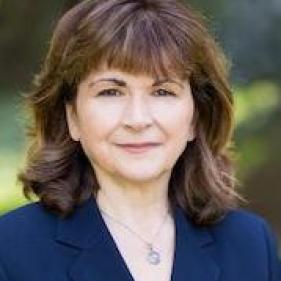
Maria Pantelia

Maria Pantelia

· Professor of Classics, Thesaurus Linguae Graecae Director

University of California, Irvine · Classics

Active 1987–2022

h-index5
Citations251
Papers268 last 5y
Funding
See your match with Maria Pantelia — sign in to PhdFit.Sign in

About

Maria C. Pantelia is a Professor of Classics at the University of California, Irvine, and serves as the Director of the Thesaurus Linguae Graecae. She holds a Ph.D. and an M.A. from The Ohio State University. Her research interests encompass Digital Humanities, Computational Linguistics, Greek Epic, and Hellenistic Poetry. Professor Pantelia has made significant contributions to the preservation and digital representation of Greek language and literature, notably through her work on the Thesaurus Linguae Graecae (TLG), including editing the bibliographic guide to Greek authors and works and overseeing the development of the online TLG database. Her scholarly work also includes contributions to Greek lexicography, textual criticism, and the encoding of Greek characters in the Unicode Standard. She has been recognized with awards such as the UCI Instructional Technology Innovation Award and the American Philological Association Excellence in Teaching Award, and her publications reflect her dedication to advancing the digital and textual study of Greek language and literature.

Research topics

  • Information Retrieval
  • Computer Science
  • Natural Language Processing
  • History

Selected publications

  • Thesaurus Linguae Graecae

    University of California Press eBooks · 2022 · 18 citations

    1st authorCorresponding
    • Computer Science
    • Computer Science
    • Information Retrieval

    The Thesaurus Linguae Graecae: A Bibliographic Guide to the Canon of Greek Authors and Works (TLG®) is a comprehensive catalog of the authors and works that have survived in Greek from antiquity (eighth century BCE) to the present era and have been collected and digitized by the TLG® in its fifty-year history. It provides biographical information about each author, such as dates, place of birth, and literary activity, as well as a list of their extant works and print publications. This volume encompasses more than 4,400 authors and 17,000 individual works. It offers a concise and authoritative literary history of Greek literature and is an indispensable reference source for its study.

  • Thesaurus Linguae Graecae

    2022 · 6 citations

    1st authorCorresponding
    • Information Retrieval
    • Information Retrieval
    • Computer Science
  • ABBREVIATIONS

    Gorgias Press eBooks · 2020

    Senior authorCorresponding
    • History
  • Review of Filoglossia+

    CALICO Journal · 2008-01-01

    article1st authorCorresponding
  • A proposal to encode the Greek Lunate Sigma in UCS

    eScholarship (California Digital Library) · 2004-03-02

    articleOpen access1st authorCorresponding

    Doc: PROPOSAL SUMMARY FORM L2/02-314R A. Administrative 1.Title: Proposal to add the Greek Capital Lunate Sigma Symbol to the UCS 2. Requester's name: Thesaurus Linguae Graecae Project (University of California, Irvine) 3. Requester type: Expert contribution 4. Submission date: 5. Requester's reference: 6a. Completion This is a complete proposal. 6b. More information to be provided? No. B. Technical - General 1a. New Script? Name? No. 1b. Addition of character(s) to existing block? Name? Yes. Greek (proposed position: U+03F9) 2. Number of characters in proposal: One 3. Proposed category: A 4. Proposed Level of Implementation: Level 1 noncombining character 5a. Character name provided? Yes. 5b. Character name in accordance with guidelines: Yes. 5c. Character shape reviewable? Yes 6a. Who will provide the appropriate computerized font for publishing the standard? TLG Project 6b. Fonts currently available. Glyph exists in a number of existing Greek fonts e.g. Monotype Porson. 6c. Font format: True Type 7a. Are references (to other character sets, dictionaries, descriptive texts etc.) provided? Yes (see below) 7b. Are published examples of use of proposed character attached? Yes. 8. Does the proposal address other aspects of character data processing? No.

  • A proposal to encode the ancient Greek musical system in UCS

    eScholarship (California Digital Library) · 2004-03-02

    articleOpen access1st authorCorresponding

    4. The context of use for the proposed characters (type of use; common or rare) Use varies.Some characters are common in extant Greek texts.Some appear less often. Are the proposed characters in current use by the user community?Yes. Characters are present in various editions of Greek texts and used extensively by scholars and students of Greek as well as individuals interested in the study of ancient Greek music. After giving due considerations to the principles in Principles and Procedures document, must the proposed characters be entirely in the BMP?No, Plane 1 (SMP).7. Should the proposed characters be kept together in a contiguous range (rather than being scattered)?Yes. Can any of the proposed characters be considered a presentation form of an existing character or character sequence?No. Can any of the proposed characters be encoded using a composed character sequence of either existing characters or other proposed characters?No. 10.Can any of the proposed character(s) be considered to be similar (in appearance or function) to an existing character?Yes, three of the proposed characters resemble (but are not identical) to Greek or Roman alphabetic characters.11a.Does the proposal include use of combining characters and/or use of composite sequences Yes (combining characters).11b.Is a list of composite sequences and their corresponding glyph images (graphic symbols) provided?No. Too numerous to list.12.

  • A proposal to encode a combining diacritic in the UCS

    eScholarship (California Digital Library) · 2004-10-25

    articleOpen access1st authorCorresponding

    L2/03-186 ISO/IEC JTC 1/SC 2/WG 2 PROPOSAL SUMMARY FORM TO ACCOMPANY SUBMISSIONS FOR ADDITIONS TO THE REPERTOIRE OF ISO/IEC 10646 1 Please fill all the sections A, B and C below. (Please read Principles and Procedures Document for guidelines and details before filling this form.) See http://www.dkuug.dk/JTC1/SC2/WG2/docs/summaryform.html for latest Form. See http://www.dkuug.dk/JTC1/SC2/WG2/docs/principles.html for latest Principles and Procedures document. See http://www.dkuug.dk/JTC1/SC2/WG2/docs/roadmaps.html for latest roadmaps. A. Administrative Proposal to encode one additional combining diacritic in the UCS 1. Title: 2. Requester's name: Thesaurus Linguae Graecae Project (University of California, Irvine) and UTC 3. Requester type (Member body/Liaison/Individual contribution): Expert Contribution 4. Submission date: 5. Requester's reference (if applicable): 6. This is a complete proposal: B. Technical - General 1. (Choose one of the following:) a. This proposal is for a new script (set of characters): Proposed name of script:. b. The proposal is for addition of character(s) to an existing block: Yes Name of the existing block: Combining Diacritical Marks (0359) 2. Number of characters in proposal: 3. Proposed category (see section II, Character Categories): Category C 4. Proposed Level of Implementation (1, 2 or 3) (see clause 14, ISO/IEC 10646-1: 2000): Level 3 Is a rationale provided for the choice? Yes If Yes, reference: Combining Character 5. Is a repertoire including character names provided? Yes a. If YES, are the names in accordance with the 'character naming guidelines in Annex L of ISO/IEC 10646-1: 2000? Yes b. Are the character shapes attached in a legible form suitable for review? Yes 6. Who will provide the appropriate computerized font (ordered preference: True Type, or PostScript format) for publishing the standard? David Perry and TLG Project (True Type) If available now, identify source(s) for the font (include address, e-mail, ftp-site, etc.) and indicate the tools used: TLG Project, mcpantel@uci.edu a. Are references (to other character sets, dictionaries, descriptive texts etc.) provided? Yes b. Are published examples of use (such as samples from newspapers, magazines, or other sources) of proposed characters attached? Yes 8. Special encoding issues: Does the proposal address other aspects of character data processing (if applicable) such as input, presentation, sorting, searching, indexing, transliteration etc. (if yes please enclose information)? No 9. Additional Information: The property for this character is Mn Submitters are invited to provide any additional information about Properties of the proposed Character(s) or Script that will assist in correct understanding of and correct linguistic processing of the proposed character(s) or script. Examples of such properties are: Casing information, Numeric information, Currency information, Display behaviour information such as line breaks, widths etc., Combining behaviour, Spacing behaviour, Directional behaviour, Default Collation behaviour, relevance in Mark Up contexts, Compatibility equivalence and other Unicode normalization related information. See the Unicode standard at http://www.unicode.org for such information on other scripts. Also see http://www.unicode.org/Public/UNIDATA/UnicodeCharacterDatabase.html and associated Unicode Technical Reports for information needed for consideration by the Unicode Technical Committee for inclusion in the Unicode Standard. Form number: N2352-F (Original 1994-10-14; Revised 1995-01, 1995-04, 1996-04, 1996-08, 1999-03, 2001-05, 2001-09)

  • A proposal to encode the Greek Capital and Small Letter San in the UCS

    eScholarship (California Digital Library) · 2004-04-25

    articleOpen access1st authorCorresponding

    L2/02-313R PROPOSAL SUMMARY FORM A. Administrative 1. Title: Proposal to encode the Greek Capital Letter San and Greek Small Letter San in the UCS 2. Requester's name: Thesaurus Linguae Graecae Project (University of California, Irvine) 3. Requester type: Expert contribution 4. Submission date: 5. Requester's reference: 6. Completion: This is a complete proposal. B. Technical - General 1. The proposal is for addition of character(s) to an existing block: Greek and Coptic (proposed positions: U+03FA and U+03FB) 2. Number of characters in proposal: Two 3. Proposed category: C 4. Proposed Level of Implementation: Level 1 5a. Character name provided? Yes 5b. Character name in accordance with guidelines: Yes 5c. Character shape reviewable? Yes 6a. Who will provide the appropriate computerized font for publishing the standard? David Perry and the TLG Project 6b. Font currently available? Yes. 6c. Font format: True Type 7a. Are references provided? Yes. 7b. Are published examples of use of proposed character attached? Yes. 8. Does the proposal address other aspects of character data processing? No.

  • A proposal to encode Greek Metrical Symbols in UCS

    eScholarship (California Digital Library) · 2004-08-24

    articleOpen access1st authorCorresponding

    The context of use for the proposed characters (type of use; common or rare) Common in publications and studies related to ancient and modern poetry, meter, and music. 5. Are the proposed characters in current use by the user community?Yes.Characters are present in

  • Proposal to encode three Punctuation Characters in the UCS

    eScholarship (California Digital Library) · 2004-08-23

    articleOpen access1st authorCorresponding

    L2/03-193 ISO/IEC JTC 1/SC 2/WG 2 PROPOSAL SUMMARY FORM TO ACCOMPANY SUBMISSIONS FOR ADDITIONS TO THE REPERTOIRE OF ISO/IEC 10646 1 Please fill all the sections A, B and C below. (Please read Principles and Procedures Document for guidelines and details before filling this form.) See http://www.dkuug.dk/JTC1/SC2/WG2/docs/summaryform.html for latest Form. See http://www.dkuug.dk/JTC1/SC2/WG2/docs/principles.html for latest Principles and Procedures document. See http://www.dkuug.dk/JTC1/SC2/WG2/docs/roadmaps.html for latest roadmaps. A. Administrative 1. Title: Proposal to encode additional Punctuation Characters in the UCS 2. Requester's name: Thesaurus Linguae Graecae Project (University of California, Irvine) and UTC 3. Requester type (Member body/Liaison/Individual contribution): Expert Contribution 4. Submission date: 5. Requester's reference (if applicable): 6. This is a complete proposal: B. Technical - General 1. (Choose one of the following:) a. This proposal is for a new script (set of characters): Proposed name of script:. b. The proposal is for addition of character(s) to an existing block: Yes Name of the existing block: Supplemental Punctuation (205A-205C) 2. Number of characters in proposal: 3. Proposed category (see section II, Character Categories): Category C 4. Proposed Level of Implementation (1, 2 or 3) (see clause 14, ISO/IEC 10646-1: 2000): Level 1 Is a rationale provided for the choice? If Yes, reference: ________________________________________________________________ 5. Is a repertoire including character names provided? Yes a. If YES, are the names in accordance with the 'character naming guidelines in Annex L of ISO/IEC 10646-1: 2000? Yes b. Are the character shapes attached in a legible form suitable for review? Yes 6. Who will provide the appropriate computerized font (ordered preference: True Type, or PostScript format) for publishing the standard? David Perry and TLG Project (True Type) If available now, identify source(s) for the font (include address, e-mail, ftp-site, etc.) and indicate the tools used: TLG Project, mcpantel@uci.edu 7. References: a. Are references (to other character sets, dictionaries, descriptive texts etc.) provided? Yes b. Are published examples of use (such as samples from newspapers, magazines, or other sources) of proposed characters attached? Yes 8. Special encoding issues: Does the proposal address other aspects of character data processing (if applicable) such as input, presentation, sorting, searching, indexing, transliteration etc. (if yes please enclose information)? No 9. Additional Information: The property for these characters is Po Submitters are invited to provide any additional information about Properties of the proposed Character(s) or Script that will assist in correct understanding of and correct linguistic processing of the proposed character(s) or script. Examples of such properties are: Casing information, Numeric information, Currency information, Display behaviour information such as line breaks, widths etc., Combining behaviour, Spacing behaviour, Directional behaviour, Default Collation behaviour, relevance in Mark Up contexts, Compatibility equivalence and other Unicode normalization related information. See the Unicode standard at http://www.unicode.org for such information on other scripts. Also see http://www.unicode.org/Public/UNIDATA/UnicodeCharacterDatabase.html and associated Unicode Technical Reports for information needed for consideration by the Unicode Technical Committee for inclusion in the Unicode Standard. Form number: N2352-F (Original 1994-10-14; Revised 1995-01, 1995-04, 1996-04, 1996-08, 1999-03, 2001-05, 2001-09)

Frequent coauthors

  • Schriftsteller Grbs

    University of California, Irvine

    36 shared
  • Richard Peevers

    12 shared
  • Resume-aware match score
  • Save to shortlist
  • AI-drafted outreach

See your match with Maria Pantelia

PhdFit ranks faculty by your research interests, methods, and publications — grounded in their actual work, not templates.

  • Free to start
  • No credit card
  • 30-second signup