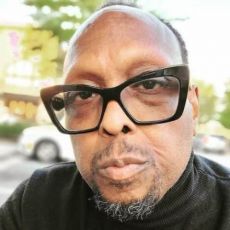
Mark Anthony Neal
· James B. Duke Distinguished Professor of African and African American StudiesDuke University · Business Administration
Active 1991–2023
About
Mark Anthony Neal is the James B. Duke Distinguished Professor of African & African American Studies and Chair of the Department of African & African American Studies at Duke University. He offers courses on Black Masculinity, Popular Culture, and Digital Humanities, including signature courses on Michael Jackson & the Black Performance Tradition, and The History of Hip-Hop, which he co-teaches with Grammy Award Winning producer 9 th Wonder (Patrick Douthit). Neal is the author of several books, including What the Music Said: Black Popular Music and Black Public Culture (1999), Soul Babies: Black Popular Culture and the Post-Soul Aesthetic (2002), and Looking for Leroy: Illegible Black Masculinities (2013). The 10th Anniversary edition of Neal’s *New Black Man* was published in February 2015 by Routledge. He is also co-editor of *That’s the Joint: The Hip-Hop Studies Reader* (Routledge), now in its second edition. Neal hosts the video webcast *Left of Black*, produced in collaboration with the Franklin Humanities Institute at Duke. His academic background includes a Ph.D. from the State University of New York, Buffalo, and M.A. and B.A. degrees from the State University of New York, Fredonia. Neal's research focuses on Black culture, music, and performance, contributing significantly to the fields of African and African American Studies.
Research topics
- Computer Science
- Art
- Art history
- Computer graphics (images)
- Psychology
Selected publications
Sehnsucht The C S Lewis Journal · 2023 · 2 citations
1st authorCorresponding- Art
- Psychology
Interview with Walter Hooper
16. Queering Hip Hop Feminist Pedagogies in the New South
2022-10-28
book-chapterSenior authorNew York University Press eBooks · 2022 · 31 citations
1st authorCorresponding- Computer Science
- Art
- Computer graphics (images)
A framework for understanding the deep archive of Black performance in the digital era In an era of Big Data and algorithms, our easy access to the archive of contemporary and historical Blackness is unprecedented. That iterations of Black visual art, such as Bert Williams’s 1916 silent film short “A Natural Born Gambler” or the performances of Josephine Baker from the 1920s, are merely a quick YouTube search away has transformed how scholars teach and research Black performance. While Black Ephemera celebrates this new access, it also questions the crisis and the challenge of the Black musical archive in a moment when Black American culture has become a global export. Using music and sound as its primary texts, Black Ephemera argues that the cultural DNA of Black America has become obscured in the transformation from analog to digital. Through a cross-reading of the relationship between the digital era and culture produced in the pre-digital era, Neal argues that Black music has itself been reduced to ephemera, at best, and at worst to the background sounds of the continued exploitation and commodification of Black culture. The crisis and challenges of Black archives are not simply questions of knowledge, but of how knowledge moves and manifests itself within Blackness that is obscure, ephemeral, fugitive, precarious, fluid, and increasingly digital. Black Ephemera is a reminder that for every great leap forward there is a necessary return to the archive. Through this work, Neal offers a new framework for thinking about Black culture in the digital world.
Oxford Music Online · 2022-05-24
reference-entry1st authorCorresponding2. “I Got the Blues of a Fallen Teardrop”
New York University Press eBooks · 2022-03-08
book-chapter1st authorCorrespondingQueering Hip Hop Feminist Pedagogies in the New South
2022-12-16
book-chapterSenior authorTwo Editions of a Field Evolving Faster Than a Collection Could Contain
2021-04-23
book-chapterSenior authorLeft of Black: Networking a New Discourse
2021-04-23
book-chapter1st authorCorrespondingliquid blackness · 2021-10-01 · 1 citations
articleOpen access1st authorCorrespondingAbstract The essay explores how the invisibility and trauma of Black women are negotiated in Black sonic culture, utilizing Ricardo Cortez Cruz's experimental novel Five Days of Bleeding (1995), in which the primary female character, Zu-Zu, speaks (and sings) primarily using obscure song lyrics and titles, largely drawn from an archive of Black women's performance.
AN INTERVIEW WITH MARK ANTHONY NEAL
2020-02-28
book-chapter1st authorCorresponding
Frequent coauthors
- 5 shared
Jon Timmis
Aberystwyth University
- 3 shared
Doina Catană
- 2 shared
L. Claessens
- 2 shared
Regina N. Bradley
- 2 shared
Bettina L. Love
- 2 shared
Murray Forman
New York University Press
- 2 shared
James Brasington
University of Canterbury
- 2 shared
John Hunt
Western Sydney University
- Resume-aware match score
- Save to shortlist
- AI-drafted outreach
See your match with Mark Anthony Neal
PhdFit ranks faculty by your research interests, methods, and publications — grounded in their actual work, not templates.
- Free to start
- No credit card
- 30-second signup