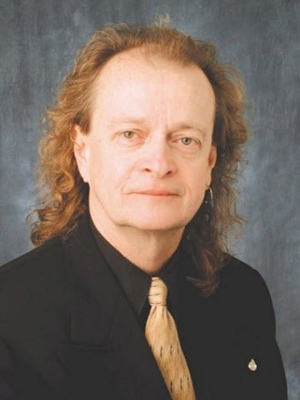
Mark Balas
· Professor, Mechanical Engineering Leland T. Jordan ProfessorVerifiedTexas A&M University · Mechanical Engineering
Active 1967–2026
About
Mark Balas is a Professor of Mechanical Engineering at Texas A&M University and holds the title of Leland T. Jordan Professor. His educational background includes a Ph.D. in Applied Mathematics and M.S. degrees in Electrical Engineering and Mathematics from the University of Denver, as well as a B.S. in Electrical Engineering from the University of Akron. His research interests focus on control and estimation of quantum systems. Throughout his career, he has received several prestigious awards and honors, including the AIAA GNC Control Heritage Award (Lifetime Achievement Award) in 2018, and he is recognized as a Fellow by ASME, IEEE, and AIAA. His professional profile can be found on Google Scholar, and he is actively involved in research and academic activities within the Department of Mechanical Engineering at Texas A&M University.
Research topics
- Computer Science
- Artificial Intelligence
- Mechanical engineering
- Physics
- Quantum mechanics
- Engineering ethics
- Mathematics
- Engineering
- Statistical physics
- Algorithm
Selected publications
Exponential Convergent Projection-Based Estimator onto a Closed Convex Set
2026-01-08
articleSenior authorStates are typically unavailable in practical control system applications. The best approximation of the true states of the observable system is generated by state estimators operating in two steps, including measurement and prediction. Moreover, constrained problems, whether they may describe physical limitations, may form a closed convex set. In such cases, it is possible that the predicted states fall outside of the admissible closed convex set. Therefore, it is necessary to guarantee constraint satisfaction. We need to ensure that the estimator meets the constraints. To this end, it is required to design a projection-based state estimator. Then, implausible states will be projected back onto the desired closed convex set. In this study, we present a general strategy for projection onto multiple closed convex sets with arbitrary boundaries, utilizing Dykstra’s algorithm.
Applied Sciences · 2025-06-13
articleOpen accessCorrespondingMany dynamic systems experience unwanted actuation caused by an unknown exogenous input. Typically, when these exogenous inputs are stochastically bounded and a basis set cannot be identified, a Kalman-like estimator may suffice for state estimation, provided there is minimal uncertainty regarding the true system dynamics. However, such exogenous inputs can encompass environmental factors that constrain and influence system dynamics and overall performance. These environmental factors can modify the system’s internal interactions and constitutive constants. The proposed control scheme examines the case where the true system’s plant changes due to environmental or health factors while being actuated by stochastic variances. This approach updates the reference model by utilizing the input and output of the true system. Lyapunov stability analysis guarantees that both internal and external error states will converge to a neighborhood around zero asymptotically, provided the assumptions and constraints of the proof are satisfied.
Volume 5: Dynamics, Vibration, and Control · 2025-11-16
articleAbstract Many dynamic systems undergo performance degradation with use, often due to changes in physical dynamics or constitutive constants. A model must consider these changes to ensure the reliability of state information. Failure to account for changes in a model can lead to complications when moving the true-physical system along a trajectory, primarily if the movement relies on model state information. Given a change in the true system from the model, Lyapunov stability methods are used to synthesize an input for trajectory tracking and gather true state information. True state information is captured by adaptively updating the model plant. The proposed control architecture guarantees asymptotic convergence to zero for global external and internal state errors.
On-Line Prediction of the Quantum Density Matrix
Quantum Reports · 2025-12-22
articleOpen accessSenior authorCorrespondingTime evolution of open quantum systems is governed by the master equation. The master equation, which is a matrix formalism, is the time derivative of the density matrix, which contains the complete information on the state of a quantum system. Instead of implementing successive measurements on repeated identically prepared systems, which are inevitably imperfect and can only be performed a limited number of times, a state estimator can be designed to obtain the whole information about the state of a quantum system represented in a density matrix. Trace-one and positive semi-definite properties of the density matrix arising from physical constraints have to be preserved during state estimation in quantum systems. To address this challenge, we present a projection technique that incorporates Dykstra’s algorithm and physical constraints into state estimation. This technique, which is an iterative method, ensures convergence and includes a designed oracle that projects the estimated state into intersections of admissible closed convex sets. The oracle structure is constructed using Hilbert projection, which looks for the best approximation of the projected estimated state within a Hilbert space into a closed convex set. According to the Hilbert projection theorem, this proposed oracle guarantees the existence and uniqueness of the best approximation of the projected state.
Preprints.org · 2025-01-28
preprintOpen accessQuantum computing, leveraging the principles of superposition and entanglement, speeds up the computational process in dynamical systems. Quantum Phase Estimation (QPE) which is a core of many quantum algorithms is an oracle to determine a significant invariant of systems, namely the eigenvalues of the state transition matrix. In addition to showing the scalability of QPE, this paper illustrates the time evolution of phase in the Schrödinger’s equation through Python Code executed in the Qiskit/Aer simulator. In addition, this paper proposes an efficient method for phase estimation of a non-self-adjoint Hamiltonian, which offers great potential in solving complex quantum systems.
A Graph Theoretic Approach to Dynamic Stability of Formations of Autonomous Systems
2025-01-03
articleThe dynamic stability of autonomous agent formations is essential in understanding the limitations of the formation and methods to restore any lack of stability. These formations can be represented through a directed graph (digraph), where edges describe the directionality of connection between each agent, which is at the vertices. In this paper, we prove a new stability analysis technique using the graph Laplacian that provides a clear picture of the dynamic stability of the autonomous formation or an approach to reinstate that stability. In addition, a strategy to examine robustness to graph variations is presented. Examples are included for illustration of these results.
A Control Framework for Direct Adaptive Estimation With Known Inputs for LTI Dynamical Systems
2025-01-03 · 1 citations
articleA system model can provide insights into the true-physical system within a set of assumptions and constraints. Often, with age or use, the true-physical systems experience a form of disaggregation, altering performance. If a model does not account for these changes, this could lead to an inaccurate diagnosis of the true dynamics and potentially catastrophic failure. The proposed control scheme updates the system model by utilizing known input and the true system output to account for possible health changes. This approach can be implemented in real-time and online. Stability proof guarantees asymptotic convergence to zero for global output and internal state error
System Identification of Brain Wave Modes Using EEG
Synthesis lectures on biomedical engineering · 2023-01-01
book-chapterSenior authorAdaptive Unknown Input Estimators
Synthesis lectures on biomedical engineering · 2023-01-01
book-chapterSenior authorSynthesis lectures on biomedical engineering · 2023-01-01
book-chapterSenior author
Frequent coauthors
- 84 shared
Susan A. Frost
Birmingham Women’s and Children’s NHS Foundation Trust
- 32 shared
Vinod P. Gehlot
- 24 shared
Kaman Thapa Magar
University of Dayton
- 20 shared
Alan Wright
National Renewable Energy Laboratory
- 20 shared
Tristan D. Griffith
Texas A&M University
- 14 shared
Nailu Li
Yangzhou University
- 14 shared
Robert J. Fuentes
- 12 shared
James E. Hubbard
Edward Via College of Osteopathic Medicine
Awards & honors
- AIAA GNC Control Heritage Award (Lifetime Achievement Award)…
- ASME Fellow, 2015
- IEEE Fellow, 2006
- AIAA Fellow, 2001
- Resume-aware match score
- Save to shortlist
- AI-drafted outreach
See your match with Mark Balas
PhdFit ranks faculty by your research interests, methods, and publications — grounded in their actual work, not templates.
- Free to start
- No credit card
- 30-second signup