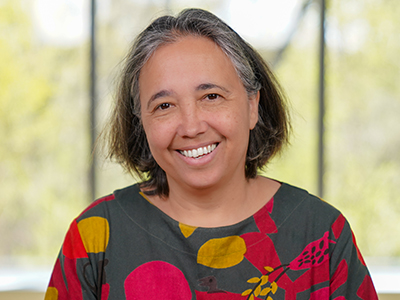
Mark Clague
· Executive Director, U-M Arts Initiative; Professor of Music; Director of U-M Gershwin Initiative; Co-Editor-in-Chief MUSAVerifiedUniversity of Michigan · Department of Musicology
Active 1998–2025
About
Mark Clague is a musicologist who strives to understand the social impact of the arts in the United States of America and to share this understanding with students, scholars, and the public. His recent projects focus on the United States national anthem, "The Star-Spangled Banner," diversity in music historiography and education, especially through the exploration of African-American song, career trajectories in the performing arts, and critical editing as editor-in-chief of The George and Ira Gershwin Critical Edition. His scholarly interests center on how music forges and shapes community relationships, emphasizing the art of sound as a social force that is both personal and communal, serving as a powerful emotional expression and an everyday tool for living. Clague is a full professor of musicology with tenure at the School of Music, Theatre & Dance at the University of Michigan, where he also serves as Executive Director of the U-M Arts Initiative. He holds affiliate appointments in American Culture, African and Afro-American Studies, Non-Profit Management, and Entrepreneurship. His 2022 monograph, "O Say Can You Hear?: A Cultural Biography of 'The Star-Spangled Banner,'" has been favorably reviewed by major publications and has led to numerous speaking engagements and media appearances. Clague's work includes editing George Gershwin’s symphonic tone poem "An American in Paris," which was recorded and nominated for a Grammy Award. His previous roles include executive editor for scholarly editions of American music and editorial positions at the Center for Black Music Research. His dissertation, awarded the H. Wiley Housewright Dissertation Prize, examined civic imagination through the Auditorium Theater Building in Chicago. Clague has authored an annotated edition of Alton Augustus Adams, Sr.'s memoirs and has contributed to various publications on American music and culture. He has lectured nationally and internationally, presenting at numerous academic conferences and universities. His awards include fellowships from the National Endowment for the Humanities, the University of Michigan, and the Mellon Foundation, among others. Clague also serves on the board of the Ann Arbor Summer Festival and is involved in strategic planning for the Society for American Music. His background as a principal bassoonist with various symphonies and his engagement in performance and public talks further exemplify his diverse contributions to the field of musicology and arts education.
Research topics
- Sociology
- Psychology
- Computer Science
- Art history
- Art
- Finance
- Medicine
- Aesthetics
- Optometry
- Business
- Neuroscience
- Pedagogy
- Visual arts
Selected publications
The Journal of Arts Management Law and Society · 2025-09-03
articleSenior authorFrom Portfolio to Platform Career
Artivate A Journal of Entrepreneurship in the Arts · 2024 · 1 citations
1st authorCorresponding- Computer Science
- Business
- Computer Science
Written as a concise guide for students and working professionals, this article examines and critiques the “portfolio career” in arts professional development to offer an alternative conceptual strategy to forge a sustainable life. Eight modes of arts work are explored (performing, teaching, creating, writing, healing, manufacturing, distributing, and administering). The “Platform Career” is proposed as an extension of and possible solution to the shortcomings of the portfolio career. In the platform model, one professional activity serves as a financial base for the artist’s panoply of creative work, providing health insurance and other employment benefits plus additional financial stability to reduce financial and emotional precarity.
2024-09-12
article1st authorCorrespondingEmerging Artist Resilience Needs: Transitional Education for a Post-COVID Creative Sector
The Journal of Arts Management Law and Society · 2023-11-02 · 2 citations
articleSenior authorThis study investigated the impacts of the COVID-19 pandemic on recent arts graduates from three universities in the United States. We present evidence of shifting definitions of adaptability, resilience, transformation, excellence, and success in arts training. Based on surveys and interviews, it reinforces findings from the Strategic National Arts Alumni Project (SNAAP). The of experiences of recent arts and arts administration graduates affirms some current pedagogies and suggests others. We synthesize these findings to amplify some models, propose new ones, rebalance traditional outcomes toward a social mission, and consider the need for an expanded notion of excellence in the arts.
2022-02-10
preprint1st authorCorrespondingDetroit's Perpetual Renaissance: Timeless Visions and Daily Blindness in the Detroit Arts Scene
Artivate A Journal of Entrepreneurship in the Arts · 2020 · 1 citations
Senior authorCorresponding- Sociology
- Art
- Aesthetics
Most people just found out their jobs are bullshit (or at least not essential). We also just realized that migrant farmers, grocery clerks, and janitors are. It is the role of the artists to bear witness to our collective shifts, and continue to bear our souls. We are acting not only as a mirror that reflects moments/space in history but a window that allows for radical collective re-imagination of a future that is vastly different than what we have been led to believe was normal. (Cassells 2020)
Detroit’s Perpetual Renaissance
Artivate A Journal of Entrepreneurship in the Arts · 2020 · 1 citations
Senior authorCorresponding- Art
- Art history
50 years ago, Jimi Hendrix’s Woodstock anthem expressed the hopes and fears of a nation
2019-08-14 · 1 citations
articleOpen access1st authorCorrespondingIntroduction: The Soul of Alton Adams
2019-12-31
book-chapter1st authorCorrespondingAmerican Music Goes to School A Point of View and a Case in Point
University of Illinois Press eBooks · 2019-03-01
book-chapter1st authorCorrespondingThat patronage remains a critical contemporary concern, not merely a topic of historical interest, is illustrated in Clague's case study from the twenty-first century. He begins with an extensive survey of the aesthetic principles found in earlier European and American commentaries in order to review the idea of a compositional “school” itself; he then focuses his discussion on the Atlanta school of composers and the work of Atlanta Symphony conductor Robert Spano. Clague traces Spano’s strategic commissioning principles as well as the tactics used to introduce new music to new audiences, while also offering insight into the creative power of institution building through community engagement.
Frequent coauthors
- 3 shared
Susan Badger Booth
Eastern Michigan University
- 2 shared
Michael Mauskapf
- 1 shared
Jamie Vander Broek
- 1 shared
Jeremy J. Peters
- 1 shared
Margot Lieth Philipp
Awards & honors
- Public Scholar Fellowship from the National Endowment for th…
- University of Michigan’s Albert A. Stanley Medal
- Mellon Fellowship in the Humanities
- University of Chicago’s Wayne C. Booth Teaching Prize
- Wiley Housewright Dissertation Prize of the Society for Amer…
- Resume-aware match score
- Save to shortlist
- AI-drafted outreach
See your match with Mark Clague
PhdFit ranks faculty by your research interests, methods, and publications — grounded in their actual work, not templates.
- Free to start
- No credit card
- 30-second signup