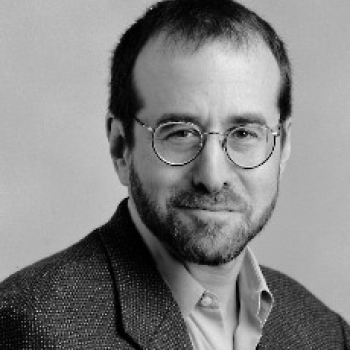
Mark Crispin Miller
· Professor of Media, Culture, and CommunicationNew York University · Communication Studies
Active 1956–2019
About
Mark Crispin Miller is a Professor of Media, Culture, and Communication at NYU Steinhardt. His research interests include modern propaganda, the history and tactics of advertising, American film, and media ownership. He has authored several books, including 'Boxed In: The Culture of TV,' 'Mad Scientists: The Secret History of Modern Propaganda,' 'Spectacle: Operation Desert Storm and the Triumph of Illusion,' 'The Bush Dyslexicon,' and his newest book is 'Cruel and Unusual: Bush/Cheney's New World Order.' Miller's work critically analyzes media and propaganda, exploring their development, principles, strategies, and effects across various contexts such as government, religion, revolution, war, politics, and advertising. His courses, such as 'Introduction to Mass Persuasion and Propaganda,' focus on the cultural, social, and technological implications of media and propaganda in both historical and modern settings.
Research topics
- Medicine
- Audiology
- Psychology
- Acoustics
- Computer science
Selected publications
Rehabilitating the Client with Monaural Hearing Loss
NSUWorks (Nova Southeastern University) · 2019-01-01
articleOpen accessSenior authorRehabilitators receive little, if any, advice about how to manage the client with a monaural hearing loss (MHL). How seriously should they view that condition? The rehabilitation literature devotes very little space to MHL. Indeed, rehabilitation textbooks have almost nothing to say about the effects of MHL can have and about what steps rehabilitators should take in responding to clients who present themselves with MHL. A review of the audiological and ontological research, however, leads to the conclusion that clients with MHL deserve rehabilitators’ careful attentions. These clients should be treated thoughtfully and sympathetically, because MHL’s effects can be, and often are, psychologically, socially, and economically debilitating.
OTHER TESTS SEEN AS MORE USEFUL THAN SRT
The Hearing Journal · 2010-03-01
article1st authorCorrespondingI call attention to the column “Our most useful test: The SRT+” by my distinguished colleague Dr. Robert L. Martin in the excellent November 2009 issue devoted to auditory problems accompanied by cognitive deficits. Martin recommends SRT determination before pure-tone audiometry. However, the SRT's use of spondaic material is largely controlled by the primarily low-frequency vowel sounds where a majority of our patients have good or even normal hearing. With pure-tone audiometry we can evaluate thresholds in the critical high-frequency range where so much of speech intelligibility is concentrated. This important part of the range is also evaluated with monosyllabic words when we determine the WRS. So, I question whether SRT, which depends upon hearing in a range where so many of our patients hear well, is “our most useful test.” A major hearing aid manufacturer many years ago suggested a picture test using children's spondee words to identify hearing loss. They made the mistake of using materials that failed to identify critical losses in the high frequencies. Later they added a bird whistle in an abortive effort to salvage their test. I use the SRT as part of a complete audiologic evaluation, e.g., better SRT than PTA in pseudohypacusis, reliability of response, etc., but not in place of the pure-tone test. Maurice H. Miller, PhD Professor Emeritus New York University
How to Eliminate Air-bone Gaps Audiometrically: Use Too Much Masking
Ear Nose & Throat Journal · 2008-05-01 · 3 citations
articleOpen access1st authorCorrespondingThe excessive, indiscriminate use of masking during measurements of pure-tone bone-conduction thresholds can reduce or eliminate air-bone gaps. This may result in an abnormal, audiometrically induced bone-conduction threshold shift and suggest to the otologist the need for auditory brainstem response testing and/or magnetic resonance imaging. A case is presented in which the inappropriate use of the masking plateau method resulted in a reduction of the air-bone gap in an ear with a mild conductive hearing loss. The audiometric Weber test should be used in these cases, and nonmasked bone thresholds should be used to determine the actual level of the cochlear reserve.
Genetics and Deafness: Implications for Education and Life Care of Deaf Students
American annals of the deaf · 2008-09-01 · 9 citations
articleSenior authorThe severity of deafness can obscure the presence of other disabilities that may accompany genetic anomalies, such as occur in Alport and Usher syndromes. Recent advances in genetics have heightened attention to various disabilities and dysfunctions that may coexist with deafness. Failure to recognize these additional disabilities when they occur can misguide educational planning; may open the afflicted deaf person to failure to identify, diagnose, and manage potentially serious health conditions; and in some instances may even lead to loss of life. Of the many genetic conditions that have been identified, a few examples are cited to illustrate the need to inform parents, educators, and other caregivers about the importance of obtaining genetic information.
ASHA Leader · 2008-11-01
article1st authorCorrespondingYou have accessThe ASHA LeaderInbox1 Nov 2008Promote Professionalism Maurice Miller Maurice Miller Google Scholar More articles by this author https://doi.org/10.1044/leader.IN2.13162008.4 SectionsAbout ToolsAdd to favorites ShareFacebookTwitterLinked In In reference to the letter “Politics Showing” in the September 2 issue and the more recent “Convention Diversity” in the October 14 issue, I must voice that ASHA indeed exhibits an agenda regarding lesbian, gay, and transgendered individuals in our profession. Increasingly, The ASHA Leader publishes articles on how to treat patients by referring to the way they choose to have sex. We should treat patients with our expertise as related to their deficit or disorder, not based on how they characterize themselves in the bedroom. I do not know what a “Gay and Lesbian Chicago tour” is but I know that ASHA should not endorse or invite individuals to participate in something based on a sexual preference. We are professionals—not gay and lesbian professionals, not heterosexual professionals—just professionals. What is your reaction when I invite members to join HASP (heterosexual audiologists and speech-language pathologists)? Would anyone join me in writing an article on how to be sensitive to the needs of heterosexuals with aphasia? Of course not. The idea is preposterous. The only political arena we should join is one that will increase research and help our patients and our professionals. These gay and lesbian articles and references shout, “agenda.” Bipartisanship will maintain unity among our professionals and ASHA members. Division accomplishes nothing. Author Notes Margina Busby, Mobile, Alabama Advertising Disclaimer | Advertise With Us Advertising Disclaimer | Advertise With Us Additional Resources FiguresSourcesRelatedDetails Volume 13Issue 16November 2008 Get Permissions Add to your Mendeley library History Published in print: Nov 1, 2008 Metrics Downloaded 250 times Topicsasha-topicsleader_do_tagleader-topicsasha-article-typesCopyright & Permissions© 2008 American Speech-Language-Hearing AssociationLoading ...
HOW THE HIGH COURT CHANGED AUDIOLOGY
The Hearing Journal · 2007-05-01
article1st authorCorrespondingIn your December 2006 issue, you refer to a Supreme Court ruling in an unrelated case that stated that ASHA had no authority to prevent audiologists from dispensing hearing aids “in private practice.” While your description is essentially correct, ASHA's efforts were not limited to private practitioners, but included hearing aid dispensaries in institutional settings both voluntary and proprietary. In those days (the early 1970s), fewer ASHA audiologists were in private practice than in recent years and most were employed in institutional settings. Dr. Kenneth O. Johnson, then executive secretary of ASHA (and recently deceased), appointed a committee, of which I was a member (as were Don Causey, Earl Harford, and David Resnick), to devise a system to allow ASHA audiologists to dispense on a “non-profit” basis, unbundling services to allow the audiologist to charge for pre- and post-dispensing visits and audiologic rehabilitation services connected with amplification. This, too, was eliminated by the Court ruling to which you refer. Thanks for allowing me to recall some of these almost forgotten events, which changed (for the better) the face of audiology forever. Maurice Miller, PhD New York University
Journal of the American Academy of Audiology · 2006-01-01
article1st authorCorrespondingSelected complex auditory disorders
The Journal of Rehabilitation Research and Development · 2005-01-01 · 5 citations
review1st authorCorrespondingThis article provides an overview of four auditory disorders relevant generally to adults and especially to veterans. The disorders are noise-induced hearing loss, idiopathic sudden sensorineural hearing loss, otosclerosis, and Méniàre's disease. Sensorineural hearing loss characterizes each, but additional aspects vary with each of the four conditions. This article describes the conditions, discusses their diagnoses and treatments, and outlines current and suggested rehabilitation. The emphasis is on recent advances, some of which await confirmation prior to possible acceptance as standard practice.
Teamwork between Otologists and Audiologists
Ear Nose & Throat Journal · 2005-12-01
letterOpen access1st authorCorrespondingMaking sense of OSHA's final rule.
PubMed · 2004-03-01
article1st authorCorresponding
Frequent coauthors
- 10 shared
Ira A. Polisar
- 9 shared
Newton J. Coker
- 6 shared
Samuel Hirschenfang
- 6 shared
Marcia Rabinowitz
University School
- 6 shared
Judith L. Turbin
Kings County Hospital Center
- 4 shared
Shokri Radpour
Indiana University – Purdue University Indianapolis
- 4 shared
Jay R. Lucker
Howard University
- 3 shared
Jerome D. Schein
Otsuka (United States)
- Resume-aware match score
- Save to shortlist
- AI-drafted outreach
See your match with Mark Crispin Miller
PhdFit ranks faculty by your research interests, methods, and publications — grounded in their actual work, not templates.
- Free to start
- No credit card
- 30-second signup