Resume-aware faculty matching

Find professors who actually fit you

Upload your resume. Four AI agents analyze your background, rank the faculty who fit, inspect their recent research, and help you draft outreach — grounded in their actual work, not templates.

Free to startNo credit cardCancel anytime
Top matches Balanced preset
Dr. Sarah Chen
Stanford · Interpretability · NLP
91
Dr. Marcus Holloway
MIT · Robotics · RL
84
Dr. Aisha Okonkwo
CMU · Fairness · HCI
82
Nova · Professor Researcher · re-ranking top 20…
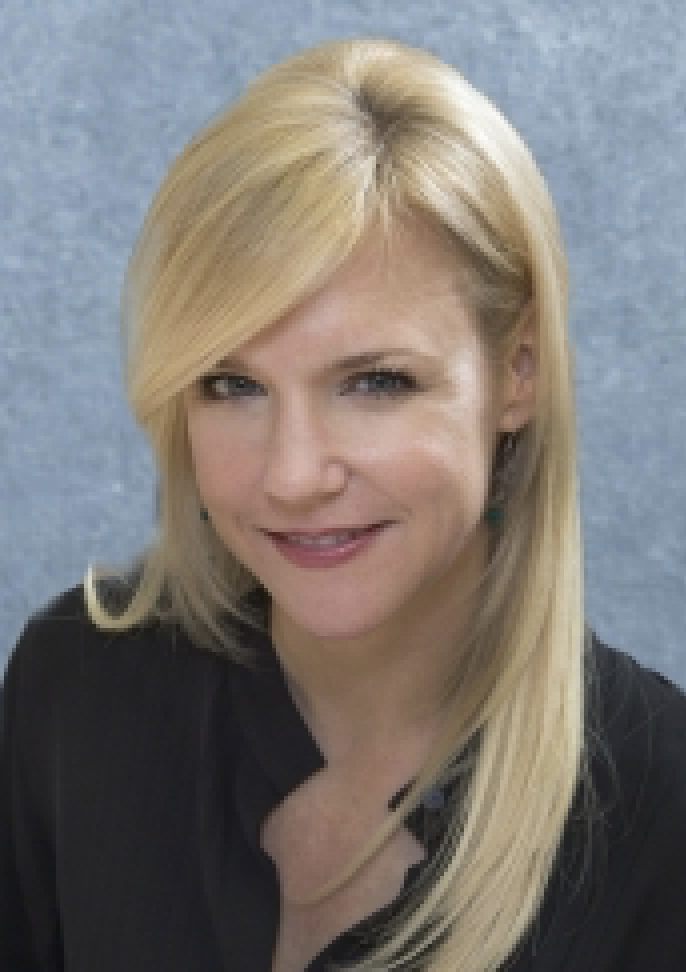
Martie Haselton

Martie Haselton

· Professor

University of California, Los Angeles · Communication Studies

Active 1997–2025

h-index46
Citations10.4k
Papers11120 last 5y
Funding
See your match with Martie Haselton — sign in to PhdFit.Sign in

About

Martie Haselton is an interdisciplinary evolutionary scientist who studies how evolution has shaped the social mind. Her research focuses on understanding the mechanisms guiding women’s sexual decision making, particularly how these mechanisms have evolved to take conception probability into account during the brief fertility window each month. Her recent work has involved testing hypotheses related to ovulation cues, including collecting photographs, vocal recordings, and body odor samples from women to examine whether there are detectable cues of ovulation that others can perceive. Her findings suggest that women wear more attractive and revealing clothing, have higher vocal pitch, and emit more attractive body odors during high-fertility days of their cycle, challenging the long-held assumption that human ovulation is concealed. This research has significant implications for understanding fluctuations in attraction, relationship dynamics, and social behavior. In addition to her work on female fertility cues, Haselton has investigated the role of reproductive hormones in other areas of life, including postpartum hormonal effects on maternal mental health. She holds a Ph.D. in Psychology from the University of Texas, Austin, and has earned master's and bachelor's degrees in Psychology from the College of William & Mary and the University of San Diego, respectively. Her research interests encompass intimate relationships, psychology of mating, social endocrinology, bias in social inference, sex differences, and evolution and human behavior.

Research topics

  • Sociology
  • Psychology
  • Social psychology
  • Computer Science
  • Social Science
  • Epistemology
  • Ecology
  • Developmental psychology
  • Environmental ethics
  • Medicine
  • Neuroscience
  • Biology

Selected publications

  • Psychological Science in the Wake of COVID-19: Social, Methodological, and Metascientific Considerations

    UNC Libraries · 2025-05-14

    articleOpen access

    The COVID-19 pandemic has extensively changed the state of psychological science from what research questions psychologists can ask to which methodologies psychologists can use to investigate them. In this article, we offer a perspective on how to optimize new research in the pandemic's wake. Because this pandemic is inherently a social phenomenon-an event that hinges on human-to-human contact-we focus on socially relevant subfields of psychology. We highlight specific psychological phenomena that have likely shifted as a result of the pandemic and discuss theoretical, methodological, and practical considerations of conducting research on these phenomena. After this discussion, we evaluate metascientific issues that have been amplified by the pandemic. We aim to demonstrate how theoretically grounded views on the COVID-19 pandemic can help make psychological science stronger-not weaker-in its wake.

  • Strange Bedfellows: The Alliance Theory of Political Belief Systems

    Psychological Inquiry · 2023-07-03 · 31 citations

    articleSenior author

    What explains the contents of political belief systems? A widespread view is that they derive from abstract values, like equality, tolerance, and authority. Here, we challenge this view, arguing instead that belief systems derive from political alliance structures that vary across nations and time periods. When partisans mobilize support for their political allies, they generate patchwork narratives that appeal to ad-hoc, and often incompatible, moral principles. In the first part of the paper, we explain how people choose their allies, and how they support their allies using propagandistic tactics. In the second part, we show how these choices and tactics give rise to political alliance structures, with their strange bedfellows, and the idiosyncratic contents of belief systems. If Alliance Theory is correct, then we need a radically different approach to political psychology—one in which belief systems arise not from deep-seated moral values, but from ever-shifting alliances and rivalries.

  • Menstrual Symptoms: Insights from Mobile Menstrual Tracking Applications for English and Chinese Teenagers

    Adolescents · 2023-06-28 · 5 citations

    articleOpen accessSenior author

    Mobile software applications (apps) have transformed how individuals oversee and maintain their own health. One way that girls can monitor their menstrual cycles is through the increasingly widespread use of mobile menstrual tracking apps. This study aimed to examine menstrual symptom tracking for adolescents in English and Chinese apps, exploring menstrual literacy, cross-cultural differences, and framing, or presentation, of symptoms. The mixed-methods content analysis involved 15 popular free menstrual tracking apps in English (n = 8) and Chinese (n = 7), sampled from December 2022 to January 2023. A quantitative analysis of qualitative data was conducted through manual coding of content and automatically analyzing sentiment, or emotional tone, using a computational approach. We found that (1) menstrual literacy on symptom management or treatment was generally insufficient, (2) there were more available emotional than physical symptoms in English than Chinese apps, and (3) symptoms were framed more negatively than positively somewhat more in Chinese than English apps. Our findings emphasize the urgency to provide better evidence-informed communication about symptoms, either presented more positively or neutrally, in menstrual tracking apps for adolescent users. Since adolescence is a critical developmental stage that requires ample support, we recommend that digital menstrual trackers be crucially improved and future research should investigate how they can uniquely shape attitudes and experiences, and subsequent sexual and reproductive health empowerment and bodily autonomy.

  • The Strange Epicycles of Political Psychology: A Response to Commentaries

    2023-12-12

    preprintOpen accessSenior author

    A response to commentaries on Strange Bedfellows: The Alliance Theory of Political Belief Systems, published in Psychological Inquiry.

  • Menstrual Attitudes in the U.S. and China: Insights from Mobile Menstrual Tracking Applications for Teenagers

    Preprints.org · 2023-03-28 · 1 citations

    preprintOpen accessSenior author

    Mobile software applications (apps) have transformed how individuals oversee and maintain their own health. One way that girls can monitor their menstrual cycles is through the increasingly widespread use of mobile menstrual tracking apps. This study aims to examine menstrual symptom tracking for adolescents in English and Chinese apps, exploring menstrual literacy, cross-cultural differences, and framing, or presentation, of symptoms. The mixed methods content analysis involved 15 popular free menstrual tracking apps in English (n = 8) and Chinese (n = 7). Quantitative analysis of qualitative data was conducted through manual coding of content and automatically analyzing sentiment, or emotional tone, using a computational approach. We found that: (1) Menstrual literacy on symptom management or treatment was generally insufficient, (2) There were more available emotional than physical symptoms in English than Chinese apps, (3) Symptoms were framed more negatively than positively, somewhat more in Chinese than English apps. Findings emphasize the importance of improving information in digital menstrual trackers. Our findings further reflect cultural differences in emotional expression and negative attitudes toward menstruation. Since adolescence is a critical developmental stage that requires ample support, digital menstrual trackers can uniquely shape attitudes and experiences, ultimately, empowering teenagers to better manage their menstrual health.

  • Strange Bedfellows: The Alliance Theory of Political Belief Systems

    2023-04-25 · 12 citations

    preprintOpen accessSenior author

    What explains the contents of political belief systems? A widespread view is that they derive from abstract values, like equality, tolerance, and authority. Here, we challenge this view, arguing instead that belief systems derive from political alliance structures that vary across nations and time periods. When partisans mobilize support for their political allies, they generate patchwork narratives that appeal to ad-hoc, and often incompatible, moral principles. In the first part of the paper, we explain how people choose their allies, and how they support their allies using propagandistic tactics. In the second part, we show how these choices and tactics give rise to political alliance structures, with their strange bedfellows, and the idiosyncratic contents of belief systems. If Alliance Theory is correct, then we need a radically different approach to political psychology—one in which belief systems arise not from deep-seated moral values, but from ever-shifting alliances and rivalries.

  • The Strange Epicycles of Political Psychology: A Response to Commentaries

    Psychological Inquiry · 2023-07-03 · 1 citations

    articleSenior author
  • The Strange Epicycles of Political Psychology: A Response to Commentaries

    2023-12-12

    preprintOpen accessSenior author

    A response to commentaries on Strange Bedfellows: The Alliance Theory of Political Belief Systems, published in Psychological Inquiry.

  • Menstrual Attitudes in the U.S. and China: Insights from Mobile Menstrual Tracking Applications for Teenagers

    Preprints.org · 2023-03-30 · 2 citations

    preprintOpen accessSenior author

    Mobile software applications (apps) have transformed how individuals oversee and maintain their own health. One way that girls can monitor their menstrual cycles is through the increasingly widespread use of mobile menstrual tracking apps. This study aims to examine menstrual symptom tracking for adolescents in English and Chinese apps, exploring menstrual literacy, cross-cultural differences, and framing, or presentation, of symptoms. The mixed methods content analysis involved 15 popular free menstrual tracking apps in English (n = 8) and Chinese (n = 7). Quantitative analysis of qualitative data was conducted through manual coding of content and automatically analyzing sentiment, or emotional tone, using a computational approach. We found that: (1) Menstrual literacy on symptom management or treatment was generally insufficient, (2) There were more available emotional than physical symptoms in English than Chinese apps, (3) Symptoms were framed more negatively than positively, somewhat more in Chinese than English apps. Findings emphasize the importance of improving information in digital menstrual trackers. Our findings further reflect cultural differences in emotional expression and negative attitudes toward menstruation. Since adolescence is a critical developmental stage that requires ample support, digital menstrual trackers can uniquely shape attitudes and experiences, ultimately, empowering teenagers to better manage their menstrual health.

  • Understanding Women’s Estrus and Extended Sexuality

    Oxford University Press eBooks · 2023-01-26 · 1 citations

    book-chapterSenior author

    Abstract Women are sexually active throughout their ovarian cycles and yet sex can lead to conception only a modest proportion of the cycle. Hence, whereas some of the time, women’s sex is conceptive, at other timepoints, it is nonconceptive. Most mammalian females, by contrast, are sexually active only when sex can lead to conception. Women’s nonconceptive sexual proceptivity and receptivity evolved for functions other than conception itself. Form follows function. The dual sexuality framework, then, proposes that women’s sexuality during phases of the cycle when conception is possible differs from their sexuality during phases when conception is not possible. This perspective puts theoretical constraints on the ways that conceptive and nonconceptive sexuality can be understood. Within these constraints, multiple, contrasting psychological designs are possible. Research that assesses alternative possible psychological designs promises to enhance our understanding of human mating in ways that extend far beyond the domain of women’s phase-specific sexuality.

Frequent coauthors

  • Kelly A. Gildersleeve

    University of Michigan–Ann Arbor

    40 shared
  • David M. Buss

    24 shared
  • David A. Frederick

    20 shared
  • Melissa R. Fales

    University of California, Los Angeles

    19 shared
  • Jordane Boudesseul

    Université Paris Nanterre

    17 shared
  • Laurent Bègue

    Hôpital Saint-Michel

    17 shared
  • Steven W. Gangestad

    University of New Mexico

    15 shared
  • Elizabeth G. Pillsworth

    California State University, Fullerton

    14 shared

Labs

  • Resume-aware match score
  • Save to shortlist
  • AI-drafted outreach

See your match with Martie Haselton

PhdFit ranks faculty by your research interests, methods, and publications — grounded in their actual work, not templates.

  • Free to start
  • No credit card
  • 30-second signup