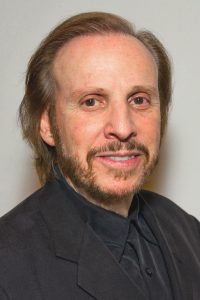
Martin Levine
· Assistant Professor of ArtStony Brook University · Art
Active 1959–2024
About
Martin Levine is a professor in the Department of Art at Stony Brook University, with a focus on printmaking, etching, lithography, and drawing. He works primarily in aquatint, etching, lithography, and drawing, and his artwork has been included in numerous exhibitions worldwide across countries such as Australia, Poland, Germany, England, Taiwan, Japan, Spain, The Netherlands, Norway, Ireland, Colombia, Uruguay, Slovenia, Egypt, Vietnam, Venezuela, Brazil, Israel, Canada, and the United States. His work is part of many prestigious public and private collections, including the Victoria and Albert Museum, San Francisco Museum of Modern Art, Brooklyn Museum, Art Institute of Chicago, Library of Congress, New York Public Library, Museu D’Art Contemporani D’Eivissa, Spain, Museum of Fine Arts Boston, New York Historical Society, Milwaukee Art Center, and Zimmerli Museum. Levine has received over 120 national and international awards, including recognition from the National Endowment for the Arts in printmaking. He is a past president of the Society of American Graphic Artists (SAGA) and has been elected to the National Academy of Design. Additionally, he has served as an invited juror for many international and national exhibitions, including events in the UK, Bulgaria, Poland, Yugoslavia, and institutions such as the Pratt Graphics Center and the National Academy of Design in New York.
Research topics
- Computer Science
- Psychology
- Cognitive science
- Neuroscience
- Cognitive psychology
Selected publications
2024-03-05 · 1 citations
book-chapter1st authorCorrespondingFor the past decade Hypothesis (H) theory has largely been confined to the behavior of adult humans during complex concept-identification problems. More specifically, the theory has emphasized the dynamics of H testing within a given problem. This paper contains an expanded application of the theory, an expansion which may be characterized in two ways. (a) The focus will be not upon within-problem dynamics, but upon changes occurring from problem to problem during a series (at least two) of problems. In a word, transfer will be the concern of this theoretical development. (b) A variety of phenomena, all from studies with adult humans, will be treated. These include learning-to-learn, Einstellung, the partial reinforcement extinction effect (PREE), and reversal-nonreversal shift effects.
2022-08-02
book-chapter1st authorCorrespondingFrom current perspectives, the most important detail of Reading No. 12 was the introduction of the blank-trial series as a probe for the H. This technique was demonstrated in four-dimensional problems with a set of four blank trials. The most fundamental validation derives from a feature insufficiently stressed within the articles. During four blank trials S may produce any one of 16 response patterns. Eight of these are patterns corresponding to the simple Hs; the remaining eight are patterns inconsistent with these Hs and with the theory as initially stated. This feature provides a built-in null hypothesis: If during blank trials Ss were responding randomly, then the proportion of blank-trial sets showing simple H patterns should approximate 0.5. The obtained result was characteristically above 0.9. Other results also attested to the validity of the probe.
The Start of The Child Program
2022-08-02
book-chapter1st authorCorrespondingBarry Gholson, a post-doctoral Fellow trained in child research, immersed himself in H theory and in the techniques associated with the multidimensional discrimination task, especially the use of the blank-trial probe. An initial experiment is planned with children. The use of children as Ss, however, produced a theoretical departure divergent enough to warrant separate treatment. The most important change concerned the blank-trial stimulus sequence. It will be recalled that for 4-D problems a simple H appeared from the four blank trials as either four responses to one side as a 4-0 pattern or two responses to each side as a 2-2 pattern. A single-alternation pattern could result either from mechanical position alternation or from Ss consistently choosing the stimulus component that, for the given set of blank trials, happened to alternate positions. Thus seemingly, trivial alteration in stimulus sequence yielded clear results and facilitated the expansion of the theory.
The Presolution Paradox in Discrimination Learning *
2022-08-02
book-chapter1st authorCorrespondingLevine, in an analysis of H behavior during discrimination learning, employed stimuli varying in form, color, size, and location. The sequence of stimuli were internally orthogonal, i.e., during four consecutive feedback trials each letter was black twice, large stimuli were on the right-hand side twice, etc. During presolution responding S samples can neither the correct H nor the other H on the same dimension. Thus, if “right side” is the solution, before the trial of the last error (TLE) S tries neither the H right side nor left side. The theoretical curves embody the two predictions. First is that all versions predict below chance responding starting at Trial 2 whereas the second is the better the processing the worse the predicted performance. Demonstration problems and appropriate instructions are given S samples only from the Hs corresponding to the stimulus levels.
2022-08-02
book-chapter1st authorCorrespondingBy the mid-1930’s behaviorism was in bloom. Books by Pavlov, Watson, and Thorndike were already classics. The epoch-making work of Skinner and Hull was under way. It is not surprising, therefore, that Krechevsky’s H theory, with its flagrant use of cognitive language, drew strong reaction. This chapter presents an example schematizes Spence’s model and illustrates in a simplified way the derivation of the response-pattern shifts. Spence’s model was not only a brilliant tour deforce but was the prototype of subsequent conditioning theories of discrimination learning. In 1945 Spence, with an experiment tailored to avoid what he felt were artifacts in previous experiments, demonstrated results consistent with the S-R position. That experiment, with one subsequently performed by his student, effectively ended the controversy.
A Model of Hypothesis Behavior In Discrimination Learning Set *
Routledge eBooks · 2022 · 4 citations
1st authorCorresponding- Computer Science
- Psychology
- Computer Science
Krechevsky measured position preferences, position alternation, and light-going tendencies in the white rat in a discrimination problem. He described each tendency as a “hypothesis” (H). No comprehensive picture of H behavior was available to suggest the total set of Hs which existed, to insure a lack of confounding in the measurement of various Hs, and to show the proportion of behavior under the control of each H. This chapter provides such a picture, to describe a mathematical model of H behavior which permits an analysis having the following characteristics: The operation of a large number of Hs can be analyzed simultaneously; the relative strength of each H, i.e., the proportion of responses controlled by each H, can be demonstrated at successive stages of the experiment; the measure of a given H is uninfluenced by the presence of other Hs; and the analysis is independent of the particular reward and stimulus sequences employed.
2022-08-02
book-chapter1st authorCorrespondingThe Transfer Hypothesis and the general cognitive machinery are applied to experiments in which the college student has been the subject. Problem-to-problem improvement in the concept-identification experiment has been demonstrated by Paul Fingerman. Typically, in these experiments the S is given minimal instructions. Certain procedural details of the learning-to-learn experiments make it extremely likely that S will experience the solution to each problem. He receives a large number of trials in which to discover the solution, and he must manifest a long criterion run before the problem is ended. According to the Transfer Hypothesis, therefore, with each successive problem the S is more and more likely to sample only from the simple domain. It follows that the group of Ss, because they are going from sampling in the universe at large to sampling in a limited domain.
2022-08-02
book-chapter1st authorCorrespondingThis chapter discusses derivation precriterion suppression that could be derived by assuming that S tests Hs according to well-documented routines. The precriterion suppression also be derived by using counterbalanced stimulus sequences. In deriving the effect, the author concern was with pre-TLE performance. The problem was to derive the probability of a correct response on trial n given that S made an error on some later trial. Most importantly, the theorems that applied to precriterion behavior should obviously also apply to behavior in this problem. Technically, the S would always be in the “precriterion” state. One consideration that encouraged the use of insoluble problems was suggested by a mathematician acquaintance. This is explained by the derivation of the precriterion performance curve, i.e., of the probability of a correct response given that S made an error at some later trial.
The None-To-All Theorem of Human Discrimination Learning *
2022-08-02
book-chapter1st authorCorrespondingThe H was determined by the blank-trial method developed by Levine. If sets of four blank trials alternate with outcome trials, during a long discrimination problem one may derive both a learning curve and a hypothesis curve. The percentage correct on each outcome trial yields the learning curve; the percentage occurrence of the correct H at each blank-trial set describes the hypothesis curve. The latter provides a direct test of the none-to-all theorem. A precriterion learning curve and H curve were obtained. The learning curve is based only on the outcome trial data. Because of the counterintuitive, subchance character of the precriterion learning curve it was decided to replicate the study. Another condition, however, was added. To check on the possibility that the unusual procedure of blank trials contributed to the suppression effect, two conditions were presented: problems with and problems without the blank-trial sets.
2022-08-02
book-chapter1st authorCorrespondingIn the late 1920’s Karl Lashley was investigating, by the method of ablation, brain funct ions in the learning processes of rats. One of the tasks presented was a simultaneous brightness discrimination in which the S faced two paths, one marked by a bright circle, the other by a dark circle. An occasional musing of this sort hardly presages an important tradition, but Lashley’s conclusion effectively piqued one young researcher. David Krech (né Krechevsky), a student at New York University, was inspired by Lashley’s challenge. Krech has recently described the circumstances that led him to embrace this problem. The description provides a clear instance of the interplay between the happenstance of daily life and scientific accomplishment.
Frequent coauthors
- 9 shared
Sheridan Phillips
- 6 shared
Michael Palij
- 6 shared
Irwin N. Jankovic
- 5 shared
Barry Gholson
- 5 shared
Gerard L. Hanley
Dublin City University
- 4 shared
Judith L Taddonio
Stony Brook University
- 4 shared
Tracey L. Kahan
- 4 shared
Laurence Rotkin
Education
Other
California College of Arts and Crafts
Awards & honors
- National Endowment for the Arts in Printmaking
- elected to the National Academy of Design
- past president of the Society of American Graphic Artists (S…
- Resume-aware match score
- Save to shortlist
- AI-drafted outreach
See your match with Martin Levine
PhdFit ranks faculty by your research interests, methods, and publications — grounded in their actual work, not templates.
- Free to start
- No credit card
- 30-second signup