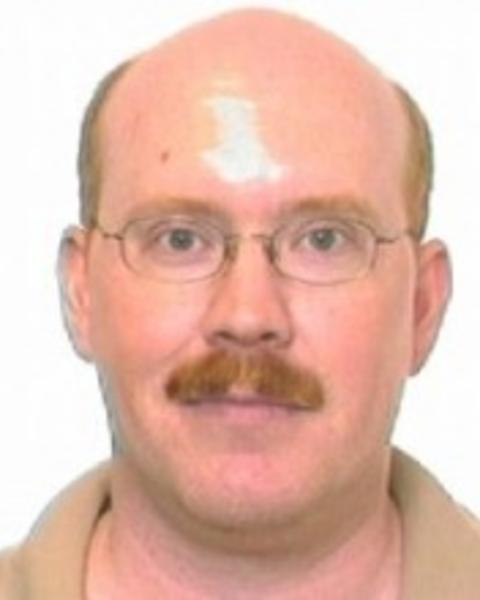
Matthew Holman
VerifiedHarvard University · Astronomy
Active 1970–2024
Research topics
- Computer Science
- Physics
- Astronomy
- Data Mining
- Computer Security
- History
- Art history
- Astrobiology
- Mathematics
- Database
- Data science
- Philosophy
- Cartography
- Geography
- Linguistics
Selected publications
Recommendations for Early Definition Science with the Nancy Grace Roman Space Telescope
arXiv (Cornell University) · 2024 · 3 citations
- Astronomy
- History
- Astrobiology
The Nancy Grace Roman Space Telescope (Roman), NASA's next flagship observatory, has significant mission time to be spent on surveys for general astrophysics in addition to its three core community surveys. We considered what types of observations outside the core surveys would most benefit from early definition, given 700 hours of mission time in the first two years of Roman's operation. We recommend that a survey of the Galactic plane be defined early, based on the broad range of stakeholders for such a survey, the added scientific value of a first pass to obtain a baseline for proper motions complementary to Gaia's, and the significant potential synergies with ground-based surveys, notably the Legacy Survey of Space and Time (LSST) on Rubin. We also found strong motivation to follow a community definition process for ultra-deep observations with Roman.
From Data to Software to Science with the Rubin Observatory LSST
arXiv (Cornell University) · 2022 · 3 citations
- Computer Science
- Computer Science
- Data science
The Vera C. Rubin Observatory Legacy Survey of Space and Time (LSST) dataset will dramatically alter our understanding of the Universe, from the origins of the Solar System to the nature of dark matter and dark energy. Much of this research will depend on the existence of robust, tested, and scalable algorithms, software, and services. Identifying and developing such tools ahead of time has the potential to significantly accelerate the delivery of early science from LSST. Developing these collaboratively, and making them broadly available, can enable more inclusive and equitable collaboration on LSST science. To facilitate such opportunities, a community workshop entitled "From Data to Software to Science with the Rubin Observatory LSST" was organized by the LSST Interdisciplinary Network for Collaboration and Computing (LINCC) and partners, and held at the Flatiron Institute in New York, March 28-30th 2022. The workshop included over 50 in-person attendees invited from over 300 applications. It identified seven key software areas of need: (i) scalable cross-matching and distributed joining of catalogs, (ii) robust photometric redshift determination, (iii) software for determination of selection functions, (iv) frameworks for scalable time-series analyses, (v) services for image access and reprocessing at scale, (vi) object image access (cutouts) and analysis at scale, and (vii) scalable job execution systems. This white paper summarizes the discussions of this workshop. It considers the motivating science use cases, identified cross-cutting algorithms, software, and services, their high-level technical specifications, and the principles of inclusive collaborations needed to develop them. We provide it as a useful roadmap of needs, as well as to spur action and collaboration between groups and individuals looking to develop reusable software for early LSST science.
The TESS Objects of Interest Catalog from the TESS Prime Mission
The Astrophysical Journal Supplement Series · 2021 · 300 citations
- Computer Science
- Physics
- Astronomy
We present 2241 exoplanet candidates identified with data from the Transiting Exoplanet Survey Satellite (TESS) during its 2 yr Prime Mission. We list these candidates in the TESS Objects of Interest (TOI) Catalog, which includes both new planet candidates found by TESS and previously known planets recovered by TESS observations. We describe the process used to identify TOIs, investigate the characteristics of the new planet candidates, and discuss some notable TESS planet discoveries. The TOI catalog includes an unprecedented number of small planet candidates around nearby bright stars, which are well suited for detailed follow-up observations. The TESS data products for the Prime Mission (sectors 1-26), including the TOI catalog, light curves, full-frame images, and target pixel files, are publicly available at the Mikulski Archive for Space Telescopes.
Recent grants
Frequent coauthors
- 96 shared
Joshua N. Winn
Princeton University
- 91 shared
Jon M. Jenkins
- 90 shared
Darin Ragozzine
Brigham Young University
- 75 shared
Jack J. Lissauer
Ames Research Center
- 74 shared
David R. Ciardi
NASA Exoplanet Science Institute
- 72 shared
Daniel C. Fabrycky
University of Chicago
- 72 shared
David W. Latham
- 71 shared
Lars A. Buchhave
Similar researchers at Harvard University
- Resume-aware match score
- Save to shortlist
- AI-drafted outreach
See your match with Matthew Holman
PhdFit ranks faculty by your research interests, methods, and publications — grounded in their actual work, not templates.
- Free to start
- No credit card
- 30-second signup