Resume-aware faculty matching

Find professors who actually fit you

Upload your resume. Four AI agents analyze your background, rank the faculty who fit, inspect their recent research, and help you draft outreach — grounded in their actual work, not templates.

Free to startNo credit cardCancel anytime
Top matches Balanced preset
Dr. Sarah Chen
Stanford · Interpretability · NLP
91
Dr. Marcus Holloway
MIT · Robotics · RL
84
Dr. Aisha Okonkwo
CMU · Fairness · HCI
82
Nova · Professor Researcher · re-ranking top 20…
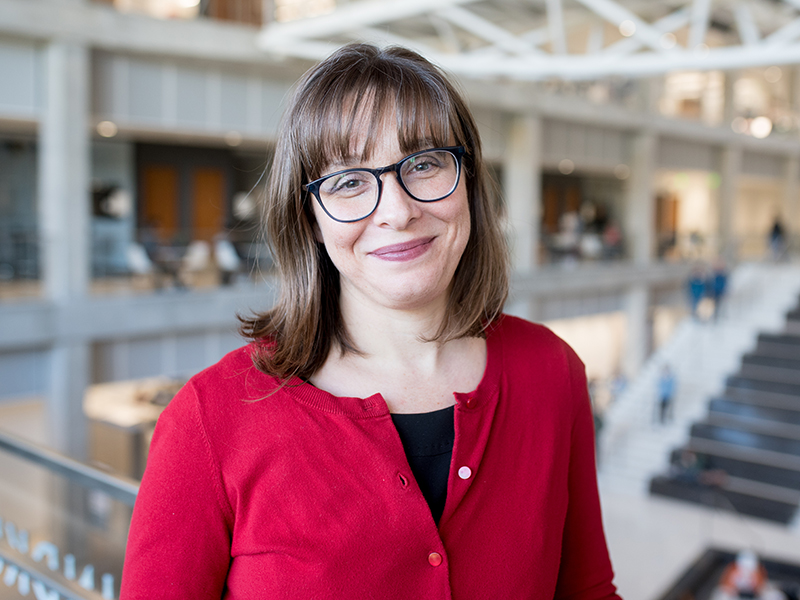
Maura Borrego

Maura Borrego

· ProfessorVerified

University of Texas at Austin · Mechanical Engineering

Active 2005–2026

h-index46
Citations9.1k
Papers309156 last 5y
Funding$3.6M
See your match with Maura Borrego — sign in to PhdFit.Sign in

About

Maura Borrego is a professor holding the E.P. Schoch Professorship in Engineering at the University of Texas at Austin. She specializes in engineering education research, focusing on factors that support the successful transfer of Hispanic engineering students from two-year to four-year institutions, undergraduate student resistance to active learning, decision-making processes of engineering instructors regarding teaching, learning in graduate engineering research groups, interdisciplinary education, and teamwork. Dr. Borrego has been awarded National Science Foundation grants for her research and has received notable awards including the U.S. Presidential Early Career Award for Scientists and Engineers (PECASE), a NSF CAREER award, and two outstanding publication awards from the American Educational Research Association. She serves as an Associate Editor for the Journal of Engineering Education and holds leadership roles within the American Society for Engineering Education, including Vice President for Professional Interest Councils and Chair of Professional Interest Council IV. Her academic background is in Materials Science and Engineering, with a B.S. from the University of Wisconsin-Madison and both an M.S. and Ph.D. from Stanford University. Dr. Borrego also serves as the Director of the Center for Engineering Education and is involved in various committees related to STEM education and curriculum development.

Research topics

  • Computer Science
  • Psychology
  • Medicine
  • Medical education
  • Mathematics education
  • Engineering
  • Pedagogy
  • Artificial Intelligence
  • Engineering ethics
  • Political Science
  • Sociology
  • Social Science
  • Management
  • Epistemology
  • Social psychology

Selected publications

  • How LGBTQIA+ STEM Students Navigate Campus Microclimates

    Journal of Student Affairs Research and Practice · 2026-04-23

    articleSenior author
  • Queering Identity Management for LGBTQIA+ STEM Students: Applying the Queered Model of Multiple Dimensions of Identity

    Journal of college student development · 2026-01-01

    articleSenior author

    Abstract: The queered model of multiple dimensions of identity (Q-MMDI) is applied to interviews with 12 LGBTQIA+ undergraduates and graduate students in cis-heteronormative STEM disciplines. Participants were recruited from a STEM course or reading group with discussion of literature on queer experiences. Our application of the four Q-MMDI components (cis-heteronormative context, desire for acceptance, identity performatives, and becoming as an ongoing identity process) allow for framing and expansion of former LGBTQIA+ experiences. Context interacts with desire, as participants described expectations for being accepted in a cis-heteronormative disciplinary environment. Performativity is related to becoming, or the ongoing process of developing identity through action, reflection, and optimism for the future. Courses and reading groups played an important role in validating student experiences, allowing them to express LGBTQIA+ identities in STEM spaces and increasing their community and expectations for acceptance in STEM organizations. The underutilized Q-MMDI extends the theory to STEM disciplinary spaces.

  • Mentoring Graduate Students with Disabilities: A Qualitative Evidence Synthesis and Review

    Education Sciences · 2026-01-31

    articleOpen access1st authorCorresponding

    Graduate education is important for career and social mobility, but it is inaccessible to many students with disabilities. Prior research describes structural and societal barriers—including but not limited to ableism and discrimination—and their impact on graduate students with disabilities. This review discusses challenges unique to graduate education such as faculty-student power differentials, unwillingness to disclose disability for fear of appearing incapable, classification of graduate students as both students and employees, and limited applicability of formal accommodations beyond organized coursework. Informed by our lived experience as disabled graduate students and faculty, we conduct a qualitative evidence synthesis of 28 articles, theses, book chapters and reports into actionable steps graduate faculty can take to mentor and support graduate students with disabilities. Using a mentoring-across-difference framework, we endorse reciprocal mentoring relationships that support trust, mutual learning, and sustained connection between mentors and mentees. Recommendations range from developing trust, questioning ableist disciplinary and graduate program norms, advocating for students and helping students develop advocacy skills, and providing scaffolding for disabled graduate students’ learning and professional development.

  • QUEER CULTURAL CAPITAL OF LGBTQ+ UNDERGRADUATE STEM STUDENTS

    Journal of Women and Minorities in Science and Engineering · 2025-10-07 · 2 citations

    articleSenior author

    We apply Yosso's community cultural wealth (CCW) and Pennell's queer cultural capital frameworks to the experiences of LGBTQ+ STEM students. We conducted interviews with nine LGBTQ+ undergraduate STEM majors and coded for the seven forms of wealth defined by Yosso and Pennell to determine if these are valuable frameworks for understanding the experiences of LGBTQ+ STEM students. The study found that students displayed most forms of capital in navigating their STEM environments, and research could expand and adapt CCW to fit the unique experiences of LGBTQ+ students. Linguistic, social, and navigational forms of capital emerged as the most important, but we also found examples of aspirational, resistant and transgressive capital. In particular, we substantially expand examples of linguistic capital beyond the findings of prior research, and some of the first examples of transgressive capital in STEM students are identified as such.

  • A scoping review on U.S. undergraduate students with disabilities in STEM courses and STEM majors

    International Journal of STEM Education · 2025-01-16 · 8 citations

    reviewOpen access1st authorCorresponding

    The purpose of this scoping review is to describe how the literature has discussed and studied disability in undergraduate-level STEM courses in the United States. A Critical Disability Studies lens informed our inclusion criteria. We considered extensive lists of disability types and diagnoses and concluded that “disability” as a search term best captured educational experiences rather than medical approaches. After screening nearly 9000 abstracts, we identified a final set of 409 dissertations, articles, conference papers, commentaries, briefs and news items. Sources appeared in discipline-based education research (DBER), STEM disciplinary and education journals as well as DBER conferences. Under 10% of sources included 2-year college settings. The largest groups of sources focused on disability writ large (39%, vs. specific categories) and across STEM (38%, vs. specific disciplines). Students were the main research participants (80%). Instructors were the main target of recommendations (84%). In terms of solutions, the largest group (n = 111) advocated for Universal Design, followed by accommodations (n = 94), and technology developed or tested with persons with disabilities (n = 90). Sources which the authors framed as empirical studies less frequently disclosed positionality as a person with a disability (16%) than non-empirical sources (21%). Quantitative (n = 125), qualitative (n = 99), and mixed methods (n = 64) approaches were well-represented. The most common data collection methods were surveys, assessments or task completions (n = 161 sources), followed by interviews (n = 109), observations (n = 44), document analyses (n = 18), and institutional student records (n = 14). More research is needed that centers the experiences of students with disabilities, focuses on specific disability types, employs critical quantitative and qualitative methodologies, and otherwise avoids implicit deficit views of disabled students. Citations to the qualifying sources are available in a public Zotero library.

  • Social Capital Development Through a Postdoc Future Faculty Program: Community Building and Mentorship

    Innovative Higher Education · 2025-01-07 · 2 citations

    articleSenior author
  • Synergistic organizational influences: how universities strategically prepare graduate students for industry, government, and non-profit careers

    Higher Education · 2025-11-19

    articleOpen access

    Abstract A majority of engineering postgraduate students (Master’s and PhD) enter into jobs in industry, government, and non-profit organizations. However, most postgraduate programming is geared toward careers in academia. Our study examines how universities prepare engineering postgraduate students for careers outside of academia. We draw on interview data with administrators across 11 institutions and leverage an existing framework for organizational influences to identify how institutions leverage their organizational characteristics, organizational culture, and/or management strategies to prepare engineering postgraduate students for these careers. The highest-impact efforts were those that synergistically leveraged at least two organizational influences, such as utilizing an industry advisory board to design career-relevant curricula. We conclude with recommendations for how institutions can help their students be prepared for these career sectors.

  • Understanding How Skill Development During Graduate School Can Prepare Students for Engineering Industry Career Pathways  

    2025-08-21 · 1 citations

    article
  • Differential graduate student-advisor career mentorship for academic vs. non-academic careers

    2025-08-21 · 1 citations

    articleSenior author
  • A Mentoring Program for First Year Engineering Graduate Students

    2025-01-01 · 2 citations

    articleOpen accessSenior author

    In this paper, we describe and evaluate a graduate mentoring program named “First ChEnnections,” organized by the department of chemical engineering and later expanded to all engineering departments at a large, public research institution in the Southwest U.S. The main goal of this program was to develop a community to support first-year PhD students in […]

Recent grants

Frequent coauthors

  • David B. Knight

    Pennsylvania State University

    140 shared
  • Maya Denton

    University of Oklahoma

    98 shared
  • Anita Patrick

    Clemson University

    83 shared
  • Nathan Hyungsok Choe

    George Washington University

    80 shared
  • Cynthia Finelli

    University of Michigan–Ann Arbor

    73 shared
  • Andrea Ogilvie

    Mitchell Institute

    63 shared
  • Gabriella Coloyan Fleming

    The University of Texas at Austin

    59 shared
  • Jeffrey E. Froyd

    Texas A&M University

    58 shared

Education

  • B.S., Materials Science and Engineering

    University of Wisconsin-Madison

  • M.S., Materials Science and Engineering

    Stanford University

  • Ph.D., Materials Science and Engineering

    Stanford University

Awards & honors

  • U.S. Presidential Early Career Award for Scientists and Engi…
  • National Science Foundation CAREER award
  • two outstanding publication awards from the American Educati…
  • Resume-aware match score
  • Save to shortlist
  • AI-drafted outreach

See your match with Maura Borrego

PhdFit ranks faculty by your research interests, methods, and publications — grounded in their actual work, not templates.

  • Free to start
  • No credit card
  • 30-second signup