Resume-aware faculty matching

Find professors who actually fit you

Upload your resume. Four AI agents analyze your background, rank the faculty who fit, inspect their recent research, and help you draft outreach — grounded in their actual work, not templates.

Free to startNo credit cardCancel anytime
Top matches Balanced preset
Dr. Sarah Chen
Stanford · Interpretability · NLP
91
Dr. Marcus Holloway
MIT · Robotics · RL
84
Dr. Aisha Okonkwo
CMU · Fairness · HCI
82
Nova · Professor Researcher · re-ranking top 20…
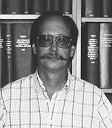
Michael Morony

Michael Morony

University of California, Los Angeles · History

Active 1974–2022

h-index13
Citations1.1k
Papers1017 last 5y
Funding
See your match with Michael Morony — sign in to PhdFit.Sign in

About

Michael Morony is a Professor Emeritus at UCLA in the Department of History. His field of study focuses on Near Eastern history, with research encompassing the history of Iraq after the Muslim conquest, landholding and social change in early Islamic Iraq, and the Arabisation of the Gulf. His scholarly work includes publications such as 'Iraq After the Muslim Conquest' (1983) and contributions to various edited volumes on land tenure, social transformation, and early Islamic history. Morony's research also involves the history of commerce, land use, and settlement patterns in late Sasanian and early Islamic Iraq, as well as the economic history of the region through sources like Michael the Syrian.

Research topics

  • Sociology
  • Geography
  • Ancient history
  • History
  • Archaeology
  • Business

Selected publications

  • Christian Communities in Baghdād and Its Hinterland

    BRILL eBooks · 2022 · 1 citations

    1st authorCorresponding
    • Sociology
    • Geography
    • Sociology
  • Production and the Exploitation of Resources

    2022-04-19 · 16 citations

    book1st authorCorresponding

    Contents: Introduction. Mining: Sources of gold and silver in Islam according to al-Hamdani, D.M. Dunlop Preliminary report on the third phase of Ancient Mining Survey Southwestern Province, J. Hester Patterns of early Islamic metallurgy in Oman, Gerd Weisberger. Stock Raising: The edge of empire: the archaeology of pastoral nomads in the Southern Negev highlands in late antiquity, Steven A. Rosen and Gideon Avni The Bedouins of Egypt during the first centuries of the Hijra, Abdel Hamid Saleh The relationship between pastoral nomadism and agriculture: northern Syria and the Jazira in the 11th century, Jean-Luc Krawczyk. Agriculture: Settlement of highlands and lowlands in early Islamic Damghan, Kathryn Maurer Trinkaus Rice in the Middle East in the first centuries of Islam, Marius Canard Managing a farm according to the Nabataean agriculture, Toufic Fahd The calendar of agricultural tasks according to Al-Falaha al-Nabatiyya, Toufic Fahd Agriculture in Muslim Spain, ExpiraciA(3)n GarcA a-SA!nchez A medieval green revolution: new crops and farming techniques in the early Islamic world, Andrew M. Watson. Irrigation: Sassanian and early Islamic water-control and irrigation systems on the Deh Luran Plain, Iran, James A. Neely The origin and spread of Qanats in the Old World, Paul Ward English The origins of the Aflaj of Oman, J.C. Wilkinson Notes on traditional hydraulics and agriculture in Oman, Paolo M. Costa Hydraulic technology in Al-Andalus, Thomas F. Glick Index.

  • Social Elites in Iraq and Iran: After the Conquest

    2021-01-31

    other1st authorCorresponding
  • Land Use and Settlement Patterns in Late Sasanian and Early Islamic Iraq

    2021-01-31

    other1st authorCorresponding
  • Religious Communities in Late Sasanian and Early Muslim Iraq 1

    Routledge eBooks · 2021 · 2 citations

    1st authorCorresponding
    • Ancient history
    • History

    The emergence of a segmented society composed of separate religious communities is usually associated with Islam and marks a major change in forms of social organization which was part of the general transformation taking place in the Middle East from the fourth to the ninth centuries. There are several criteria which point to the existence of religious communities in the late Sasanian period. The first is the spread of a primarily religious personal identity and religiously sanctioned way of life among Jews and Christians. From an institutional point of view, the Jews were organized into the most fully developed community in Sasanian Iraq complete with a system of religious law, urban institutions, schools, and synagogues. Muslims brought the foundations of their own religious law, a form of congregational worship, and the mosque with them to Iraq where the development of their own vocations of religious leadership, education, and legal administration combined their own background with local patterns of organization.

  • The Arabisation of the Gulf

    2020-07-24

    book-chapter1st authorCorresponding
  • SOCIAL ELITES IN IRAQ AND IRAN:

    Gerlach Press eBooks · 2020-12-04

    book-chapter1st authorCorresponding
  • The Making of the Medieval Middle East: Religion, Society, and Simple Believers by Jack Tannous

    Journal of late antiquity · 2020-01-01

    articleOpen access1st authorCorresponding

    Reviewed by: The Making of the Medieval Middle East: Religion, Society, and Simple Believers by Jack Tannous Michael Morony The Making of the Medieval Middle East: Religion, Society, and Simple Believers Jack Tannous Princeton: Princeton University Press, 2018. Pp. xiv + 672. ISBN 978-0-691-17909-4 Given that the formation of confessional religious traditions with mass memberships is taken to be definitive for Late Antiquity, Tannous makes two important points. One is that the vast majority of ordinary, everyday, non-elite believers were illiterate, agrarian, theologically unsophisticated, and poorly catechized. The second is that instead of a simple dichotomy between the learned and the unlearned there was a layering of knowledge among ordinary believers, both Christian and Muslim. The focus in this book is on simple, non-elite believers, confessional belonging and boundaries, and religious change mainly in the Fertile Crescent and Egypt from Late Antiquity into the Islamic period, how and when Christians became the majority population in the countryside, and the mechanics and pace of de-Christianization/Islamization after the Muslim conquest, when Christians remained the demographic majority until the eleventh century ce. It remains to be seen if the concept of simple believers would work for Christian Armenians or Ethiopians or for Jews or Zoroastrians. Because of the urban and/or elite biases of the written sources Tannous resorts to indirect evidence, what he calls an "oblique approach," such as anecdotal information, references to uncanonical practices, the fact that there were not enough priests to go around, especially in villages, and the use of as many types of sources as possible for corroboration. He makes very illuminating and creative use of Jacob of Edessa's (d. 708) canonical responsa and the unpublished Syriac and Karshuni manuscripts of the Life of Theodota of Amid. The questions asked of Jacob give a sense of what was happening among ordinary Christians, and Tannous argues that they reflect actual behavior. Confessional multiplicity resulting from the permanent fracturing of eastern Christianity into rival Churches was a major reality at the end of Late Antiquity after the Council of Chalcedon in 451 [End Page 187] when there was fierce competition for the loyalties of simple, everyday Christians by religious elites. But Tannous minimizes the importance of religious doctrine in boundary creation, notes the importance of and confessional indifference toward sacraments, and recognizes the role of schools in creating rival confessional identities. Tannous finds the same layering of knowledge and shallow grasp of details among ordinary early Muslims. Outside of the Arabian Peninsula Muslims were a ruling minority for several centuries, and Tannous suggests that in the period after the conquest it is likely that several hundred thousand Muslims lived among perhaps twenty or thirty million non-Muslims (398), so it is mistaken to call the non-Muslim population "minorities" for at least 500 years after the conquest. At first the Muslim community consisted of non-Muslim converts and their descendents, and the layering of knowledge and the lack of an orthodoxy among Muslims are key to understanding the religious dynamics in the Middle East following the Arab conquests. The earliest Christian-Muslim interactions occurred in a context of widespread ignorance and selective regard or disregard for the Qur'ān or the Prophet's example. There was no single reason for the conversion of Christians to Islam. Tannous enumerates material benefits, status and power, family or tribal connections, permissiveness, the delights of paradise, and compulsion as possible reasons and suggests a model of conversions occurring at a slow and incremental pace. For Tannous most conversions by Christians to Islam were by simple Christians into simple Muslims, and the conversion by simple Christians may not have meant much of a change at all in their lived religious lives, while much Late Antique culture survived. In what is an impressive, circumspect, detailed, thorough, and careful exposition, there is one serious problem. Tannous claims that "Magians [Zoroastrians] were regarded by the Qur'ān as People of the Book" (295) with reference to Arthur Jeffery (The Foreign Vocabulary of the Qur'ān [Baroda: Oriental Institute, 1938], 4) who inaccurately says that "the Qur'ān grants special privilege and protection to four communities as true believers...

  • Land Use and Settlement Patterns in Late Sasanian and Early Islamic Iraq

    Gerlach Press eBooks · 2020 · 27 citations

    1st authorCorresponding
    • Geography
    • Ancient history
    • History
  • The Arabisation of the Gulf

    2020-07-07 · 1 citations

    book-chapter1st authorCorresponding

Frequent coauthors

  • Khodadad Rezakhani

    4 shared
  • David J. Wasserstein

    Sunnybrook Health Science Centre

    2 shared
  • William M. Brinner

    2 shared
  • C. Edmund Bosworth

    2 shared
  • Miklós Muranyi

    2 shared
  • Wolfram Brandes

    Millennium Engineering and Integration (United States)

    1 shared
  • Mohsen M. Milani

    1 shared
  • John Haldon

    Princeton University

    1 shared
  • Resume-aware match score
  • Save to shortlist
  • AI-drafted outreach

See your match with Michael Morony

PhdFit ranks faculty by your research interests, methods, and publications — grounded in their actual work, not templates.

  • Free to start
  • No credit card
  • 30-second signup