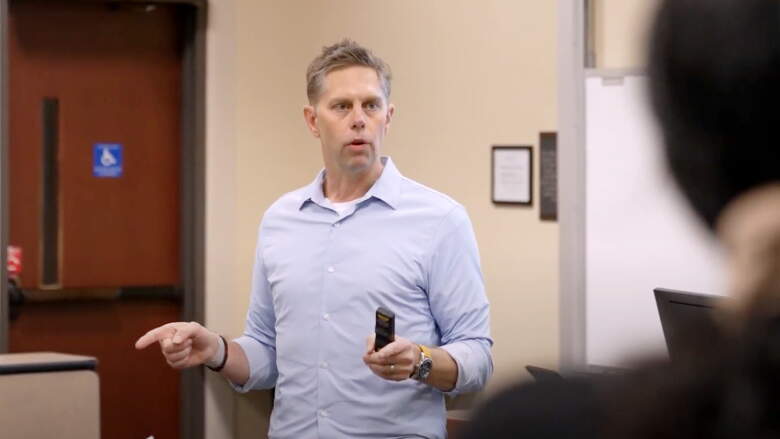
Mike Christian
· Professor of Organizational BehaviorVerifiedUniversity of North Carolina at Chapel Hill · Organizational Behavior and Human Resource Management
Active 2007–2026
Research topics
- Social psychology
- Psychology
- Psychotherapist
- Psychoanalysis
- Aesthetics
- Medicine
- Applied psychology
- Mathematics
- Literature
- Cognitive psychology
- Art
Selected publications
Employee Advocacy in The Digital Era: The Roles of Employer Branding and EVP in Indonesia
Enrichment Journal of Multidisciplinary Research and Development · 2026-03-11
articleOpen accessSenior authorThis study examined whether employer branding (EB) and employee value proposition (EVP) increase employee advocacy (EA) among teaching and non-teaching staff in an Indonesian education network, and whether digital literacy (DL) strengthens these relationships in a work context where communication and advocacy are increasingly mediated by digital platforms. A cross-sectional survey was administered to 320 employees and analyzed using PLS-SEM with SmartPLS 4.1.1.6, including measurement model evaluation (reliability and validity) and structural model testing with interaction terms to assess moderation effects. EB and EVP showed positive and significant effects on EA, indicating that a compelling employer image and a strong employment value offering are associated with stronger employee willingness to advocate for the organization. In contrast, DL did not significantly moderate the EB–EA and EVP–EA relationships, suggesting that advocacy in this setting is shaped more by motivational and relational factors than by employees’ perceived digital capability. The study extends the employee advocacy literature by empirically positioning EA as an outward-facing behavioral outcome of EB and EVP in an emerging-economy education context, while also providing evidence that digital literacy despite high levels among respondents may not function as a meaningful boundary condition for these relationships.
WIDYAKALA JOURNAL OF PEMBANGUNAN JAYA UNIVERSITY · 2025-09-30
articleOpen accessSenior authorThis study aims to examine the influence of Green Packaging (GP), Environmental Awareness (EA), and Willingness to Pay (WTP) on Purchase Decision (PD), with Perceived Naturalness (PN) and Perceived Healthiness (PH) serving as mediating variables among street food consumers in urban settings. The research methodology employs a quantitative approach via a survey technique. The sample comprised 161 street food patrons chosen through a purposive sampling method. The investigation was conducted utilizing the Partial Least Squares-Structural Equation Modeling (PLS-SEM) technique. The findings indicated that GP exerted no significant influence on the purchase choice, whereas EA and WTP demonstrated a positive and significant impact on BD when assessed directly. The association between green packaging mediated by perceived naturalness is favorable and substantial, however it is not significant when mediated by perceived healthiness. Environmental awareness shows a substantial and favorable correlation with BD, either directly or through mediation by PN and PH. The willingness to pay exerts a positive and substantial influence on BD; however, when mediated by PN, this effect is not significant, but mediation by PH results in a positive and significant effect.
2025-08-28
article1st authorCorrespondingThis research is driven by the growing utilization of artificial intelligence (AI) in tourism destination marketing, particularly in China, which depends on visual components and tailored content to enhance visitation intent. This research aims to examine the impact of perceived intelligence and creativity on individual acceptability of AI-generated tourism destination promotion. A quantitative methodology was employed utilizing an online survey including 108 individuals from Indonesia who had never traveled to China, featuring one animated AI advertising from the Douyin platform. The investigation employed the Partial Least Squares Structural Equation Modeling (PLS-SEM) approach. The findings indicated that both predictor variables exerted a significant direct influence on ad acceptance; however, perceived intellect did not mitigate the connection between imagination and ad acceptance. This discovery validates the significance of imaginative capacity in visual content as the primary catalyst for acceptance. This research is constrained by the diversity of AI applications employed, the restricted number of construct components, and the exclusion of variables with negative perceptual connotations. Additional research is advised to enhance the technological framework, perceptual dimensions, and demographic attributes of participants.
The Labor of Love: Exploring Work-Family Dynamics and Romantic Partnerships Impact on Work
Academy of Management Proceedings · 2025-07-01
articleThis symposium delves into the intricate relationship between work and family life by examining how work-family conflicts unfold in diverse contexts and influence different members of the organizations. The presentations in this symposium will discuss the impact of different aspects and events from family life, such as relationships with romantic partners and divorces, on employees' resources and social interactions at work. Further, our presentations draw insights from both traditional and non-traditional employees (e.g., multiple job holders) as well as investigate how supervisors' experiences with work-family conflict can shape their supervisory behaviors and impact their employees' well-being. By exploring the impact of work-family spillover effects on employees and supervisors, emphasizing romantic partnerships, our symposium offers insights and implications on employees’ well-being, interpersonal dynamics, and resources. Invisible Family Load and Women’s Work Outcomes: The Critical Role of Spousal Competence Author: Fernando Jose Quijano Franky; Author: Michael Christian; University of North Carolina at Chapel Hill Navigating Disruptions Inside and Outside Work: Work and Nonwork Implications of Employee Resource Author: Jinfeng Chen; Purdue University Author: Kelly Schwind Wilson; Purdue University When You’re Here, You’re Family: At-Home Rejections Effect on Workplace Behaviors Author: Alexandria Lauren Garcia; Author: Amy Bartels; University of Nebraska-Lincoln Balancing Dual Concerns: The Interdependent Impact of Multiple Job Holders and Their Partners Author: Brandon Mathew Fogel; University of Nebraska-Lincoln Author: Madison Lee Schnacker; University of Nebraska-Lincoln Author: Jenna Renae Pieper; University of Nebraska-Lincoln Author: Sherry (Qiang) Fu; Colorado State University Putting Myself in Your Shoes: How Supervisor Work-Family Conflict Experiences Shape Perspective Tak Author: Seo Hyun Kwon; Author: Nitya Chawla; University of Minnesota
Determinants of Indonesian Tourism Commercial Acceptance in AI Ad Conversion
2025-08-15
article1st authorCorrespondingDigital transformation has become a pivotal factor in reshaping various industries, including banking, where it enhances service accessibility and customer engagement. In particular, the integration of digital tools and financial literacy programs has shown significant promise in improving the accessibility of banking transaction services, especially for underserved populations. This research aims to investigate how digital transformation and financial literacy initiatives contribute to enhancing the accessibility of banking services. The focus is on understanding the interplay between digital literacy and technology adoption in banking, specifically in the context of low-income and digitally excluded groups. A mixed-methods approach was employed, combining quantitative surveys to assess customer perceptions and qualitative interviews to explore the barriers to accessing digital banking services. The findings reveal that while digital transformation has greatly expanded service access, challenges such as limited digital literacy and trust issues remain significant barriers. The study also identifies that financial literacy programs can mitigate these challenges by empowering customers to use digital banking platforms more effectively. The research concludes that the successful integration of digital transformation in banking requires not only technological innovation but also a concerted effort to improve financial literacy among customers. These findings have implications for banking institutions, policymakers, and educators in designing inclusive and accessible digital banking solutions that cater to all demographic groups.
Impact of AI-Generated Tourism Ads on Consumer Intent in Indonesian Market Using PLS-SEM
2025-08-15
article1st authorCorrespondingThe integration of artificial intelligence (AI) in digital marketing has revolutionized consumer engagement, particularly through AI-generated advertisements. Despite growing applications, the effectiveness of these ads in influencing consumer behavior remains an area of ongoing exploration. This study investigates how AI-generated tourism advertisements affect the intention of Indonesian consumers to visit China. A quantitative experiment with 118 participants was conducted, using a structured questionnaire for data collection. The analysis applied Partial Least Squares Structural Equation Modeling (PLS-SEM) using SmartPLS software to examine the relationships between AI content characteristics and consumer intent. Results indicate that novelty and perceived eeriness of AI-generated advertisements significantly influence consumer travel intentions. Additionally, the synthesis of artificial elements in the ads impacts perceived eeriness, which indirectly affects travel intent. These findings suggest that while AI-generated advertisements can enhance novelty, addressing perceptions of eeriness is crucial for optimizing consumer engagement. This research contributes to the understanding of AI-driven digital marketing and provides valuable insights for tourism marketers aiming to improve the effectiveness of AI-based campaigns, while also supporting the Uncanny Valley theory in marketing applications.
Examining Learning Anxiety in AI-Enhanced Educational Environments Among Urban Lecturers
2024-08-07 · 6 citations
article1st authorCorrespondingThis study investigates the anxiety educators face regarding artificial intelligence (AI)-based learning. Employing a quantitative, observational methodology, the research utilized linear regression analysis with SPSS 23 and a cross-sectional design, involving a sample of 102 lecturers (51 male and 51 female) from state and private universities in Jakarta, selected through purposive sampling. The findings indicate that lecturers predominantly expressed neutral or disagreeing stances towards fears associated with AI learning, with male professors tending towards neutrality and female lecturers more likely to disagree. No significant influence of gender and age on AI learning anxiety was found. The integration of AI in higher education is perceived as beneficial, fostering a desire for knowledge acquisition, despite some reservations. Educators generally support AI utilization in academia if their concerns are considered. This study is limited by its small sample size and focus on a single geographic region. Future research could expand these findings by investigating the impact of AI knowledge and subjective norms on learning anxiety, exploring demographic features beyond gender and age, and gaining a deeper understanding of lecturers’ apprehensions over AI.
Seeing your life story as a Hero’s Journey increases meaning in life.
Journal of Personality and Social Psychology · 2023 · 67 citations
- Psychology
- Aesthetics
- Social psychology
). Eight studies reveal that the Hero's Journey predicts and can causally increase people's experience of meaning in life. We first distill the Hero's Journey into seven key elements-protagonist, shift, quest, allies, challenge, transformation, legacy-and then develop a new measure that assesses the perceived presence of the Hero's Journey narrative in people's life stories: the Hero's Journey Scale. Using this scale, we find a positive relationship between the Hero's Journey and meaning in life with both online participants (Studies 1-2) and older adults in a community sample (Study 3). We then develop a restorying intervention that leads people to see the events of their life as a Hero's Journey (Study 4). This intervention causally increases meaning in life (Study 5) by prompting people to reflect on important elements of their lives and connecting them into a coherent and compelling narrative (Study 6). This Hero's Journey restorying intervention also increases the extent to which people perceive meaning in an ambiguous grammar task (Study 7) and increases their resilience to life's challenges (Study 8). These results provide initial evidence that enduring cultural narratives like the Hero's Journey both reflect meaningful lives and can help to create them. (PsycInfo Database Record (c) 2023 APA, all rights reserved).
Journal of Applied Psychology · 2023-02-06 · 27 citations
articleSenior authorDetaching from work is beneficial because it helps employees recover from work demands. However, we argue that detachment may be a trade-off for employees in organizations with higher (vs. lower) levels of performance pressure. Drawing on social self-preservation theory, we hypothesize that evening detachment leads employees working in higher (vs. lower) performance pressure work contexts to experience increased shame at work the next morning. In turn, we hypothesize that shame motivates employees to engage in cheating behaviors to covertly inflate their performance and reduce the possibility that others will form negative perceptions of them. In three studies-a 2-week experience sampling study and two experiments-we find that evening detachment leads to heightened next-morning shame in higher (vs. lower) performance pressure work contexts, increasing cheating behavior throughout the workday. (PsycInfo Database Record (c) 2023 APA, all rights reserved).
Acta Medica Philippina · 2023 · 19 citations
- Psychology
- Social psychology
- Applied psychology
Introduction: The COVID-19 pandemic has impacted technical workers who work more often in the field (e.g., engineering, mechanical, health safety environment (HSE), quality control, and production workers) with increasingly complex workloads and work pressures. Few studies have yet to examine the job satisfaction of such workers using a combination of psychological and organizational factors during difficult times, such as the current COVID-19 pandemic. Objective: This study aims to explain whether psychological and organizational factors affect employee job satisfaction as a result of the COVID-19 pandemic. Methods: This quantitative research uses Partial Least Square-Structural Equation Modeling. A survey with a questionnaire was used to collect data in this study. Using the non-probability sampling technique, data from 103 respondents spread throughout four Similar Exposure Groups (SEGs) in Indonesia were collected. Data analysis in this study used SmartPLS 3.0. Results: Male workers in this study constituted more than 90% of the respondents, the majority with a long working period (more than five years). Worker experience was directly proportional to worker age; most workers were between 41 and 56 years old. The results, with a majority of SEGs from engineering, found that out of five hypotheses (H1-H5), four are accepted while one is rejected. Employee job satisfaction during this pandemic is influenced by the feeling of safety (H1) and work pressure (H3). Work pressure is further influenced by the feeling of safety at work (H2). Moreover, work pressure acts as a mediator on the feeling of safety and job satisfaction (H4). However, job satisfaction is not influenced by management commitment (H5). Conclusion: Management commitment to work safety during pandemic situations must be adjusted, especially regarding policies to ensure the availability of additional standards on health protocols to prevent the spread of COVID-19 in the workplace. In addition, the guarantee that the company is committed to ensuring that workers feel safe will be covered if exposed to COVID-19. Occupational safety and health standards are no longer fully focused on work equipment or facilities. The feeling of safety and work pressure during a pandemic require attention from companies in accordance with their existing limitations and capabilities.
Frequent coauthors
- 26 shared
Barbara M. Fraumeni
National Bureau of Economic Research
- 10 shared
Jon D. Samuels
Bureau of Economic Analysis
- 8 shared
Matthew J. Pearsall
University of North Carolina at Chapel Hill
- 8 shared
Aleksander P. J. Ellis
University of Arizona
- 6 shared
Casher Belinda
University of Notre Dame
- 5 shared
Jerel E. Slaughter
- 5 shared
David A. Hofmann
University of North Carolina at Chapel Hill
- 5 shared
Erin C. Long
Education
Master of Science, Industrial/Organisational Psychology
Tulane University
PhD, Eller College of Management
University of Arizona
Bachelor of Arts, Psychology and Sociology
University of Wiscousin-Madison
- Resume-aware match score
- Save to shortlist
- AI-drafted outreach
See your match with Mike Christian
PhdFit ranks faculty by your research interests, methods, and publications — grounded in their actual work, not templates.
- Free to start
- No credit card
- 30-second signup