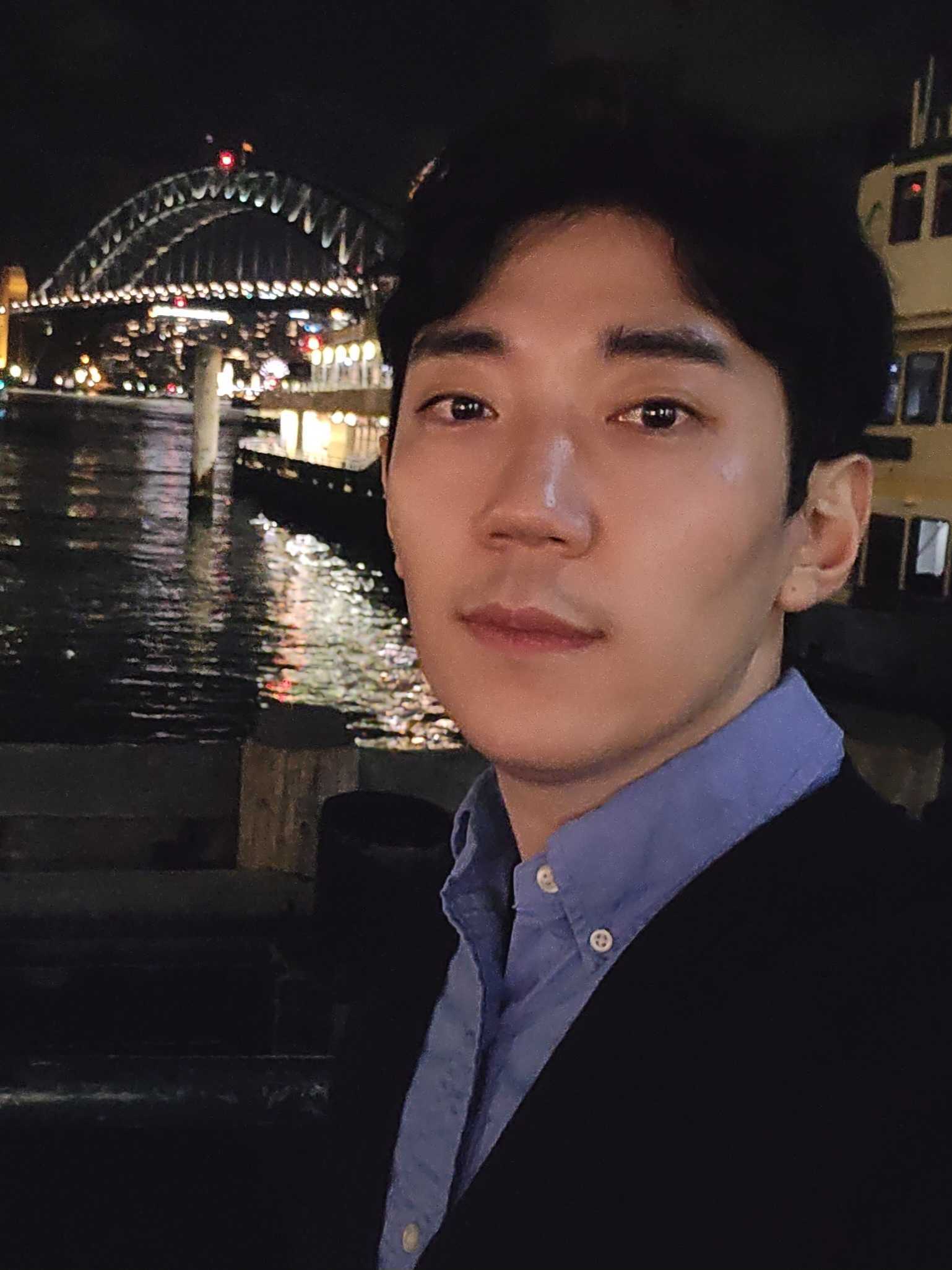
Minsung Kim
· Assistant ProfessorVerifiedRutgers University · Computer Science
Active 1999–2025
About
Minsung Kim is an Assistant Professor in the Department of Computer Science and WINLAB at Rutgers University, and an Associate Graduate Faculty member in the Department of Electrical and Computer Engineering. Prior to joining Rutgers in September 2024, he was a Postdoctoral Associate at Yale University. He earned his Ph.D. in Computer Science from Princeton University, where he was supported by the Siebel Scholars Fellowship and the Qualcomm Innovation Fellowship. At Rutgers, he leads the EXceL: NextG Wireless and Emerging Computing Systems Laboratory, focusing on quantum and emerging computing systems for next-generation wireless networks. His research aims to leverage quantum and quantum-inspired computation to accelerate NextG baseband processing at base station systems, unlocking unprecedented wireless performance in communication networks. He is actively seeking self-motivated students and postdocs interested in topics intersecting Quantum, Wireless, AI, and Systems. Throughout his academic career, Minsung Kim has contributed significantly to the field of wireless communications and quantum computing. His work includes developing quantum maximum-likelihood MIMO detection methods, exploring intelligent dynamic resource provisioning for elastic massive MIMO virtualized radio access networks, and applying physics-inspired heuristics for soft MIMO detection in 5G and beyond. His research has been recognized with numerous awards, including the Prof. Chin Ok Lee & Ms. Kwanghee Kim Early Career Award, the Rising Stars of ACM MobiSys recognition, and the Siebel Scholars Award. He has also been nominated for the ACM SIGMOBILE Doctoral Dissertation Award and the ACM Doctoral Dissertation Award. His research integrates quantum annealing and hybrid classical-quantum computation structures to advance wireless network capabilities. Minsung Kim's educational background includes a B.E. in Electrical Engineering with Great Honor from Korea University and a visiting student position in Electrical Engineering at Stanford University. His professional experience spans academic research and industry internships, including roles at Meta, InterDigital Communications, and NASA's Quantum Artificial Intelligence Laboratory. His teaching portfolio at Rutgers includes courses on Internet Technology and Computer Networks. He has delivered invited talks at prestigious venues such as Qualcomm, ACM MobiCom, and leading Korean universities, emphasizing his expertise in quantum and emerging non-traditional computing for next-generation wireless networks.
Research topics
- Computer Science
- Chemistry
- Risk analysis (engineering)
- Bioinformatics
- Pharmacology
- Biology
- Pathology
- Computational biology
- Biochemical engineering
- Medicine
- Organic chemistry
- Engineering
Selected publications
Computational Toxicology · 2025-06-25 · 3 citations
articleDevelopment of QSAR models to predict blood-brain barrier permeability
Frontiers in Pharmacology · 2022-10-20 · 38 citations
articleOpen accessAssessing drug permeability across the blood-brain barrier (BBB) is important when evaluating the abuse potential of new pharmaceuticals as well as developing novel therapeutics that target central nervous system disorders. One of the gold-standard in vivo methods for determining BBB permeability is rodent log BB; however, like most in vivo methods, it is time-consuming and expensive. In the present study, two statistical-based quantitative structure-activity relationship (QSAR) models were developed to predict BBB permeability of drugs based on their chemical structure. The in vivo BBB permeability data were harvested for 921 compounds from publicly available literature, non-proprietary drug approval packages, and University of Washington’s Drug Interaction Database. The cross-validation performance statistics for the BBB models ranged from 82 to 85% in sensitivity and 80–83% in negative predictivity. Additionally, the performance of newly developed models was assessed using an external validation set comprised of 83 chemicals. Overall, performance of individual models ranged from 70 to 75% in sensitivity, 70–72% in negative predictivity, and 78–86% in coverage. The predictive performance was further improved to 93% in coverage by combining predictions across the two software programs. These new models can be rapidly deployed to predict blood brain barrier permeability of pharmaceutical candidates and reduce the use of experimental animals.
Regulatory Toxicology and Pharmacology · 2021-07-14 · 22 citations
articleOpen accessThe ICH M7 (R1) guideline recommends the use of complementary (Q)SAR models to assess the mutagenic potential of drug impurities as a state-of-the-art, high-throughput alternative to empirical testing. Additionally, it includes a provision for the application of expert knowledge to increase prediction confidence and resolve conflicting calls. Expert knowledge, which considers structural analogs and mechanisms of activity, has been valuable when models return an indeterminate (equivocal) result or no prediction (out-of-domain). A retrospective analysis of 1002 impurities evaluated in drug regulatory applications between April 2017 and March 2019 assessed the impact of expert review on (Q)SAR predictions. Expert knowledge overturned the default predictions for 26% of the impurities and resolved 91% of equivocal predictions and 75% of out-of-domain calls. Of the 261 overturned default predictions, 15% were upgraded to equivocal or positive and 79% were downgraded to equivocal or negative. Chemical classes with the most overturns were primary aromatic amines (46%), aldehydes (45%), Michael-reactive acceptors (37%), and non-primary alkyl halides (33%). Additionally, low confidence predictions were the most often overturned. Collectively, the results suggest that expert knowledge continues to play an important role in an ICH M7 (Q)SAR prediction workflow and triaging predictions based on chemical class and probability can improve (Q)SAR review efficiency.
Computational Toxicology · 2021 · 42 citations
- Computer Science
- Risk analysis (engineering)
- Computational biology
UNC Libraries · 2020-11-07 · 2 citations
articleOpen accessOral bioavailability (%F) is a key factor that determines the fate of a new drug in clinical trials. Traditionally, %F is measured using costly and time -consuming experimental tests. Developing computational models to evaluate the %F of new drugs before they are synthesized would be beneficial in the drug discovery process.
Predicting Chemical Ocular Toxicity Using a Combinatorial QSAR Approach
UNC Libraries · 2020-11-01
articleOpen accessRegulatory agencies require testing of chemicals and products to protect workers and consumers from potential eye injury hazards. Animal screening, such as the rabbit Draize test, for potential environmental toxicants is time-consuming and costly. Therefore, virtual screening using computational models to tag potential ocular toxicants is attractive to toxicologists and policy makers. We have developed quantitative structure-activity relationship (QSAR) models for a set of small molecules with animal ocular toxicity data compiled by the National Toxicology Program Interagency Center for the Evaluation of Alternative Toxicological Methods. The data set was initially curated by removing duplicates, mixtures, and inorganics. The remaining 75 compounds were used to develop QSAR models. We applied both k nearest neighbor and random forest statistical approaches in combination with Dragon and Molecular Operating Environment descriptors. Developed models were validated on an external set of 34 compounds collected from additional sources. The external correct classification rates (CCR) of all individual models were between 72 and 87%. Furthermore, the consensus model, based on the prediction average of individual models, showed additional improvement (CCR = 0.93). The validated models could be used to screen external chemical libraries and prioritize chemicals for in vivo screening as potential ocular toxicants.
UNC Libraries · 2020-11-04
articleOpen accessCompared to the current knowledge on cancer chemotherapeutic agents, only limited information is available on the ability of organic compounds, such as drugs and/or natural products, to prevent or delay the onset of cancer. In order to evaluate chemical chemopreventive potentials and design novel chemopreventive agents with low to no toxicity, we developed predictive computational models for chemopreventive agents in this study. First, we curated a database containing over 400 organic compounds with known chemoprevention activities. Based on this database, various random forest and support vector machine binary classifiers were developed. All of the resulting models were validated by cross validation procedures. Then, the validated models were applied to virtually screen a chemical library containing around 23,000 natural products and derivatives. We selected a list of 148 novel chemopreventive compounds based on the consensus prediction of all validated models. We further analyzed the predicted active compounds by their ease of organic synthesis. Finally, 18 compounds were synthesized and experimentally validated for their chemopreventive activity. The experimental validation results paralleled the cross validation results, demonstrating the utility of the developed models. The predictive models developed in this study can be applied to virtually screen other chemical libraries to identify novel lead compounds for the chemo-prevention of cancers.
Evaluating kratom alkaloids using PHASE
PLoS ONE · 2020 · 59 citations
- Chemistry
- Organic chemistry
Kratom is a botanical substance that is marketed and promoted in the US for pharmaceutical opioid indications despite having no US Food and Drug Administration approved uses. Kratom contains over forty alkaloids including two partial agonists at the mu opioid receptor, mitragynine and 7-hydroxymitragynine, that have been subjected to the FDA's scientific and medical evaluation. However, pharmacological and toxicological data for the remaining alkaloids are limited. Therefore, we applied the Public Health Assessment via Structural Evaluation (PHASE) protocol to generate in silico binding profiles for 25 kratom alkaloids to facilitate the risk evaluation of kratom. PHASE demonstrates that kratom alkaloids share structural features with controlled opioids, indicates that several alkaloids bind to the opioid, adrenergic, and serotonin receptors, and suggests that mitragynine and 7-hydroxymitragynine are the strongest binders at the mu opioid receptor. Subsequently, the in silico binding profiles of a subset of the alkaloids were experimentally verified at the opioid, adrenergic, and serotonin receptors using radioligand binding assays. The verified binding profiles demonstrate the ability of PHASE to identify potential safety signals and provide a tool for prioritizing experimental evaluation of high-risk compounds.
Transitioning to composite bacterial mutagenicity models in ICH M7 (Q)SAR analyses
Regulatory Toxicology and Pharmacology · 2019-10-03 · 36 citations
articleOpen accessThe International Council on Harmonisation (ICH) M7(R1) guideline describes the use of complementary (quantitative) structure-activity relationship ((Q)SAR) models to assess the mutagenic potential of drug impurities in new and generic drugs. Historically, the CASE Ultra and Leadscope software platforms used two different statistical-based models to predict mutations at G-C (guanine-cytosine) and A-T (adenine-thymine) sites, to comprehensively assess bacterial mutagenesis. In the present study, composite bacterial mutagenicity models covering multiple mutation types were developed. These new models contain more than double the number of chemicals (n = 9,254 and n = 13,514) than the corresponding non-composite models and show better toxicophore coverage. Additionally, the use of a single composite bacterial mutagenicity model simplifies impurity analysis in an ICH M7 (Q)SAR workflow by reducing the number of model outputs requiring review. An external validation set of 388 drug impurities representing proprietary pharmaceutical chemical space showed performance statistics ranging from of 66-82% in sensitivity, 91-95% in negative predictivity and 96% in coverage. This effort represents a major enhancement to these (Q)SAR models and their use under ICH M7(R1), leading to improved patient safety through greater predictive accuracy, applicability, and efficiency when assessing the bacterial mutagenic potential of drug impurities.
Clinical Pharmacology & Therapeutics · 2019-04-08 · 21 citations
articleOpen accessThe US Food and Drug Administration's Center for Drug Evaluation and Research (CDER) developed an investigational Public Health Assessment via Structural Evaluation (PHASE) methodology to provide a structure-based evaluation of a newly identified opioid's risk to public safety. PHASE utilizes molecular structure to predict biological function. First, a similarity metric quantifies the structural similarity of a new drug relative to drugs currently controlled in the Controlled Substances Act (CSA). Next, software predictions provide the primary and secondary biological targets of the new drug. Finally, molecular docking estimates the binding affinity at the identified biological targets. The multicomponent computational approach coupled with expert review provides a rapid, systematic evaluation of a new drug in the absence of in vitro or in vivo data. The information provided by PHASE has the potential to inform law enforcement agencies with vital information regarding newly emerging illicit opioids.
Frequent coauthors
- 21 shared
Naomi L. Kruhlak
Translational Sciences (United States)
- 21 shared
Lidiya Stavitskaya
Center for Drug Evaluation and Research
- 12 shared
Christopher R. Ellis
Vanderbilt University Medical Center
- 12 shared
Edward G. Hawkins
Center for Drug Evaluation and Research
- 12 shared
Alexander Sedykh
Scio Diamond Technology Corporation (United States)
- 10 shared
Hao Zhu
Obstetrics and Gynecology Hospital of Fudan University
- 8 shared
Rebecca Racz
Center for Drug Evaluation and Research
- 8 shared
David G. Strauss
Center for Drug Evaluation and Research
Labs
E XceL: NextG Wireless and Emerging Computing Systems LaboratoryPI
- Resume-aware match score
- Save to shortlist
- AI-drafted outreach
See your match with Minsung Kim
PhdFit ranks faculty by your research interests, methods, and publications — grounded in their actual work, not templates.
- Free to start
- No credit card
- 30-second signup