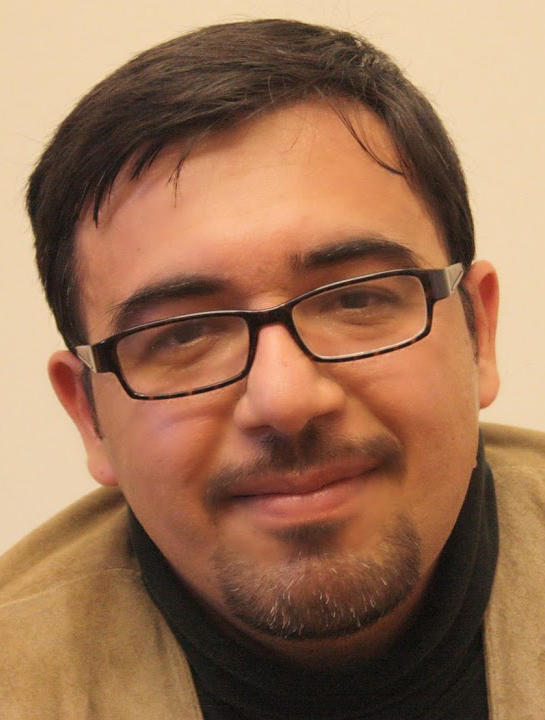
Mohammad R. K. Mofrad
· ProfessorUniversity of California, Berkeley · Mechanical Engineering
Active 1996–2024
About
Mohammad R. K. Mofrad is a Professor of Mechanical Engineering and Bioengineering at the University of California, Berkeley. His educational background includes a B.A.Sc. from Sharif University of Technology, an M.A.Sc. from the University of Waterloo, and a Ph.D. from the University of Toronto. His professional experience encompasses postdoctoral research at the University of Toronto, MIT, and Harvard Medical School/Massachusetts General Hospital, as well as roles as Principal Research Scientist at MIT and faculty positions at UC Berkeley, where he has served as Assistant Professor, Associate Professor, and now Professor. He has also been a Visiting Professor at EPFL in Lausanne, Switzerland, and a Faculty Scientist at Lawrence Berkeley National Lab. His research focuses on multiscale biomechanics related to cardiovascular disease and brain injury, molecular and cellular mechanobiology, and the mechanics of integrin-mediated focal adhesions, nuclear pores, and nucleocytoplasmic transport. He directs the Molecular Cell Biomechanics Laboratory and has contributed significantly to understanding the mechanical behavior of biological systems at various scales.
Research topics
- Biochemistry
- Biology
- Cell biology
- Biophysics
- Chemistry
Selected publications
Molecular models of LINC complex assembly at the nuclear envelope
Journal of Cell Science · 2021 · 42 citations
Senior authorCorresponding- Biology
- Cell biology
- Biophysics
Large protein complexes assemble at the nuclear envelope to transmit mechanical signals between the cytoskeleton and nucleoskeleton. These protein complexes are known as the linkers of the nucleoskeleton and cytoskeleton complexes (LINC complexes) and are formed by the interaction of SUN and KASH domain proteins in the nuclear envelope. Ample evidence suggests that SUN-KASH complexes form higher-order assemblies to withstand and transfer forces across the nuclear envelope. Herein, we present a review of recent studies over the past few years that have shed light on the mechanisms of SUN-KASH interactions, their higher order assembly, and the molecular mechanisms of force transfer across these complexes.
Nanoscale integrin cluster dynamics controls cellular mechanosensing via FAKY397 phosphorylation
Science Advances · 2020 · 132 citations
- Cell biology
- Chemistry
- Biophysics
Transduction of extracellular matrix mechanics affects cell migration, proliferation, and differentiation. While this mechanotransduction is known to depend on the regulation of focal adhesion kinase phosphorylation on Y397 (FAKpY397), the mechanism remains elusive. To address this, we developed a mathematical model to test the hypothesis that FAKpY397-based mechanosensing arises from the dynamics of nanoscale integrin clustering, stiffness-dependent disassembly of integrin clusters, and FAKY397 phosphorylation within integrin clusters. Modeling results predicted that integrin clustering dynamics governs how cells convert substrate stiffness to FAKpY397, and hence governs how different cell types transduce mechanical signals. Existing experiments on MDCK cells and HT1080 cells, as well as our new experiments on 3T3 fibroblasts, confirmed our predictions and supported our model. Our results suggest a new pathway by which integrin clusters enable cells to calibrate responses to their mechanical microenvironment.
Recent grants
Models of the Nuclear Pore Biomechanics
NSF · $450k · 2017–2023
Computational Modeling of Cytoskeletal Contractility and Remodeling
NSF · $320k · 2008–2012
Conformational Switch, Activation and Clustering in Cell Focal Adhesions
NSF · $447k · 2015–2021
CAREER: Cellular Mechanotransduction: An Integrated Research and Education Program
NSF · $450k · 2010–2016
Frequent coauthors
- 180 shared
Bharat Bhushan
- 74 shared
Roger D. Kamm
Massachusetts Institute of Technology
- 73 shared
Niren Murthy
University of California, Berkeley
- 73 shared
Mélanie Ott
Gladstone Institutes
- 73 shared
Kamyar Behrouzi
University of California, Berkeley
- 69 shared
Daniel K. Nomura
University of California, Berkeley
- 67 shared
Teena Bajaj
University of California, Berkeley
- 67 shared
Sang‐Hee Yoon
Inha University
Education
- 1994
Ph.D., Mechanical Engineering
University of California, Berkeley
- 1990
M.S., Mechanical Engineering
University of California, Berkeley
- 1988
B.S., Mechanical Engineering
University of California, Berkeley
Similar researchers at University of California, Berkeley
- Resume-aware match score
- Save to shortlist
- AI-drafted outreach
See your match with Mohammad R. K. Mofrad
PhdFit ranks faculty by your research interests, methods, and publications — grounded in their actual work, not templates.
- Free to start
- No credit card
- 30-second signup