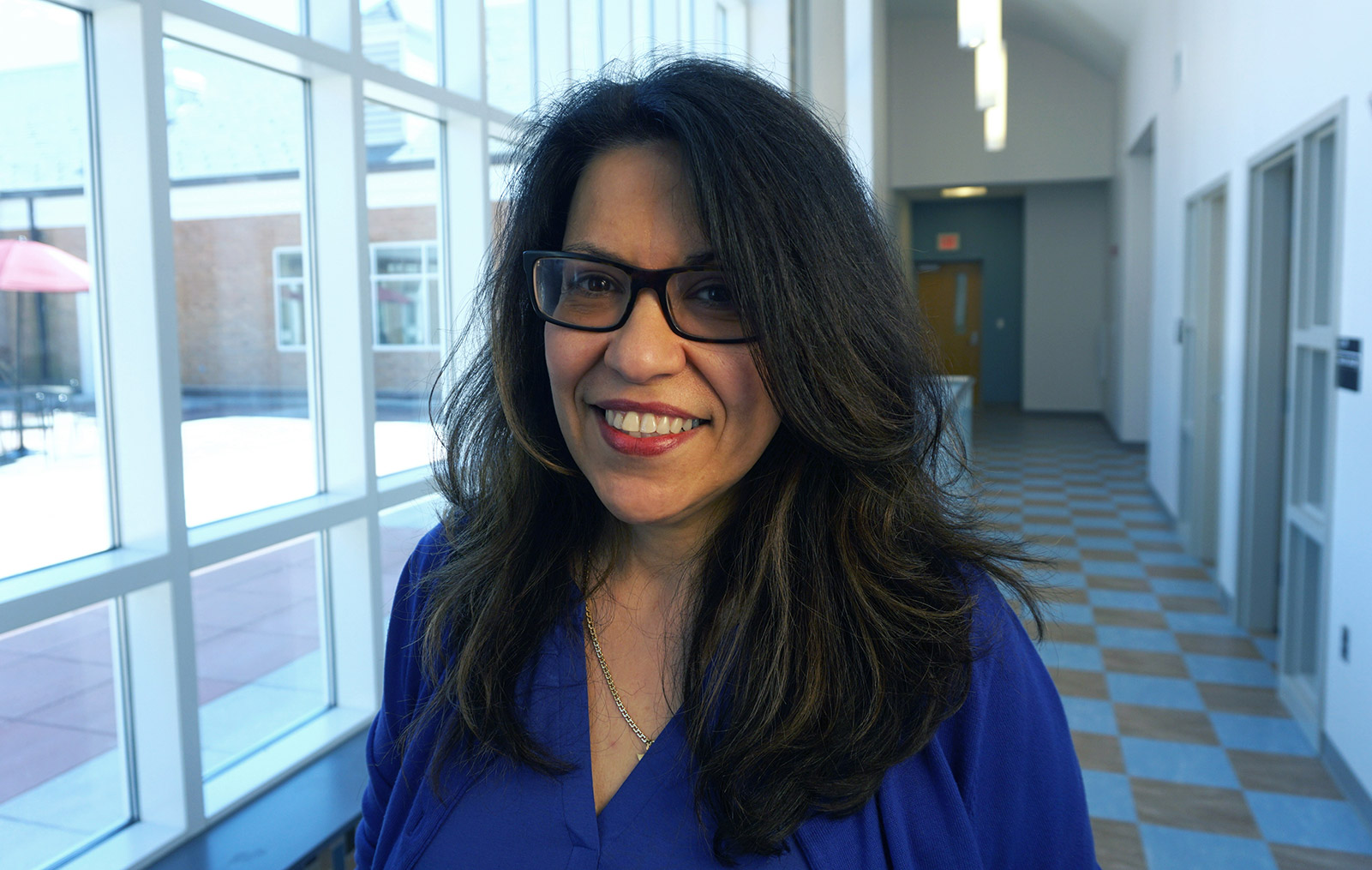
Nancy Mirabal
· Associate Professor, American Studies Affiliate Faculty, Latin American and Caribbean Studies CenterUniversity of Maryland, College Park · American Studies
Active 1993–2021
About
Nancy Raquel Mirabal is an Associate Professor of American Studies and the Director of the U.S. Latina/o Studies Program at the University of Maryland, College Park. She is the author of Suspect Freedoms: The Racial and Sexual Politics of Cubanidad in New York, 1823-1957, and the first editor of Technofuturos: Critical Interventions in Latina/o Studies. Additionally, she is a co-editor of Keywords for Latina/o Studies. Her publications have appeared in various academic journals including the Latino Studies Journal, The Public Historian, Cultural Dynamics, and Callaloo, reflecting her engagement with issues related to Latina/o studies, racial and sexual politics, and cultural dynamics.
Research topics
- Computer Science
- Political Science
- Sociology
- Gender studies
- Anthropology
- Art
- Criminology
- History
- Geography
- Aesthetics
- Law
- Psychology
- Art history
Selected publications
New York University Press eBooks · 2021
- Computer Science
- Computer Science
Collaborative in design and execution, the books in the Keywords series bring together scholars across a wide range of disciplines in the humanities and social sciences, with each essay on a single term to help trace the contours and debates of a particular field. Keywords are the nodal points in many of today's most dynamic and vexed discussions of political and social life, both inside and outside of the academy. Providing accessible A-to-Z surveys of prevailing scholarly concepts, the books serve as flexible tools for carving out new areas of inquiry.
A History of Latinx Immigrant Activism
Labor Studies in Working-Class History of the Americas · 2020-12-01
article1st authorCorrespondingSteve Striffler’s Solidarity: Latin America and the US Left in the Era of Human Rights examines the multiple responses to US interventions, occupations, and wars in Latin America during the late nineteenth and most of the twentieth century. Striffler’s key intervention is a constant and needed reminder that US violence, corruption, and deceit in Latin America did not go unnoticed and, in fact, prompted decades of activism.Striffler’s historical reach begins with the late nineteenth century and ends with the wars in Central America, the rise of NAFTA, and the Zapatista Movement. There is a lot to cover here and as a result, it reads more like a survey than an in-depth study of a particular event, movement, or cause. Moreover, by focusing on the US Left, which tends to focus on white leftists, and the politics of solidarity with Latin America and Latin Americans, there is a tendency to minimize, and exclude the activism of communities of color, women, and immigrants in the United States who were active and critical to the success of these very same movements.For my response, I will look at those moments in Striffler’s book where Latin American politics and revolutions inspired immigrants living and working in the United States to organize among themselves and across communities. How would Striffler’s argument change if we were to examine US left-wing politics and movements from the perspective of immigrants and communities of color in the United States? For instance, Striffler mentions Ricardo Flores Magón, a Mexican revolutionary and founder of the Partido Liberal Mexicano (PLM) who was exiled in 1904 to San Antonio and later Los Angeles. We learn of Flores Magón through the Industrial Workers of the World’s (IWW) connection with the PLM. As Striffler writes, by “1914 the PLM had some 6,000 members on the US side of the border, and in Los Angeles, its Spanish-language newspaper, Regneración, had over 10,000 readers. For its part, and in communication with the PLM, the IWW was organizing workers, including those of Mexican descent throughout the U.S. Southwest” (41). Many of those workers were organizers. Some were members of the PLM, others formed unions, and still others wrote for Regneración. The PLM and Regneración influenced the Mexican immigrant community for decades, establishing a strong radical element that shaped numerous political organizations, unions, and the activism of women, including Jovita Idar, Luisa Moreno, Emma Tenayuca, Josefina Fierro de Bright, and Paula Carmona (Enrique Flores Mágon’s wife and Ricardo Flores Mágon’s sister-in-law). These women, as scholars Cynthia E. Orozco Nicole Guidotti Hernandez, Vicki L. Ruiz, Gabriela Gonzalez, and Emma Pérez have so well argued, have yet to garner the historical recognition they so richly deserve for their activism in the United States.1In March of 1918 Flores Magón was charged under the Espionage Act of 1917 and was imprisoned at Leavenworth prison until his death in 1922. While in the United States, as Christina Heatherton writes, “Flores Magón had commanded the world to witness, support, and join the struggle for freedom, especially the struggle of the Mexican Revolution, which he saw as a battle against US imperialism, racism, and capitalism.”2 Once at Leavenworth, Flores Magón was part of a collective of radical thinkers who had been imprisoned for their anticapitalist politics and activism. As Heatherton explains, the prison, labeled an “university of radicalism” by one federal surveillance file, was a rare space where activists gathered, met, discussed, and published a prison newspaper, the Leavenworth New Era, where, as Heatherton notes, Flores Magón’s brother, Enrique published a regular column called “Mexican Kaleidoscope.”3 The reason I bring this up is that the history of activism on the Left can and should move beyond traditional notions of white political alliances. Ricardo and Enrique Flores Magón were powerful figures in their own right, who articulated strong criticisms against capitalism and, in doing so, collaborated and worked in tandem with the IWW.Striffler begins his book with the Haitian Revolution, and rightly so. The Haitian Revolution changed everything. A rupture that challenged the fundamental workings of white supremacy. Striffler does not recount the history of Toussaint L’Ouverture, Jean-Jacques Dessalines, or Henri Christophe. He does not write about the events that led to the first Black republic in the Americas, but instead asks us to see the Haitian Revolution as “an early precursor to post Second World War anti-colonial movements, which took revolutionary nationalism into internationalist directions” (26). But before the revolution could be seen as a movement, we must see it as Michel Rolph Trouillot has written, a revolution so unthinkable, and impossible that it remained in the realm of rumor and myth making for decades. A revolution that the hemisphere had yet to reconcile. What did it mean that the first Black Republic was refused by even the most sympathetic of allies?Striffler does mention that the Haitian Revolution inspired revolts in the South, namely the Pointe Coupee Conspiracy (1795), Gabriel Prosser’s revolt in Virginia (1800), and Denmark Vesey’s rebellion in Charleston (1822), and the impact those revolts had on African American desires to be free (27). However, he fails to mention Nat Turner’s rebellion in Virginia (1831) and David Walker’s “An Appeal to the Coloured Citizens of the World” (1829), one of the most significant documents in the history of the United States. Walker’s “Appeal” publicly rebuked slavery and called for slaves to revolt. Had Striffler included Walker’s “Appeal” it would have demonstrated the power of African American writing and intellectual production in fomenting resistance. Walker’s “Appeal” influenced important African American thinkers and activists of the time, including Henry Highland Garnet, Frederick Doug lass, and Martin Delany.After citing the role of the Haitian Revolution, Striffler then moves to other parts of the Western Hemisphere, notably, Cuba and the Spanish-American War. He argues that “it was black organizers who built a Cuban solidarity movement throughout the United States during the 1860s and 1870s, which was rooted in both anti-colonialism and anti-slavery” (33). To prove this point, Striffler briefly discusses the Cuban Anti-Slavery Society, an organization founded by African American men in New York. I appreciate that Striffler mentioned the Cuban Anti-Slavery Society, a necessary history that I researched and published in my own work, and that I consider to be an invaluable chapter in nineteenth-century African American male diasporic political activism.Formed in 1872, a few years after the end of the Civil War, by African American abolitionists Henry Highland Garnet and Samuel Scottron, the Cuban Anti-Slavery Society was an exercise in futurity, one where Afro-diasporic alliances across and among the hemisphere resonated with those who had witnessed the end of slavery in the United States, and those who were still fighting to end slavery in Cuba and later Brazil. The members of the society were aware of, and worked with Black Cuban and Puerto Rican revolutionaries who had migrated to New York and Florida during the 1860s. The Cuban Anti-Slavery Society did not last long. Within a few years it transitioned into the American Foreign Anti-Slavery Society as a strategy for expanding their diasporic reach, one that resonated for generations among Afro-diasporic political communities and migrants. But the story doesn’t end there. Black Cubans and Puerto Ricans had organized around freedom and independence in the United States before the founding of the Cuban Anti-Slavery Society. Arguably, it was their political activism in New York that influenced the creation of the Cuban Anti-Slavery Society.As early as the 1860s Black Cuban and Puerto Rican revolutionaries migrated to New York and Florida to escape wars, political chaos, and racial violence. Once in New York, they organized numerous political and social clubs devoted to ending Spanish authoritarian rule. Those who migrated during the mid- to late nineteenth century included Black Cuban men such as Rafael Serra, Teófilo Domínguez, Joaquin Granados, and the Black Puerto Rican Sotero Figueroa. Some, like Juan Bonilla, were born in Florida. They, along with countless others, were involved in creating a nationalist movement that challenged empire, colonialism, and slavery, as well as racism within the Cuban immigrant community. They organized revolutionary clubs, published and disseminated newspapers, and established a political club for Black Cuban and Puerto Rican men known as La Liga de Instrucción y Recreo (1891). Moreover, they were instrumental in demanding that racial equality and social justice be part of the platform for the Cuban Revolutionary Party (Partido Revolucionario Cubano), founded in New York and Tampa in 1892.4The United States’ intervention in the Cuban War for Independence has often been written from the perspective of occupiers and colonists — rarely from the perspective of Afro-diasporic migrants, men and women who fought to end slavery, gain independence, and go on to influence and shape US political activism toward Latin America during the early part of the twentieth century. As the United States passed colonialist measures such as the Foraker Act in Puerto Rico and the Platt Amendment in Cuba, Puerto Rican and Cuban migrants moved to New York to escape harsh conditions and political turmoil and/or find work. With the passage of the Jones Act in 1917, which conferred citizenship to Puerto Ricans, as well as the rise of the repressive Machado government in Cuba, the migration of Puerto Ricans and Cubans increased significantly in the 1920s and 1930s, creating a diasporic political community that continually asked what it meant to live and work in the United States, during a period of occupation.Many of those who migrated were labor organizers, communists, and, in the case of Cubans, anti-Machado activists. They chose to come to New York City for two main reasons: the existence of a long-standing Puerto Rican and Cuban community, and the possibility of building what the Cuban journalist Pablo Torriente Brau called “radical communities.” According to Torriente Brau, the immigrants who migrated during this period were the most revolutionary in New York. Cubans and Puerto Ricans in New York were part of a large Latin American revolutionary community who were, as Torriente Brau wrote, “forced out of our countries, persecuted by imperialism that by our internal contradictions, tolerates us here, where we agitate in meetings, in the revolutionary press, in the clubs, in societies.”5 They included clubs, such as El Club Martí and La Organización Revolucionaria Cubana (ORCA), both founded in Harlem in 1935. ORCA published the influential socialist-leaning newspaper, Frente Unico, that called for an end to the corruption in Latin America.6But it was El Club Julio Antonio Mella, founded in 1932, that was like no other. Formed precisely at the moment the Cuban people were under the oppressive regime of the Machado government, El Club Mella, as it was commonly known, was one of a number of immigrant lodges organized under the auspices of the International Worker’s Order (IWO).According to a report authored by the National Committee of the Hispanic Section of the IWO, “there were no clubs in the United States for Cuban residents who wanted to protest and challenge the Machadato.”7 Once El Club Mella was organized, thousands of workers, many of them Cuban and exiled for political reasons, joined the club. Named after the charismatic cofounder of the Cuban Communist Party, Julio Antonio Mella, El Club Mella was similar to many diasporic and immigrant clubs organized during this period. In fact, as Torriente Brau noted, in New York alone there were “twelve different organizations and labor unions that represented twenty-three different countries.”8 These clubs promoted internationalism, antifascism, antiracism, and socialism, along with establishing a long history of protesting against tyrannical governments in Latin America.El Club Mella was not alone. There were numerous immigrant-led and organized clubs, mutual aid societies, and labor unions that banded together throughout the United States during the mid-twentieth century to both support immigrant communities and fight against repression in their home countries and Latin Amer-ica in general. One of the more influential was El Congreso de Pueblos que Habla Española, founded by Luisa Moreno and Josefina Fierro de Bright in Los Angeles in 1938. El Congreso, as it was commonly known, promoted an agenda and politics that included all immigrants living in the United States, including noncitizens. Unlike other organizations at the time, namely, the League of United Latin American Citizens (LULAC) and the American GI Forum, El Congreso was not invested in the politics of Americanization or assimilation. Furthermore, it supported the working class and established a platform that included housing, education, poverty, immigration, civil rights, and US foreign policy. Much like other organizations created and led by immigrant and communities of color during this period, El Congreso was forced to disband as a result of the growing post–World War II anticommunist and anti-immigrant sentiment.9By the 1960s, immigrant and generational Latinx communities established organizations that focused on the racial and gender politics in the United States and the US intervention in Latin America. Striffler does a good job of discussing the Venceremos Brigades. Founded by the Students for a Democratic Society, the Brigades were a powerful, transnational movement made up of activists, radical scholars, students, and anyone interested in promoting solidarity with Cuba. As Striffler writes,The Brigades, which in various ways would incorporate most of the era’s left expressions, including antiwar feminism, the SNCC, Black Power, Puerto Rican, Chicano and Asian American activism, were involved in two main activities: hands-on support of the revolution by breaking the travel ban and participating in Cuban economic development, most famously assisting in the sugar harvest; and publicizing the concrete gains associated with the Cuban Revolution in order to provide an anti-imperialist grassroots foreign policy that countered the propaganda coming out of Washington. (88–89)It is here that Striffler incorporates a more expansive analysis that includes the actions and activism of communities of color in solidarity with the Cuban Revolution. For some, like the Young Lords, support of the Cuban Revolution along with Puerto Rican independence and a call to move toward socialism, were all connected. One area where Striffler could have included more context was the role of Cuban exiles and immigrants involved in organizing and participating in the Venceremos Brigades, most notably the writer, poet, and activist Lourdes Casal and the playwright Dolores Prida.Toward the end of the book, Striffler writes of the Central American solidarity movements, a defining moment in Latin American left-wing solidarity movements. As Striffler writes, “Central Americans not only brought heart-wrenching accounts of trauma, hunger, torture, and mass murder which spurred US citizens to take action, but played key roles in developing the solidarity infrastructure” (133). The large numbers of migrants from primarily El Salvador, Nicaragua, and Guatemala directly influenced and shaped the solidarity movements in the United States. At the same time, these movements had a long history of Latinxled organizing and activism in the United States, one that could be summoned to challenge US policies in Central America.This was definitely the case in San Francisco, where as early as the 1930s Salvadorans and Nicaraguans had migrated to work. In their accounts of Central American and Mexican activism in San Francisco, scholars Eduardo Contreras and Cary Cordova write of communities where immigrants organized and were part of labor and solidarity movements. Contreras’s research explores the labor activism of Central American and Mexican immigrants in San Francisco from the 1930s to the 1970s, providing a needed analysis that demonstrates the long history of immigrant activism and organizing, one that was recognizable and in turn set the terrain for the Frente Sandinista Liberacíon Nacional (FSLN) and Frente Farabundo Martí para la Liberacíon Nacional (FMLN) solidarity movements of the 1970s and 1980s. Cordova furthers this argument by showing how these historical movements, activism, and alliances influenced art, art activism, and the production of a distinct Latinx activist and artist community in San Francisco and the Bay Area. In addition, as María Cristina García’s pivotal research argues and clearly documents, there were similar Latinx-led and organized movements and organizations in other areas, including Maryland, Washington DC, and Los Angeles.10In closing, I’m interested in how Striffler’s argument and research would respond to the current politics surrounding the border, documentation, and anti-immigrant sentiment — results of a long legacy of US intervention in Latin America. Many of the activists today are young, undocumented, extremely capable, and engaged in creative and powerful direct action. Organizations such as UndocuQueer, RAICES (Refugee and Immigrant Center for Education and Legal Services), United We Dream, and the National Immigrant Youth Alliance are, for the most part, organized and led by young Latinx activists, many of whom are undocumented. Arguably, these organizations, this form of activism, are a result of a long history of Latinx- and immigrant-led organizing and activism, one that will continue to change and influence how we think and write about solidarity movements in the United States.
New York University Press eBooks · 2020 · 5 citations
1st authorCorresponding- Political Science
- Political Science
- Psychology
Beginning in the early nineteenth century, Cubans migrated to New York City to organize and protest against Spanish colonial rule. While revolutionary wars raged in Cuba, expatriates envisioned, dissected, and redefined meanings of independence and nationhood. An underlying element was the concept of Cubanidad, a shared sense of what it meant to be Cuban. Deeply influenced by discussions of slavery, freedom, masculinity, and United States imperialism, the question of what and who constituted “being Cuban” remained in flux and often, suspect. The first book to explore Cuban racial and sexual politics in New York during the nineteenth and twentieth centuries, Suspect Freedoms chronicles the largely unexamined and often forgotten history of more than a hundred years of Cuban exile, migration, diaspora, and community formation. Nancy Raquel Mirabal delves into the rich cache of primary sources, archival documents, literary texts, club records, newspapers, photographs, and oral histories to write what Michel Rolph Trouillot has termed an “unthinkable history.” Situating this pivotal era within larger theoretical discussions of potential, future, visibility, and belonging, Mirabal shows how these transformations complicated meanings of territoriality, gender, race, power, and labor. She argues that slavery, nation, and the fear that Cuba would become “another Haiti” were critical in the making of early diasporic Cubanidades, and documents how, by the late nineteenth and early twentieth centuries, Afro-Cubans were authors of their own experiences; organizing movements, publishing texts, and establishing important political, revolutionary, and social clubs. Meticulously documented and deftly crafted, Suspect Freedoms unravels a nuanced and vital history.
Schomburg, Futurity, and the Precarious Archives of Self
Small Axe A Caribbean Journal of Criticism · 2020 · 1 citations
1st authorCorresponding- Sociology
- Political Science
- Gender studies
The Schomburg Center for Research in Black Culture is the premier center of African American and Afro-diasporic studies. Yet, as the literary scholar Vanessa Valdés argues, we know little of the center’s namesake and his drive to collect and establish a renowned archive that emphasized the history, experience, and culture of African descended peoples and communities. Employing Valdés’s Diasporic Blackness: The Life and Times of Arturo Alfonso Schomburg, this essay explores the politics of Afro-diasporic collection, archive, visibility, and futurity.
New York University Press eBooks · 2020 · 13 citations
Senior authorCorresponding- Computer Science
- Computer Science
2018 Outstanding Academic Title, given by CHOICE Magazine Introduces key terms, concepts, debates, and histories for Latinx Studies Keywords for Latina/o Studies is a generative text that enhances the ongoing dialogue within a rapidly growing and changing field. The keywords included in this collection represent established and emergent terms, categories, and concepts that undergird Latina/o studies; they delineate the shifting contours of a field best thought of as an intellectual imaginary and experiential project of social and cultural identities within the US academy. Bringing together 63 essays, from humanists, historians, anthropologists, sociologists, among others, each focused on a single term, the volume reveals the broad range of the field while also illuminating the tensions and contestations surrounding issues of language, politics, and histories of colonization, specific to this area of study. From “borderlands” to “migration,” from “citizenship” to “mestizaje,” this accessible volume will be informative for those who are new to Latina/o studies, providing them with a mapping of the current debates and a trajectory of the development of the field, as well as being a valuable resource for scholars to expand their knowledge and critical engagement with the dynamic transformations in the field.
2020-10-09
book-chapter1st authorCorrespondingNew York University Press eBooks · 2020
- Computer Science
- Computer Science
New York University Press eBooks · 2020-12-31
book-chapter1st authorCorrespondingSugar, Cigars, and Revolution: The Making of Cuban New York, by Lisandro Pérez
New West Indian Guide / Nieuwe West-Indische Gids · 2019-12-05
articleOpen access1st authorCorrespondingSugar, Cigars, and Revolution is a thoroughly researched study on the early history of Cubans in New York.Beginning roughly in 1823 with the exile of Father Félix Varela and ending in 1898 with the Cuban War for Independence, Lisandro Pérez chronicles an important history of Cuban migration and settlement in New York during the nineteenth century.He organizes the book in two parts-"Sugar: 1823-1868" and "War: 1868-1895"-highlighting what he argues are the two defining events in the history of Cubans in New York.Threaded throughout are the workings of capital, revolution, and insurgency.Although Pérez views Varela's exile as an important marker in Cuban migration history, he writes that to fully understand the origin of the city's Cuban community, one must go "all the way back to the eighteenth century," noting that trade between New York and Cuba was "older than the United States itself, dating back to the British military victory in 1762" (p.20).The U.S. interest in Cuba's sugar and later cigar industry made the island attractive as both a trading partner and possible extension of U.S. influence via annexation.What distinguishes Pérez's research from other studies on the subject is his focus on the elite Cuban community, an important element of the historical narrative that rarely gets discussed in such great detail.We learn that from 1823 to 1868 many of the Cubans leaving the island were "boys and young men from wealthy families seeking an education and work experience, and [that] the counting houses had a direct role in bringing them from Cuba" (p.30).The merchants who ran the counting houses would "make the arrangements for the sons of merchants and planters to be enrolled in boarding schools in the New York area" (p.30).We learn about the wealthy Cuban families, including the Aldamas, Madans, Mestres, and Bentancourts, whose connection to U.S. politicians, government officials, and businessmen laid the groundwork for establishing effective and powerful economic and political networks.These networks would serve them well before and during the Ten Years' War when Cuba would be plunged into a bloody, chaotic war for independence.The onset of the Ten Years' War (1868-78) and La Guerra Chiquita (1879-80), as well as the failure of annexation and reformism, led to what Pérez calls a movement toward "total independence."This, he argues, inspired a growing and more diverse Cuban community, one that was no longer dominated by the "elite planter interests" (p.117).Here too, Pérez offers a history of exile revolutionary activity and insurgent politics from the perspective of elite Cubans in New York.His focus on the many meetings, conflicts, and alliances among the more powerful and well-to-do elements of the exile community is fascinating
Archival dilemmas and possibilities
Cultural Dynamics · 2018-10-19
article1st authorCorresponding
Frequent coauthors
- 4 shared
Lawrence La Fountain-Stokes
- 3 shared
Deborah Vargas
Universidad de Santiago de Chile
- 3 shared
Erica Edwards
Clinical Research Consortium
- 2 shared
Deborah R. Vargas
- 2 shared
Joni Adamson
Arizona State University
- 2 shared
Nina Christensen
- 2 shared
David Serlin
University of California, San Diego
- 2 shared
Glenn Hendler
New York University Press
Education
- 2003
Ph.D., Ethnic Studies
University of California, Berkeley
- 2001
M.A., Ethnic Studies
University of California, Berkeley
B.A., Ethnic Studies
University of California, Los Angeles
Awards & honors
- Scholar in Residence Fellowship at The Schomburg Center for…
- The University Chancellor Postdoctoral Fellowship for Academ…
- International Migration Postdoctoral Fellowship, Social Scie…
- Distinguished Lecturer for the Organization of American Hist…
- National Endowment for Humanities, DC Community Heritage Pro…
- Resume-aware match score
- Save to shortlist
- AI-drafted outreach
See your match with Nancy Mirabal
PhdFit ranks faculty by your research interests, methods, and publications — grounded in their actual work, not templates.
- Free to start
- No credit card
- 30-second signup