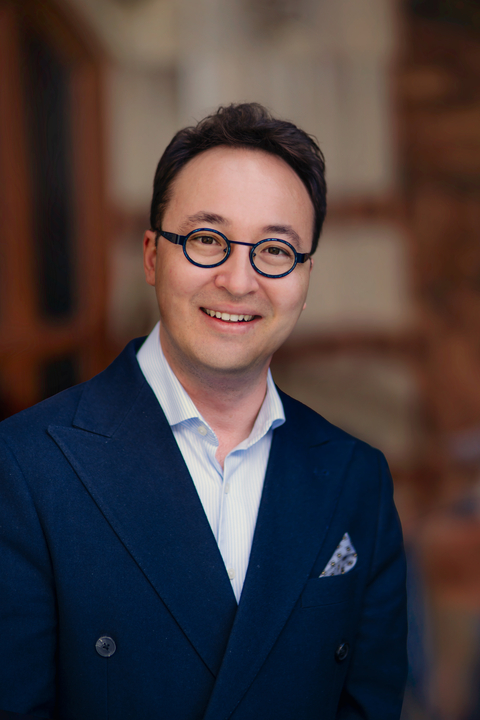
Nari Shelekpayev
VerifiedYale University · Department of Slavic Languages and Literatures
Active 2015–2025
About
Nari Shelekpayev is an Assistant Professor of Slavic Languages and Literatures at Yale University. His academic background includes a Ph.D. from Université de Montréal in History, an M.A. from EHESS Paris in Social Sciences, an M.L. from Université Paris 2, Panthéon-Assas in International Law, and B.A. degrees from Nankai University in Political Science and Karaganda State Conservatory in Piano Performance. His research interests encompass cities, cultural history, global, transnational, and comparative history, with a focus on the Russian Empire and USSR, opera, Central Asia, and biopolitics in the late Soviet and early post-Soviet periods. Shelekpayev's scholarly work explores the political and cultural transformations of urban centers, particularly in Eurasia, and examines themes related to biopolitics, urban development, and national identity. He has authored and edited works on the history of capital cities in Eurasia and the Americas, and his articles address topics such as Soviet and post-Soviet urban politics, Central Asian history, and the cultural history of Russia and its neighboring regions. Shelekpayev has received numerous fellowships and awards, including the Macmillan Center Faculty Research Grant and the Griswold Faculty Research Fund Award at Yale, and is an active member of professional associations related to Slavic, East European, and Eurasian studies. His teaching includes courses on post-Soviet civilization, Russian and Soviet music, and Eurasian cities, reflecting his expertise in the cultural and political history of the region.
Research topics
- Political science
- History
- Economic history
- Art
- Sociology
Selected publications
Thinking beyond Soviet Teleologies: Perspectives for the Study of Central Asia
Kritika · 2025-01-01
article1st authorCorrespondingSpecial Issue Introduction: Capital Cities in Imperial and Post-Imperial Contexts
Urban History Review · 2024-03-01
article1st authorCorrespondingSotsiologicheskoe Obozrenie / Russian Sociological Review · 2023-01-01 · 1 citations
articleOpen accessSenior authorThis text is a response to Isabelle Ohayon, Julien Thorez, and Tomohiko Uyama, who commented on our essay that was published two years ago in this journal. We argue that “tactical essentialism,” embraced by Central Asian scholarly communities to circumvent external academic and political pressure, is not equivalent to biological primordialism. We also discuss the commemoration of the 1916 uprising in Kyrgyzstan to demonstrate how the production of history in Central Asia involves the participation of local communities. The socio-historical agenda in the region is fluid and is not dictated solely by the state, as our interlocutors suggest.
Ottawa, 1857–1860: the making of Canada's capital city on the eve of Confederation
Urban History · 2021-09-24
article1st authorCorrespondingAbstract Canadian historiography has long regarded the choice and elaboration of Ottawa as a capital city in the mid-nineteenth century as a political compromise between Ontario (Canada West) and Quebec (Canada East). This article suggests that this view be reconsidered in the context of Canada's expansion westward and the dispossession of Indigenous lands. The key goal of this article is to provide a comprehensive analysis of transforming Ottawa into a capital city in 1857–60, including not only its choice as the seat of government but also the elaboration of Canada's Parliament Buildings, which were to become the key symbol of its future statehood, as well as the visit of the prince of Wales to Ottawa in 1860. The prince's visit allowed the city to be legitimized and inaugurated as the new seat of government.
Rethinking Transfers of Power and Public Protest in Kazakhstan, 1959–1989
Europe Asia Studies · 2021-11-08 · 4 citations
article1st authorCorrespondingThis article attempts to reconstruct and reconnect the history of transfers of power and mass protests in Kazakhstan since 1959. The investigation focuses on two events, the uprising in Temirtau in 1959 and the so-called December events (referred to as ‘Zheltoqsan’) in Almaty and other cities in Kazakhstan in 1986. In doing so, this article does not intend to simply set the two episodes side by side to discuss their similarities and differences. Rather, it aims to explore the common dynamics that influenced and, to a certain extent, shaped Kazakhstan as a polity in the second half of the twentieth century.
The Man Who Struck the Judge with a Fly Swatter: Justice and Performance in Contemporary Kazakhstan
Slavic Review · 2021-01-01
article1st authorCorrespondingThis article investigates a series of events that occurred in Quaragandy, a postindustrial city in northern Kazakhstan in the mid-2010s. These events led to Evgenii Tankov, an established lawyer, hitting a judge, Arai Alshynbekov, with a fly swatter during a routine court session. This research demonstrates that Tankov's act was not a flash of rage or a real attempt to harm the judge. It was, instead, a calculated strategy in which a political statement was concealed if not sheathed within the form of a grotesque performance. Tankov knew he would be judged for disrespect towards the court: and yet he used his subsequent trial to demonstrate the moral and intellectual impasse of Kazakhstan's judicial system. This article claims that as a performance, Tankov's case is useful because it allows one to re-think the genre itself. Moreover, it argues that the form of the trial per se became a genre of political agency in contemporary Kazakhstan. As an example of political praxis, this case allows one to question the ways in which non-political actors produce and affirm their identities and create new forms of political agency in a reality in which political behavior is bounded by a postsocialist authoritarian state.
Capital Cities, Politics, and Urban Life in Central Asia, 1955–2017
Kritika · 2020-01-01 · 2 citations
article1st authorCorrespondingCapital Cities, Politics, and Urban Life in Central Asia, 1955–2017 Nari Shelekpayev (bio) Anna Bronovitskaia, Nikolai Malinin, and Iurii Pal´min, Alma-Ata: Arkhitektura sovetskogo modernizma. Spravochnik-putevoditel´ (Alma-Ata: The Architecture of Soviet Modernism. A Reference Guide). 352 pp. Moscow: Garage, 2018. ISBN-13 978-5990971653. Natalie Koch, The Geopolitics of Spectacle: Space, Synecdoche, and the New Capitals of Asia. xiii + 194 pp. Ithaca, NY: Cornell University Press, 2018. ISBN-13 978-1501720918. $44.50. Mateusz Laszczkowski, "City of the Future": Built Space, Modernity, and Urban Change in Astana. xii + 205 pp. New York: Berghahn Books, 2018. ISBN-13 978-1789200751. $135.00. Philippe Meuser, Seismic Modernism: Architecture and Housing in Soviet Tashkent. 303 pp. Berlin: DOM Publishers, 2016. ISBN-13 978-3869224930. $39.95. The 20th century was a period of rapid urbanization and city growth throughout the world. Central Asia was not an exception: between 1897 and the early 21st century, the urban population in the region grew by more than 20 times. The majority of citizens in the two largest Central Asian countries, Kazakhstan and Uzbekistan, lived in cities by 2018. For this reason, the ways in which cities are constructed and transformed, along with matters pertaining to urban life and the conditions that enabled the migration to cities, are important, if not central, issues to take into account when studying [End Page 413] Central Asian societies.1 The four books discussed in this review contribute to this field by considering urban architecture and design as well as the life of the inhabitants of the biggest and most populated cities in (post-)Soviet Central Asia since the 1950s: Tashkent, Almaty, and Astana. Of the three cities, Tashkent is the oldest. In the distant past, it belonged to various ancient and medieval states on the territory of what is currently Uzbekistan. After the Russian conquest, Tashkent was the governor-general's seat and, from 1930 to 1991, the capital of Soviet Uzbekistan. The earthquake in 1966 became a dramatic point in Tashkent's history as it destroyed the old city center and left more than 200,000 people homeless. The reconstruction of 1966–70 became an all-Union effort that transformed Tashkent into an exemplary modernist city. Almaty (Vernyi, Alma-Ata since 1921) and Astana (Akmolinsk, Tselinograd since 1961, Nur-Sultan since 2019) were founded as fortresses by the Russian military in the mid-19th century. Almaty became the capital city of Kazakhstan in 1927. Astana underwent a major transformation when it was made the administrative center of Kazakhstan's Virgin Lands Campaign (Tselina) in the late 1950s. A major difference between Kazakhstan and Uzbekistan consisted in the fact that while Tashkent remained Uzbekistan's capital after the collapse of the Soviet Union, Kazakhstan chose to relocate its seat of government from Almaty to Astana in the late 1990s. The post-Soviet "capital" development in the two countries thus took different paths. In Uzbekistan, the territory of the "old" capital city became the substratum on which a new material and symbolic layer would be laid. In Kazakhstan, the very fact of relocation created opportunities for developing new languages of representation in Astana, without a radical transformation of the existing urban landscape in Almaty. Although the four books discussed in this review approach Almaty, Tashkent, and Astana from different perspectives, they share a way of looking at urban issues in each city. First, they approach the construction of Tashkent, Almaty, and Astana and the way states in Kazakhstan and Uzbekistan are governed as an interrelated process. Second, they are attentive to the experience urbanites have had and use these experiences as a point of departure when examining the projects of architects and politicians. Third, they scrutinize [End Page 414] the cases of Astana, Almaty, and Tashkent through the prism of theories and frameworks that go beyond Central Asia and by doing so put the three cities on the global scholarly map. ________ Philipp Meuser has authored several books on modernist architecture.2 His regional interests are very broad, ranging from postwar Germany to Astana to Pyongyang. Among these various contributions, the book on Tashkent stands out thanks to its quality and detail. As the title of the...
Sotsiologicheskoe Obozrenie / Russian Sociological Review · 2020-01-01 · 4 citations
articleOpen access1st authorCorrespondingIn his article “In Search of the Global East: Thinking between North and South”, Martin Müller offers a number of radical, although not new, insights on the role that post-socialist states presumably play in the modern world, as well as their perception, and the production of knowledge about themselves in these countries. This article is a response to Müller’s text and a reflection on the historiography of Central Asia, an integral part of the “Global East”. In the first part of this text, we analyze Müller’s own approach and explain why it is problematic from a historical point of view. In the second part, we focus on the production of “external” and “internal” knowledge about Central Asia and propose another paradigm labeled as “tactical essentialism”, which we believe best describes the production of historical narratives in the region at the moment. Despite the differences between the two concepts, it seems to us that “strategic” and “tactical” essentialism are essentially manifestations of the same process, namely, the attempts to oust the Soviet past from the ethos of post-socialist researchers (or replace it with other narratives).
Whose master plan? Kisho Kurokawa and ‘capital planning’ in post-Soviet Astana, 1995–2000
Planning Perspectives · 2019-03-29 · 17 citations
article1st authorCorrespondingAstana, Kazakhstan’s new capital city, was established in 1998 and became the only seat of government to be relocated within the former Soviet Union. In 1998, the government of Kazakhstan held an open international competition for a new master plan of Astana, for which 27 projects from 14 countries were received. This article focuses on the activities of the Japanese architect Kisho Kurokawa, who, despite having been awarded third place by the competition’s jury, was nevertheless declared its winner. I propose to re-examine the circumstances behind the choice of Kurokawa’s proposal (not to mention its financing by the Japan International Cooperation Agency) that eventually led to its implementation as the Master Plan for the new capital of Kazakhstan. A close look at this process will shed light on the way Astana has been perceived and planned since 1998 and also reveal the ways in which planning strategies and (international) politics influenced and co-constructed one another in post-Soviet Kazakhstan.
2018-04-01
book-chapter1st authorCorresponding
Frequent coauthors
- 2 shared
Aminat Chokobaeva
Nazarbayev University
- 1 shared
Aliki Economides
Laurentian University
Labs
Slavic Languages and LiteraturesPI
Education
- 2019
PhD in History, History
Université de Montréal
Awards & honors
- Macmillan Center Faculty Research Grant, Yale University, 20…
- Griswold Faculty Research Fund Award, Whitney Humanities Cen…
- Robert L. Platzman Memorial Fellowship, University of Chicag…
- Associate Fellow, British Royal Historical Society (elected…
- Resume-aware match score
- Save to shortlist
- AI-drafted outreach
See your match with Nari Shelekpayev
PhdFit ranks faculty by your research interests, methods, and publications — grounded in their actual work, not templates.
- Free to start
- No credit card
- 30-second signup