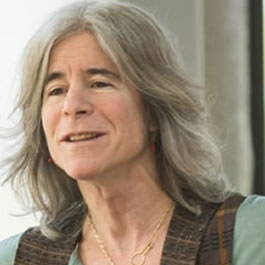
Nina Kraus
· Professor of Communication Sciences and DisordersVerifiedNorthwestern University · Radio/Television/Film
Active 1976–2025
About
Nina Kraus directs the Auditory Neuroscience Laboratory at Northwestern University, where she studies the auditory system and its underlying brain mechanisms. Her research explores how musical input influences abilities such as reading and language learning, as well as how conditions like autism, aging, and HIV affect sound processing. Kraus's work has recently focused on the auditory aspects of concussion, supported by a five-year grant from the National Institute of Neurological Disorders and Stroke to study concussion in Northwestern's Division I athletes across multiple sports. Kraus earned a PhD in neuroscience from Northwestern University. Her lifelong interest in sound was inspired by her childhood experiences listening to her mother play piano and the multilingual voices of her European-born parents, which shaped her dedication to understanding how we process sound in everyday communication.
Research topics
- Medicine
- Psychology
- Neuroscience
- Computer Science
- Audiology
- Cognitive psychology
- Biology
- Genetics
- Internal medicine
- Immunology
- Communication
- Speech recognition
- Endocrinology
- Physiology
- Developmental psychology
Selected publications
Rhythm: Inside and Outside the Head
2025-12-16
other1st authorCorrespondingInternational Journal of Molecular Sciences · 2025-03-11
articleOpen accessEvidence suggests that carriers of FMR1 mutations (e.g., fragile X syndrome and the FMR1 premutation) may demonstrate specific phenotypic patterns shared with autism (AU), particularly in the domain of pragmatic language, which involves the use of language in social contexts. Such evidence may implicate FMR1, a high-confidence gene associated with AU, in components of the AU phenotype. Prosody (i.e., using intonation and rhythm in speech to express meaning) is a pragmatic feature widely impacted in AU. Prosodic differences have also been observed in unaffected relatives of autistic individuals and in those with fragile X syndrome, although prosody has not been extensively studied among FMR1 premutation carriers. This study investigated how FMR1 variability may specifically influence prosody by examining the prosodic characteristics and related neural processing of prosodic features in women carrying the FMR1 premutation (PM). In Study 1, acoustic measures of prosody (i.e., in intonation and rhythm) were examined in speech samples elicited from a semi-structured narrative task. Study 2 examined the neural frequency following response (FFR) as an index of speech prosodic processing. Findings revealed differences in the production of intonation and rhythm in PM carriers relative to controls, with patterns that parallel differences identified in parents of autistic individuals. No differences in neural processing of prosodic cues were found. Post hoc analyses further revealed associations between speech rhythm and FMR1 variation (number of CGG repeats) among PM carriers. Together, the results suggest that FMR1 may play a role in speech prosodic phenotypes, at least in speech production, contributing to a deeper understanding of AU-related speech and language phenotypes among FMR1 mutation carriers.
Persistent post-concussion symptoms include neural auditory processing in young children.
PubMed · 2024-03-01 · 2 citations
articleOpen accessSenior authorAim: Difficulty understanding speech following concussion is likely caused by auditory processing impairments. We hypothesized that concussion disrupts pitch and phonetic processing of a sound, cues in understanding a talker. Patients & methods/results: We obtained frequency following responses to a syllable from 120 concussed and 120 control. Encoding of the fundamental frequency (F0), a pitch cue and the first formant (F1), a phonetic cue, was poorer in concussed children. The F0 reduction was greater in the children assessed within 2 weeks of their injuries. Conclusion: Concussions affect auditory processing. Results strengthen evidence of reduced F0 encoding in children with concussion and call for longitudinal study aimed at monitoring the recovery course with respect to the auditory system.
Neural Delays in Processing Speech in Background Noise Minimized after Short-Term Auditory Training
Biology · 2024-07-08 · 3 citations
articleOpen accessSenior authorBackground noise disrupts the neural processing of sound, resulting in delayed and diminished far-field auditory-evoked responses. In young adults, we previously provided evidence that cognitively based short-term auditory training can ameliorate the impact of background noise on the frequency-following response (FFR), leading to greater neural synchrony to the speech fundamental frequency(F0) in noisy listening conditions. In this same dataset (55 healthy young adults), we now examine whether training-related changes extend to the latency of the FFR, with the prediction of faster neural timing after training. FFRs were measured on two days separated by ~8 weeks. FFRs were elicited by the syllable "da" presented at a signal-to-noise ratio (SNR) of +10 dB SPL relative to a background of multi-talker noise. Half of the participants participated in 20 sessions of computerized training (Listening and Communication Enhancement Program, LACE) between test sessions, while the other half served as Controls. In both groups, half of the participants were non-native speakers of English. In the Control Group, response latencies were unchanged at retest, but for the training group, response latencies were earlier. Findings suggest that auditory training can improve how the adult nervous system responds in noisy listening conditions, as demonstrated by decreased response latencies.
Concussion acutely disrupts auditory processing in division I football student-athletes
Brain Injury · 2024-09-03 · 3 citations
articleOpen accessSenior authorCorrespondingINTRODUCTION: Diagnosis, assessment, and management of sports-related concussion require a multi-modal approach. Yet, currently, an objective assessment of auditory processing is not included. The auditory system is uniquely complex, relying on exquisite temporal precision to integrate signals across many synapses, connected by long axons. Given this complexity and precision, together with the fact that axons are highly susceptible to damage from mechanical force, we hypothesize that auditory processing is susceptible to concussive injury. METHODS: We measured the frequency-following response (FFR), a scalp-recorded evoked potential that assesses processing of complex sound features, including pitch and phonetic identity. FFRs were obtained on male Division I Collegiate football players prior to contact practice to determine a pre-season baseline of auditory processing abilities, and again after sustaining a sports-related concussion. We predicted that concussion would decrease pitch and phonetic processing relative to the student-athlete's preseason baseline. RESULTS: We found that pitch and phonetic encoding was smaller post-concussion. Student-athletes who sustained a second concussion showed similar declines after each injury. CONCLUSIONS: Auditory processing should be included in the multimodal assessment of sports-related concussion. Future studies that extend this work to other sports, other injuries (e.g. blast exposure), and to female athletes are needed.
The relationship between HIV and reading performance for children in Tanzania
AIDS · 2024-09-19
articleOpen accessCorrespondingOBJECTIVE: Children with HIV (CWH) are at increased risk for cognitive and developmental delays, although HIV's influence on reading development remains unclear. Research using internationally validated reading measures with control for factors known to influence literacy outcomes is needed. The Early Grade Reading Assessment (EGRA) is a tool for assessing students' progress toward reading that has been validated across countries. It was administered to a cohort of children living with and without HIV (CWH/CWOH) and data on other factors that might affect literacy were also measured. DESIGN AND METHODS: 388 children [217 children without HIV (CWOH) and 171 CWH; ages 3-8] drawn from a longitudinal study in Dar es Salaam, Tanzania completed the EGRA. EGRA performance between CWH and CWOH was compared adjusting for age, socioeconomic status, years of education, English learning, and type of school (public or private). RESULTS: Despite the biological and environmental confounders, CWH performed significantly worse than CWOH on the Letter Name Knowledge subtest, the Syllable subtest, the Non-Word subtest, and the Reading Comprehension subtest. The difference approached significance for the Oral Reading Fluency subtest. CONCLUSIONS: CWH performed worse than CWOH on the EGRA, indicating literacy skill development in CWH needs early intervention. Longitudinal analyses, including electrophysiological and behavioral data, are needed to find the factors associated with poor reading and literacy performance in CWH.
Peter Dallos—A Renaissance Man
The Hearing Journal · 2023-03-30
article1st authorCorrespondingThere is a sculptor, whose art I admire, living and working outside of Ashville, North Carolina. His medium is metal—welded steel, copper, brass, aluminum—with sparing use of concrete, glass, and wood. His pieces range from the abstract to the representative (flowers) to the functional (candlesticks). Most of his work is serious and dark, with collections titled “War,” “Struggle,” and “End of the Road.” Some works, such as his “Machines” series also include a touch of whimsey. His work has been displayed in galleries in New York and Chicago, and his entire “War” series is in the permanent collection of the Holocaust Museum in Washington DC.Peter Dallos with an original sculpture from his “Struggle” series. Hearing Matters, outer hair cells.Oh, and he happens to be the premier auditory neuroscientist of our time. Peter Dallos brought me into the hearing sciences. I had gone to graduate school to study the biology of communication but had not yet decided which corner of this vast topic I wanted to settle into. Luckily, rather early on, I found myself at a party where someone encouraged me to talk to Raymond Carhart. Readers of this journal know Ray as the “Father of Audiology.” Ray was generous with his time and after listening to me said, “I think you need to meet Peter Dallos.” The way I remember it, he took me by the hand and led me to Peter’s office. Soon after, I found myself in Peter’s basement lab, being shown how to count hair cells in a phase contrast microscope—one of my earliest introductions to beauty in science. With that, my path in the hearing sciences was set in motion. SCIENCE IS A DEEPLY HUMAN ENDEAVOR I learned so many things from how Peter ran his lab. For example, he put time into cultivating relationships among lab members. Every day, the whole pile of us had lunch together around a long table in a room adjacent to the lab. It was there I witnessed the camaraderie that was not only possible but, as I came to understand, an essential ingredient of the scientific discoveries that were coming fast and furious from that lab. Working hand-in-hand with his team, especially Mary Ann Cheatham, his lifelong scientific partner at the microscope and the oscilloscope, the secrets of the cochlea were revealed one after another. These interpersonal interactions experienced early in my career made me realize that science is a deeply human endeavor. It is often overlooked that science is conducted by people. People with homes and families and pets and tax returns and lives make science happen—scientific breakthroughs do not emerge fully formed from unmanned test tubes and unattended computer algorithms. They come from people like Peter, who often brought his young son Christopher to the lab. They come from Mary Ann, and the crew too numerous to mention who cut their teeth in Peter’s basement operation and, with his tutelage, went on to be field leaders today. REWRITING THE BOOK And what discoveries! Peter was one of the first to pay any attention to the efferent auditory system. He took to heart the observation that efferent outer hair cells (OHCs) in the cochlea outnumber the afferent inner hair cells three to one. So, while everyone else spent their time studying the inner hair cells (IHCs), he systematically rewrote the book on the cochlea with his discovery that OHCs do a crucial job in amplification. While IHCs may do the heavy lifting of conducting sound to the auditory nerve, their sensitivity and frequency selectivity depend on the humble OHCs. OHCs achieve this by playing a highly active role in hearing. They change their length rapidly in response to sound, which in turn mechanically amplifies an incoming signal. The protein that brings about the movement of the OHCs was dubbed Prestin, after the fastest musical tempo presto, for the biologically unprecedented speed at which OHCs move. LESSER-KNOWN CONTRIBUTIONS But I do not want to make this little essay about only Peter’s science—that is easy to find and learn about. I want to talk about some of the things that would not necessarily come across in his immense contribution to the scientific literature. What a perusal of https://www.pdallosart.com will not make clear is his drawing ability and how it served his scholarship. Fascinated by drawing since childhood, Peter brought this talent into the classroom. Armed with a pocket full of colored chalk, Peter would produce breathtakingly intricate, accurate, and beautiful sketches of the inner ear or whatever the day’s topic was on the chalkboard. As the drawing came into being, he would point out the basilar and tectorial membranes, the hair cells interfacing with the eighth nerve, and so on. By using hand drawing as his medium, the lecture would proceed slowly, at a pace exactly suited for learning, which is different from what is common in the classroom today. Computer technology has turned classroom teaching into a barrage of multimedia information, all appearing instantaneously and effortlessly in PowerPoint. In fact, as PowerPoint became popular, Peter did begin to introduce slides into his classroom. But he noticed it evoked a stark decline in student engagement. The more his hand-drawings were supplanted by pre-made slides, the fewer questions he received from his students. Eventually, when open laptops in front of students became standard, he found that hardly any teacher-student connection remained. As a professor today, I can appreciate the importance of pace to effective learning, and the benefit of using one’s hand to take notes. Back when I was in Peter’s classroom, my fellow students and I were present in a way I find is often not true in classrooms today. Although I confess to using PowerPoint for teaching, I agree with Peter that laptops can be a hindrance to the teacher-student connection and they are prohibited in my classroom. Another skill we could all learn from Peter is his preternatural inability to be rattled. In decades of faculty meetings, I can recall many, many instances of a topic bringing out the worst among us. Venting, arm-waving, heated back-and-forths, and decidedly noncollegiate shouting among colleagues. Peter, meanwhile, would generally remain silent until the hubbub died down. Then he would clear his throat…and you could hear a pin drop. He would calmly and quietly say a few sentences that cut to the core of the matter. Sometimes his view was unexpected but it invariably contained wisdom. And with that, the dispute would be brought to a reasonable conclusion with all players at least somewhat satisfied. In a similar vein, for years, I had an office next door to Peter’s. On occasion, I would pop in on him, all riled up about some injustice or other going on in the department, the university, the world. He might be in complete agreement with me but he was never ruffled. I once asked him how he was able to remain so calm in the face of the crisis du jour. He said simply, “Nothing fazes you after the atrocities I’ve seen.” Peter is the person who, in his edits on my draft dissertation, finally drummed it into my head that the word “data” is plural. I can still see his big red cross out through “is” changing it to “data ARE.” I no longer make that mistake, and, more broadly, his writing is the standard to which I aspire. There are numerous examples of precise and beautiful writing in Peter’s autobiography, “I Was Here!: Life, Science and Art in Turbulent Times.” Peter came of age in an era when it was not customary to speak about yourself and your feelings. “I Was Here!” taught me a great deal about him that I never knew from decades of one-to-one conversations. I learned of his history as a refugee from war-torn Hungary and the many difficulties he faced and overcame in becoming the mentor, scholar, scientist, artist, and role model he is. Peter is a gentleman in the best sense of the word. As such, he inspires a certain ritual and formality. No matter how close one’s relationship is to Peter, I cannot imagine anyone running up to him, slapping him on the back, and shouting, “How you doing, buddy?” One of my favorite memories is coming to work on a Saturday with my three-year-old son, Nick. Finding Peter’s office door open, I introduced Nick to “Professor Peter Dallos.” To my surprise, without missing a beat, Nick said, “Hi, Petey.” Peter responded with a big smile, as a gentleman does. Dear Peter, you will always be a model of the Renaissance Man I’d like to be.
The Hearing Journal · 2023-08-30
articleWith great sadness, we convey to his many colleagues that Arnold Starr, MD, passed away on July 2, 2023, at the age of 91. Arne was a special fellow in several ways. He grew up in New York City and started at Kenyon College in Ohio at the tender age of 16. Arne interrupted his medical education at New York University by spending a year in Scandinavia doing research. Following his residency at Harvard University, Arne demonstrated again his focus on research by being a research associate for two years at the NIH. After a stint on the faculty of Stanford University, Arne was invited in 1971 to the University of California Irvine to be the Director of the Division of Neurology within the Department of Medicine. The independent Department of Neurology at UCI was established in 1977, with Arne as the founding Chair and Professor Emeritus after he retired from the university.Arnold Starr, MD, is pictured a few years before his July 2, 2023, passing. Arnold Starr, legacy, auditory brainstem response, ABR, clinician, scientist.When asked “What is the purpose of an Academic Clinician?”, he responded as if the answer were obvious: “To improve the practice of medicine.” Indeed, he often referred to the clinical setting in which he saw a full complement of patients as “my second laboratory.” Among his many contributions to basic and clinical science, the most direct outcomes of his perspective of the academic clinician are evident in his development of the auditory brainstem response (ABR) and his identification of auditory neuropathy, an unexpectedly common form of hearing impairment. The ABR is used both clinically and in basic science research to assess the functionality of the cochlea and lower brainstem. The broad utilization of this electrophysiological response is evident in its use to assess hearing in newborn humans and in human and animal subjects in clinical and basic science studies. The development of auditory neuropathy reveals much about Arne as a clinician and as a scientist. It grew out of his intense frustration at being unable to understand the symptoms of a particular patient. The patient could hear, had an unremarkable audiogram for her age, but could not understand speech. The initial description of this patient in a clinical journal resulted in an enormously broad range of basic science research, from the function of temporal synchrony of neuronal discharges in hearing to the function of ribbon synapses in inner hair cells, and clinical research leading to the recognition of auditory neuropathy as a significant form of hearing impairment. Additional contributions to basic science and clinical issues are described in an essay written a few years ago by one of the present authors, Nina Kraus, PhD (https://bit.ly/3ONWoAM). Much can be said about Arnold Starr, but perhaps the most apt description of him is that he thrived on thinking and was most rewarded by understanding. This was manifest in his many original contributions to both science and medicine. His motto in combining both was “outcome may be better when we understand.” On the personal level, Dr. Starr was an original thinker and an artist. He was an avid traveler who enjoyed bridging cultural differences, learning, and teaching in all corners of the globe. He traveled to the Soviet Union 30 years before the fall of the Iron Curtain, and his first published paper was on medical education in the Soviet Union. He studied whales in Norway and acupuncture in China, and wherever he traveled, he made personal friendships with the colleagues and students he met. He thrived on unexpected and surprising events and often enjoyed creating them himself. He was also an accomplished painter who exhibited and sold his art. Arne created a unique set of paintings that he called “Neuralscapes”—renderings of intricate neural structures. (View his 1998 painting of inner- and outer-hair cells here: https://bit.ly/3qDWhi7.) A special smile and a very particular twinkle in his eyes appeared underneath an enormous straw hat whenever he drove a tractor through the twenty acres of apple and pear trees on his beloved farm, a two-hour drive from his home. That smile and that twinkle remain instructive. Thoughts on something you read here? Write to us at [email protected].
Journal of Concussion · 2023-01-01
articleOpen accessCorrespondingObjective Concussions cause microstructural damage, which we hypothesize leads to a lack of synchrony in the brain. Interactive Metronome (IM) behaviorally assesses how well an individual can maintain a steady rhythm under both unsupervised (absence of feedback) and supervised (presence of visual feedback) conditions. If concussion causes dyssynchrony, then we predict that children with concussion do worse on IM than healthy children and that the difficulty should be greatest during the unsupervised condition, when the children must self-regulate their rhythm performance. Setting and Participants Seventy-four children and adolescents (age range 8–17 years) were assessed on IM across two different tasks (unsupervised – “no feedback” and supervised – “visual feedback”) during a clinic visit after their concussion injury and diagnosis. Design and Main Measures We compared the participants with concussion to a healthy control group (N = 73, age range 15–19 years) with respect to their ability to clap on time with a steady beat using IM, calculated as ms off the beat, separately for the unsupervised and supervised conditions. Results Results reveal participants with concussion struggled to maintain a steady rhythm compared to the control group, particularly during the unsupervised condition. Conclusion These results support the hypothesis that concussion can give rise to brain dyssynchrony. IM captures this dysfunction and, we suggest rhythmic training has the potential to re-establish synchronization among neural networks that may be compromised after a concussion. Interventional studies are a necessary next step for testing the efficacy of IM training to accelerate concussion recovery.
AIDS · 2023-10-27 · 2 citations
articleOpen accessOBJECTIVE: Central nervous system (CNS) damage from HIV infection or treatment can lead to developmental delays and poor educational outcomes in children living with HIV (CLWH). Early markers of central nervous system dysfunction are needed to target interventions and prevent life-long disability. The frequency following response (FFR) is an auditory electrophysiology test that can reflect the health of the central nervous system. In this study, we explore whether the FFR reveals auditory central nervous system dysfunction in CLWH. STUDY DESIGN: Cross-sectional analysis of an ongoing cohort study. Data were from the child's first visit in the study. SETTING: The infectious disease center in Dar es Salaam, Tanzania. METHODS: We collected the FFR from 151 CLWH and 151 HIV-negative children. To evoke the FFR, three speech syllabi (/da/, /ba/, /ga/) were played monaurally to the child's right ear. Response measures included neural timing (peak latencies), strength of frequency encoding (fundamental frequency and first formant amplitude), encoding consistency (inter-response consistency), and encoding precision (stimulus-to-response correlation). RESULTS: CLWH showed smaller first formant amplitudes ( P < 0.0001), weaker inter-response consistencies ( P < 0.0001) and smaller stimulus to response correlations ( P < 0.0001) than FFRs from HIV-negative children. These findings generalized across the three speech stimuli with moderately strong effect sizes (partial η2 ranged from 0.061 to 0.094). CONCLUSION: The FFR shows auditory central nervous system dysfunction in CLWH. Neural encoding of auditory stimuli was less robust, more variable, and less accurate. As the FFR is a passive and objective test, it may offer an effective way to assess and detect central nervous system function in CLWH.
Recent grants
A preschool biomarker for literacy
NIH · $1.8M · 2012–2018
SGER: Generalization of musical experience to listening to speech in noise
NSF · $198k · 2008–2010
NIH · $543k · 1995
Neural correlates of auditory function and training in older adults
NIH · $1.7M · 2010–2017
NIH · $215k · 1993
Frequent coauthors
- 137 shared
Trent Nicol
Northwestern University
- 110 shared
Travis White‐Schwoch
Northwestern University
- 91 shared
Steven G. Zecker
Northwestern University
- 77 shared
Erika Skoe
University of Connecticut
- 73 shared
Catherine M. Warrier
Northwestern University
- 70 shared
Therese McGee
- 69 shared
Samira Anderson
University of Maryland, College Park
- 65 shared
Sumitrajit Dhar
Federated Co-operatives (Canada)
Awards & honors
- Five-year grant from the National Institute of Neurological…
- Resume-aware match score
- Save to shortlist
- AI-drafted outreach
See your match with Nina Kraus
PhdFit ranks faculty by your research interests, methods, and publications — grounded in their actual work, not templates.
- Free to start
- No credit card
- 30-second signup