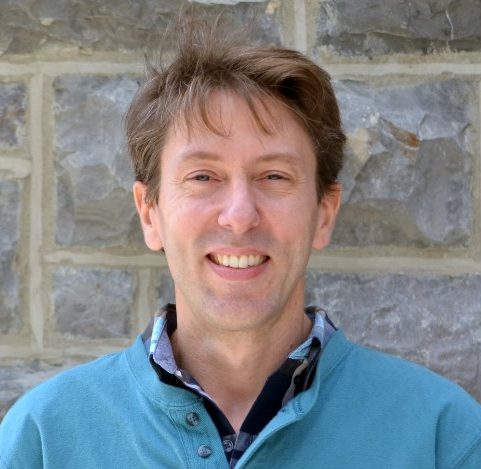
Olivier Coutier-Delgosha
· ProfessorVerifiedVirginia Tech · Aerospace and Ocean Engineering
Active 2001–2025
About
Olivier Coutier-Delgosha is a Professor and Assistant Department Head for Graduate Studies in the Kevin T. Crofton Department of Aerospace and Ocean Engineering at Virginia Tech. He holds a Ph.D. in Mechanical Engineering from the Institut National Polytechnique de Grenoble (INPG), obtained in 2001, and both his MS and BS degrees from INPG and Ecole Nationale Supérieure de l'Énergie respectively. His research focuses on cavitation, propulsion, and multiphase flow, with particular expertise in the analysis of turbulence effects on unsteady sheet cavitation, the mathematical derivation of cavitation-related equations in CFD, and the physical and numerical analysis of cavitating flows. He has developed and validated advanced measurement techniques such as fast X-ray imaging and endoscopic analysis to study the internal structure and dynamics of cavitating flows, including the effects of cavitation in rocket engine inducers. Dr. Coutier-Delgosha has contributed to the understanding of cavitation erosion, the stability of cavitation models, and the internal structure of cavitating flows, and has been actively involved in the coupling of CFD simulations with erosion models. His professional service includes chairing international conferences and serving as an associate editor for the Journal of Fluids Engineering. He has held academic positions at Arts & Metiers ParisTech and Virginia Tech, where he has been a full professor since 2020, and has also served as director of the Laboratoire de Mécanique de Lille.
Research topics
- Mechanics
- Materials science
- Physics
- Thermodynamics
- Medicine
- Acoustics
- Mechanical engineering
Selected publications
Splashing regimes of high-speed drop impact
Journal of Fluid Mechanics · 2025-09-16 · 3 citations
articleOpen accessSenior authorCorrespondingWhen a drop impinges onto a deep liquid pool, it can yield various splashing behaviours, leading to a crown-like structure along the free surface. Under high-speed impact conditions, the upper portion of the thin-walled crown may undergo necking and encapsulate a large bubble, which remains fascinating and is rarely discussed in the literature. In this work, we numerically study this physical process based on the volume-of-fluid and adaptive mesh refinement framework. Our meticulous observations have allowed us to unveil a spectrum of repeatable early-time jet behaviours, vorticity structures and crater evolution, underscoring the rich and complex nature of drop-impact phenomenon. We show that the interplay between aerodynamic pressure and surface tension on the liquid crown could play a significant role in its bending and surface closure. A regime map, incorporating both early-stage jet dynamics and overall bubble-canopy formation, is established across a wide parameter space. This study provides a comprehensive understanding of the diverse splashing regimes, offering insights into the fundamental characteristics of drop-impact phenomenon.
A novel data-driven method for augmenting turbulence modeling for unsteady cavitating flows
International Journal of Heat and Fluid Flow · 2025-05-03 · 3 citations
articleSenior authorSSRN Electronic Journal · 2024-01-01
preprintOpen accessSenior authorarXiv (Cornell University) · 2024-08-06 · 1 citations
preprintOpen accessSenior authorThis study examines the pressure exerted by a cavitation bubble collapsing near a rigid wall. A laser-generated bubble in a water basin undergoes growth, collapse, second growth, and final collapse. Shock waves and liquid jets from non-spherical collapses are influenced by the stand-off ratio $γ$, defined as the bubble centroid distance from the wall divided by the bubble radius. We detail shock mechanisms, such as tip or torus collapse, for various $γ$ values. High-speed and Schlieren imaging visualize the microjet and shock waves. The microjet's evolution is tracked for large $γ$, while shock waves are captured in composite images showing multiple shock positions. Quantitative analyses of the microjet interface, shock wave velocities, and impact times are reported. Wall-mounted sensors and a needle hydrophone measure pressure and compare with high-speed observations to assess the dominant contributions to pressure changes with $γ$, revealing implications for cavitation erosion mechanisms.
Numerical investigation of three-dimensional effects of hydrodynamic cavitation in a Venturi tube
Ultrasonics Sonochemistry · 2024-10-31 · 14 citations
articleOpen accessSenior authorHydrodynamic Cavitation (HC) is a highly turbulent, unsteady, multi-phase flow that has been useful in many processing applications like wastewater treatment and process intensification and hence needs to be studied in detail. The aim of this study is to investigate the mechanisms driving HC inside a Venturi tube using numerical simulations. The numerical simulations are conducted in the form of both two-dimensional (2D) and three-dimensional (3D) simulations using the Detached Eddy Simulation (DES) model database to simulate the cavitation-turbulence interplay, and the results are validated against high-fidelity experimental data. Initial 2D calculation results show that though URANS models are able to show unsteady cavitation, they are unable to reproduce the correct cavity morphology while the DES models reproduce the cavity morphology accurately. After extending to 3D simulations and the resulting vorticity budget analysis highlight the cavitation-vortex interactions and show the domination of velocity gradients and the growth and shrinking of the fluid element terms over the baroclinic torque for vortex production. Finally, localized scale comparisons are conducted to evaluate the model's ability to simulate the cavitation-turbulence interaction. It is observed that the 3D DES simulations are able to predict accurately the cavitation-turbulence interaction on a localized scale for turbulence properties like Reynolds shear stress and Turbulent Kinetic Energy (TKE), emphasizing the 3D effects of turbulence and their influence on the cavitating flow. However, significant discrepancies continue to exist between the numerical simulations and experiments, near the throat where the numerical simulations predict a thinner cavity. Therefore, this study offers new insights on simulating HC and highlights the bottleneck between turbulence model development and accurate simulations of HC to provide a reference for improving modeling accuracy.
Investigation of cloud cavitating flow in a venturi using Adaptive Mesh Refinement (AMR)
arXiv (Cornell University) · 2024-09-04
preprintOpen accessSenior authorUnsteady cloud cavitating flow is detrimental to the efficiency of hydraulic machinery like pumps and propellers due to the resulting side-effects of vibration, noise and erosion damage. Modelling such a unsteady and highly turbulent flow remains a challenging issue. In this paper, cloud cavitating flow in a venturi is calculated using the Detached Eddy Simulation (DES) model combined with the Merkle model. The Adaptive Mesh Refinement (AMR) method is employed to speed up the calculation and investigate the mechanisms for vortex development in the venturi. The results indicate the velocity gradients and the generalized fluid element strongly influence the formation of vortices throughout a cavitation cycle. In addition, the cavitation-turbulence coupling is investigated on the local scale by comparing with high-fidelity experimental data and using profile stations. While the AMR calculation is able to predict well the time-averaged velocities and turbulence-related aspects near the throat, it displays discrepancies further downstream owing to a coarser grid refinement downstream and under-performs compared to a traditional grid simulation . Additionally, the AMR calculations is unable to reproduce the cavity width as observed in the experiments. Therefore, while AMR promises to speed the process significantly by refining grid only in regions of interest, it is comparatively in line with a traditional calculation for cavitating flows. Thus, this study intends to provide a reference to employing AMR as a tool to speed up calculations and be able to simulate turbulence-cavitation interactions accurately.
A Novel Data-Driven Method for Augmenting Turbulence Modelling for Unsteady Cavitating Flows
SSRN Electronic Journal · 2024-01-01
preprintOpen accessSenior authorOcean Engineering · 2024-02-03 · 4 citations
articleSenior authorarXiv (Cornell University) · 2024-05-01
preprintOpen accessSenior authorThe concept of Hydrodynamic Cavitation (HC) has emerged as a promising method for wastewater treatment, bio-diesel production and multiple other environmental processes with Venturi-type cavitation reactors showing particular advantages. However, numerical simulations of a venturi-type reactor with an elucidated explanation of the underlying flow physics remain inadequate. The present study numerically investigates and analyzes the flow inside a venturi-type reactor from both global cavity dynamics and localized turbulence statistics perspectives. Some models in the Detached Eddy Simulation (DES) family are employed to model the turbulence with the study initially comparing 2D simulations before extending the analysis to 3D simulations. The results show that while URANS models show significantly different dynamics as a result of grid refinement, the DES models show standard flow dynamics associated with cavitating flows. Nevertheless, signifi- cant discrepancies continue to exist when comparing the turbulence statistics on the local scale. As the discussion extends to 3D calculations, the DES models are able to well predict the turbulence phenomena at the local scale and reveal some new insights regarding the role of baroclinic torque into the cavitation-vortex interaction.The findings of this study thus contribute to the fundamental understandings of the venturi-type reactor.
Slip velocity and field information of two-phase cavitating flows
Physics of Fluids · 2024-09-01 · 5 citations
articleSenior authorIn this work, laser-induced florescent particle image velocimetry was performed to measure simultaneously the liquid and vapor velocity fields at the mid-span of a small-scale Venturi type section to determine the presence of a slip velocity between the phases. Various dynamic behavior and Kelvin–Helmholtz (K-H) instability involved in the cloud cavity shedding regime are discussed at four different cavitation numbers. The velocity, vorticity, and turbulence field information of the two phases are analyzed. The liquid–vapor mixture in a cavitating flow is usually considered a homogeneous medium in currently used computational models, but it is shown in this study that the two phases have very different dynamics. The measurements of the time-averaged velocities highlight the existence of a noteworthy slippage between the liquid and the vapor phases, especially in the upstream part of the cavitation region, where the slippage between the two phases can reach about 50% of the liquid velocity. Using phase-locked average, it is shown that the slip velocity in the upstream region is mainly located at the upper liquid–vapor interface, while the slip velocity in the closure area is near the bottom wall, due to the reentrant jet. These results contradict a primary assumption of the current models, where the medium is usually considered as a homogeneous mixture with a unique velocity field, thus providing a reference for future computational model improvement.
Recent grants
INVESTIGATION OF THE PRIMARY MECHANISMS OF CAVITATION-INDUCED DAMAGES
NSF · $420k · 2017–2022
Frequent coauthors
- 263 shared
Annie-Claude Bayeul-Lainé
Centre National de la Recherche Scientifique
- 216 shared
Guangjian Zhang
Jiangsu University
- 116 shared
Xinlei Zhang
Chinese Academy of Sciences
- 103 shared
Lei Shi
Tianjin University
- 90 shared
Mingming Ge
Macau University of Science and Technology
- 67 shared
Mahamadou Adama Maiga
Laboratoire de Mécanique des Fluides de Lille - Kampé de Fériet
- 63 shared
Shuo Liu
State Key Laboratory of Millimeter Waves
- 60 shared
Hui Wang
Laboratoire de Mécanique des Fluides de Lille - Kampé de Fériet
Awards & honors
- Fulbright Grant (2014)
- Post-doctoral Grant awarded by the CNES (French Space Agency…
- Research Grant from Ministry of Education and Research, 1999…
- Resume-aware match score
- Save to shortlist
- AI-drafted outreach
See your match with Olivier Coutier-Delgosha
PhdFit ranks faculty by your research interests, methods, and publications — grounded in their actual work, not templates.
- Free to start
- No credit card
- 30-second signup