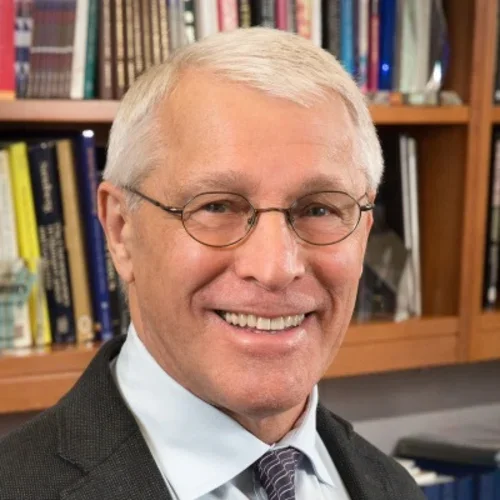
Owen Witte
VerifiedUniversity of California, Los Angeles · Pharmacology and Pharmaceutical Sciences
Active 1972–2025
About
Owen Witte received his undergraduate degree from Cornell University and his MD from Stanford University. He completed postdoctoral research at MIT and subsequently joined the faculty at UCLA, where he is currently a University Professor of Microbiology, Immunology, and Molecular Genetics, holding the President’s Chair in Developmental Immunology. He is also the Director Emeritus of the Eli and Edythe Broad Center of Regenerative Medicine and Stem Cell Research at UCLA. Dr. Witte has made significant contributions to the understanding of human leukemias, immune disorders, and epithelial cancer stem cells. His work includes the discovery of tyrosine kinase activity for the ABL gene and the demonstration of the BCR-ABL oncoproteins in human leukemias, which has led to the development of kinase-targeted therapies for these cancers. Additionally, he co-discovered Bruton’s tyrosine kinase (BTK), essential for normal B-lymphocyte development, with mutations leading to X-linked agammaglobulinemia, an immune deficiency. New inhibitors for BTK are now entering clinical practice for certain lymphomas and leukemias. His recent research focuses on defining stem cells and growth regulatory pathways for epithelial cancers, particularly prostate and other organ sites, to develop new therapies. His group also investigates mechanisms of therapy resistance in cancers driven by epigenetic changes, especially the conversion of aggressive adenocarcinomas to small cell neuroendocrine phenotypes, aiming to identify new targets for immunotherapy. Dr. Witte has extensive consulting experience in biotech and pharmaceutical industries, serving on the boards of Allogene Therapeutics, Kronos Bio, and Vida Ventures. He is a member of the National Academy of Sciences, the American Academy of Arts and Sciences, and the National Academy of Medicine, and has received numerous awards including the AAMC Award for Distinguished Research in Biomedical Sciences and the Stanford Arthur Kornberg and Paul Berg Lifetime Achievement Award in Biomedical Sciences.
Research topics
- Biology
- Cancer research
- Medicine
- Oncology
- Genetics
- Bioinformatics
- Immunology
- Cell biology
- Internal medicine
Selected publications
2025-11-24
articleOpen access<p>Gene expression level of Krüppel-like factor (KLF) family among the five mCRPC subtypes</p>
2025-11-24
articleOpen access<p>Gene expression level of SOX2 among the tumor subtypes of WCDT samples</p>
2025-11-24
articleOpen access<p>Volcano plots representing the differentially expressed (DE) genes in the mCRPC subtypes compared to AR+/NE- tumors</p>
2025-11-24
articleOpen access<p>Gene expression level of CHD7 among the mCRPC tumors of Beltran et al. cohort</p>
npj Precision Oncology · 2025-07-07
articleOpen accessThe androgen receptor inhibitor enzalutamide is one of the principal treatments for metastatic prostate cancer. Most patients respond. However, a subset is primary refractory. Seeking to understand enzalutamide extreme non-response (ENR), we analyzed RNA-sequencing in biopsies from men treated prospectively on an enzalutamide clinical trial. We focused on those with ENR (progression within 3 months) vs. long-term response (progression after 24 months). We identified an ENR program linked to proliferation, epithelial-to-mesenchymal transition, and stemness. High expression of this program in additional datasets was independently linked to poor tumor control with AR targeting but favorable tumor control with docetaxel, another standard treatment. CDK2 was implicated in the ENR program. CDK2 suppression reduced the ENR program and viability of ENR program-high prostate cancer models. The ENR gene program is predictive of non-response to AR targeting. Patients whose tumors harbor this program may be good candidates for docetaxel or CDK2 inhibitor clinical trials.
Nature Biotechnology · 2025-12-08
articleSenior author2025-11-24
articleOpen access<p>Hierarchical clustering analyses of benign, localized, and mCRPC tumors representing the expression of neuroendocrine marker genes (NE), androgen-related genes (AR), and genes related to squamous (SQUAM) differentiation</p>
2025-11-24
articleOpen access<p>ETS family fusions detected in the WCDT samples</p>
2025-11-24
articleOpen access<p>Gene Ontology (GO) with Biological processes (BP) on the genes uniquely up- or down-regulated within each subtype</p>
2025-11-24
articleOpen access<p>A heatmap representing the enrichment of transcription factors (TF) in hypermethylated regions of different subtypes of the WCDT samples</p>
Recent grants
NIH · $10.5M · 2000
UCLA-Caltech Medical Scientist Training Program
NIH · $35.5M · 1983–2024
NIH · $24.4M · 2010
NIH · $35.9M · 2002–2025
NIH · $2.0M · 2004
Frequent coauthors
- 253 shared
Antoni Ribas
Parker Institute for Cancer Immunotherapy
- 211 shared
Donghui Cheng
Sichuan Academy of Medical Sciences & Sichuan Provincial People's Hospital
- 161 shared
Caius G. Radu
University of the Witwatersrand
- 158 shared
Jiaoti Huang
Duke University
- 152 shared
David Baltimore
- 136 shared
James R. Heath
Institute for Systems Biology
- 120 shared
Jami McLaughlin
University of California, Los Angeles
- 116 shared
Sanaz Memarzadeh
University of California, Los Angeles
Education
- 1976
M.D.
Stanford University
- 1971
B.S.
Cornell University
Awards & honors
- Association of American Medical Colleges' Award for Distingu…
- Arthur Kornberg and Paul Berg Lifetime Achievement Award in…
- Resume-aware match score
- Save to shortlist
- AI-drafted outreach
See your match with Owen Witte
PhdFit ranks faculty by your research interests, methods, and publications — grounded in their actual work, not templates.
- Free to start
- No credit card
- 30-second signup