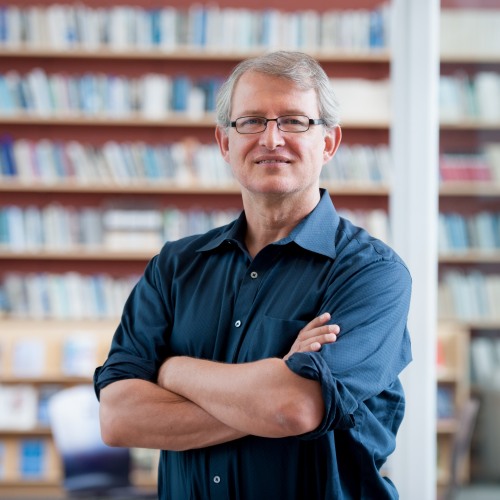
Patrick Heller
· Director, Saxena Center for Contemporary South Asia, Interim Director, Ph.D. Fellows Program, Lyn Crost Professor of Social Sciences, Professor of International and Public Affairs and SociologyVerifiedBrown University · International and Public Affairs
Active 1994–2025
About
Patrick Heller is Lyn Crost Professor of Social Sciences in the Department of Sociology and the Watson Institute of International and Public Affairs at Brown University. His research focuses on the comparative study of social inequality and democratic deepening, with a particular interest in how democratic institutions and practices can foster more inclusive and participatory forms of development. Heller's work primarily examines contexts in Brazil, India, and South Africa, exploring themes such as comparative democracy, urban governance, social movements, development theory and policy, decentralization, the middle class, civil society, and state transformation. Through his extensive research, he investigates the dynamics of democratic deepening and the role of civil society and collective action in unequal societies, contributing to a deeper understanding of the political and social processes shaping development in the global South.
Research topics
- Political Science
- Sociology
- Social Science
- Computer Science
- Economics
- Law
- Geography
- Econometrics
- Mathematics
- Public administration
- Development economics
- Political economy
- Public relations
- Economic growth
Selected publications
Journal of Empirical Research on Human Research Ethics · 2025-05-08
articleInformed consent (IC) is a critical component in research involving human participants, yet participants’ understanding of consent information remains underexplored, particularly in vulnerable populations. This study aimed to assess whether attention deficit hyperactivity disorder (ADHD) was associated with understanding and willingness to sign the IC among detained individuals. This secondary analysis used data from a randomised trial conducted in a Swiss prison (n = 183). Statistical analyses included regression models. There was no significant difference in understanding of the IC between the groups with and without positive screening for ADHD (mean score = 5.2 vs. 4.9 respectively, p = .468). Acceptance of signing the IC was comparable between groups (83.3% ADHD vs. 84.9% non-ADHD, p = .814). Our findings suggest that ADHD did not significantly impair the understanding of the IC or the decision to participate in research among detained individuals. However, the level of understanding was overall low, highlighting the need for tailored approaches to improve understanding in vulnerable populations.
Health & Justice · 2025-11-11
articleOpen accessBACKGROUND: Suicide attempts represent a critical public health concern in prison settings, where rates are substantially higher than in the general population. The COVID-19 pandemic introduced additional stressors, yet little is known about its impact on suicide attempts among detained persons. This study aimed to identify the underlying reasons and motivations for suicide attempts in a Swiss pre-trial prison and to examine changes before and during the pandemic. We analyzed 205 suicide attempts by 125 detained persons between 2016 and 2021. Data were collected from clinical and prison records. Reasons and motivations were extracted using content analysis. Population-averaged logistic regression models were used to examine differences between periods. RESULTS: Suicide attempts were associated with health-related and personal issues (85%), prison-related problems (76%), and interpersonal conflicts (61%). Psychological distress, juridical issues, and conflicts with correctional officers were the most common reasons. Motivations included protest against the institution (39%), desire to die (18%), escape (11%), and help-seeking (7%). There was an increase in health-related and personal problems during the pandemic, particularly dissatisfaction with medical care (+104%), physical pain (+181%), and psychological distress (+18%), while help-seeking motivations decreased (-72%). Psychiatric morbidity and self-harm history were associated with these outcomes. Sample characteristics remained largely stable across periods. CONCLUSIONS: This study highlights the multifaceted nature of suicide attempts in prison and the impact of the COVID-19 pandemic on health-related and personal issues. While preventive measures were essential for infection control, they may have increased psychological distress, and reduced medical resources likely exacerbated clinical needs. These findings underscore the importance of balancing public health measures with continuous access to care during public health emergencies.
Civil society, the state and institutionalizing welfare rights in India
World Development · 2024-06-14 · 16 citations
articleSenior authorThe Rich Have Peers, the Poor Have Patrons: Engaging the State in a South Indian City
American Journal of Sociology · 2023-07-01 · 12 citations
article1st authorCorrespondingResearch on democracy has shed much light on two kinds of democratic politics: patterns of voting and patterns of associational or movement politics. But there is growing recognition that in order to better understand the quality or depth of democracy, we need to move beyond this dualistic focus to better understand the everyday practices through which citizens can effectively wield their rights; these practices often diverge from the formal equality enshrined in laws and constitutions. We study this question through a large, unique sample survey carried out in a South Indian city. We find that effective citizenship is refracted through the institutional specificities of urban India and that, as a result, the poor access the state through political participation and the rich through particularistic connections to persons of influence. But unlike the conventional celebration of participation as a citizenship-deepening activity, we also find that a substantial part of participation is associated with forms of brokerage that compromise democratic citizenship.
Wits University Press eBooks · 2023-06-01
book-chapter1st authorCorrespondingPLOS Global Public Health · 2023 · 31 citations
Senior authorCorresponding- Political Science
- Sociology
- Political Science
Despite receiving less attention than high-income countries, low- and middle-income countries (LMICs) experienced more than 85% of global excess deaths during the first two years of the COVID-19 pandemic. Due to the unprecedented speed and scale of the COVID-19 pandemic, which placed large demands on government capacity, many LMICs relied on civil society organizations (CSOs) to assist in implementing COVID-19 response programs. Yet few studies have examined the critical role CSOs played in mitigating the effects of the COVID-19 pandemic in low resource settings. This study explored the CSO response to COVID-19 in five of the most heavily impacted LMICs in the Global South. Interviews were conducted from May to August 2021 with a purposive sample of CSO key informants within each of the five countries. A total of 52 CSOs were selected from which 53 key informants were interviewed either via Zoom or by phone. Interviews were coded and analyzed using NVivo or MAXQDA2020. Out of the 52 CSOs selected, 24 were national organizations, 8 were regional, and 20 were local. CSOs fell into six categories: community-based organizations, non-governmental organizations, unions/professional organizations, campaigns/social movements, research organizations/think tanks, and networks/coalitions. CSOs across all five countries adapted their missions, stretched their resources, and performed a wide range of activities that fit into five programmatic areas: food security and livelihood support, public health and medical care, cash transfer programs, risk communication and community education, and needs assessment. This qualitative analysis demonstrates the critical role CSOs played in supplementing government emergency aid response by delivering necessary resources and supporting highly vulnerable populations during the COVID-19 pandemic, as well as the primary challenges they faced in doing so. Given the generally weak state of public capacity in the LMICs studied, this role was vital to responding to the pandemic.
Citizenship and Inequality in the Post-Colonial City
2023-08-14
book-chapter1st authorCorrespondingIn this chapter, the authors attempt to navigate between the lumpers and the splitters by splicing a set of comparative observations that focus on recurrent practices that, they believe, shape struggles and opportunities for inclusion in post-colonial cities. If land use planning and housing generate the basic parameters of socio-class segregation, generating a differentiated citizenship, the uneven delivery of public services reinforces it. Urban Brazil has thus shown substantial movement on the Tilly democratization continuum and specifically demonstrates how more instituted processes of democratic citizenship and urban governance can act as a countervailing force to the processes of rationing the city. Building on Weber's classic investigation of the city, Le Gales and others treat cities as governed spaces and specifically as mini-societies constituted by “conflicts of authority, the interplay of social groups, and control mechanisms: in other words, the particular division of labor between the market, social structures and political structures”.
Parties, Civil Society and Democratic Deepening: Comparing India, Brazil and South Africa
Studies in Indian Politics · 2023-06-01 · 6 citations
article1st authorCorrespondingDespite being among the most successful democracies in the Global South, India, Brazil and South Africa have all recently experienced democratic crises. I argue that these democratic crises result from the formation of social coalitions that have been willing to subvert democratic institutions and practices in order to preserve or restore their social and economic privileges. In structural terms, these reactions are tied to the unresolved problem of the incorporation of popular classes. This problem has in turn been mediated by the balance between political and civil society. In India and South Africa that balance has favoured the dominance of mass-based nationalist parties that have thwarted democratic deepening. In Brazil, a more balanced relationship between civil society and political society has favoured the partial incorporation of the popular classes.
Annual Review of Sociology · 2022-04-18 · 15 citations
articleOpen access1st authorCorrespondingGiven the legacies of colonialism and the inequities of the global capitalist system, consolidated democracies in the Global South were the exception prior to the third wave of democratization in the 1970s. As democratization in the Global South grew, a first generation of work by sociologists challenged mainstream political science's preoccupation with electoral and liberal democracy and brought popular mobilization to the center of the analysis. This literature made key contributions to the debate on democratic transitions and consolidation. A more recent wave of work has focused on the democratization of democracy, examining civil society, movements, participatory democracy, transnational activism, and the wide range of political actors and forms of collective action that have emerged in a democratizing Global South. Variation across and within democracies remains high, but there have been clear cases of democratic deepening. Improving our understanding of the fabric of democratic institutions and practices, including recent cases of regression, calls for more research, especially in subnational and local contexts.
2022-11-23
book-chapter1st authorCorrespondingKarl Polanyi famously argued that markets work best and generate the most stable and just outcomes when they are, as he put it, embedded. Though the idea of embedded markets has become a clarion call of critics of neoliberalism and of markets run amok, Polanyi did not actually have much to say about what embeddedness looked like. He did point to the mobilisation of a counter-movement that encompassed a broad array of social actors that he described as ‘active' society (Burawoy 2003). But Polanyi did not elaborate on the actual institutional and political conditions that would support an ‘active' society and in general make a counter-movement successful. He clearly had democracy in mind, but what kind of democracy? Under what conditions does democracy actually become responsive to societal demands and deliver substantive results? The traditional response from comparative scholars of democracy has been to point to organised working-class power, as in the vast literature on European social democracies. But all these explanations are predicated on the existence of an organised, broad-based working-class coalition, a condition that historically materialised only in post-WWII Europe, and with some modifications, in a handful of democracies in the global south (Sandbrook et al. 2007). In today's post-industrial and increasingly precarious and fragmented economy, the search for a cohesive class actor that might anchor a deeper form of democracy is an exercise in futility. This, however, does not rule out the possibility of other pathways of democratic deepening, and indeed of democracies that are more firmly embedded in civil societies, and that are, much like Polanyi's original formulation, concerned with social protection and promoting solidarity. Understanding these pathways requires that we disaggregate democracy, and in particular that we clearly and purposefully spell out the differences between formal electoral democracy and what I call embedded democracy. 1 Many of the contributions to this volume do just that by pointing to real-world cases of citizen empowerment, 20including Harilal and Elamon's chapter on the Indian state of Kerala. My goal is simply to provide some basic conceptual tools for thinking about democratic deepening by re-examining the relationship between democracy and citizenship. Building on Polanyi, I specifically argue that formal democracies need to be more securely embedded in civil society and that in the context of post-colonial democracies this in particular draws our attention to the challenge of democratic decentralisation.
Frequent coauthors
- 80 shared
Gianpaolo Baiocchi
New York University
- 66 shared
Archon Fung
Harvard University Press
- 64 shared
Alejandro Velasco
University of Wisconsin–Madison
- 64 shared
Josh Lerner
Entrepreneurial Ecosystems
- 64 shared
Mareike Winchell
- 64 shared
Johana Londoño
- 64 shared
Pedro Cabán
Seton Hall University
- 64 shared
Kale Lustavali
Columbia University
Labs
- Resume-aware match score
- Save to shortlist
- AI-drafted outreach
See your match with Patrick Heller
PhdFit ranks faculty by your research interests, methods, and publications — grounded in their actual work, not templates.
- Free to start
- No credit card
- 30-second signup