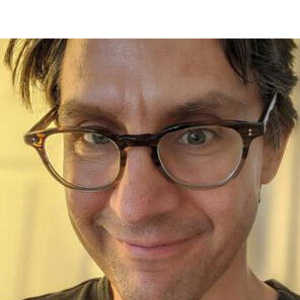
Paul Kockelman
· Professor of AnthropologyYale University · Anatomy
Active 1970–2025
About
Paul Kockelman is a Professor of Anthropology at Yale University with a focus on sociocultural and linguistic anthropology. He has conducted extensive ethnographic and linguistic fieldwork among speakers of Q’eqchi’ (Maya) living in the highlands of Guatemala. His research explores the interpretive grounds of humans and the algorithmic models of machines, particularly examining the tense and traumatic coupling between these domains over the past decade. Kockelman is the author of numerous books, including 'Mathematical Models of Meaning,' which approaches possible world semiotics through a dynamics systems perspective; 'Last Words: Large Language Models and the AI Apocalypse,' which discusses artificial intelligence and ChatGPT; and 'The Anthropology of Intensity,' focusing on language, culture, and the environment. His work also encompasses themes of meaning, mediation, new media, human-animal relations, environmental interventions, ontology, and the intersection of language and mind. Additionally, he has edited collections on distributed agency and linguistic anthropology. He is known for his engagement with topics such as artificial intelligence, cognitive science, and science and technology studies, and he has a particular interest in the semiotic and ontological implications of technological and linguistic phenomena. Kockelman’s work is characterized by a combination of ethnographic insight, theoretical rigor, and a focus on the intersections of language, culture, and technology.
Research topics
- Sociology
- Computer Science
- Philosophy
- Psychology
- Linguistics
- Epistemology
- Cognitive science
- Archaeology
- Social psychology
- History
- Programming language
- Anthropology
Selected publications
Mathematical Models of Meaning
The MIT Press eBooks · 2025-08-19
bookOpen access1st authorCorrespondingA mathematical model of meaning that captures the dynamics and diversity of meaning-oriented agents. In Mathematical Models of Meaning, Paul Kockelman offers answers to the following kinds of questions: What is meaning? What is the relation between meaning, information, value, and purpose? What ingredients are necessary for a system to exhibit meaning? What behaviors, and capacities for behavior, are particular to meaning-oriented agents? Is there a relatively simple mathematical model that can adequately capture the dynamics—and diversity—of meaning-oriented agents? And finally, how can we best bridge the divide between interpretive paradigms that are qualitative and context rich and formal methods that are quantitative and domain general? Partially grounded in a pragmatist approach, this book rethinks the semiotic, statistical, and logical currents of Charles Sanders Peirce’s thought in relation to more recent developments in allied traditions. Putting possible worlds, as well as social relations, at the center of significance, it focuses on the emergence of meaningful behavior among relatively distributed agents that choose in real time, learn over developmental time, or evolve over phylogenetic time.
Current Anthropology · 2024-09-17 · 1 citations
article1st authorCorrespondingThe first part of this article lays out what ontologies are and how they should be studied—in ways that precede, supersede, and otherwise route around not just the “ontological turn” but also its critics. The second part of this article offers an anthropological critique of Quine’s influential account of ontological commitment and a Quinean critique of certain anthropological commitments as to the existence and nature of possible worlds. As will be seen, we rework Quine’s metaontological dictum, “to be is to be the value of a variable,” into a more modest and ethnographically manageable form: to be is to become a value.
Cambridge University Press eBooks · 2022-05-05
book-chapter1st authorCorrespondingChapter 9 introduces the Q’eqchi’-Maya institution of replacement (eeqaj), a set of practices and beliefs, which determine when various kinds of entities and agents must be replaced, as well as what kinds of entities and agents may substitute for them, and thereby serve as their replacements. It uses this institution as a means to articulate various modes of temporality that underlie social practices and material processes: temporality as repetition (and interruption); temporality as irreversibility (and reversibility); temporality as reckoning (and regimentation); temporality as roots and fruits; and temporality as cosmology and worldview. In addition, it highlights the important role that thresholds play in mediating such practices and processes.
Cambridge University Press eBooks · 2022-05-05
book-chapter1st authorCorrespondingA summary is not available for this content so a preview has been provided. Please use the Get access link above for information on how to access this content.
Cambridge University Press eBooks · 2022-05-05
book-chapter1st authorCorrespondingChapter 4 synthesizes the concerns of the first three chapters. It is about four topics that underlie the Anthropocene: gradients (the way qualities vary in their intensity over space and time, and the ways such variations relate to causal processes); grading (the ways agents assess and alter such intensities and experience and intervene in causal processes); degradation (the ways highly valuable variations in qualitative intensities are lowered or lost); and grace (the way agents work to maintain gradients, care for those whose lives have been degraded, and value those agents who work and care in such ways). It reframes a few universal thermodynamic variables as (soon to be, if not already) global sociocultural values: energy, entropy, work, and temperature. In addition, it details some of the key features of one important nineteenth-century cosmology in regard to the origins of the Anthropocene (and the discipline of anthropology).
Cambridge University Press eBooks · 2022-05-05
book-chapter1st authorCorrespondingChapter 6 focuses on the role of mas (< Sp. más) in Q’eqchi’-Maya and the function of the modern comparative construction (long thought to be a calque of its Spanish equivalent). In contrast to previous analyses, it shows that Q’eqchi’ mas does not function as a comparative (like Spanish más), but rather as a degree modifier, indefinite quantity, and differential operator (like Spanish muy and mucho). It shows that the comparative construction does not require mas but only the positive form of gradable predicate, along with the adposition chiru (before, in the face of) to mark the standard. It shows that mas came into Q’eqchi’ during the late 1800s and seems to have functioned this way from the beginning. In addition, it offers reasons for this shift in meaning and its frequent misanalysis by linguists.
Cambridge University Press eBooks · 2022-05-05
book-chapter1st authorCorrespondingChapter 3 is about the social and semiotic mediation of experiential grounds. In particular, the way people interrelate the dimensions and degrees of their sensations and instigations, or experience and action. It offers a continuous time semiotics of such processes and uses this to critique widespread notions of materiality, as well as to better theorize the notion of affordances. It builds a bridge between ecological theories of perception and pragmatist notions of meaning.
Cambridge University Press eBooks · 2022-05-05
book-chapter1st authorCorrespondingChapter 1 is about the social and semiotic mediation of comparative grounds. In particular, the way people come to understand and alter the relative intensity of entities and events. Focusing on the multiple processes that mediate people’s understandings of landslides in a Mayan village in highland Guatemala, it shows the ways comparative grounds relate to communicative practices and social conventions. In addition, it highlights the political, economic, affective, and ecological stakes at work in such forms of mediation.
Cambridge University Press eBooks · 2022-05-05
book-chapter1st authorCorrespondingChapter 5 analyzes the structure, function, and history of intensifiers and indefinite quantities in Q’eqchi’. Such forms indicate the relative magnitude (amount, size, or degree) of various dimensions without the use of explicit numbers (two, 300, one million), units (dollars, pounds, degrees), or quantifiers (all, none, some). It surveys the form, meaning, and function of the most frequently used intensifiers in Q’eqchi’. In addition, it sketches a context-sensitive semantics of indefinite quantities, showing their core components and the ways these are mediated by code, context, and culture. It analyzes the comparative grounds presupposed by indefinite quantities and the relative elasticity of the magnitudes they indicate. It uses discourse data to rank the relative intensities, or comparative magnitudes, encoded by indefinite quantities – showing the ways they remain relatively invariant under variation.
Cambridge University Press eBooks · 2022-05-05
book-chapter1st authorCorrespondingA summary is not available for this content so a preview has been provided. Please use the Get access link above for information on how to access this content.
Frequent coauthors
- 8 shared
N. J. Enfield
University of Sydney
- 7 shared
Jack Sidnell
University of Toronto
- 2 shared
Anya Bernstein
- 1 shared
Souleymane Bachir Diagne
- 1 shared
Raymond D 'Angelo
- 1 shared
George E. Wishon
- 1 shared
Nanda Tinahadi
- 1 shared
Helen Verran
- Resume-aware match score
- Save to shortlist
- AI-drafted outreach
See your match with Paul Kockelman
PhdFit ranks faculty by your research interests, methods, and publications — grounded in their actual work, not templates.
- Free to start
- No credit card
- 30-second signup