Resume-aware faculty matching

Find professors who actually fit you

Upload your resume. Four AI agents analyze your background, rank the faculty who fit, inspect their recent research, and help you draft outreach — grounded in their actual work, not templates.

Free to startNo credit cardCancel anytime
Top matches Balanced preset
Dr. Sarah Chen
Stanford · Interpretability · NLP
91
Dr. Marcus Holloway
MIT · Robotics · RL
84
Dr. Aisha Okonkwo
CMU · Fairness · HCI
82
Nova · Professor Researcher · re-ranking top 20…
Peter Loewenberg

Peter Loewenberg

University of California, Los Angeles · History

Active 1969–2022

h-index13
Citations680
Papers1297 last 5y
Funding
See your match with Peter Loewenberg — sign in to PhdFit.Sign in

About

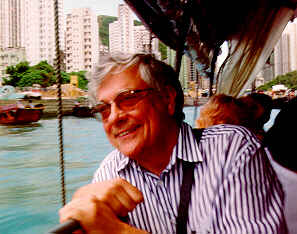
Peter Loewenberg is a Professor Emeritus at UCLA Department of History, with a diverse background that includes being born in Germany, spending early childhood in China, and growing up in Bakersfield. He was trained at the Free University of Berlin and Berkeley. His academic focus encompasses European cultural and intellectual history, German, Austrian, and Swiss history, Psychohistory, and Political Psychology. Loewenberg integrates his roles as a historian and political psychologist with clinical psychoanalysis, serving as Dean and Director of the Training School at the Southern California Psychoanalytic Institute and the New Center for Psychoanalysis in Los Angeles. He has held the position of Sir Peter Ustinov Visiting Professor at the University of Vienna in 2006 and is actively involved in international psychoanalytic organizations, including serving as Chair of the IPA China Committee and Co-Editor of the IPA Centenary History Volume. His scholarly work explores the intersections of history, psychoanalysis, and cultural studies, contributing significantly to understanding national identity, trauma, and psychohistorical analysis.

Research topics

  • Sociology
  • Political Science
  • Psychoanalysis
  • Psychology
  • Philosophy
  • Law
  • Aesthetics
  • Anthropology
  • Gender studies
  • History
  • Art history
  • Social psychology
  • Epistemology

Selected publications

  • Chapter 12 THE PSYCHOLOGY OF CREATING THE OTHER IN NATIONAL IDENTITY, ETHNIC ENMITY, AND RACISM

    Berghahn Books · 2022

    1st authorCorresponding
    • Sociology
    • Political Science
    • Psychology
  • Chapter 8 A Life Betwtween Homelands

    Berghahn Books · 2022-10-21

    book-chapter1st authorCorresponding
  • The Psychohistory Forum Roundtable on the January 6th Insurrection

    Clio s Psyche · 2021-01-01

    article

    In our roundtable below, you will find the comments of our psychohistorical colleagues on the January 6th attack on our Constitution and the historical analogies that come to mind. We welcome your thoughts on our Google listserv and for our next issue on the paranoid style in American politics. Our roundtable began here at Dr. Loewenberg’s suggestion.

  • The Historian’s Self-Reflection and American Racism

    Journal of the American Psychoanalytic Association · 2021 · 1 citations

    1st authorCorresponding
    • Sociology
    • Psychoanalysis
    • History

    , with an exemplary psychodynamic introduction by editor David Thelen, persuaded six referees, all distinguished scholars, four white and two African American, to waive their strict confidentiality and publish their reviews. The author published the paper as submitted, with no revisions. This unique view of the workings of the academic publication review process reveals a sharp clash in evaluation between the referees based on race and stance toward the self-reflective intent of the author.

  • Chinese culture and psychoanalysis

    Psychoanalysis and Psychotherapy in China · 2020 · 9 citations

    1st authorCorresponding
    • Sociology
    • Sociology
    • Political Science

    An emotional and intellectual affinity between Chinese culture and psychoanalysis has surprised and attracted many of us who work and teach in the People’s Republic of China (PRC) and Taiwan. A primary motive for seeking analysis and psychoanalytic training is because psychoanalysis serves as an inner resource for modern Chinese to resist the authority and moral coercion from family, repressive institutions, and the state. Despite the current focus on the narcissism of wealth, power, and fame among affluent urban Chinese, the reception of psychoanalysis is conditioned by contemporary and ancient cultural factors. For contemporary Chinese, psychoanalysis is an exciting tool of personal liberation to build a sense of an autonomous self that is not a part of traditional Chinese values and family structures. This article will focus on the traditional imperatives, suggesting that explicit trends in Chinese culture and philosophical and religious traditions contribute to explaining why there is currently an enthusiastic responsiveness to psychoanalysis in China (Scharff & Varvin, 2014). To those who have worked and taught in China there appears to be a cultural aptitude for the psychodynamic modes of thought, its dialectics, the coexistence of contradictions, the suspension and collapse of linear time categories that allows Chinese students and candidates to “take to” and under-stand analytic thought and practice. I believe the Chinese will, in the tradition of their rich and ancient intellectual heritage, develop a form of “Chinese psychoanalysis” which will synthesise the Western psychoanalytic “schools” and teachings with uniquely Chinese tempers, flavours, registers, and characteristics (Gerlach et al., 2013).

  • 17. Psychohistory

    Cornell University Press eBooks · 2020-12-31

    book-chapter1st authorCorresponding
  • Reflexionen uber die »Einbindung psychodynamischer Wahrnehmungen in historische Daten«. Ein autobiografischer Essay

    Psychosozial-Verlag eBooks · 2020-01-01

    book-chapter1st authorCorresponding
  • Peter Loewenberg’s Pioneering Road Traveled as a Psychohistorian

    Clio s Psyche · 2020-01-01

    articleOpen access1st authorCorresponding

    I am identified as a psychohistorian or a psychoanalytic historian. I would like to get away from the concept of “applying” psychodynamics to the humanities and social sciences because I have found that the integration of psychodynamic perceptions with historical data takes place the moment the historian encounters the historical event or archival document. The clinical perceptual tools and method of thinking is in the mind of the historian, so he/she has a nuanced awareness of what possibly productive questions to pose or look for in the historical behavior or situation. The psychoanalytic perceptions, usually the affectual and emotional valences, are integrated in the methodological approach to the historical work, as they are in other aspects of life—and in this essay.

  • »Wer von der Wissenschaft gemütliche Befriedigung fordert oder erwartet, der muß sich enttäuscht fühlen«

    Jahrbuch der Psychoanalyse · 2020-01-01

    book-chapterSenior author
  • Freud, Max Weber, and the Shoah

    2019-08-28

    book-chapter1st authorCorresponding

    As a totality and as a concept, the Shoah is incomprehensible, we cannot claim to understand it. Before the task of explanation, the disciplines of history, the social sciences, and psychoanalysis must throw up their hands in despair. The Shoah forces historians to confront the limits of representation. As Saul Friedlander put it, “Even the most precise historical renditions of the Shoah contain an opaqueness at the core which confronts traditional historical narrative”. 1 Dominic LaCapra writes: “I do not think that conventional techniques, which in certain respects are necessary, are ever sufficient, and to some extent the study of the Holocaust may help us to reconsider the requirements of historiography in general”. 2 Conceptualization, if not representation, is necessary and possible. It is so within the classic armamentarium of Western humane letters, psychoanalysis, and social science theory.

Frequent coauthors

  • M.G. Kim

    Harvard University

    49 shared
  • Sam Schweber

    University of Oklahoma

    49 shared
  • Kuang-Tai Hsu

    Princeton University

    49 shared
  • Samantha Mcclintock

    California Institute of Technology

    49 shared
  • Shawn Michelle Smith

    California State University, Northridge

    49 shared
  • M. CHARPENTIER‐MORIZE

    Rutgers Sexual and Reproductive Health and Rights

    49 shared
  • Ted Benfey

    California Institute of Technology

    49 shared
  • John W. Servos

    49 shared

Education

  • Ph.D., History

    Free University of Berlin

Awards & honors

  • Peter Loewenberg Receives Nevitt Sanford Award
  • Resume-aware match score
  • Save to shortlist
  • AI-drafted outreach

See your match with Peter Loewenberg

PhdFit ranks faculty by your research interests, methods, and publications — grounded in their actual work, not templates.

  • Free to start
  • No credit card
  • 30-second signup