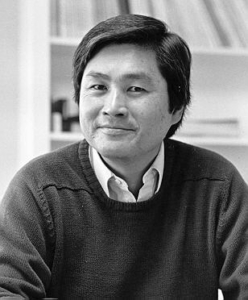
Philip Huang
University of California, Los Angeles · History
Active 1970–2025
About
Philip Huang is a Professor Emeritus at UCLA in the Department of History. His research focuses on Chinese history, specifically late imperial, modern, and contemporary China. His notable publications include works on legal practices in China during the Qing and Republican periods, rural development in the Yangzi Delta, and social change in North China. Huang has contributed to the field through his publications such as 'Code, Custom, and Legal Practice in China: The Qing and the Republic Compared,' 'Civil Justice in China: Representation and Practice in the Qing,' and 'The Peasant Family and Rural Development in the Yangzi Delta, 1350-1988.' He is also a founding editor of the journal 'Modern China,' which has been published since 1975, and the journal 'Rural China: An International Journal of History and Social Science,' established in 2001. Huang holds a Ph.D. from the University of Washington (1966) and a B.A. from Princeton University (1960). His academic career includes extensive research and publication in Chinese history, with a focus on legal, social, and rural developments.
Research topics
- Political Science
- Law
- Sociology
- Social Science
- Economic history
- Economics
- Medicine
- Economy
- Biology
- Virology
- History
- Economic growth
Selected publications
The Journals Zhongguo xiangcun yanjiu and Rural China: Retrospect and Prospect
Rural China · 2025-01-03
article1st authorCorrespondingAbstract Rural China has long been a rather sensitive subject within China. For that reason, our Chinese journal Zhongguo xiangcun yanjiu , published inside China, has faced some serious difficulties. By contrast, the bilingual international version of our journal Rural China: An International Journal of History and Social Science , published by E. J. Brill in the Netherlands, has long been very stable. In recent years, the Chinese countryside has in fact seen substantial new accomplishments and development. Today, the subject of “rural China” actually needs fundamental rethinking to incorporate the new developments that have occurred. It also requires that we pay attention to the multiple forces and influences that have come from outside the ruralities – we must no longer “merely study rural China qua rural China.”
The Journals Zhongguo xiangcun yanjiu and Rural China: Retrospect and Prospect
Rural China · 2025-04-03
article1st authorCorrespondingAbstract Rural China has long been a rather sensitive subject within China. For that reason, our Chinese journal Zhongguo xiangcun yanjiu on rural China, published inside China, has faced some serious difficulties. By contrast, the bilingual international version of our journal Rural China: An International Journal of History and Social Science , published by E. J. Brill in the Netherlands, has long been very stable. In recent years, the Chinese countryside has in fact seen substantial new accomplishments and development. Today, the subject of “rural China” actually needs fundamental rethinking to incorporate the new developments that have occurred. It also requires that we pay attention to the multiple forces and influences that have come from outside the ruralities —— we must no longer “simply study rural China qua rural China.”
My Research on China: Objective Scholarship and Subjective Emotions
Rural China · 2025-11-07
article1st authorCorrespondingAbstract Looking back at the advanced age of 84 on my own lifelong research, I can see that deep-seated emotions are certain to influence a researcher’s choice of problem, viewpoint, and depth of engagement. Only if we confront such realities can we hope to both derive creative energy from them and rise above them. Emotions can become hindrances to understanding and analysis, but can also lend them greater motive force and multi-dimensionality than “pure reason.” The key is to recognize the source and necessary presence of such, so as not to be driven unwittingly by them, but rather to derive greater depth of scholarly understanding from them. Needless to say, the point here has to do with the deep-seated motive forces of scholarship of the author, not simply a matter of techniques of emotive expression or mode of writing.
Mao Tse-tung and the Middle Peasants, 1925–1928
Rural China · 2025-09-05
article1st authorCorrespondingAbstract Against the background context of the First United Front between the Chinese Communist Party and the Guomindang, the main significance of Mao Zedong’s “Report on the Investigation of the Peasant Movement in Hunan” was to affirm the place of mass movements in the countryside, which was a clearly different position from that of the leadership of the United Front. It was also different from the emphasis on cities of the Communist Party led at the time by Chen Duxiu. In the several years following, the core problem in Mao Zedong’s search for a strategy for rural social revolution was how at the same time to trigger the activism of the poor peasants and gain the support of the middle peasants. Mobilizing middle peasants would come to be the foundation of how he came to view mass movements. Over the long term, with the rise of Mao Zedong, mass movements would become the central theme of the revolution. The “mass line” of “from the masses, to the masses” would profoundly shape the Chinese Communist Party’s mode of organization and of epistemology.
Rural China · 2025-09-05 · 1 citations
article1st authorCorrespondingAbstract Involution has been the key concept in my studies of Chinese history over the “longue durée.” It spotlights the reality of relatively high population pressure on farmland, with ever-decreasing farm size per capita throughout later imperial Chinese history, especially in the Ming-Qing era. Distinguished from gradually changing evolution and radical revolution, involution is characterized by mainly stationary technologies and methods of farming under ever-increasing population-to-land ratios.
Revisiting “Involution” versus “Development” in China and in the West
Rural China · 2025-11-07
article1st authorCorrespondingAbstract Involution, or diminishing output per unit input, necessarily occurred sooner or later under the mounting population-to-land pressures of China from the Ming and Qing periods on. It could be countered for a time by enhanced inputs, as, for example, through the use of more or higher-quality fertilizer, or by pre-modern technological advances, such as the earlier switch from dry rice farming to wet rice farming, but would then resume under continued population pressure. Involution was a phenomenon rarely encountered in the pre-modern West, but was a major long-term historical tendency in pre-modern China. With long-term involution came ever greater difficulty for transitions to other ways of production. The opposite of “involution” was “revolution,” wrought by technological change, such as the early switch from dry to wet farming of rice in China, or the coming of modern inputs such as chemical fertilizer. In addition to “revolution,” “involution” can also be juxtaposed against modernizing “development.” Pre-modern Chinese agriculture was far more labor intensive per unit land than pre-modern Western agriculture. Its transition into modernization (e.g., chemical inputs) was accordingly also far more difficult than the West’s. While the history of Western agriculture can be comprehended mainly through the two categories of “pre-modern” and “modern,” Chinese agriculture requires, in addition to those two, the intermediate third category of “involution” for comprehension.
Either/Or or Both/And Paths of Change?
Rural China · 2025-09-05
article1st authorCorrespondingAbstract The English and Chinese languages evince fundamental differences in modes of thought and expression. One leans strongly toward either/or, the other both/and. This can be seen in the differences between the two over a long period of time, and even in the Chinese understandings and usages of the terms “Communism” and “Communist Party.” Looking to the future, we can expect even stronger and more apparent evidence of the fundamental tendencies of the Chinese language and mode of thought.
Rural China · 2025-11-07
article1st authorCorrespondingAbstract Different from modern physics, traditional Chinese “humanics” focused on the human world, not the physical world. Its main emphasis was on “people” and not on “things,” and on co-existence and not on pushes and pulls. The former led finally to the development and use of nuclear weapons, including the imperialism and colonialism that preceded it. The latter, however, always focused on human co-existence and interaction, not on physics. To be sure, some observers have equated modern communism with historical Western imperialism, and have projected onto modern and contemporary China imperialism’s pursuit of hegemony and invasion, leading therefore to the U.S.-led policy of “containment and isolation” of the People’s Republic of China. We need to see and understand that, in reality, the “all under heaven” view of present-day China is still anchored instead on traditional Confucian humanics, not modern Western imperialism or its physics.
The Theories of “Differential Optimums” and “Vertical Integration” and Their Implications for China
Rural China · 2024-02-23
article1st authorCorrespondingAbstract Chayanov, outside of his theoretical analysis of how peasant households are distinctive for being at once a production and a consumption unit, and the multiple implications of that fact, has made two other major theoretical contributions, one making clear that peasant economies observe the logic of “differential optimums” rather than the simple logic of economies of scale, the other having to do with the need for co-operatives for “vertical integration” of small peasant economies, in order to preserve for the peasants more of the value of their products in the BIG MARKET . The former can be readily observed in the “new agriculture revolution” of the Chinese economy in the past few decades; the latter can be readily seen in the striking modernization of the “East Asian” (i.e. Japan, South Korea, and the Taiwan area) economies since 1945. China’s annual “Number One Documents” about agriculture of the past two decades have shown how the country first mistakenly tried to imitate the simple scale-economy logic of the United States, and then shifted since 2018 toward a new emphasis on the peasants as the principal agents of agricultural development and of peasant villages as the basic unit for agricultural co-ops. Those have been the basis for new advances as well as for reinterpretations and modifications of Chayanov’s two major theoretical visions.
Fifty Years of <i>Modern China</i> : An International Journal of History and Social Science
Modern China · 2024 · 1 citations
1st authorCorresponding- Political Science
- Social Science
- Sociology
Looking back at the past half-century since the founding of the journal Modern China in 1975, we can see that in the beginning non–Chinese American scholars accounted for fully 73 percent of all articles. That figure remained at a fairly high 64 percent at the end of the century, but has declined greatly since, first down to 26 percent by 2005-2009, and further to just 11 percent in 2020-2022. That decline has been partly countered by the increasing numbers of Chinese-origin scholars (US citizens or not) based in the United States. At the same time, the proportion of articles published by mainland China–based scholars has steadily increased in the past two decades, reaching the present 28 percent. If we add to that articles by Chinese-origin scholars both inside and outside the United States, citizens or not, the total proportion rises to 65 percent, nearly two-thirds of all our articles, a sea change for the journal. Alongside that change, there has been the rise and expansion also of non–Chinese-origin scholars in the rest of the English–language world outside the United States, who now account for 24 percent of all our articles. Together these changes tell about the dramatic transnationalization of English language–based China studies as a whole, from mainly non–Chinese-origin American scholars to an ever-increasing proportion of Chinese-origin scholars, and from mainly a US endeavor to an ever more transnational one.
Frequent coauthors
- 21 shared
Kathryn Bernhardt
University of California, Los Angeles
- 5 shared
W. J. Alford
Atrium Medical (Australia)
- 5 shared
W.A. Rowe
- 5 shared
Hugh Scogin
Stanford University
- 4 shared
Amanda Feldpausch
Regions Hospital
- 4 shared
Lisa J. Delaney
Centers for Disease Control and Prevention
- 4 shared
Jeffrey B. Doty
Centers for Disease Control and Prevention
- 4 shared
Heidi Threadgill Honza
Center for Surveillance, Epidemiology, and Laboratory Services
Awards & honors
- Levenson Prize of the AAS
- Fairbank Prize of the AHA
- Resume-aware match score
- Save to shortlist
- AI-drafted outreach
See your match with Philip Huang
PhdFit ranks faculty by your research interests, methods, and publications — grounded in their actual work, not templates.
- Free to start
- No credit card
- 30-second signup