Resume-aware faculty matching

Find professors who actually fit you

Upload your resume. Four AI agents analyze your background, rank the faculty who fit, inspect their recent research, and help you draft outreach — grounded in their actual work, not templates.

Free to startNo credit cardCancel anytime
Top matches Balanced preset
Dr. Sarah Chen
Stanford · Interpretability · NLP
91
Dr. Marcus Holloway
MIT · Robotics · RL
84
Dr. Aisha Okonkwo
CMU · Fairness · HCI
82
Nova · Professor Researcher · re-ranking top 20…
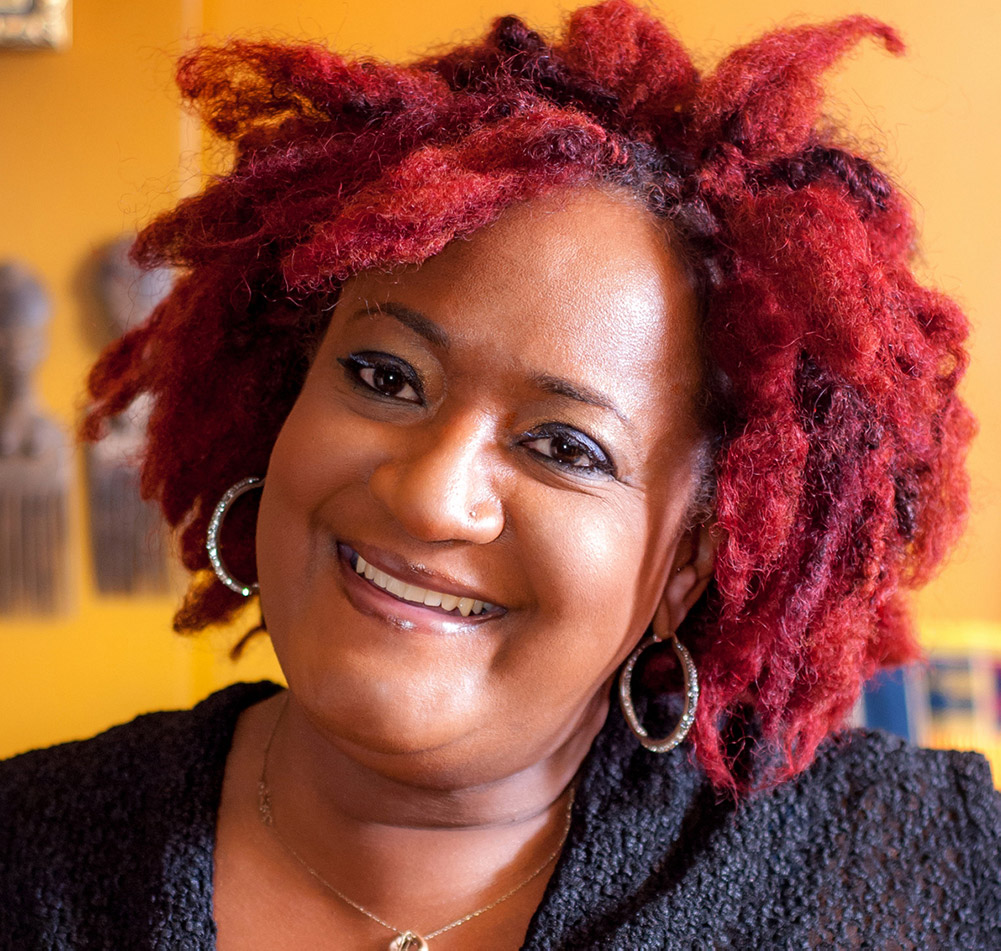
Psyche Williams-Forson

Psyche Williams-Forson

· Professor, American Studies

University of Maryland, College Park · American Studies

Active 1905–2025

h-index7
Citations224
Papers3012 last 5y
Funding
See your match with Psyche Williams-Forson — sign in to PhdFit.Sign in

About

Dr. Psyche Williams-Forson is an award-winning scholar and thought leader in Black food studies, recognized nationally and internationally for her groundbreaking research at the intersections of food, race, gender, and power. She is the author of the acclaimed book 'Eating While Black: Food Shaming and Race in America,' which won the 2023 James Beard Media Award, and the prize-winning 'Building Houses out of Chicken Legs: Black Women, Food, and Power,' honored by the American Folklore Society. Additionally, she co-edited 'Taking Food Public: Redefining Food in a Changing World,' a foundational text in food studies. Her work provides essential insights into African and African American cultural contributions to Southern foodways and identity, and her scholarship is frequently cited for its innovation and accessibility. Dr. Williams-Forson has been featured in mainstream media, including NBC Today, Netflix’s Ugly Delicious, and the documentary The Invisible Vegan. She served as Chair of the Department of American Studies from 2015 to 2025, becoming the first Black woman to hold this position, and is the Principal Investigator for the Mellon-funded initiative Breaking the M.O.L.D., aimed at expanding leadership pathways for women and BIPOC scholars in the arts and humanities. Her academic appointments include affiliations with Theatre, Dance, and Performing Studies; African American Studies; Anthropology; Women, Gender, and Sexuality Studies; and the Consortium on Race, Gender, and Ethnicity.

Research topics

  • Sociology
  • Gender studies
  • Social Science
  • Political Science
  • Art
  • Art history
  • Psychology
  • Aesthetics
  • Medicine
  • Ecology
  • Public relations
  • Anthropology
  • Biology
  • Psychoanalysis

Selected publications

  • A Scoping Review of Eating Behaviors Associated with Weight Status in Black American Adults

    Journal of Racial and Ethnic Health Disparities · 2025-08-06

    review
  • Multiple inequalities in every meal: theorizing the intersectional erasure of food producers both past and present

    Food Culture & Society · 2025-07-22 · 1 citations

    articleOpen access

    In hierarchical societies across diverse cultures and time periods, food producers are often made invisible for the purpose of enhancing the prestige of tastemakers in their respective societies. Engaging Intersectionality theory with the history, anthropology, and archaeology of foodways can elucidate how what we term “prestige-aserasure” manifests in various social contexts. This paradoxical invisibility arises from food producers’ labor underpinning the very foundations of culinary prestige, while that same labor remains devalued within global capitalist and precapitalist systems. Food producers’ contributions are intentionally and unintentionally obscured— regardless of distance from origin to consumer—while tastemakers reap disproportionate credit. We engage examples from multiple continents and centuries to demonstrate that Intersectionality theory does not only apply to modern cases of racism and sexism. Instead, we use anthropology’s cross-cultural comparative method to examine how food production and consumption can both bolster and challenge social hierarchies based on race, class, gender, ability, and other axes of identity and prestige/oppression. We demonstrate the potential of archaeology’s contribution to food studies as well as the promise of intersectional approaches for those reconstructing and analyzing foodways across pertinent disciplines.

  • One bad apple: Black women, the Anthropocene and the hypocrisy in food conversations

    Agenda · 2023-01-02

    article1st authorCorresponding

    Farmer’s markets are ubiquitous on United States (US) landscapes, regardless of region and locale. And while there has been some scholarship about these spaces in the last several years, there is more that can be said regarding the inconsistencies between what many market organisers espouse and the realities for many Black customers. Many Black market-goers attend these outdoor shops but seldom see vendors that look like them, or worse, often, these sellers are denied a space at these markets. While many of these market organisers are advocates for “healthy eating” and fresh vegetables and fruits, they tend not to make it easy to access these nutrients, despite what they may intend. These contradictions emerge in debates surrounding the Anthropocene, which philosopher Axelle Karera (2019 Karera, A 2019, ‘Blackness and the pitfalls of Anthropocene ethics’, Critical Philosophy of Race, vol. 7, no. 1, pp. 32-56.[Crossref], [Web of Science ®] , [Google Scholar], p. 32) argues powerfully disavows the presence of racial aggression. Further, she maintains that the Anthropocene will never be successful until it grapples with the realities of Black suffering, in history and the present. This article considers these contradictions to think about how the realities of the lives of US Black people from throughout the African Diaspora are glossed over, sacrificed at the altar of “healthy eating” and “home cooking” with little regard for the ways we are dehumanised daily, including with food. By taking a womanist liberatory position, this article argues for centring the experiences of Black people in confronting the hypocrisies created by many of our contemporary food discussions.

  • Eating in the Meantime

    University of North Carolina Press eBooks · 2022-08-16

    book-chapter1st authorCorresponding

    Food choices are very complex. Food choices are also not neutral and are informed by race, gender, and even age, location, space, and place. Seldom are these matters considered when we discuss eating healthily and avoiding fast food. Alternative food spaces like dollar stores and fast-food markets tend not to be considered as viable spaces for acquiring food and are shunned for the more frequently heralded farmer’s markets as if these markets are panaceas. This chapter considers how food shaming and food policing is often due more to ignorance about social and cultural relations around food as much as it is about the foods themselves.

  • Eating While Black

    University of North Carolina Press eBooks · 2022 · 27 citations

    1st authorCorresponding
    • Sociology
    • Political Science
    • Sociology

    <italic>Eating While Black</italic> illuminates how anti-Black racism operates in the practice and culture of eating. Mass media, nutrition science, economics, and public policy tend to drive entrenched opinions among Black and non-Black Americans about what is healthful and right to eat. Distorted views of how and what Black people eat are pervasive, bolstering the belief that they must be corrected and regulated. What is at stake is nothing less than whether Americans can learn to embrace nonracist understandings and practices in relation to food. Sustainable culture—what keeps a community alive and thriving—is essential to Black peoples' fight for access and equity, and food is central to this fight. Starkly exposing the rampant shaming and policing around how Black people eat, this book contemplates food's role in cultural transmission, belonging, homemaking, and survival. Black people's relationships to food have historically been connected to extreme forms of control and scarcity and to stunning creativity and ingenuity. In advancing dialogue about eating and race, this book urges us to think and talk about food in new ways to improve American society on both personal and structural levels.

  • Worry about Yourself

    University of North Carolina Press eBooks · 2022-08-16

    book-chapter1st authorCorresponding

    <italic>Eating While Black</italic> looks at how Black people’s food cultures are shamed and surveilled in even the most innocuous situations. Williams-Forson situates this discussion within a broader context of structural and systemic racism, violence, degradation, socioeconomics, and exploitation; characteristics that have always been inflicted upon Black people in American society.

  • In Her Mouth Was an Olive Leaf Pluck’d Off

    University of North Carolina Press eBooks · 2022-08-16

    book-chapter1st authorCorresponding

    This chapter examines some of the way in which Black people make food choices (or the lack thereof), especially during times of calamity and chaos. It also discusses the ways that movement—voluntary or involuntary—affects how and what we eat. It also considers how centuries of misinformation and misinterpretation undergird anti-Black racism. And finally, it looks at the ways that ideology, cultural capital, and class connect with race to open our understanding of how food shaming takes place in our everyday lives.

  • 2020 Keywords Symposium

    Theory & Event · 2022 · 3 citations

    • Sociology
    • Art history
    • Art

    2020 Keywords Symposium Jennifer C. Nash (bio), Samantha Pinto (bio), Marisol LeBrón (bio), Monica L. Miller (bio), Ann Cvetkovich (bio), Julie Livingston (bio), Psyche Williams-Forson (bio), Ruha Benjamin (bio), Christina Hanhardt (bio), Harris Solomon (bio), Neelima Navuluri (bio), Charles W. Hargett (bio), Peter S. Kussin (bio), Noémi Tousignant (bio), Joshua Chambers-Letson (bio), Tiana Reid (bio), Miriam Posner (bio), Racquel Gates, Sari Altschuler (bio), Gayle Wald (bio), and Banu Subramaniam (bio) 2020 (Introduction) Jennifer C. Nash and Samantha Pinto 125 Abolish Marisol LeBrón 128 Asynchronous Monica L. Miller 134 COVID Silver Linings Ann Cvetkovich 139 Essential Worker Julie Livingston 144 Food-in-Place (Shelter-in-Place) Psyche Williams-Forson 148 Mask Ruha Benjamin 151 Mutual Aid Christina Hanhardt 152 PPE Harris Solomon, Neelima Navuluri, Charles W. Hargett, Peter S. Kussin 158 Risk Factor Noémi Tousignant 163 Social Distancing Joshua Chambers-Letson 169 Stay at Home Tiana Reid 175 Supply Chain Management Miriam Posner 178 Synchronous Racquel Gates 181 Wave/Forest Fire Sari Altschuler 187 Zoom Gayle Wald 192 Zoonosis (Virus) Banu Subramaniam 196 [End Page 124] 2020 Jennifer C. Nash and Samantha Pinto Academic projects are often born from desire. When we began the project of collecting these essays—effectively archiving the present—it was an act of imagining a future when we would look back on 2020. Perhaps this collection—with its snapshot of a horrifying present now past—would offer us one way of remembering how everything about daily life was upended. The promise, always, was that by the time this came to be in print, COVID-19 would be something we needed to remember rather than still part of the ongoing present. Our method was to build a glossary of COVID-19 neologisms, and to come to terms with how 2020 is now its own keyword. This symposium represents the radical and acute—and ongoing—challenges of the pandemic; collapsing social structures that are affecting women, parents, and the economically disenfranchised; the exhaustion of years of unchecked and unbridled White Supremacy in health care, law enforcement, housing, and employment; the contentious election and the Trump administration's refusal to concede. It represents disparate responses to the realities of the "stay at home" orders that started proliferating in the US in March and April of 2020. Essential workers—disproportionately Black and Brown—were ordered to continue working, while others began "panic baking" and "panic shopping" (the disappearance of flour, yeast, and toilet paper from grocery stores marked the first quarter of the year).1 While some buried their dead in anguish and isolation,2 others purchased real estate, thanks to record-low interest rates and new demands for more space as houses were transformed into offices and schools.3 In some ways, this is a quintessentially American story—the variety of ways that crisis is experienced and inhabited, with the starkest and most deathly outcomes reserved for those most precarious as the capitalist machine keeps rolling along. Terms like "the new normal," and the 2020 OED word of the year, "unprecedented,"4 now pepper our collective consciousness as we describe the dizzying changes that 2020 ushered in, and the new endurances it demands of some, as well as the old intractable inequities it brought to the public surface. If the physical and structural shifts were massive and visible in scale, so was the vocabulary introduced to mark these changes, much of it quickly absorbed and normalized. The spring of 2020 called us to "flatten the curve" through social distancing, the summer of 2020 warned us about a "second wave," and the fall and winter of 2020 ushered in discussions about vaccines, immunity, antibodies, and the need to endure the "COVID winter." Bleeding into 2021, crisis and critique have merged into a lexicon that [End Page 125] is repeated, rehearsed, rehashed, remade.5 These terms have become part of a collective vocabulary, a shared index for describing the relentless conditions of the present, even as that present is experienced and endured differently. If we were to continue to build this glossary, we might include terms like Delta, variants, boosters, vaccine mandates, breakthrough infections, and, of course, "the long 2020." In this "long 2020" marked...

  • Home and Domesticity

    Cambridge University Press eBooks · 2022 · 1 citations

    1st authorCorresponding
    • Sociology
    • Sociology
    • Aesthetics

    Material culture studies have long incorporated analysis of domestic environments and dynamics of home in shaping culture, rituals of power, and more. This chapter examines the centrality of home, domestic environments, and communal living experiments to understanding people.

  • When Racism Rests on Your Plate, Indeed, Worry about Yourself

    University of North Carolina Press eBooks · 2022-08-16

    book-chapter1st authorCorresponding

    Williams-Forson concludes by encouraging conversation about food and what it means to eat the “right” way, considering way sociocultural and economic identities impact food choices. Food shaming is a means by which to control Black bodies. Black Americans experience food shaming that is directly impacted by the historical legacy of enslavement, systemic inequities, and race and class discrimination. A locavore challenge allows participants to experience firsthand how sociocultural and economic conditions and food insecurity impact food choices.

Frequent coauthors

  • Leda Fisher

    1 shared
  • Ruha Benjamin

    1 shared
  • Carolyn de la Peña

    University of California, Davis

    1 shared
  • Gillian Clark

    1 shared
  • Abby Wilkerson

    1 shared
  • Marisol LeBrón

    1 shared
  • Miriam Posner

    University of California, Los Angeles

    1 shared
  • Sari Altschuler

    1 shared

Education

  • Ph.D., American Studies

    UMD, College Park

  • Other, Women's Studies

    UMD, College Park

  • M.A., American Studies

    UMD, College Park

  • B.A., English/African American Studies, Women’s Studies

    University of Virginia

Awards & honors

  • 2023 James Beard Media Award
  • Resume-aware match score
  • Save to shortlist
  • AI-drafted outreach

See your match with Psyche Williams-Forson

PhdFit ranks faculty by your research interests, methods, and publications — grounded in their actual work, not templates.

  • Free to start
  • No credit card
  • 30-second signup