Resume-aware faculty matching

Find professors who actually fit you

Upload your resume. Four AI agents analyze your background, rank the faculty who fit, inspect their recent research, and help you draft outreach — grounded in their actual work, not templates.

Free to startNo credit cardCancel anytime
Top matches Balanced preset
Dr. Sarah Chen
Stanford · Interpretability · NLP
91
Dr. Marcus Holloway
MIT · Robotics · RL
84
Dr. Aisha Okonkwo
CMU · Fairness · HCI
82
Nova · Professor Researcher · re-ranking top 20…
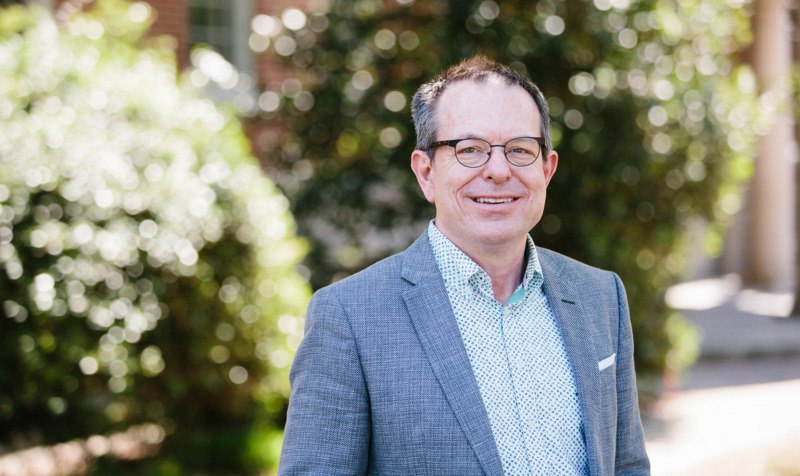
R. Keith Sawyer

R. Keith Sawyer

Verified

University of North Carolina at Chapel Hill · Health Behavior

Active 1989–2025

h-index58
Citations19.3k
Papers24745 last 5y
Funding
See your match with R. Keith Sawyer — sign in to PhdFit.Sign in

About

R. Keith Sawyer is the Morgan Distinguished Professor of Educational Innovations at the University of North Carolina School of Education. His career is dedicated to the study of creativity and learning, with a focus on improvisation group performance, including jazz ensembles and Chicago improv theater groups. Sawyer's research explores how groups enter a state of group flow, how members interact moment-to-moment, and how collective efforts produce outcomes greater than the sum of individual contributions. His work applies rigorous qualitative methods to analyze the interactional dynamics of creative ensembles, identifying commonalities across different types of groups such as jazz, theater, and business teams. Sawyer has extended his research findings to practical applications in education and organizational settings. He demonstrates that effective teachers utilize guided improvisation to support individual student learning and has authored books such as 'Group Genius: The Creative Power of Collaboration' (2017) and 'The Creative Classroom: Innovative Teaching for 21st Century Learners' (2019). His research also informs advice for enhancing creativity in business teams, study groups, and professional development. Additionally, Sawyer hosts a podcast titled 'The Science of Creativity,' which discusses the latest psychological research on creativity. His scholarly work includes the development of the theory of collaborative emergence, presented in his book 'Social Emergence: Societies as Complex Systems' (2005). Currently, he studies how teaching and learning are organized in professional art and design schools, conducting ethnographic studies at institutions such as the Savannah College of Art & Design and Washington University in St. Louis. His research aims to identify features that can be used to design more effective learning environments, contributing numerous peer-reviewed articles and delivering scholarly presentations across the United States and Europe. His recent book, 'Learning to See: Inside the World's Leading Art and Design Schools,' was published by MIT Press in 2025.

Research topics

  • Visual arts
  • Art

Selected publications

  • Creative Engagement for Well‐Being: Implications for Growth and Learning

    The Journal of Creative Behavior · 2025-06-20 · 2 citations

    articleSenior author

    ABSTRACT Creativity is increasingly recognized not only as a cognitive asset but also as a contributor to emotional and psychological well‐being. This paper explores the relationship between creativity and well‐being across everyday, artistic, and educational contexts, highlighting how creative engagement supports resilience, stress reduction, and personal fulfillment. Drawing from research in psychology, neuroscience, and education, we examine mechanisms such as flow states, mindfulness, and expressive practices that link creativity to improved mental health. We also consider how creativity fosters adaptability and emotional regulation, both of which are critical in navigating personal challenges and uncertain futures. In educational settings, creative engagement offers promising avenues to support holistic student development, yet systemic barriers (such as limited funding and emphasis on standardized testing) can constrain its implementation. The paper concludes by calling for more longitudinal and culturally inclusive research to deepen our understanding of creativity's role in well‐being and inform practices that foster both emotional and intellectual growth.

  • Explaining Creativity

    2023-12-14 · 71 citations

    book1st authorCorresponding

    Abstract Given the heightened complexity and uncertainty of the world we live in, creativity, or the ability to develop new and effective ideas, products, or solutions, has grown in societal interest internationally. There is a recognition of the need for creative problem solving to address complex problems, and thus, new areas of creativity studies and applications have rapidly emerged. Creativity is increasingly recognized as a highly coveted and prized skill for the future of work and life. This book builds on the essential foundations of creativity research and practice that were established in the first and second editions of the book. It provides an up-to-date and exhaustive review of research findings, as well as chapters on new topics were not included in prior books: technology, wellbeing, and self-beliefs. Explaining Creativity takes an interdisciplinary approach that explains concepts, topics and themes related to creativity in ways that are accessible to students and non-experts, yet thorough and detailed enough to be useful to academics or other experts. This broad and practical, yet still detailed, approach covers a broad terrain of the creativity landscape, investigating core aspects of creative cognition, creative practice, and social and cultural contexts for creativity.

  • Introduction

    2023-12-14 · 5 citations

    book-chapter1st authorCorresponding

    Abstract Chapter 1 introduces the reader to scientific research on creativity. The chapter begins by providing the rationale for studying creativity—the need for creative solutions to challenging problems, whether in business, personal life, or society. The chapter then provides the two definitions of creativity that will be used throughout the book: the individualist definition, associated with psychological research, and the sociocultural definition, associated with group dynamics, sociology, economics, and anthropology. The chapter ends by describing the Western cultural model of creativity—a set of 10 beliefs that most people ascribe to in Western countries, including the United States. These 10 beliefs will be referenced throughout the book.

  • Science

    2023-12-14

    book-chapter1st authorCorresponding

    Abstract This chapter reviews research on creativity in science. The first creativity researchers in the 1950s focused on scientific creativity because of its importance to the economy and to military power. The chapter reviews psychological studies of scientists and the mental processes associated with scientific thinking, including analogies; the process of problem-solving and problem finding; how working on multiple projects simultaneously can enhance creativity; the parallels between science and art; and studies of whether scientific disciplines primarily advance through brilliant individuals or through collaborative teams. The chapter then reviews statistical studies of scientific productivity over time, of citation patterns, and of multiple discovery.

  • Preface to the Third Edition

    2023-12-14

    book-chapter1st authorCorresponding

    Extract A lot has happened since the publication of the second edition of Explaining Creativity in 2012. There’s been an explosion of new and exciting research on creativity and innovation, both in areas covered in the prior book and in new ones. We’ve rewritten every chapter to incorporate the key findings of these new scientific studies. We’ve also added three new chapters reviewing research areas that have grown in importance in the last 10 years: mental health, technology, and self-beliefs. Since the publication of the second edition of this book in 2012, many other overviews of creativity research have appeared, including Mark Runco’s Creativity (second edition, 2014), James Kaufman’s Creativity 101 (second edition, 2016), and edited handbooks like The Cambridge Handbook of Creativity (second edition, 2019). All of these books took an individualist approach, one that focuses on psychological studies of the creative person. Explaining Creativity gives you a broad overview of psychological research as well, but we also bring you sociocultural approaches that reveal the interdisciplinarity of creativity and its role across social and cultural contexts.

  • Journals That Publish Creativity Research

    2023-12-14

    book-chapter1st authorCorresponding

    Subject Social Psychology Collection: Oxford Scholarship Online

  • Culture and Creativity

    2023-12-14 · 1 citations

    book-chapter1st authorCorresponding

    Abstract This chapter reviews studies of cultural differences in creativity. These studies are associated with anthropologists who use ethnographic methods. Research shows that creativity and conceptions of creativity vary dramatically from culture to culture. This chapter challenges the assumed universality of the Western cultural model of creativity that was first presented in Chapter 1. The imposition by Westerners of this cultural model on non-Western culture resulted in the now-debunked claim that non-Western art is “primitive” or is only “craft,” somehow lesser than Western art. The core of the chapter examines how members of different cultures have very different conceptions of what creativity is, who is creative, and what traits are associated with creativity. This review includes studies of the contrast between creativity as originality and change, versus creativity as the continuation and elaboration of tradition.

  • Creative Self-Beliefs

    2023-12-14

    book-chapter1st authorCorresponding

    Abstract This chapter explores creative self-beliefs—what people believe about themselves and their own creativity. It discusses the “self,” which distinguishes a person from others as a unique individual, and how people build a sense of meaning about the self—their self-beliefs. Self-beliefs influence how people will act in a given situation, including how they use, or don’t use, their creativity. Creative self-beliefs are an internal sensibility that people often use to help them decide if, when, or how to act creatively. The chapter reviews research on how one’s creative self-beliefs affect creative skills, behaviors, or abilities, looking at creative self-belief concepts like creative self-efficacy, creative personal identity, and creative mindset. The chapter reviews the effects of personality, social, family, cultural, and experiential influences on these different kinds of creative self-beliefs and creative outcomes. It concludes with promising areas and possible tensions in research on creative self-beliefs.

  • Defining Creativity Through Assessment

    2023-12-14 · 2 citations

    book-chapter1st authorCorresponding

    Abstract Many scientific studies of creativity take a quantitative approach in which variables are defined and measured in a rigorous way. Psychologists, for example, have developed creativity tests that measure the creative potential of an individual. These tests sometimes measure personality traits like extroversion or openness to experience. Other tests measure cognitive characteristics such as intelligence or associative fluency. This chapter reviews the many assessments that have been developed since the 1950s, most famously the Torrance Tests of Creative Thinking. The chapter then reviews research on the relationship between creativity and intelligence, and the degree to which creativity is domain-specific (for example, creative ability at music specifically) or domain-general (creative ability that applies to all activities).

  • Third Edition Literature Review Methodology

    2023-12-14

    book-chapter1st authorCorresponding

    Subject Social Psychology Collection: Oxford Scholarship Online

Frequent coauthors

  • Danah Henriksen

    Arizona State University

    31 shared
  • John Gammack

    9 shared
  • Mihály Csíkszentmihályi

    Science Club

    9 shared
  • Vera John‐Steiner

    7 shared
  • Robert J. Sternberg

    Cornell University

    6 shared
  • Seana Moran

    Harvard University Press

    5 shared
  • David Feldman

    5 shared
  • Pierre Demeulenaere

    5 shared
  • Resume-aware match score
  • Save to shortlist
  • AI-drafted outreach

See your match with R. Keith Sawyer

PhdFit ranks faculty by your research interests, methods, and publications — grounded in their actual work, not templates.

  • Free to start
  • No credit card
  • 30-second signup