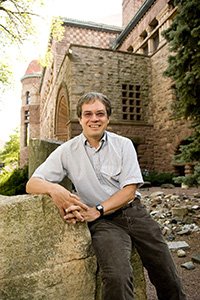
R. Lawrence Edwards
· Regents and Distinguished McKnight University Professor, Department of Earth and Environmental SciencesVerifiedUniversity of Minnesota · Earth Sciences
Active 1895–2025
About
R. Lawrence Edwards is a Regents and Distinguished McKnight University Professor in the Department of Earth and Environmental Sciences at the University of Minnesota. He is an isotope geochemist renowned for his development of modern uranium-thorium (Th-230) dating methods and their application to studying climate history and ocean chemistry. His work has significantly improved the accuracy of radiocarbon dating, contributing to the calibration of the radiocarbon timescale. Edwards champions cave deposits as recorders of historic and prehistoric climate, relating these records to ocean sediments and ice cores to establish patterns of climate change over time and space. His research helps to understand the causes of abrupt climate change and rapid ice sheet melting at the end of glacial cycles. Additionally, he investigates the relationship between climate change and cultural history, linking global shifts in rainfall patterns to major cultural changes, such as the decline of Chinese dynasties and the expansion of rice cultivation. His cave records of recent centuries provide some of the strongest evidence for human-induced climate change. Edwards is one of the most cited earth scientists worldwide, with numerous awards and honors recognizing his contributions to geoscience.
Research topics
- Geology
- Oceanography
- Geography
- Ecology
- Climatology
- Environmental science
- Biology
- Archaeology
- Paleontology
- Chemistry
- Political Science
- Statistics
- Physical geography
- History
- Ancient history
- Geochemistry
- Mineralogy
- Seismology
- Meteorology
Selected publications
Onset of summer aridification and the decline of Homo floresiensis at Liang Bua 61,000 years ago
Communications Earth & Environment · 2025-12-08 · 3 citations
articleOpen accessAbstract The cause of the disappearance of the primitive hominin Homo floresiensis from the Indonesian island of Flores about 50,000 years ago is a key question in palaeoanthropology. While the potential roles of climate change and human agency continue to be debated, the history of freshwater availability essential for survival at the type locality, Liang Bua, remains poorly understood. Although speleothem δ 18 O is widely used to reconstruct monsoon rainfall, variations in summer and winter rainfall, with distinct δ 18 O values, can complicate interpretations of mean annual rainfall. Here, we combine speleothem Mg/Ca, a proxy for local rainfall, with δ 18 O to determine annual, summer and winter rainfall amounts concurrent with H. floresiensis and Stegodon , one of its primary prey. Geochemical modelling of the Mg- 18 O system reveals a sustained decline in mean annual rainfall from ~1560 to 990 mm between 76,000 and 61,000 years ago. Critically, summer rainfall decreased to a record low of ~450 mm at 61,000–55,000 years ago, alongside a marked decline in both the abundance and relative proportion of Stegodon remains in the fossil record. These findings increase the likelihood that progressive landscape aridification, and intensified human-faunal competition for dwindling resources, culminated in abandonment of Liang Bua.
Interstadial diversity of East Asian summer monsoon linked to changes of the Northern Westerlies
Nature Communications · 2025-08-25 · 7 citations
articleOpen accessAbstract During the last glacial period, the iconic Greenland ice-core records provide evidence of interstadial warmings with various durations ranging from a century to millennia. However, whether differences in interstadial duration are mirrored by distinct hydroclimate responses in the tropics remains unclear. Here we present four speleothem δ 18 O records from the Indian summer monsoon (ISM) and East Asian summer monsoon (EASM) regions, spanning both short and long interstadials during the last glacial period. Greenland and ISM records show broadly similar isotopic responses across events, however, the EASM records exhibit markedly different δ 18 O depletions between short and long interstadials. Using an isotope-enabled climate model, we attribute these differences to a further northward shift of the Northern Westerlies during short interstadials, driven by intensified high-latitude warming. This shift promoted the northwestward expansion of Western Pacific Subtropical High and hence the delivery of isotopically enriched near-sourced vapor to eastern China, dampening δ 18 O depletion during stadial-to-interstadial transitions. Our findings highlight a previously unrecognized sensitivity of EASM precipitation δ 18 O to nuanced meridional shifts in the Northern Westerlies in contrast to the uniform responses of the ISM during interstadials.
Science Advances · 2025-06-13 · 5 citations
articleOpen accessRapid, millennial-scale changes in sea level have been proposed for the beginning, middle, and/or end of the Last Interglacial (LIG) [~129 to 116 thousand years ago (ka)]. Each of these scenarios has different implications for polar ice sheet behavior in a warming world. Here, we present a suite of 230 Th ages for fossil corals in the Seychelles within a detailed sedimentary and stratigraphic context to evaluate the evolution of sea level during this past warm period. The rise to peak sea level at ~122 to 123 ka was punctuated by two abrupt stratigraphic discontinuities, defining three distinct generations of reef growth. We attribute the evidence of episodic reef growth and ephemeral sea-level fall to the competing influence of Northern Hemisphere ice melt and Antarctic ice regrowth. Asynchronous ice sheet contributions would mask the full extent of retreat for individual ice sheets during the LIG and imply greater temperature sensitivity of ice sheets than previously inferred.
Controls on the southwest USA hydroclimate over the last six glacial-interglacial cycles
Nature Communications · 2025-11-14
articleOpen accessAbstract The Great Basin in the southwest United States experienced major hydroclimate shifts throughout the Quaternary. Understanding the drivers behind these past changes has become increasingly important for improving future climate projections. Here, we present an absolute-dated δ 18 O and δ 13 C record from Devils Hole cave 2 (southern Nevada) that reveals climate and environmental changes in the southern Great Basin over the last 580,000 years. Water isotope-enabled Earth system simulations and phasing analysis show that temperature-related mechanisms are a primary driver of δ 18 O variability, with additional drivers stemming from processes linked to North American ice sheets. Vegetation density in the highlands of southern Nevada is primarily forced by Northern Hemisphere summer intensity. A rapid decline in primary productivity occurs during warm interglacial periods when local groundwater recharge declines to <50% above modern. Our study sheds new light on the relationship between temperature, moisture balance, and vegetation over the last six glacial-interglacial cycles.
Global Biogeochemical Cycles · 2025-04-01 · 2 citations
articleOpen accessAbstract The physical and biogeochemical properties of the western Arctic Ocean are rapidly changing, resulting in cascading shifts to the local ecosystems. The nutrient‐rich Pacific water inflow to the Arctic through the Bering Strait is modified on the Chukchi and East Siberian shelves by brine rejection during sea ice formation, resulting in a strong halocline (called the Upper Halocline Layer (UHL)) that separates the cold and relatively fresh surface layer from the warmer and more saline (and nutrient‐poor) Atlantic‐derived water below. Biogeochemical signals entrained into the UHL result from Pacific Waters modified by sediment and river influence on the shelf. In this synthesis, we bring together data from the 2015 Arctic U.S. GEOTRACES program to implement a multi‐tracer (dissolved and particulate trace elements, radioactive and stable isotopes, macronutrients, and dissolved gas/atmospheric tracers) approach to assess the relative influence of shelf sediments, rivers, and Pacific seawater contribution to the Amerasian Arctic halocline. For each element, we characterized their behavior as mixing dominated (e.g., dCu, dGa), shelf‐influenced (e.g., dFe, dZn), or a combination of both (e.g., dBa, dNi). Leveraging this framework, we assessed sources and sinks contributing to elemental distributions: shelf sediments (e.g., dFe, dZn, dCd, dHg), riverine sources, (e.g., dCu, dBa, dissolved organic carbon), and scavenging by particles originating on the shelf (e.g., dFe, dMn, dV, etc.). Additionally, synthesized results from isotopic and atmospheric tracers yielded tracer age estimates for the Upper Halocline ranging between 1 and 2 decades on a spatial gradient consistent with cyclonic circulation.
Science Advances · 2025-10-01 · 4 citations
articleOpen access234 U/ 238 U ratios are used across various fields in Earth science, but their measurement is highly challenging due to the four orders of magnitude difference in isotope abundance between 234 U and 238 U. Here, we develop refined techniques for accurately and precisely measuring 234 U/ 238 U using multicollector inductively coupled plasma mass spectrometry, providing a reproducibility of ±0.08 per mil (2σ). At this sub-epsilon precision level, the half-life of 234 U is refined to 245,670 ± 260 years. For U-Th geochronology, systematic uncertainties from decay constants largely cancel, effectively reducing the uncertainty in the 234 U half-life to ~±25 years. This improved measurement precision consequently reduces total 2σ age uncertainties to ±3 thousand years (kyr) at ~600 thousand years ago (ka) and ±6 kyr at ~700 ka, a substantial improvement over earlier methods with uncertainties of tens of thousands of years.
Quaternary Science Reviews · 2025-04-04 · 8 citations
articleClimate of the past · 2025-07-16 · 2 citations
articleOpen accessCorrespondingAbstract. In the Northern Hemisphere, the last 16.5 kyr was characterized by abrupt temperature transitions during stadials, interstadials, and the onset of the Holocene. These changes are closely linked to large-scale variations in the extent of continental ice sheets, greenhouse gas concentrations, and ocean circulation. Speleothems and their fluid inclusions serve as valuable proxies, offering high-resolution chronologies and quantitative records of past temperature changes for understanding global and regional climate mechanisms in the past. Here, we present a record based on five speleothems from two caves on the northeastern Iberian Peninsula (Ostolo and Mendukilo caves). Using hydrogen isotopic composition of fluid inclusions and rainfall samples, we developed a δ2H/T transfer function in order to reconstruct regional temperatures over the past 16.5 kyr (Ostolo–Mendukilo Fluid Inclusion Temperature record, OM-FIT). Our novel findings reveal abrupt temperature changes in SW Europe during the last deglaciation and Early Holocene, at millennial and centennial scales, anchored by a precise chronology. At the onset of Greenland Interstadial 1, the OM-FIT record shows an increase of 6.7 ± 2.8 °C relative to the cold conditions of the preceding Greenland Stadial 2.1a. During the early phase of Greenland Stadial 1, OM-FIT records a temperature decline of 6.1 ± 2.8 °C. The end of this cold phase and the onset of the Holocene are marked by a rapid warming of about 5 °C, reaching a maximum at 11.66 ± 0.03 kyr BP. The OM-FIT record also exhibits abrupt events during the Holocene (e.g., the 8.2 kyr event), which are also reflected in the δ18O values of the calcite. These abrupt temperature changes during the last deglaciation and the Holocene correspond to variations seen in paleotemperature records across Europe and in Greenland ice cores. This clearly and quantitatively illustrates the influence of changes in the Atlantic Meridional Overturning Circulation, driven by subarctic freshening, on the climate of southern Europe.
Global and Planetary Change · 2025-09-23 · 3 citations
articleGlobal and Planetary Change · 2025-11-09 · 2 citations
article
Recent grants
NSF · $895k · 2013–2018
Collaborative Research: U.S. GEOTRACES Pacific Section: Analysis of 230Th, 232Th and 231Pa
NSF · $410k · 2013–2015
NSF · $403k · 2017–2023
NSF · $181k · 2011–2015
P2C2: Testing the Timing of the Devils Hole Climate Record
NSF · $408k · 2016–2020
Frequent coauthors
- 935 shared
Hai Cheng
Xi'an Jiaotong University
- 176 shared
Yongjin Wang
Nanjing Normal University
- 137 shared
Yanjun Cai
Xi'an Jiaotong University
- 116 shared
Zhisheng An
Chinese Academy of Sciences
- 114 shared
Xianfeng Wang
Earth Observatory of Singapore
- 97 shared
Liangcheng Tan
Institute of Earth Environment
- 81 shared
Chuan–Chou Shen
National Taiwan University
- 73 shared
Christoph Spötl
Education
- 1988
Ph.D., Division of Geological and Planetary Sciences
California Institute of Technology
- 1986
M.S., Geosciences
University of Michigan
- 1976
S.B., Earth, Atmosphere, and Planetary Sciences
Massachusetts Institute of Technology
Awards & honors
- 2015 Appointed Regents Professor
- 2014 Highly Cited Researcher
- 2014 Geochemical Fellow (Geochemical Society & European Asso…
- 2013-present Gunn Professor (inaugural professor)
- 2012 Fellow of the American Association for the Advancement…
- Resume-aware match score
- Save to shortlist
- AI-drafted outreach
See your match with R. Lawrence Edwards
PhdFit ranks faculty by your research interests, methods, and publications — grounded in their actual work, not templates.
- Free to start
- No credit card
- 30-second signup