Resume-aware faculty matching

Find professors who actually fit you

Upload your resume. Four AI agents analyze your background, rank the faculty who fit, inspect their recent research, and help you draft outreach — grounded in their actual work, not templates.

Free to startNo credit cardCancel anytime
Top matches Balanced preset
Dr. Sarah Chen
Stanford · Interpretability · NLP
91
Dr. Marcus Holloway
MIT · Robotics · RL
84
Dr. Aisha Okonkwo
CMU · Fairness · HCI
82
Nova · Professor Researcher · re-ranking top 20…
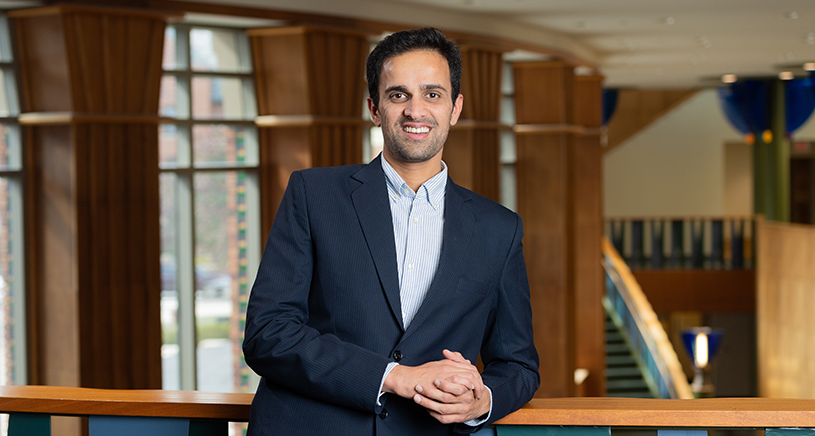
Rahul Ladhania

Rahul Ladhania

· Assistant Professor, Health Informatics, Health Management and Policy, BiostatisticsVerified

University of Michigan · Health Management and Policy

Active 2018–2026

h-index4
Citations328
Papers75 last 5y
Funding
See your match with Rahul Ladhania — sign in to PhdFit.Sign in

About

Rahul Ladhania is an Assistant Professor at the University of Michigan School of Public Health, with appointments in Health Informatics, Health Management and Policy, and Biostatistics. He holds a PhD in Public Policy and Management from Carnegie Mellon University, an MPhil in the same field from Carnegie Mellon, and a BTech in Metallurgical and Materials Engineering from the Indian Institute of Technology Madras. His research focuses on causal inference and machine learning in public and behavioral health, with particular emphasis on adapting and extending machine learning methods to learn optimal treatment rules and estimate heterogeneous treatment effects in complex policy and behavioral health settings. Prior to his current position, Rahul was a post-doctoral researcher with the Behavior Change For Good Initiative at The Wharton School of the University of Pennsylvania, where he is also a visiting scholar and co-leads the machine learning team. He is an affiliate faculty member with the Center for Health Incentives and Behavioral Economics at Penn. His work involves developing methodologies for personalized treatment strategies and understanding treatment effects, contributing to the advancement of public health interventions through innovative analytical techniques.

Research topics

  • Computer Science
  • Artificial Intelligence
  • Medicine
  • Nursing
  • Psychology
  • Machine Learning
  • Mathematics
  • Social psychology
  • Mathematical optimization
  • Economics
  • Applied psychology
  • Business
  • Family medicine
  • Virology
  • Environmental health
  • Advertising

Selected publications

  • Exploring the limits of localization: federated model stacking improves hospital-level prediction in a national research network

    npj Digital Medicine · 2026-04-24

    articleOpen access

    Challenges with model generalizability and data privacy have led to a shift in health artificial intelligence (AI) models being trained locally within individual health systems rather than relying on multicenter data. Localization carries the promise of capturing local practice patterns and patient demographics, presumably resulting in better models. Our study empirically tests this hypothesis in a national research network by comparing locally trained models predicting acute kidney injury (AKI) after cardiac surgery with two multicenter modeling approaches, pooling and a novel federated model stacking method. Trained on 43,926 cases across 23 hospitals, the study finds that multicenter models outperform single-center approaches, with higher area under the receiver operating characteristic curves (AUCs) for all AKI severity levels in both temporal and external validation sets. Hospitals with smaller case volumes benefit the most from multicenter approaches, showing the greatest AUC increase over locally trained models.

  • Improving uptake of pediatric vaccines through religious conferences and mobile vaccine clinics in Aceh, Indonesia (TABRIE): study protocol for a stepped wedge cluster randomized controlled trial

    Trials · 2025-11-21

    articleOpen access1st authorCorresponding

    BACKGROUND: Despite advancements in child immunization, inadequate immunization rates in low- and middle-income countries persist due to inadequate health infrastructure, challenges in vaccine supply and distribution, insufficient healthcare provider training, and low levels of community trust in vaccines. Aceh, a religiously conservative province in Indonesia, has low pediatric vaccination coverage and exemplifies the need for innovative vaccine delivery models. Evidence suggests interventions should target both logistical barriers (e.g., distance or clinic wait times) and societal factors, including misinformation, that contribute towards vaccine hesitancy. METHODS: The trial "TABRIE" will measure the impact of two strategies on children's vaccination rates and parental attitudes towards vaccines in Banda Aceh and Aceh Besar, Indonesia, compared to current outreach strategies. The two strategies being tested are (a) an informational conference with religious leaders who work in specific clinics and (b) a mobile vaccine clinic staffed with community health workers conducting a variety of outreach events. We will execute a stepped wedge cluster randomized design with baseline measures and a cross-sectional sampling structure. Twelve districts (Kecamatan) will be randomized into one of the two strategies. In year 1, three districts from each strategy will implement the intervention, with the other three districts implementing the strategy in the second year. We will conduct cross-sectional surveys in September 2023 (baseline), September 2024 (year 1), and September 2025 (year 2). The primary outcome is the proportion of fully vaccinated children aged 1-5 years for bacillus Calmette-Guérin (BCG), diphtheria-tetanus-pertussis (DTP), polio, and measles. Secondary outcomes include the proportion of children aged 1-5 years with at least one dose of DTP and measles vaccines, the proportion of vaccine-hesitant parents, social norms surrounding vaccination, parental trust in community health workers to administer vaccines, the proportion of parents experiencing distance barriers to vaccination, the proportion of parents reporting that their religious leader encourages vaccination, and the proportion of parents receiving vaccination information from their religious leader. DISCUSSION: This study will conduct a stepped wedge cluster randomized trial to separately estimate the effects of religious conferences and mobile vaccine clinics on pediatric vaccination rates and parental attitudes towards vaccination. It will offer a novel paradigm in vaccination delivery by inserting vaccination from clinics into social spaces that provide alternative, community-centered policy solutions to vaccine hesitancy. TRIAL REGISTRATION: ClinicalTrials.gov NCT06160999. Registered on December 14, 2023.

  • Hospital and Clinician Practice Variation in Cardiac Surgery and Postoperative Acute Kidney Injury

    JAMA Network Open · 2025-05-02 · 10 citations

    articleOpen access

    Importance: Approximately 30% of US patients develop acute kidney injury (AKI) after cardiac surgery, which is associated with increased morbidity, mortality, and health care costs. The variation in potentially modifiable hospital- and clinician-level operating room practices and their implications for AKI have not been rigorously evaluated. Objective: To quantify variation in clinician- and hospital-level hemodynamic and resuscitative practices during cardiac surgery and identify their associations with AKI. Design, Setting, and Participants: This cohort study analyzed integrated hospital, clinician, and patient data extracted from the Multicenter Perioperative Outcomes Group dataset and the Society of Thoracic Surgeons Adult Cardiac Surgical Database. Participants were adult patients (aged ≥18 years) who underwent cardiac surgical procedures between January 1, 2014, and February 1, 2022, at 8 geographically diverse US hospitals. Patients were followed up through March 2, 2022. Statistical analyses were performed from October 2024 to February 2025. Exposures: Hospital- and clinician-level variations in operating room hemodynamic practices (inotrope infusion >60 minutes and vasopressor infusion >60 minutes) and resuscitative practices (homologous red blood cell [RBC] transfusion and total fluid volume administration). Main Outcomes and Measures: The primary outcome was consensus guideline-defined AKI (any stage) within 7 days after cardiac surgery. Hospital- and clinician-level variations were quantified using intraclass correlation coefficients (ICCs). Associations of hospital- and clinician-level practices with AKI were analyzed using multilevel mixed-effects models, adjusting for patient-level characteristics. Results: Among 23 389 patients (mean [SD] age, 63 [13] years; 16 122 males [68.9%]), 4779 (20.4%) developed AKI after cardiac surgery. AKI rates varied across hospitals (median [IQR], 21.7% [15.5%-27.2%]) and clinicians (18.1% [10.1%-23.7%]). Significant clinician- and hospital-level variation existed for inotrope infusion (ICC, 6.2% [95% CI, 4.2%-8.0%] vs 17.9% [95% CI, 3.3%-31.9%]), vasopressor infusion (ICC, 11.7% [95% CI, 8.3%-14.9%] vs 44.5% [95% CI, 11.7%-63.5%]), RBC transfusion (ICC, 1.7% [95% CI, 0.9%-2.6%] vs 4.5% [95% CI, 1.2%-9.4%]), and fluid volume administration (ICC, 2.1% [95% CI, 1.3%-2.7%] vs 23.8% [95% CI, 2.7%-39.9%]). In multilevel risk-adjusted models, the AKI rate was higher for patients at hospitals with higher inotrope infusion rates (adjusted odds ratio [AOR], 1.98; 95% CI, 1.18-3.33; P = .01) and lower among clinicians with higher RBC transfusion rates (AOR, 0.89; 95% CI, 0.79-0.99; P = .03). Other practice variations were not associated with AKI. Conclusions and Relevance: This cohort study of adult patients found that hospital- and clinician-level variation in operating room practices was associated with AKI after cardiac surgery, suggesting possible targets for intervention.

  • Artificial Intelligence and gamification for health

    Edward Elgar Publishing eBooks · 2025-08-05

    book-chapterSenior author
  • rjaf: Regularized Joint Assignment Forest with Treatment Arm Clustering

    The Journal of Open Source Software · 2025-04-09

    articleOpen accessSenior author

    Learning optimal assignment of treatments is an important problem in economics, public health, and related fields, particularly when faced with a variety of treatment strategies.The problem arises, for example, in settings where randomized controlled trials (RCT) are conducted to evaluate various behavioral science-informed interventions aimed at fostering behavior change (Milkman, Gromet, et al., 2021).Such interventions have been studied across diverse domains, including encouraging gym attendance and increasing vaccine uptake for influenza or COVID-19 (Dai et al., 2021; Milkman, Gromet, et al., 2021;Milkman, Patel, et al., 2021;Milkman et al., 2022).While most studies focus on identifying interventions that perform best on average, this approach often overlooks effect heterogeneity.Ignoring heterogeneity can be a missed opportunity to tailor interventions for maximum effectiveness and may even exacerbate disparities (Bryan et al., 2021).Subject-specific covariates, such as sociodemographics can be harnessed to identify which interventions work best for different segments of the population, allowing for more impactful intervention assignments.The rjaf package provides a user-friendly implementation of the regularized joint assignment forest (RJAF) (Ladhania et al., 2023), a regularized forest-type assignment algorithm based on greedy recursive partitioning (Athey et al., 2019) that shrinks effect estimates across treatment arms.The algorithm is augmented by outcome residualization to reduce baseline variation, and employs a clustering scheme (Hartigan & Wong, 1979) that combines treatment arms with consistently similar outcomes.Personalized treatment learning is achieved by optimizing a regularized empirical analogue of the expected outcome.The integration of R (R Core Team, 2024) and C++ (Stroustrup, 2013) substantially boosts computational efficiency in tree partitioning and aggregating.It is especially suitable in RCT settings with numerous treatment arms and constrained sample sizes, making it a powerful tool for learning personalized intervention strategies.

  • Examining Gameplay Patterns and their Association with Nutritional Knowledge

    2024-08-05

    articleSenior author

    In this study, we use data from a novel 11-week cluster randomized controlled trial that we conducted in a school near Chennai (India) to evaluate the impact of regular exposure to an artificial intelligence(AI)-enabled, educational mobile health game – a low risk, non-invasive, digital vaccine candidate with neurocognitive training and implicit learning components – on students’ nutritional knowledge. This paper presents preliminary results from our analyses examining gameplay patterns of students’ who were exposed to the mHealth game, and to quantify association with their nutritional knowledge, captured from student surveys over the course of the intervention.

  • rjaf: Regularized Joint Assignment Forest with Treatment Arm Clustering

    2024-11-11

    datasetOpen accessSenior author

    Personalized assignment to one of many treatment arms via regularized and clustered joint assignment forests as described in Ladhania, Spiess, Ungar, and Wu (2023) &lt;<a href="https://doi.org/10.48550%2FarXiv.2311.00577" target="_top">doi:10.48550/arXiv.2311.00577</a>&gt;. The algorithm pools information across treatment arms: it considers a regularized forest-based assignment algorithm based on greedy recursive partitioning that shrinks effect estimates across arms; and it incorporates a clustering scheme that combines treatment arms with consistently similar outcomes.

  • Personalized Assignment to One of Many Treatment Arms via Regularized and Clustered Joint Assignment Forests

    arXiv (Cornell University) · 2023 · 1 citations

    1st authorCorresponding
    • Computer Science
    • Computer Science
    • Artificial Intelligence

    We consider learning personalized assignments to one of many treatment arms from a randomized controlled trial. Standard methods that estimate heterogeneous treatment effects separately for each arm may perform poorly in this case due to excess variance. We instead propose methods that pool information across treatment arms: First, we consider a regularized forest-based assignment algorithm based on greedy recursive partitioning that shrinks effect estimates across arms. Second, we augment our algorithm by a clustering scheme that combines treatment arms with consistently similar outcomes. In a simulation study, we compare the performance of these approaches to predicting arm-wise outcomes separately, and document gains of directly optimizing the treatment assignment with regularization and clustering. In a theoretical model, we illustrate how a high number of treatment arms makes finding the best arm hard, while we can achieve sizable utility gains from personalization by regularized optimization.

  • A 680,000-person megastudy of nudges to encourage vaccination in pharmacies

    Proceedings of the National Academy of Sciences · 2022 · 191 citations

    • Computer Science
    • Artificial Intelligence
    • Medicine

    Encouraging vaccination is a pressing policy problem. To assess whether text-based reminders can encourage pharmacy vaccination and what kinds of messages work best, we conducted a megastudy. We randomly assigned 689,693 Walmart pharmacy patients to receive one of 22 different text reminders using a variety of different behavioral science principles to nudge flu vaccination or to a business-as-usual control condition that received no messages. We found that the reminder texts that we tested increased pharmacy vaccination rates by an average of 2.0 percentage points, or 6.8%, over a 3-mo follow-up period. The most-effective messages reminded patients that a flu shot was waiting for them and delivered reminders on multiple days. The top-performing intervention included two texts delivered 3 d apart and communicated to patients that a vaccine was "waiting for you." Neither experts nor lay people anticipated that this would be the best-performing treatment, underscoring the value of simultaneously testing many different nudges in a highly powered megastudy.

  • Megastudies improve the impact of applied behavioural science

    Nature · 2021 · 254 citations

    • Psychology
    • Applied psychology
    • Medicine

Frequent coauthors

Education

  • PhD, School of Public Policy & Management

    Carnegie Mellon University

    2019
  • B.Tech, Department of Metallurgical and Materials Engineering

    Indian Institute of Technology Madras

    2010
  • Resume-aware match score
  • Save to shortlist
  • AI-drafted outreach

See your match with Rahul Ladhania

PhdFit ranks faculty by your research interests, methods, and publications — grounded in their actual work, not templates.

  • Free to start
  • No credit card
  • 30-second signup