Resume-aware faculty matching

Find professors who actually fit you

Upload your resume. Four AI agents analyze your background, rank the faculty who fit, inspect their recent research, and help you draft outreach — grounded in their actual work, not templates.

Free to startNo credit cardCancel anytime
Top matches Balanced preset
Dr. Sarah Chen
Stanford · Interpretability · NLP
91
Dr. Marcus Holloway
MIT · Robotics · RL
84
Dr. Aisha Okonkwo
CMU · Fairness · HCI
82
Nova · Professor Researcher · re-ranking top 20…
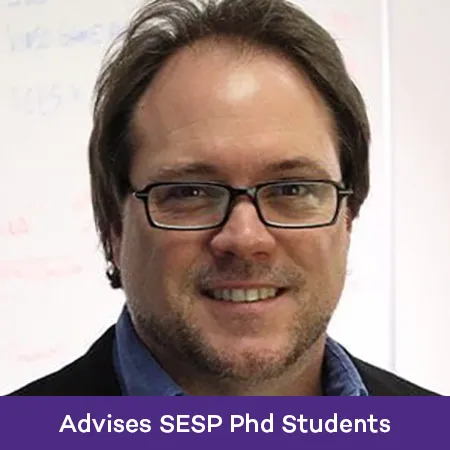
Reed Stevens

Reed Stevens

· Professor, Learning SciencesVerified

Northwestern University · Computer Science and Public Policy

Active 1988–2025

h-index27
Citations3.8k
Papers15041 last 5y
Funding$6.1M
See your match with Reed Stevens — sign in to PhdFit.Sign in

About

Reed Stevens is a Professor in the Learning Sciences at Northwestern University. His research examines and compares cognitive activity across a variety of settings, including classrooms, workplaces, and science museums. He explores new ways to conceptualize cognition and organize learning environments based on his comparative work. Dr. Stevens has specific interests in how mathematical activity contributes to different settings and how technology mediates thinking and learning. His multidisciplinary research draws on cognitive science, interactionist traditions, and the social studies of science and technology. To understand learners' naturally occurring activities, he collects audio-video records of people working and analyzes them using methods adapted from cognitive science, science studies, and ethnomethodology/conversation analysis.

Research topics

  • Computer Science
  • Psychology
  • Engineering
  • Sociology
  • Engineering management
  • Political Science
  • Mathematics education
  • Pedagogy
  • Engineering ethics
  • Mathematics

Selected publications

  • Implementation as distributed sensemaking and adaptation: Understanding how an interest-driven STEAM learning environment maintains integrity across diverse contexts

    Journal of the Learning Sciences · 2025-09-11

    articleSenior author
  • Four Days to Independent Work: Studying how Professional Coffee Roasters Learn through Proximal Apprenticeship

    Proceedings. · 2024-06-10

    articleOpen accessSenior author

    This case study examines the first four days of a proximal apprenticeship among coffee roasters.The intense and effective period of learning presented here challenges studies of apprenticeship, where delegations of responsibility occur over many months and years.To understand this transience, we track a changing web of coordinations over four days: who coordinated what?We discuss implications for apprenticeship-like learning and school science.

  • How Activists did Heterogeneous Civic Data Science to Hold a Social Services Agency Accountable to the Public

    Proceedings. · 2024-06-10 · 1 citations

    articleOpen accessSenior author

    This paper presents an ethnographic case study of a team of activists who used data science to hold a social services agency accountable to the public.The activists engaged in six data science practices that we describe as heterogeneous, to mean that they involved both the organizing of humans and technical work (Law et al., 1987;Stevens et al., 2013;Suchman, 2000).K-12 youth who want to use data science to improve public social services in their cities, beyond the classroom, should also learn to engage in heterogeneous data science practices.

  • Learning Inside the School, but Outside the Curriculum: An Extreme Case of Interest-Driven Learning in Alternative STEAM Learning Infrastructure for Schools

    Cognition and Instruction · 2024-08-05 · 4 citations

    articleSenior author

    Choice and autonomy are central tenets of interest-driven learning. Yet, in most studies on interest in school, students' choice and autonomy have been confined within the boundaries of the curriculum and the subject matter in question. This limits our understanding of how schools can support interest-driven learning as well as students' interest development in educational settings more broadly. To address this gap, in this study, we have focused on student learning when they are allowed to follow their interests beyond the curriculum during school time. Building on relational and practice-based perspectives on interest, we conceptualized such extensions as productive deviations and centered on a particular case of two 6th-grade students - Tamaz and Nuri - who created two computer games during their time in the FUSE Studio, alternative STEAM learning infrastructure for schools. Our interactional analysis of Tamaz and Nuri's problem-solving during their game-making shows that their productive deviation formed a significant learning experience for them in terms of game design and working with computers. Overall, our study contributes to discussions on fostering and supporting students' interest-driven learning and interest development in school settings.

  • VideoTraces: Rich Media Annotations for Learning and Teaching

    2023-01-10 · 1 citations

    book-chapter1st authorCorresponding

    This paper describes a computer-based video annotation environment with a variety of uses for learning and teaching. The VideoTraces system allows users to capture and annotate digital video, thus representing their ideas in a unique way. The system is based on research about the embodied nature of human knowledge and collaborative learning. In this paper, we report on two pilot uses of the system in very different settings (a science museum and a university dance course). We describe a range of ways in which people represent their ideas with VideoTraces, and argue that the system may be a general tool to support collaborative learning.

  • Expanding What Counts as Scientific Investigations in the Era of the Next Generation Science Standards

    Proceedings. · 2023-10-03

    articleOpen accessSenior author

    Science education reforms advance an epistemology of investigation as hypothesisdriven tests of theory.We argue that this is a narrowly drawn image of investigation that leads to lost opportunities for learning and teaching science.These include opportunities to develop an investigator's skills and conceptual understandings and situate investigatory practices within a broader scientific epistemology.This study portrays examples of the day-to-day investigations involved in a non-laboratory, scientific workplace: a neighborhood coffee roastery.Through microethnographic analyses we show that professional coffee roasters accomplish the same goals that science education reforms seek to achieve, and that these goals take different forms.We argue that coffee roasters' uses of investigatory practices toward non-laboratory, everyday ends expand our views of what counts as scientific investigations in the current era of reform.

  • Scientific Practices in Professional Coffee Roasting

    Proceedings. · 2023-10-03

    articleOpen accessSenior author

    This poster expands imagery about who and what counts as "scientific" through examinations of non-laboratory, scientific workplaces.Using participant observation and microethnographic analyses of professional coffee roasters, we demonstrate that their senses are (1) used as scientific instruments, (2) coordinated with more normatively recognized instruments, and (3) prioritized over those instruments in moments of conflict.This analysis offers ways to recover the body in scientific work-a growing concern in the era of the Next Generation Science Standards.

  • Dilemmas experienced by teachers in adapting to the role of facilitator in the STEAM classroom

    Teaching and Teacher Education · 2023-07-31 · 20 citations

    articleSenior author
  • Supports and Barriers to the Spread of Learning Sciences Innovations: A Comparative Actor Network Analysis

    Proceedings. · 2023-10-03

    articleOpen accessSenior author

    This study compares the adoption and spread of a learning sciences innovation, a project-based, interest-driven STEAM learning program, in two culturally distinct contexts: a large school district in the southeastern United States and the public schools in Helsinki, Finland.Using Actor Network analysis, we show how and what actors needed to be mobilized for the program to get in, get rooted, and spread (or not) in these two contexts.Our findings have implications for understanding both how to spread and sustain learning sciences innovations and similarities and differences between the Finnish and American school systems.

  • How Off-Duty Data Scientists Did Math for Civic and Social Good

    Proceedings. · 2023-10-03

    articleOpen accessSenior author

    This paper presents an ethnographic case study of a team of off-duty data scientists who electively made a new mathematical metric to address a problem with one of their city's key public services.This case study offers an image of an environment that was organized to allow participants to pursue two opportunities by doing mathone was to help potentially improve a public service in the near future and the other was to become better data scientists.The case material offers ideas for designing mathematical learning environments that might similarly offer young people opportunities to learn to do math for social good and to advance their broader interests and concerns (Stevens, 2020).

Recent grants

Frequent coauthors

  • Alexandra H. Vinson

    University of Michigan–Ann Arbor

    111 shared
  • Pryce Davis

    University of Nottingham

    110 shared
  • Lorraine Fleming

    54 shared
  • Sheri Sheppard

    Stanford University

    54 shared
  • Cynthia J. Atman

    University of Washington

    51 shared
  • Ruth Streveler

    Purdue University West Lafayette

    50 shared
  • Karl Smith

    University of Minnesota

    31 shared
  • Dennis Lund

    Howard University

    29 shared
  • Resume-aware match score
  • Save to shortlist
  • AI-drafted outreach

See your match with Reed Stevens

PhdFit ranks faculty by your research interests, methods, and publications — grounded in their actual work, not templates.

  • Free to start
  • No credit card
  • 30-second signup